
Lake Manyara Safari 2026: Tree-Climbing Lions, Birdlife & Scenic Highlights
Table of Contents
Toggle1. Why Lake Manyara Still Matters in 2026
Tucked beneath the towering walls of the Great Rift Valley, Lake Manyara National Park remains one of Tanzania’s most visually distinctive safari destinations in 2026. Smaller than giants like Serengeti National Park or Ngorongoro Conservation Area, Lake Manyara has never relied on sheer size to impress. Instead, it delivers something different: dense groundwater forests alive with birdsong, dramatic escarpment backdrops, shimmering soda lake plains, and wildlife encounters packed into a surprisingly compact landscape.
The park is still best known for its elusive tree-climbing lions — one of the rarest lion behaviors in Africa — alongside large troops of baboons, frequent elephant sightings, and seasonal flocks of flamingos that can turn sections of the lake pink when conditions are right. For birdwatchers, photographers, and travelers short on time, Lake Manyara continues to punch far above its weight.
But 2026 travelers are asking smarter questions than ever. Beyond the brochure photos and safari marketing, what is a Lake Manyara safari actually like today? Are the tree-climbing lions still regularly seen? Is the birdlife worth the detour? And does the park still feel rewarding despite its smaller size and growing popularity on Tanzania’s Northern Circuit?
The honest answer is yes — with realistic expectations. Lake Manyara may not deliver nonstop predator action every day, and sightings are never guaranteed. Yet what the park offers instead is variety, accessibility, and atmosphere. In a single game drive, you can move from thick forest filled with hornbills and monkeys to open floodplains with grazing wildlife, before finishing the afternoon beneath the golden cliffs of the Rift Valley escarpment.
For travelers looking for a shorter safari that still feels rich, scenic, and genuinely wild, Lake Manyara remains one of Tanzania’s most rewarding stops in 2026.
Travelers looking to combine northern Tanzania wildlife with time on the coast often pair a Lake Manyara safari with a longer Safari and Zanzibar beach itinerary. For those wanting both safari landscapes and Indian Ocean relaxation, a 9-Day Safari and Beach Retreat remains one of the most balanced ways to experience Tanzania in 2026.
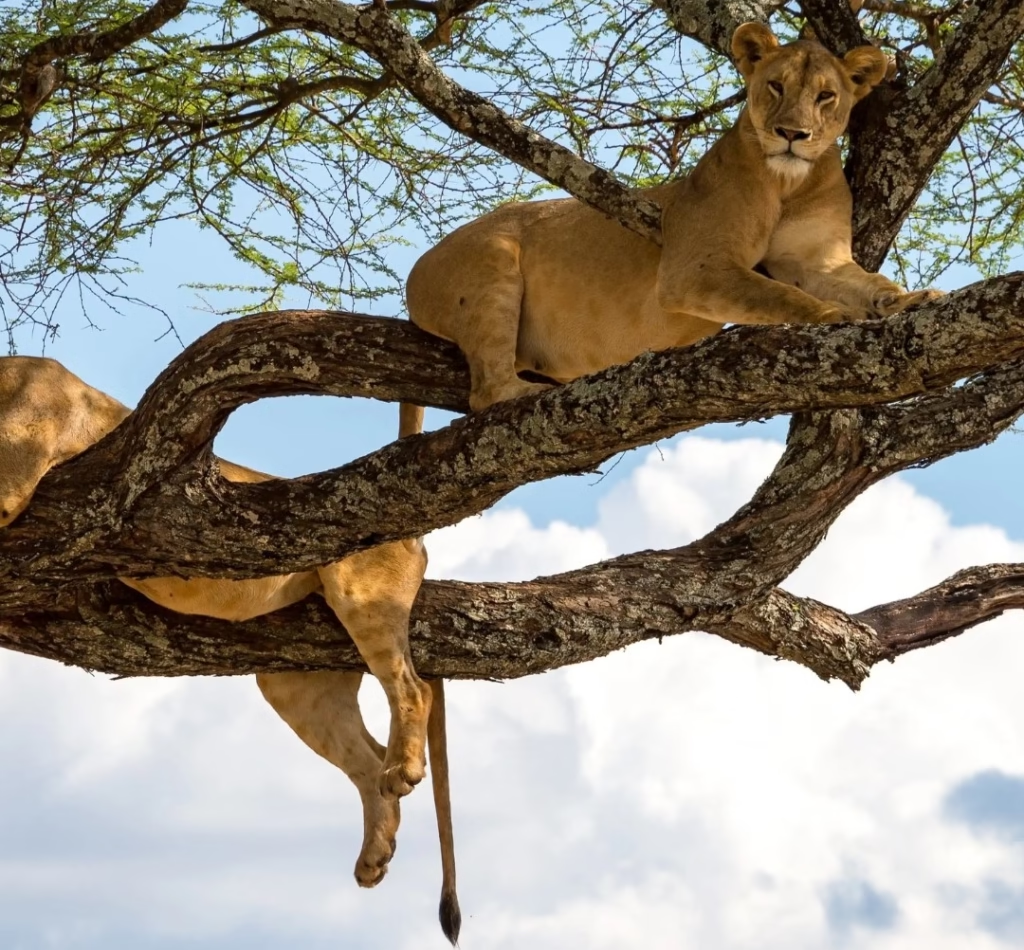
Tree climbing Lions
2. Tree-Climbing Lions in Lake Manyara: Realistic Expectations for 2026
Few wildlife sightings in Africa feel as strangely unforgettable as spotting a lion stretched across the branches of a tree. In Lake Manyara National Park, that unusual behavior continues to define the park’s identity in 2026 — even if the experience remains unpredictable.
Unlike most lions across Africa, the prides of Lake Manyara are known for regularly resting in acacia and sycamore trees, especially during warmer parts of the day. Seeing a full-grown lion draped lazily over a branch, tail hanging beneath the leaves, still feels surreal even for experienced safari travelers. It is one of the reasons the park remains such a memorable stop on Tanzania’s Northern Circuit.
2.1 Why Do Lake Manyara Lions Climb Trees?
There is still no single definitive explanation, but guides and researchers continue to point toward several practical theories. One of the most widely accepted is thermoregulation: elevated branches provide cooler air and better breezes during hot afternoons on the Rift Valley floor. Climbing may also help lions escape irritating ground insects like tsetse flies, especially during wetter months when the soil becomes damp and humid.
Other explanations are more strategic. Trees offer a natural vantage point over floodplains and woodland, allowing lions to observe prey movements from a distance while conserving energy. Some safari guides also believe the behavior is partly cultural — a learned habit passed through generations within certain prides rather than an instinct shared by all lions everywhere.
The reality is likely a combination of all these factors: climate, comfort, environment, and social learning blending together over time.
🦓 PLAN YOUR TANZANIA SAFARI
 Tell us your travel dates, budget, and preferences
 We craft your personalized Tanzania Safari itinerary
 Confirm your booking & get ready for the adventure of a lifetime
2.2 Best Areas for Tree-Climbing Lion Sightings
Most sightings happen in the park’s woodland areas near the Rift Valley escarpment, where large acacia and sycamore trees create ideal shade during the heat of the day. Guides often focus game drives along quieter forest-edge tracks where lions are known to rest after nighttime hunting.
The western sections of the park tend to produce some of the more consistent sightings, although pride movements change constantly depending on prey availability and weather conditions. One week may produce repeated sightings in the same area, while the next may feel completely empty.
This unpredictability is part of what keeps sightings exciting — and occasionally frustrating.
2.3 When Are Sightings Most Likely?
In 2026, experienced guides still recommend early morning and late-afternoon drives for the best chances. Cooler temperatures increase general wildlife activity, and lions are more likely to remain visible before retreating deeper into shade.
During hotter midday hours, lions may either disappear into dense vegetation or remain high in the trees sleeping almost motionless. Ironically, some visitors miss them entirely because the cats blend so naturally into the branches above.
Weather also plays a major role. After rain, lions may spend more time elevated away from wet ground, while prey movement across floodplains can pull prides into different sections of the park for days at a time.
2.4 The Honest Reality About Seeing Them
This is the part many safari brochures avoid mentioning: tree-climbing lion sightings are never guaranteed.
Some travelers arrive and spot lions within their first hour inside the park. Others spend an entire day searching without success. That contrast does not mean the park has “lost” its lions — it simply reflects the unpredictability of wild animals in a relatively compact ecosystem.
What Lake Manyara offers in 2026 is possibility, not certainty. And for many travelers, that unpredictability is exactly what makes the experience feel authentic rather than staged.
When the sighting finally happens — a lion lounging above the woodland as sunlight filters through the leaves — it feels earned.
While Lake Manyara is famous for its unusual tree-climbing lions, many travelers combine the park with nearby ecosystems like a Ngorongoro Crater safari for predator density or Tarangire elephant safaris for some of Tanzania’s largest elephant herds.
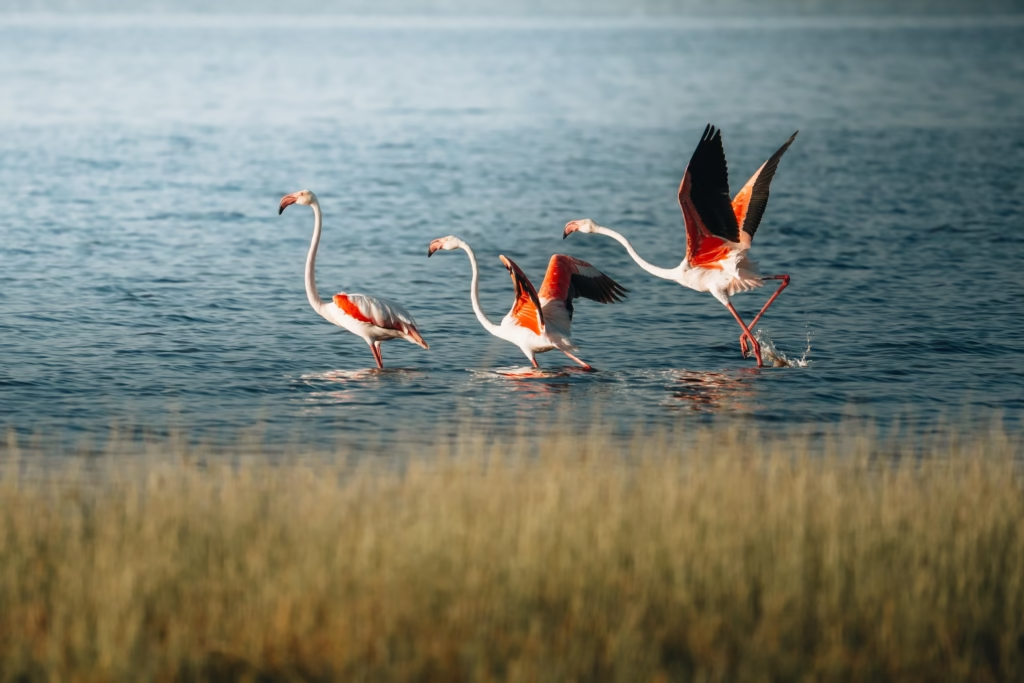
Lake Manyara Flamingos
3. Birdlife on a Lake Manyara Safari in 2026
For many travelers, Lake Manyara National Park is remembered for its lions. For birdwatchers, however, the park is something else entirely: one of the most rewarding and visually diverse birding destinations on Tanzania’s Northern Circuit.
Despite its relatively compact size, Lake Manyara hosts an astonishing variety of habitats — soda lake shoreline, groundwater forest, floodplain, woodland, and escarpment — which explains why more than 300 to 400 bird species have been recorded here over the years. In 2026, the park remains a reliable destination for both casual wildlife travelers and dedicated birders looking for species diversity within a short safari window.
3.1 Flamingos, Pelicans, and the Soda Lake Spectacle
The alkaline lake itself is still the park’s visual centerpiece. When water levels and conditions align, enormous flocks of flamingos gather along the shoreline, creating pink bands that seem to shimmer against the pale soda flats. Some seasons are more dramatic than others, but even smaller gatherings add movement and color to the landscape.
Pelicans glide low across the lake in loose formations, while storks, herons, spoonbills, and other waterbirds feed in the shallows nearby. Early mornings are especially atmospheric, with soft light reflecting across calm water as birds move through the mist rising from the lake edge.
This combination of birdlife and scenery is part of what makes Lake Manyara feel so photogenic even when predator sightings are quiet.
3.2 Forest Birds and Hidden Species
Away from the shoreline, the park changes character completely. Dense groundwater forests beneath the Rift Valley escarpment create cooler, shaded habitats where some of Manyara’s most sought-after forest birds can be found.
Species like the Silvery-cheeked hornbill move noisily through the canopy, while the vivid Schalow’s turaco flashes through the trees in bursts of green, blue, and crimson. More elusive birds such as the Narina trogon reward patient observers willing to slow down and listen carefully within the forest interior.
Raptors are also regularly seen circling above the escarpment and open plains, especially during warmer midday conditions when thermals rise from the valley floor.
One of the park’s strengths in 2026 is that birding rarely feels isolated from the rest of the safari experience. You may stop to watch hornbills in the forest and suddenly encounter elephants crossing the track moments later.
🦓 PLAN YOUR TANZANIA SAFARI
Tell us your travel dates, budget, and preferences We craft your personalized Tanzania Safari itinerary Confirm your booking & get ready for the adventure of a lifetime
3.3 Best Seasons for Birding
Birdlife changes noticeably throughout the year, which means timing can shape the entire experience.
From November to April, the wet season brings migratory species into the park alongside breeding plumage that makes many birds appear more colorful and dramatic. The scenery also becomes greener and more lush during these months, giving photographers richer tones and softer light conditions.
For serious birdwatchers, this period is often considered the most rewarding.
The dry season, usually from June to October, offers different advantages. Waterbirds become more concentrated around remaining water sources, while thinner vegetation makes general wildlife viewing easier overall. Visibility improves along many tracks, creating cleaner photographic opportunities for both birds and mammals.
Neither season is objectively “better” — they simply offer different versions of Lake Manyara.
3.4 What Bird Photographers Should Know
Photographers visiting Lake Manyara in 2026 should prepare for variety rather than repetition. Wide-angle lenses work beautifully for flamingo-filled lake scenes and Rift Valley backdrops, while telephoto lenses become essential inside the forests where species appear briefly through dense foliage.
Morning drives generally provide the softest light and calmest conditions near the lake, especially for reflections and waterbird photography. Late afternoons can also be excellent when golden light reaches the escarpment walls and birds become more active again after the midday heat.
Most importantly, patience matters here. Some of Manyara’s best bird encounters happen quietly — not during dramatic action, but in small moments hidden within the forest canopy or along the still shoreline of the lake.
Birdwatchers visiting from the coast often include Lake Manyara as part of a shorter fly-in itinerary from Zanzibar, especially the popular 6-Day Tarangire, Manyara and Ngorongoro safari, which combines birdlife, crater scenery, and classic northern Tanzania wildlife in a compact schedule.
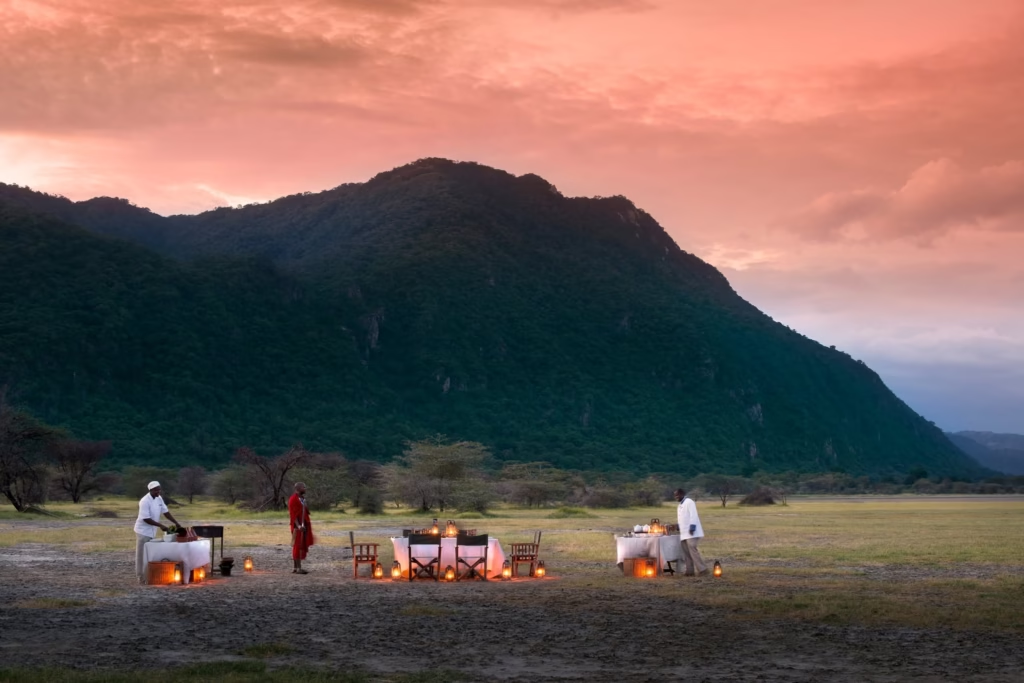
Rift Valley View
4. Scenic Highlights of Lake Manyara National Park
One of the reasons Lake Manyara National Park continues to stand out in 2026 is not just the wildlife — it is the atmosphere. Few parks on Tanzania’s Northern Circuit compress so much visual contrast into such a small area. Within a single game drive, landscapes can shift from dense forest shadows to open soda lake plains beneath the towering cliffs of the Great Rift Valley.
For photographers and travelers who value scenery as much as animal sightings, Lake Manyara often feels surprisingly cinematic.
4.1 Rift Valley Escarpment Views
The park’s defining backdrop remains the dramatic Rift Valley escarpment rising sharply above the western edge of the lake. These massive cliffs dominate the horizon throughout much of the safari, changing color constantly with shifting light and weather.
In the early morning, the escarpment often glows softly beneath mist and low cloud. By late afternoon, warm golden light spreads across the rock face, creating some of the park’s most memorable photographic moments.
Unlike larger open savannah parks, Lake Manyara’s scenery feels enclosed and layered. The cliffs, forests, floodplains, and lake all sit close together, giving drives a more intimate and immersive feeling.
4.2 Groundwater Forests and Lake Reflections
The transition between ecosystems is one of the park’s greatest strengths. Thick groundwater forests near the park entrance feel cool and almost tropical, with towering trees filtering sunlight onto winding tracks below. Moments later, the landscape opens dramatically toward the lake and surrounding floodplains.
This contrast creates a visual rhythm that keeps the scenery constantly changing.
During calm weather, sections of the soda lake can produce beautiful mirror-like reflections, especially during early mornings when wind levels remain low. Flamingos, pelicans, and passing wildlife reflected against pale water and distant escarpment cliffs create some of Lake Manyara’s most recognizable images.
Even without major predator sightings, the park often feels rewarding simply because of how visually varied it is.
🦓 PLAN YOUR TANZANIA SAFARI
Tell us your travel dates, budget, and preferences We craft your personalized Tanzania Safari itinerary Confirm your booking & get ready for the adventure of a lifetime
4.3 Best Photography Spots in the Park
Lake Manyara rewards photographers who pay attention to light rather than only chasing wildlife density. Some of the best images here come from combining animals with landscape elements instead of isolating subjects completely.
The floodplains near the lake edge are particularly strong for wide landscape compositions, while elevated viewpoints along the escarpment provide sweeping perspectives across the park below. Forest clearings can also create dramatic framing opportunities when elephants, baboons, or giraffes emerge through filtered light.
Photographers visiting in 2026 should expect changing conditions depending on rainfall and lake levels. Some seasons produce expansive reflective lake surfaces, while others emphasize dry textures and concentrated wildlife movement near water sources.
Both versions have their own appeal.
4.4 Golden Hour Game Drives
Sunrise and sunset remain the most rewarding times to experience Lake Manyara visually. Early morning drives often begin with soft mist hanging near the lake as birds move across the shoreline and sunlight slowly reaches the escarpment walls.
Late afternoons feel especially atmospheric. The low sun warms the cliffs with orange and gold tones while long shadows stretch across woodland and floodplain. Wildlife silhouettes against the lake — elephants crossing open ground, giraffes beneath acacia trees, or flamingos lifting into the sky — can create striking final moments before sunset.
Part of Lake Manyara’s appeal in 2026 is exactly this balance: it may not always deliver nonstop action, but it consistently delivers mood, texture, and scenery that linger long after the safari ends.
Travelers who enjoy Lake Manyara’s dramatic scenery often continue deeper into Tanzania’s Northern Circuit before ending their trip on the beaches of Zanzibar through a longer 9-Day Safari and Beach Retreat itinerary.
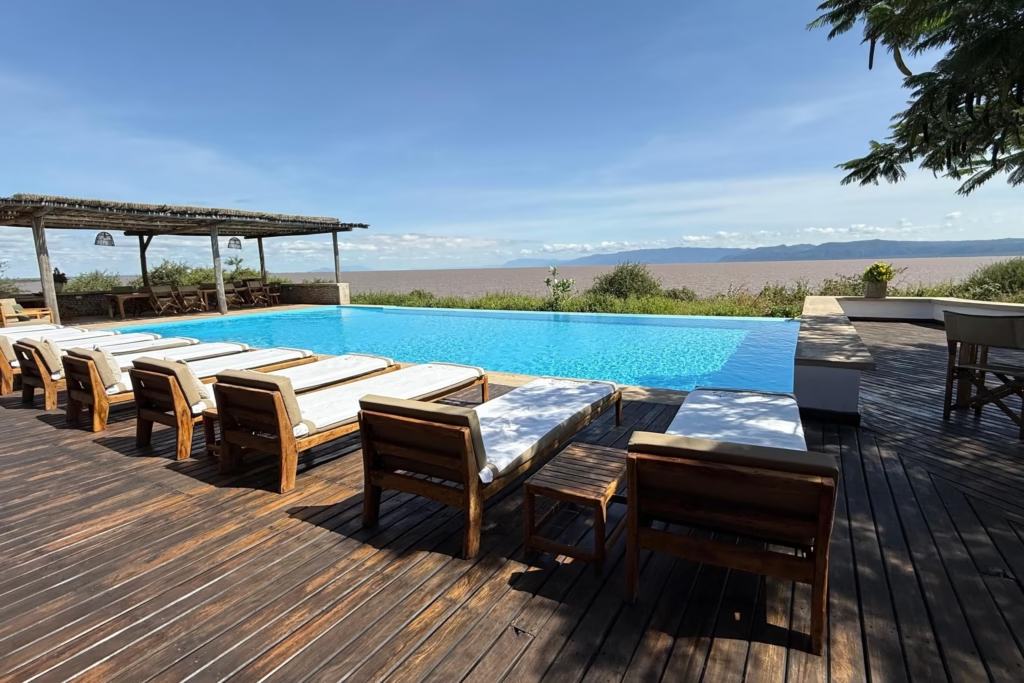
Lake Manyara Luxury Accommodation
5. What a Lake Manyara Safari Really Feels Like in 2026
There is a difference between safari marketing and safari reality — and in 2026, Lake Manyara National Park still works best when approached with realistic expectations rather than blockbuster assumptions.
The park is beautiful, rewarding, and surprisingly diverse for its size. But it is also compact, increasingly popular on Tanzania’s Northern Circuit, and naturally unpredictable in the way only wild places can be.
For many travelers, that balance becomes part of its charm.
5.1 What’s Reliably Good
Some experiences at Lake Manyara remain consistently strong year after year. Birdlife is one of them. Even travelers with little prior interest in birdwatching often leave impressed by the sheer variety of movement and color around the lake and forests.
Elephants are also seen regularly, sometimes emerging quietly from the groundwater forest with surprisingly close viewing opportunities along the tracks. Large troops of baboons remain one of the park’s most constant presences, especially near the entrance roads and forest sections.
And then there is the scenery itself. Even on slower wildlife days, the Rift Valley escarpment, reflective lake views, floodplains, and dense woodland create a safari atmosphere that rarely feels empty.
When lake conditions are favorable, flamingo flocks still gather in impressive numbers, adding dramatic color to the shoreline. Tree-climbing lions remain possible too — and when sightings happen, they still feel genuinely special rather than routine.
5.2 What’s Unpredictable
The honest reality is that Lake Manyara is not a park designed around nonstop predator action.
Some visitors arrive expecting daily lion sightings, dramatic hunts, or constant big-cat encounters similar to the Serengeti. That expectation can lead to disappointment if timing and wildlife movement do not cooperate.
The park’s famous tree-climbing lions are real, but sightings vary dramatically from day to day. You may encounter them quickly, or not at all during a short visit. The same applies to many predator sightings overall.
Wildlife movement here changes with weather, prey distribution, lake levels, and seasonal conditions. Some months feel vibrant and full of activity, while others feel quieter and more focused on scenery and birdlife.
That unpredictability is not a flaw — it is simply part of visiting a smaller ecosystem where animals move freely rather than performing on schedule.
🦓 PLAN YOUR TANZANIA SAFARI
Tell us your travel dates, budget, and preferences We craft your personalized Tanzania Safari itinerary Confirm your booking & get ready for the adventure of a lifetime
5.3 Crowds and the Reality of a Compact Park
Lake Manyara’s accessibility is both an advantage and a limitation. Because it sits relatively close to Arusha and fits easily into Northern Circuit itineraries, the park can become busy during peak safari months.
Unlike vast open systems such as the Serengeti, Lake Manyara concentrates both wildlife and vehicles into a smaller network of roads. Popular sightings can occasionally attract clusters of safari vehicles, especially during high season.
This does not ruin the experience, but it does change its rhythm.
Travelers who approach the park patiently — focusing on atmosphere, landscapes, and quieter wildlife moments rather than checklist-style safari expectations — often leave more satisfied than those chasing nonstop action.
5.4 How Timing Changes the Experience
Timing matters more here than many visitors realize.
Early morning and late-afternoon drives consistently feel more rewarding, with softer light, cooler temperatures, and increased wildlife activity. Seasonal timing also shapes expectations significantly. Wet months bring richer birdlife and greener scenery, while dry months usually improve general wildlife visibility.
One of the smartest decisions in 2026 is choosing guides with strong local knowledge. Experienced guides often know which woodland sections or escarpment areas have recently produced lion activity, elephant movement, or productive birding conditions.
Private or smaller safari setups can also improve the experience simply because they allow more flexibility and patience at sightings.
In the end, Lake Manyara works best for travelers who appreciate nuance. It may not overwhelm you with endless predator drama, but it consistently delivers something many larger parks sometimes lose: intimacy, atmosphere, and moments that feel unexpectedly personal.✨
For travelers wanting stronger chances of dense wildlife concentrations, Lake Manyara is often best paired with destinations like the Ngorongoro Crater safari or the elephant-rich landscapes of Tarangire National Park.
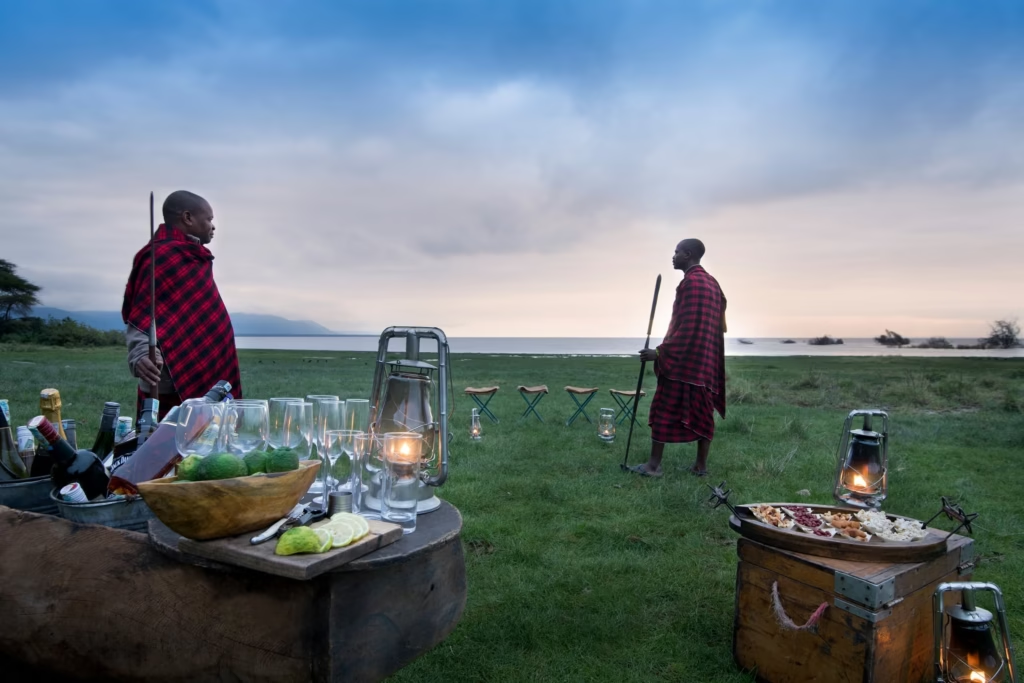
Lunch with Maasai
6. When to Visit Lake Manyara National Park
One of the advantages of visiting Lake Manyara National Park is that the park remains rewarding throughout the year — but the experience changes noticeably with the seasons. The best time for a Lake Manyara safari in 2026 depends less on “good versus bad” conditions and more on what kind of safari experience you want most.
Some travelers prioritize wildlife visibility and dry conditions, while others prefer dramatic scenery, migratory birds, and quieter landscapes after rainfall.
Best Seasons for a Lake Manyara Safari
Season | Best For | Conditions |
June–October | General wildlife viewing | Dry weather, thinner vegetation, easier sightings |
November–April | Birding & lush scenery | Migratory birds, breeding plumage, greener landscapes |
Shoulder Season | Balanced experience | Fewer crowds, mixed wildlife and scenery conditions |
6.1 June to October: Dry Season and Easier Wildlife Viewing
The dry season remains the most popular period for safaris across northern Tanzania, and Lake Manyara is no exception. From roughly June through October, vegetation becomes less dense, making elephants, baboons, giraffes, and other wildlife easier to spot along the park’s tracks and open floodplains.
Road conditions are usually smoother, skies clearer, and overall game viewing more straightforward.
This is also the time when many travelers combine Lake Manyara with the broader Northern Circuit, including Serengeti National Park and Ngorongoro Conservation Area, which means visitor numbers can increase during peak months.
For photographers, the dry season often produces cleaner wildlife visibility and dramatic dust-and-light conditions during sunrise and sunset drives.
6.2 November to April: Birdlife and Lush Scenery
The wet season transforms the park completely. Rains bring greener forests, richer colors, fuller vegetation, and a major increase in migratory bird activity across the lake and woodland habitats.
For birdwatchers, this is arguably the most exciting time to visit. Flamingos, pelicans, storks, hornbills, and migratory species become more active, while many birds display vivid breeding plumage during these months.
The scenery also feels more atmospheric and alive. Clouds gather dramatically over the Rift Valley escarpment, reflections deepen across sections of the lake, and the forest becomes intensely vibrant after rainfall.
Wildlife can sometimes be harder to spot because vegetation thickens, but the overall visual experience often feels more cinematic and immersive.
🦓 PLAN YOUR TANZANIA SAFARI
Tell us your travel dates, budget, and preferences We craft your personalized Tanzania Safari itinerary Confirm your booking & get ready for the adventure of a lifetime
6.3 Shoulder Season: A More Balanced Experience
The shoulder months between peak dry and wet periods can offer some of the park’s most balanced safari conditions. Visitor numbers are usually lower, landscapes retain some greenery, and wildlife viewing often remains reasonably productive.
For travelers hoping to avoid the busiest safari periods while still enjoying varied scenery and comfortable driving conditions, these quieter windows can be surprisingly rewarding.
In many ways, Lake Manyara is a park where atmosphere matters just as much as wildlife density. And sometimes, visiting during less crowded months allows that atmosphere to stand out even more clearly.
Seasonal timing becomes even more important when combining mainland parks with Zanzibar. Many travelers choose shorter options like the 3-Day Tarangire, Manyara and Ngorongoro safari before continuing into a longer Safari and Zanzibar beach holiday.
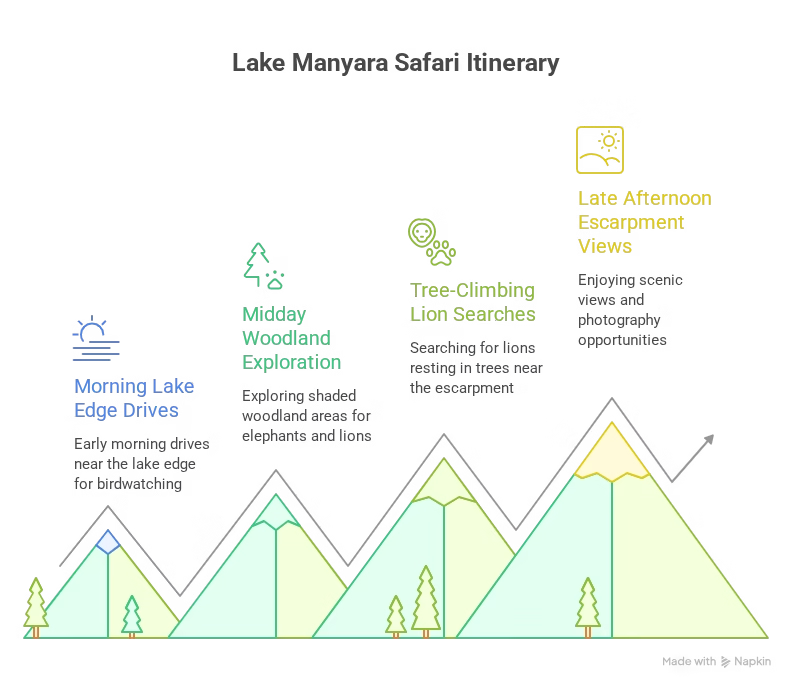
7. Suggested Lake Manyara Safari Flow
A one-day safari in Lake Manyara National Park can feel surprisingly complete when timed well. The park’s compact size allows travelers to experience several distinct ecosystems within a single day, moving from lake-edge birdlife to dense woodland and dramatic Rift Valley viewpoints without long driving distances between them.
The key is pacing. Lake Manyara works best when the day unfolds gradually rather than rushing from sighting to sighting.
8. Is a Lake Manyara Safari Worth It in 2026?
Yes — absolutely, but for the right reasons.
Lake Manyara National Park continues to earn its place on Tanzania’s Northern Circuit in 2026 not because it promises nonstop drama, but because it delivers variety, atmosphere, and genuinely memorable moments within a relatively short safari experience.
For travelers planning shorter northern Tanzania itineraries, Lake Manyara remains one of the easiest and most rewarding parks to combine with destinations like Ngorongoro Conservation Area or Tarangire National Park. Its accessibility from Arusha makes it especially appealing for first-time safari visitors, photographers, birdwatchers, and travelers who want a visually rich safari without committing to long overland travel days.
The park is particularly rewarding for people interested in birdlife, scenic diversity, and the rare chance of seeing tree-climbing lions in their natural environment. Few safari destinations combine soda lake landscapes, groundwater forest, Rift Valley escarpments, elephants, flamingos, and dense woodland into such a compact area.
Whether you are planning a short northern Tanzania adventure or a complete Safari and Zanzibar beach holiday, Lake Manyara remains one of the region’s most rewarding scenic stops. Many travelers combine it with Tarangire elephant safaris, a Ngorongoro Crater safari, or a longer 9-Day Safari and Beach Retreat for a more complete Tanzania experience.
🦓 PLAN YOUR TANZANIA SAFARI
Tell us your travel dates, budget, and preferences We craft your personalized Tanzania Safari itinerary Confirm your booking & get ready for the adventure of a lifetime
But expectations matter.
Lake Manyara is not designed for constant predator sightings or dramatic big-cat action every hour of the day. Wildlife encounters can be unpredictable, roads may feel busy during peak safari months, and famous lion sightings are never guaranteed.
The travelers who enjoy the park most are usually the ones who slow down.
They notice the changing light on the escarpment, the silence inside the forest before hornbills burst overhead, the reflections across the lake at sunrise, or the strange excitement of scanning tree branches for a sleeping lion hidden in the leaves.
In 2026, Lake Manyara works best when approached honestly rather than through safari marketing hype. It is not the largest park in Tanzania, nor the wildest, nor the most predator-heavy.
What it offers instead is texture, atmosphere, accessibility, and moments that feel surprisingly intimate.
And for many travelers, that turns out to be exactly what makes it unforgettable.✨
Frequently Asked Questions About Lake Manyara Safaris in 2026
1. Is a Lake Manyara safari worth it in 2026?
Yes — especially for travelers looking for a shorter safari with strong scenery, birdlife, elephants, and the chance to see tree-climbing lions. Lake Manyara National Park may be smaller than other northern Tanzania parks, but its variety of landscapes and accessible wildlife still make it a rewarding stop in 2026.
2. Are the tree-climbing lions still seen in Lake Manyara?
Yes, tree-climbing lions are still one of the park’s biggest attractions. However, sightings are never guaranteed. Lions move depending on weather, prey, and pride behavior, so some visitors see them easily while others may not encounter them during a short visit.
3. What is the best time to visit Lake Manyara National Park?
The dry season from June to October is generally best for easier wildlife viewing, while November to April is ideal for birdwatching and lush green scenery. Shoulder months can offer a quieter and more balanced safari experience.
4. How many bird species are found in Lake Manyara?
Lake Manyara is home to more than 300–400 recorded bird species, making it one of Tanzania’s strongest birding destinations. Flamingos, pelicans, hornbills, turacos, and raptors are among the most notable species regularly seen in the park.
5. Can Lake Manyara be visited as a day trip?
Yes. Because of its proximity to Arusha, Lake Manyara is one of the most popular day-trip safari parks on Tanzania’s Northern Circuit. Many travelers also combine it with Ngorongoro Conservation Area and Tarangire National Park as part of a longer itinerary.
6. What animals are commonly seen in Lake Manyara?
Visitors regularly see elephants, baboons, hippos, giraffes, wildebeest, zebras, monkeys, and a wide variety of birds. Lions are occasionally spotted, including the park’s famous tree-climbing prides.
7. Is Lake Manyara crowded during peak season?
The park can become busy during peak safari months because it is easily accessible and relatively compact. Popular wildlife sightings may attract several safari vehicles, especially between June and October.
8. How much time should you spend in Lake Manyara National Park?
A full-day safari is usually enough to experience the park’s major highlights, although some travelers choose to stay overnight nearby for a more relaxed pace and better early morning or sunset game drives.✨
🦓 PLAN YOUR TANZANIA SAFARI
Tell us your travel dates, budget, and preferences We craft your personalized Tanzania Safari itinerary Confirm your booking & get ready for the adventure of a lifetime