
What Is It Really Like to Sleep in a Tent in the Serengeti?
Table of Contents
Toggle1. Introduction
As the campfire fades and the Serengeti sinks into darkness, the sounds begin. A lion roars somewhere across the plains. Hyenas answer in the distance. The canvas walls of your tent shift gently in the cool night breeze while above you, thousands of stars spill across the African sky with almost impossible clarity. For many travelers, this is the moment the Serengeti stops feeling like a safari destination and starts feeling truly wild.
It’s also the moment many people quietly ask themselves: What is it really like sleeping out here?
The idea of sleeping in a tent in the Serengeti can sound intimidating before you arrive. People imagine thin fabric separating them from predators, sleepless nights filled with fear, and rough camping conditions deep in the bush. The reality, however, is very different. While sleeping in a tent Serengeti camps can feel raw, immersive, and occasionally uncomfortable, it is also surprisingly organized, secure, and deeply memorable.
You are not simply dropped alone into the wilderness. Most Serengeti tented camps operate with experienced guides, strict safety protocols, designated camp areas, and comfortable safari setups that balance adventure with practicality. Yes, you may hear lions during the night. Yes, the air can feel cold before sunrise, and dust may find its way into your bag. But those small discomforts are part of what makes the experience unforgettable.
For many travelers, sleeping in a tent in the Serengeti becomes the highlight of the entire safari — not because it feels luxurious, but because it feels real.
Before your first night under canvas in the Serengeti, many travelers wonder what the experience truly feels like. If you are planning a deeper safari adventure across Tanzania’s most iconic parks, explore our A Legendary 8-Day Tanzania Safari Experience for a complete journey through the Serengeti, Ngorongoro Crater, and beyond.
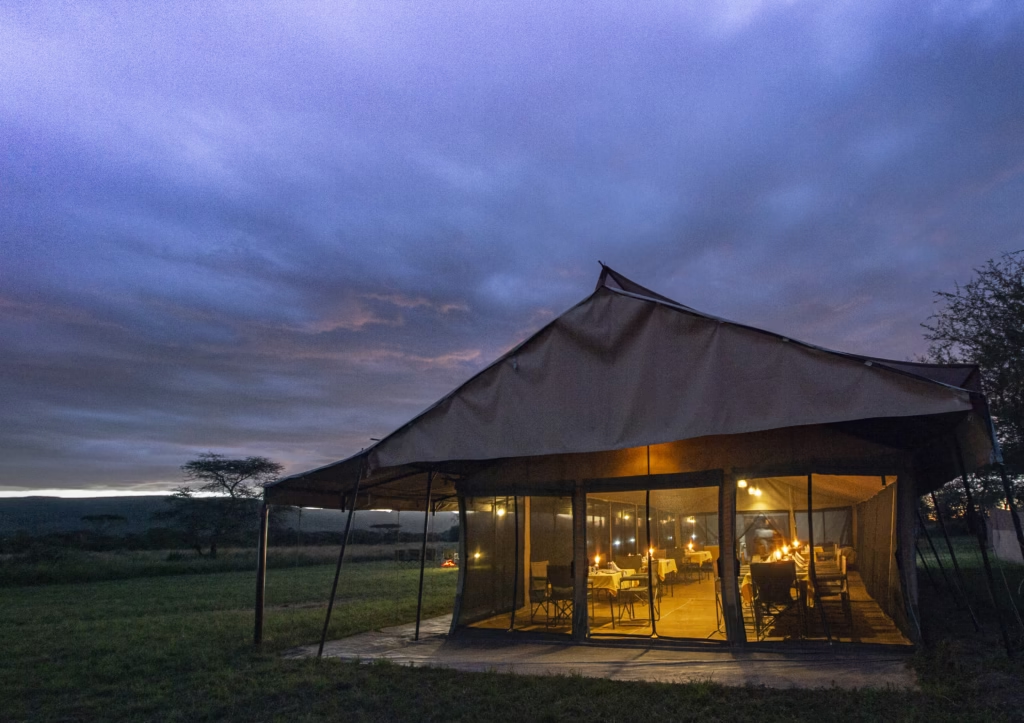
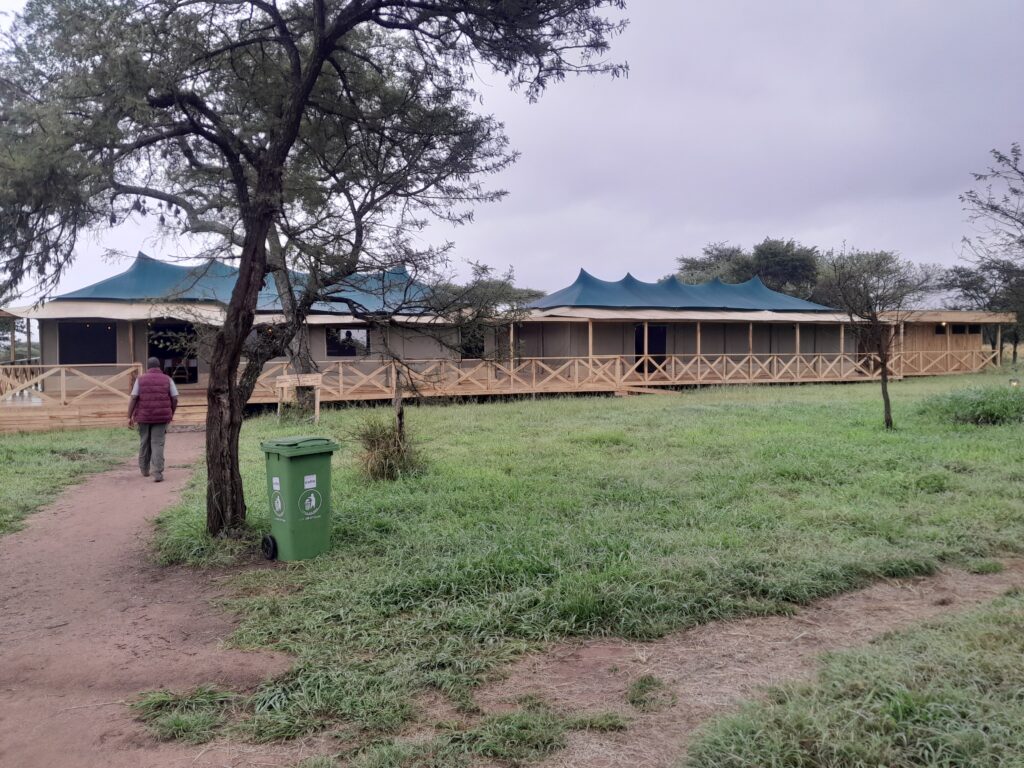
Tented Camp Serengeti
2. What Does “Sleeping in a Tent in the Serengeti” Actually Mean?
For many first-time safari travelers, the phrase sleeping in a tent in the Serengeti creates dramatic mental images — a lone tent in the middle of nowhere, wildlife wandering freely outside, and almost no separation between you and the wilderness. While the Serengeti certainly feels wild, the reality is far more structured, comfortable, and organized than most people expect.
In truth, Serengeti tent accommodation exists on a spectrum, ranging from simple public campsites to fully serviced luxury tented safari camps. Each offers a different level of comfort and atmosphere, but all are designed to let guests experience the landscape more closely than a traditional lodge.
2.1 Public Campsites
Public campsites are the most basic option and are often used by budget safari travelers and overland tour groups. Facilities are usually shared, with communal bathrooms, dining areas, and simple dome tents. You may sleep on a mattress laid directly inside the tent, and amenities are minimal compared to a hotel. These camps feel the most adventurous and closest to classic camping.
2.2 Mobile Tented Camps
Mobile tented camps offer a major step up in comfort while still keeping the authentic safari atmosphere. These camps are often semi-permanent and move seasonally to follow wildlife migration patterns. Guests usually stay in large canvas tents with proper beds, private bathrooms, bucket showers, and dining tents. Despite being “mobile,” many feel surprisingly comfortable and thoughtfully designed.
Not all safari camps offer the same experience. From simple public campsites to elegant canvas suites, the level of comfort can vary significantly. If you are comparing accommodation styles and travel budgets, browse our MID-RANGE SAFARIS collection to see how different Serengeti tented camps are structured.
🦓 PLAN YOUR TANZANIA SAFARI
 Tell us your travel dates, budget, and preferences
 We craft your personalized Tanzania Safari itinerary
 Confirm your booking & get ready for the adventure of a lifetime
2.3 Luxury Tented Safari Camps
Luxury tented camps blur the line between wilderness camping and boutique hotels. Some include king-sized beds, hardwood floors, en-suite bathrooms, hot showers, solar electricity, and even private verandas overlooking the plains. The canvas walls remain, so you still hear the sounds of the bush at night, but the overall experience feels refined rather than rugged.
What surprises many visitors is that they are never simply abandoned in the wild alone. Serengeti camps operate with experienced staff, trained guides, cooks, and often nearby park rangers. Camps follow strict safety procedures and organized layouts designed to minimize risk while preserving the feeling of immersion.
At night, guests are typically escorted between tents and dining areas by staff carrying flashlights. Campfires, designated walkways, vehicle positioning, and carefully managed camp routines all form part of the safety system. Guests are also briefed on clear camp protocols, such as keeping tents zipped and avoiding walking alone after dark.
In many ways, sleeping in a Serengeti tent is closer to staying in a wilderness hotel than true survival camping. You still experience the sounds, smells, and atmosphere of the African bush in full detail — but with structure, guidance, and an entire camp operation quietly working behind the scenes to keep the experience both memorable and safe.
3. Comfort Reality: Is It Comfortable or Rough?
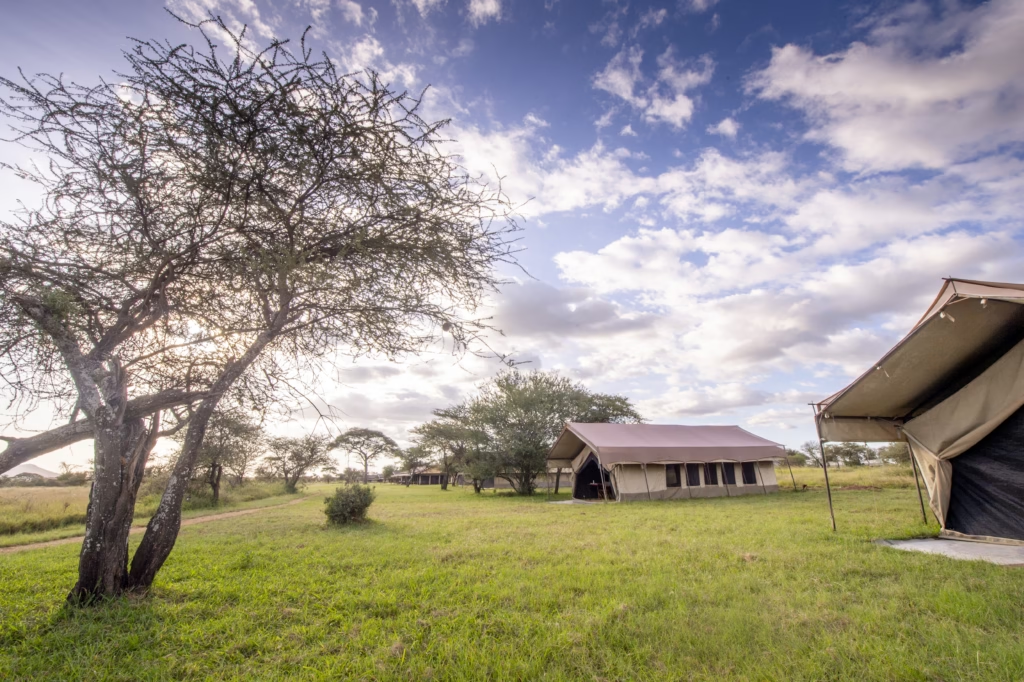
The honest answer? Sleeping in a tent Serengeti camps is both more comfortable and more rugged than most travelers expect. It is not luxury hotel living in the middle of the bush — but neither is it survival camping with a sleeping bag on bare ground. The reality sits somewhere in between, and that balance is exactly what makes the experience so memorable.
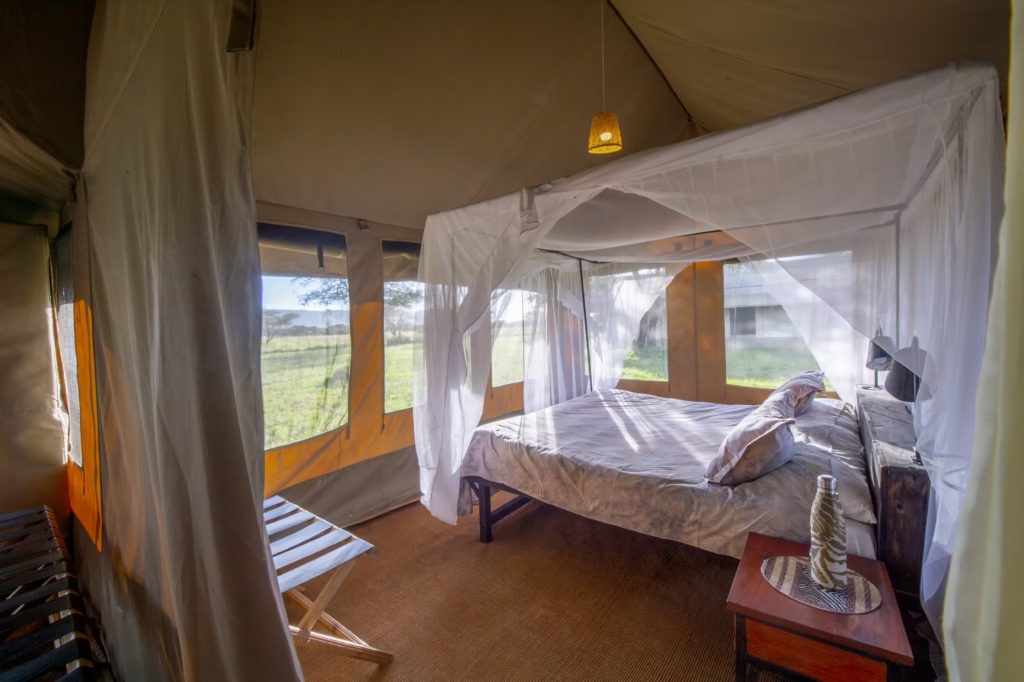
Most Serengeti tented camps use large canvas safari tents designed specifically for wildlife areas. Depending on the camp category, you may sleep on a simple mattress, twin safari beds, or even a king-sized bed under thick blankets and mosquito nets. Some camps have shared bathrooms and communal showers, while others offer private en-suite bathrooms with flushing toilets and hot bucket showers.
Even in relatively remote camps, many travelers are surprised by how much comfort is available. Electricity is commonly provided through solar power or generators, allowing guests to charge phones and cameras during certain hours. Most camps also include bedding, towels, mosquito protection, and warm showers after long game drives. In higher-end camps, you may even find wooden furniture, bedside lamps, and freshly prepared meals served under the stars.
3.1 What Feels Surprisingly Comfortable
One of the biggest surprises for first-time safari guests is how “livable” the camps feel once they settle in. After a day of dusty game drives, a warm shower and a proper bed inside a quiet canvas tent can feel incredibly satisfying. The soft lantern lighting, the cool evening air, and the distant sounds of wildlife create an atmosphere that feels far more intimate than staying inside a standard lodge room.
Many travelers also expect tents to feel flimsy or exposed, but safari tents are usually thick, durable, and thoughtfully constructed. Once zipped inside for the night, the tent often feels secure, cozy, and sheltered from the outside world.
🦓 PLAN YOUR TANZANIA SAFARI
Tell us your travel dates, budget, and preferences We craft your personalized Tanzania Safari itinerary Confirm your booking & get ready for the adventure of a lifetime
3.2 What Feels Less Comfortable Than a Hotel
At the same time, Serengeti camping comes with realities that no honest safari guide should hide. Dust is everywhere, especially during the dry season. Shoes, bags, and clothing can quickly collect a fine layer of red dirt. Temperatures also shift dramatically. Days can feel hot under the African sun, while nights and early mornings may become surprisingly cold.
Most camps do not have air conditioning, and nature does not pause for your comfort. You may hear insects buzzing near the tent walls, feel wind moving through the canvas, or wake briefly when animals pass nearby. If you are used to silent hotel rooms and climate-controlled comfort, the first night can feel unfamiliar.
Shared bathroom facilities in budget camps can also come as a surprise for travelers expecting resort-style luxury. Even in comfortable camps, Wi-Fi may be limited, electricity often runs on schedules, and power outlets are not always available throughout the night.
3.3 Why the “Rawness” Becomes Part of the Experience
Ironically, the very things that make Serengeti tent camping slightly uncomfortable are often the reasons people remember it so vividly. The cool air before sunrise, the smell of dust after a long safari drive, the distant roar of lions beyond the canvas walls — these details create a feeling that no luxury hotel can fully recreate.
That slight sense of exposure makes the safari feel real. You are not separated from the landscape by thick concrete walls or glass windows. Instead, you feel connected to the rhythm of the wilderness itself.
For many travelers, that balance between comfort and rawness becomes the emotional heart of the journey. By the end of the safari, the small inconveniences often fade from memory, while the feeling of sleeping beside one of the world’s greatest wildlife ecosystems stays unforgettable.
Many travelers combine Serengeti camping with a visit to the Ngorongoro Crater for a balanced safari experience. For a detailed breakdown of wildlife, costs, and the best time to visit, read our Ngorongoro Crater Safari: 2026 Travel Guide for Wildlife, Costs & Best Time.
4. What Do You Hear at Night in the Serengeti?
“Your first Serengeti night is rarely silent.”
Long after the safari vehicles have returned to camp and the campfire burns low, the Serengeti begins to sound completely different. The daytime world of camera shutters, guide explanations, and passing vehicles disappears. In its place comes something older, wilder, and impossible to fully describe until you hear it yourself.
At first, the sounds feel unfamiliar. Even unsettling.
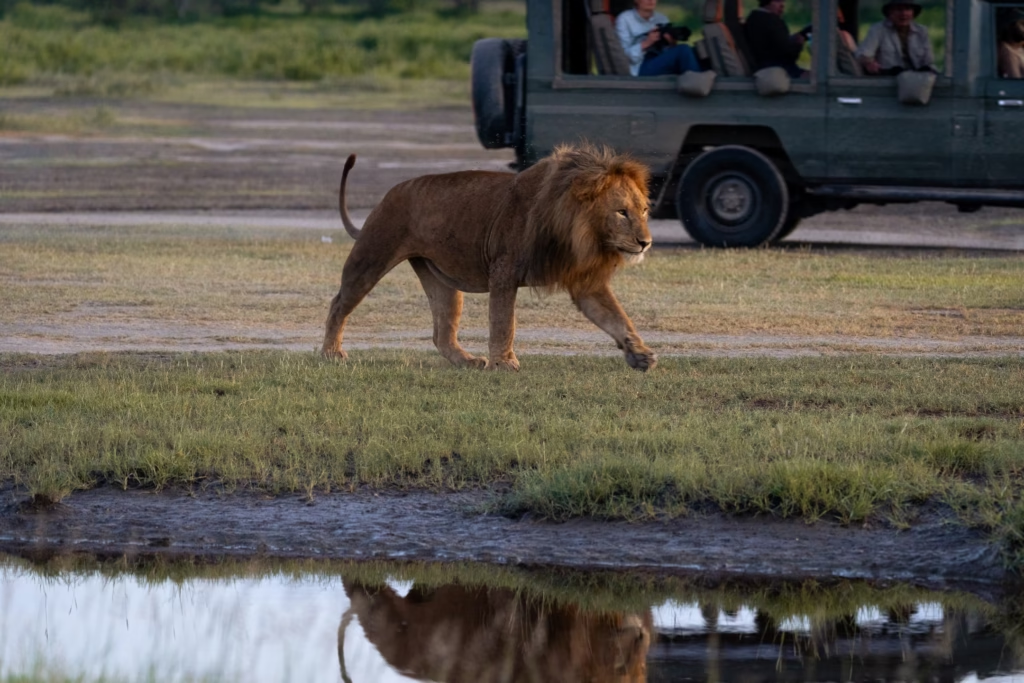
A low lion’s roar rolls across the plains in the distance — deep enough that you feel it before you fully hear it. Somewhere nearby, hyenas begin their eerie whooping calls, bouncing through the darkness like strange laughter. Zebras bark sharply in short bursts. Hippos grunt from rivers or pools beyond camp. Frogs pulse rhythmically near damp ground while insects create a constant electric hum beneath everything else.
Then there is the wind.
The Serengeti wind moves differently at night. It brushes softly against the canvas walls, carrying dust, cool air, and distant animal calls across the open plains. Sometimes it sounds gentle. Sometimes it sounds like something moving just beyond your tent.
For many travelers, this becomes the defining emotional experience of sleeping near wildlife Serengeti camps. Not seeing the animals — hearing them.
🦓 PLAN YOUR TANZANIA SAFARI
Tell us your travel dates, budget, and preferences We craft your personalized Tanzania Safari itinerary Confirm your booking & get ready for the adventure of a lifetime
4.1 The Moment the Serengeti Stops Feeling Like a Documentary
There is a very specific moment almost every first-time safari traveler experiences.
You are lying still inside the tent. The lantern has been switched off. The darkness outside feels enormous. Then suddenly, somewhere in the distance, a lion roars again.
Not from a television speaker.
Not from a nature documentary.
Not from behind zoo barriers.
Real.
Close enough that your brain instantly reminds you that you are sleeping inside one of the most famous wildlife ecosystems on Earth.
For a few seconds, many people freeze completely. Your senses sharpen. You listen harder. Your imagination starts working overtime. Is it nearby? Is it moving closer? How far away is it really?
That mixture of excitement and nervousness is part of what makes the first Serengeti night unforgettable.
If hearing lions roar across the plains at night sounds like your kind of adventure, our 5-Day Romantic Serengeti Safari (Fly-In/Fly-Out Package) offers an immersive tented safari experience with dramatic landscapes, luxury camp stays, and unforgettable evenings beneath the African sky.
4.2 Lions at Night in the Serengeti
The sound most people remember most vividly is the lions.
Lions at night Serengeti camps can sometimes sound shockingly close because sound travels extremely well across the open plains after dark. A roar from several kilometers away may feel like it is right outside the tent walls.
Guides often explain this before guests go to sleep, but the emotional reaction is still powerful the first time it happens. The sound is deep, primal, and impossible to mistake for anything else.
Ironically, many travelers later say the lion roars became strangely comforting. Once the initial fear fades, the sounds transform into part of the rhythm of the night — like wilderness “white noise.”
🦓 PLAN YOUR TANZANIA SAFARI
Tell us your travel dates, budget, and preferences We craft your personalized Tanzania Safari itinerary Confirm your booking & get ready for the adventure of a lifetime
4.3 The Strange Beauty of Serengeti Tent Sounds
The Serengeti is never truly quiet, but the nighttime soundscape changes hour by hour.
Early evening may bring zebra calls, distant wildebeest movement, and insects buzzing around lanterns. Later at night, hyenas become more active, their strange vocalizations echoing across camp. Near wetlands or rivers, hippos grunt loudly while frogs create a constant background chorus.
Even the silence between sounds feels dramatic.
Without city traffic, televisions, or human noise, your ears become incredibly sensitive. Small details stand out — a branch cracking, footsteps outside the tent, canvas shifting in the breeze.
For some guests, Serengeti tent sounds make sleeping difficult during the first night. Every unfamiliar noise triggers curiosity or alertness. But by the second or third night, something changes psychologically. The sounds that initially felt intimidating begin to feel natural, even peaceful.
The roaring lions, distant hyenas, insects, and wind stop sounding threatening and start sounding like proof that you are fully immersed in the landscape.
4.4 Why People Remember the Sounds More Than the Sightings
Years after their safari ends, many travelers struggle to remember every individual game drive. But they vividly remember lying awake in the darkness, listening to the Serengeti breathe around them.
That is the emotional power of sleeping in a tent there.
During the day, you watch wildlife.
At night, you feel surrounded by it.
And for many people, that feeling becomes the most unforgettable part of the entire safari experience.
5. Is Sleeping in a Tent in the Serengeti Safe?
For most first-time safari travelers, this is the biggest question of all.
You can prepare yourself for dust, cold mornings, or animal sounds at night — but sleeping behind canvas walls in the middle of a wildlife reserve naturally raises deeper concerns. People imagine predators wandering through camp, animals attacking tents, or dangerous encounters happening in the darkness.
The reality is much calmer and far more controlled than most people expect.
Sleeping in a tent in the Serengeti is best understood as a controlled wilderness experience, not dangerous chaos. The environment is undeniably wild, but safari camps operate with strict procedures, experienced staff, and carefully managed systems designed to keep guests safe while still allowing them to feel immersed in nature.
5.1 Why Serengeti Tented Camps Are Safer Than They Look
One of the most important things to understand is that wildlife does not usually see safari tents the way humans do.
To animals, a zipped safari tent appears as a large, unfamiliar object rather than a fragile fabric shelter containing people. Most wildlife has little interest in approaching occupied tents unless food or unusual behavior attracts attention. Animals in the Serengeti are also highly accustomed to safari vehicles, camps, and predictable human activity.
That does not mean the risks are imaginary. You are still inside an active wildlife ecosystem where lions, elephants, buffalo, hyenas, and other animals move freely. But camps are specifically designed to minimize unnecessary risk through structure and routine.
Most camps have:
- Experienced guides and camp staff nearby throughout the night
- Organized camp layouts with designated walking paths
- Safety briefings for guests upon arrival
- Rangers or armed guards in some areas
- Escort systems after dark
- Carefully selected camp locations based on wildlife movement patterns
In many camps, staff remain awake overnight specifically to monitor guest movement and respond if wildlife enters the surrounding area.
For travelers wanting a shorter but well-organized safari experience with professional guides and carefully selected camps, explore our 2-Day Fly-In Safari: Tarangire & Ngorongoro Crater (Midrange Lodge Stay) — ideal for experiencing Tanzania safely and comfortably within a limited timeframe.
🦓 PLAN YOUR TANZANIA SAFARI
Tell us your travel dates, budget, and preferences We craft your personalized Tanzania Safari itinerary Confirm your booking & get ready for the adventure of a lifetime
5.2 The Rules Matter — and They Are Taken Seriously
The Serengeti is safe largely because safari camps operate on discipline and routine. Guests are expected to follow a few simple but extremely important rules.
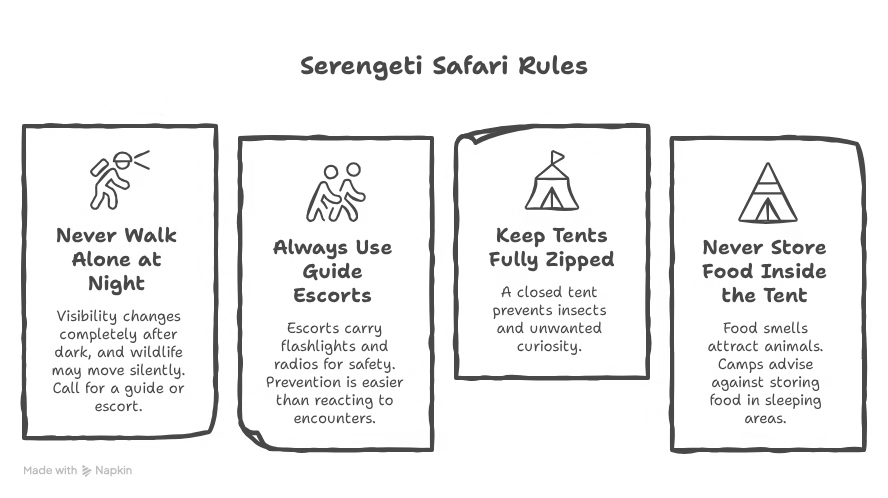
These rules may sound strict initially, but most guests quickly adapt to them. In practice, they become part of the safari rhythm rather than an inconvenience.
5.2 How Common Are Wildlife Attacks on Tourists?
Despite the fears many travelers have before arrival, serious wildlife incidents involving safari guests are extremely rare.
According to the research source referenced for this article, there have been no recorded tourist fatalities from wildlife attacks inside Serengeti National Park in the last 25 years. While isolated incidents can occasionally happen anywhere in Africa’s wilderness areas, the statistical reality is that organized safari tourism in the Serengeti has an exceptionally strong safety record.
This is largely because safari tourism in Tanzania is highly structured. Camps, guides, and park authorities understand animal behavior deeply and operate within systems refined over decades of experience.
In other words, the Serengeti feels dangerous emotionally far more often than it actually is in practice.
5.3 The Difference Between Feeling Exposed and Being Unsafe
What unsettles many first-time visitors is not actual danger — it is awareness.
In a hotel, thick walls separate you from the outside world. In a Serengeti tent, you remain conscious of the environment around you. You hear lions roaring at night. You hear footsteps outside the canvas. You hear hyenas, zebras, wind, insects, and movement in the darkness.
That sensory exposure can feel psychologically intense at first.
But over time, most travelers begin to understand that the camp itself operates with invisible layers of protection and experience behind the scenes. The staff know the environment intimately. The procedures are practiced daily. The wildlife behaves predictably far more often than unpredictably.
By the second or third night, many guests stop interpreting every sound as danger and begin experiencing it as part of the atmosphere itself.
The fear slowly transforms into respect — and then into fascination.
That balance is what makes sleeping in the Serengeti feel adventurous without becoming reckless.
6. Real Guest Reactions: What People Say After Their First Night
Ask ten travelers what their first night sleeping in the Serengeti felt like, and you will probably hear ten different emotional reactions. Some describe it as magical from the very first moment. Others admit they barely slept at all. But almost everyone agrees on one thing: it feels unlike any ordinary travel experience.
That first night inside a canvas tent tends to leave a stronger emotional impression than people expect. The sounds are real. The darkness feels bigger. The air smells different. Even experienced travelers often realize they have never truly spent a night this close to nature before.
Interestingly, guest reactions usually fall into two very different categories.
6.1 Guests Who Absolutely Loved It
For many travelers, sleeping in the Serengeti becomes the emotional high point of the entire safari.
These are the guests who step outside their tents for a few minutes before bed, look upward, and suddenly realize the sky above them is overflowing with stars. With almost no light pollution in many parts of the Serengeti, the Milky Way often stretches clearly across the darkness in astonishing detail. Some people describe it as the first time they truly understood how small and quiet the world can feel.
Then the nighttime sounds begin.
A distant lion roar.
Hyenas calling somewhere beyond camp.
Wind brushing through the grasslands.
Insects humming beneath everything else.
For guests who embrace the experience, these sounds create an almost cinematic feeling — as though they have stepped inside a wildlife documentary rather than simply watching one on television.
Many guests who experience tented camping in the Serengeti later choose longer itineraries to explore even more of Tanzania’s wilderness. If you are inspired to experience multiple ecosystems in one journey, our A Legendary 8-Day Tanzania Safari Experience combines immersive tented stays with classic Big Five safari adventures.
Many describe the atmosphere as deeply immersive and emotionally powerful. Unlike staying in a lodge with concrete walls and glass windows, sleeping in a tent creates a constant awareness of the wilderness outside. You feel connected to the landscape rather than separated from it.
Some travelers even say the experience changes the pace of their thinking. Without traffic, phones, city noise, or urban distractions, the Serengeti night feels slower and more primal. Guests often speak about listening more carefully, noticing small details, and feeling unusually present in the moment.
Others describe the experience in more emotional terms:
- “It felt like Africa the way I always imagined it.”
- “I’ve never seen stars like that before.”
- “Hearing lions at night made the safari feel real.”
- “It felt like being inside a nature documentary.”
For these guests, the slight discomforts become part of the beauty. The cold morning air, the canvas walls, and even the distant animal noises combine into something that feels authentic rather than polished.
🦓 PLAN YOUR TANZANIA SAFARI
Tell us your travel dates, budget, and preferences We craft your personalized Tanzania Safari itinerary Confirm your booking & get ready for the adventure of a lifetime
6.2 Guests Who Felt Nervous or Uncomfortable
Not everyone relaxes immediately during their first Serengeti night — and that reaction is completely normal.
Many travelers admit that the first few hours after lights-out can feel mentally intense. Human instincts are not entirely designed for sleeping while hearing predators somewhere in the darkness, even when you know the camp is safe.
Some guests struggle to sleep at first because every unfamiliar sound captures their attention. A branch cracking outside the tent may suddenly feel enormous. Hyena calls can sound eerie and unsettling. Even zebras grazing near camp may create noises that seem louder in the darkness than they really are.
Temperature surprises are also common. Travelers often expect Africa to feel constantly hot, but Serengeti nights — especially during cooler seasons — can become surprisingly cold before sunrise. Climbing out of a warm bed for an early morning game drive is not always easy.
Dust is another reality that catches some visitors off guard. During dry months, fine red dust settles onto shoes, bags, camera equipment, and clothing. Bugs and insects, while usually harmless, are also part of the environment. Guests used to sealed hotel rooms may initially find this frustrating or uncomfortable.
And then there is the psychological adjustment.
In cities and hotels, silence often feels safe. In the Serengeti, silence barely exists. The wilderness continues moving all night long, and some travelers need time to adapt emotionally to that awareness.
Yet something interesting happens by the second or third night.
The fear softens.
The sounds that initially felt alarming become familiar. Guests stop waking up at every distant animal call. Many begin sleeping more deeply than they expected, soothed by the rhythm of the wilderness around them.
6.3 Why Even Nervous Guests Often Want to Do It Again
One of the most surprising patterns among safari travelers is that even guests who felt nervous, cold, dusty, or sleep-deprived during the first night often say they would absolutely repeat the experience.
Why?
Because the emotional impact outweighs the discomfort.
Long after travelers forget the exact meals, the drive times, or even some of the wildlife sightings, they remember lying awake in a canvas tent listening to the Serengeti at night. They remember the stars above camp. They remember the feeling of vulnerability mixed with wonder. They remember realizing how alive the landscape felt after dark.
It becomes more than accommodation.
It becomes memory.
As many travelers eventually discover, sleeping in the Serengeti is not memorable because it is perfectly comfortable. It is memorable because it feels real.
“It’s the kind of night that stays with you long after the safari ends.”
7. The Honest Truth: Who Will Love It — and Who Might Not
Sleeping in a tent in the Serengeti is one of those travel experiences that people rarely feel neutral about. For some travelers, it becomes the highlight of an entire lifetime of travel. For others, it can feel more intense, exposed, or uncomfortable than expected.
The key is understanding what the experience actually offers before you arrive.
At its best, Serengeti tent camping is not about luxury in the traditional sense. It is about proximity — to wildlife, to silence, to darkness, to nature itself. The people who enjoy it most are usually the ones who value emotional experience over perfect comfort.
7.1 Who Will Absolutely Love It
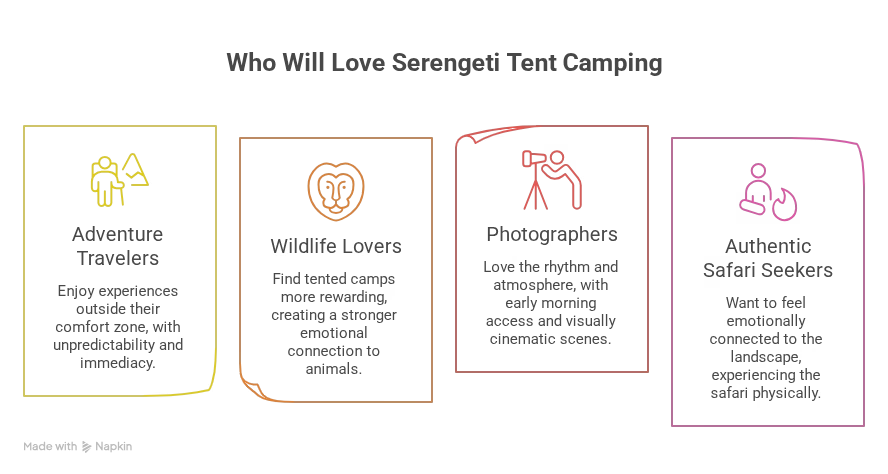
7.2 Who Might Struggle With It
- Travelers Expecting Luxury Hotel Silence
Even high-end luxury tented camps are still located inside active wildlife environments. That means noise is part of the experience. Canvas walls do not block sound the way concrete hotel walls do.
If someone expects silent, climate-controlled hotel conditions, the Serengeti can feel surprisingly raw at night.
Animals move. Wind blows. Insects hum. Hyenas call across the plains. The wilderness does not fully “switch off” while you sleep.
- Very Light Sleepers
People who wake easily from unfamiliar sounds may find the first night difficult. The Serengeti soundscape is constant and layered, especially in camps located close to migration routes or rivers.
Some guests adapt quickly and begin sleeping deeply after the first night. Others remain sensitive to every distant roar or movement outside the tent.
Bringing earplugs can genuinely help for travelers concerned about sleep quality.
- Guests Uncomfortable With Wilderness Sounds
Perhaps the most important factor is psychological comfort.
Some travelers love the feeling of being close to nature. Others find it stressful. Even though the camps are safe and professionally managed, the awareness of wildlife outside can feel emotionally intense for people who prefer highly controlled environments.
If hearing lions at night sounds thrilling, you will probably love the experience. If it sounds deeply unsettling, a safari lodge may feel more comfortable.
🦓 PLAN YOUR TANZANIA SAFARI
Tell us your travel dates, budget, and preferences We craft your personalized Tanzania Safari itinerary Confirm your booking & get ready for the adventure of a lifetime
7.3 It’s Not Luxury-City Comfort — It’s Emotional Immersion
The biggest mistake travelers make is expecting Serengeti tent camping to feel like a five-star city hotel placed in the wilderness.
That is not what makes it special.
The value of the experience comes from immersion, not perfection. The canvas walls, cool night air, wildlife sounds, dust, lantern light, and open skies all combine into something emotionally memorable precisely because it feels real.
You trade a degree of polished comfort for something much harder to replicate: the feeling of sleeping inside the ecosystem itself.
For the right traveler, that trade feels more than worth it.
8. Final Verdict: Is Sleeping in a Tent in the Serengeti Worth It?
Yes — for most travelers, sleeping in a tent in the Serengeti is absolutely worth it, as long as you arrive with honest expectations. It is more intense than staying in a safari lodge, less polished than a luxury hotel, and occasionally uncomfortable in ways modern travelers are no longer used to. You may hear lions in the middle of the night, wake up to cold morning air, or find dust covering your boots before sunrise. But it is also far safer than most people imagine, thanks to experienced guides, organized camps, and strict safety procedures that quietly operate behind the scenes throughout your stay. More importantly, it delivers something many luxury accommodations cannot: a genuine emotional connection to the wilderness around you.
Long after the safari ends, most people do not remember the thread count of the sheets or whether the Wi-Fi worked perfectly. They remember the canvas walls glowing softly under lantern light, the distant roar of a lion somewhere beyond camp, the cool air drifting through the tent before dawn, and the first golden sunlight spreading slowly across the Serengeti plains. You don’t just visit the Serengeti when you sleep in a tent there—you feel part of it.
🦓 PLAN YOUR TANZANIA SAFARI
Tell us your travel dates, budget, and preferences We craft your personalized Tanzania Safari itinerary Confirm your booking & get ready for the adventure of a lifetime
Frequently Asked Questions About Sleeping in a Tent in the Serengeti
1. Is sleeping in a tent in the Serengeti safe?
Yes — Serengeti tented camps are generally very safe when guests follow camp rules. Camps operate with experienced guides, organized layouts, and strict safety procedures. Wildlife attacks on tourists are extremely rare, and guests are always advised to use escorts at night and keep tents securely zipped.
2. Can lions enter safari tents in the Serengeti?
Lions very rarely approach occupied tents, and they generally ignore safari camps unless food attracts attention. Safari tents are designed specifically for wildlife areas, and camps follow strict protocols to minimize risk. While you may hear lions at night, actual dangerous encounters are extremely uncommon.
3. What does sleeping in a tent in the Serengeti actually feel like?
The experience feels immersive, raw, and surprisingly emotional. You hear wildlife at night, feel cool air moving through the camp, and remain constantly aware of the wilderness around you. It is less polished than a hotel stay, but far more memorable for many travelers.
4. Are Serengeti tent camps comfortable?
Most Serengeti tented camps are more comfortable than people expect. Many include proper beds, bedding, electricity, hot showers, mosquito nets, and private bathrooms. However, they are still wilderness accommodations, so guests should expect dust, temperature changes, and occasional insects.
5. What animals can you hear at night in the Serengeti?
Common nighttime sounds include lions roaring, hyenas whooping, zebras calling, hippos grunting, frogs, insects, and wind moving across the plains. For many travelers, the Serengeti night sounds become the most unforgettable part of the safari experience.
6. Is it cold at night in the Serengeti?
Yes, temperatures can drop significantly during the night and early morning, especially between June and October. Even after hot daytime temperatures, many travelers are surprised by how cold the Serengeti feels before sunrise. Warm layers are strongly recommended.
7. What should I pack for sleeping in a Serengeti tent camp?
Useful items include:
- Warm clothing for early mornings and evenings
- A flashlight or headlamp
- Comfortable closed shoes
- Earplugs for light sleepers
- A power bank
- Insect repellent
- A light jacket or fleece
Packing for both warm days and cool nights is important.
8. Is sleeping in a tent better than staying in a safari lodge?
That depends on the type of experience you want. Safari lodges usually offer more comfort, quieter rooms, and hotel-style amenities. Tented camps, however, provide a more immersive and authentic connection to the Serengeti environment. Many travelers say tented camps feel more adventurous and emotionally memorable.