
Ngorongoro Crater Safari: 2026 Travel Guide for Wildlife, Costs & Best Time.
Table of Contents
ToggleWhy a Ngorongoro Crater Safari Still Matters in 2026.
A Ngorongoro Crater safari remains one of the most iconic wildlife experiences in Africa — and in 2026, it still delivers something few safari destinations can match: an astonishing concentration of animals inside a single, dramatic volcanic landscape. Located in northern Tanzania, the crater has built a global reputation as one of the easiest places to see the Big Five in a relatively short amount of time, making it a cornerstone of the classic East African safari circuit.
What makes Ngorongoro extraordinary is not just the wildlife itself, but the density of it. Within the crater floor, lions patrol open grasslands, massive buffalo herds graze beside zebra and wildebeest, hippos crowd freshwater pools, and endangered black rhinos still roam one of the safest strongholds left in Tanzania. For many travelers, it is the closest thing Africa has to a “one-day safari jackpot.”
But the reality of a Ngorongoro Crater safari in 2026 is more nuanced than the glossy brochures suggest.
Yes, the scenery is breathtaking. The crater walls rise dramatically around the caldera like a natural amphitheater, while misty forests, soda lakes, and wide golden plains create some of the most photogenic safari landscapes on the continent. Yet Ngorongoro is also one of Tanzania’s busiest safari destinations. During peak season, multiple vehicles may gather around a single lion sighting, and the overall experience can feel less remote than parks like Serengeti or Ruaha.
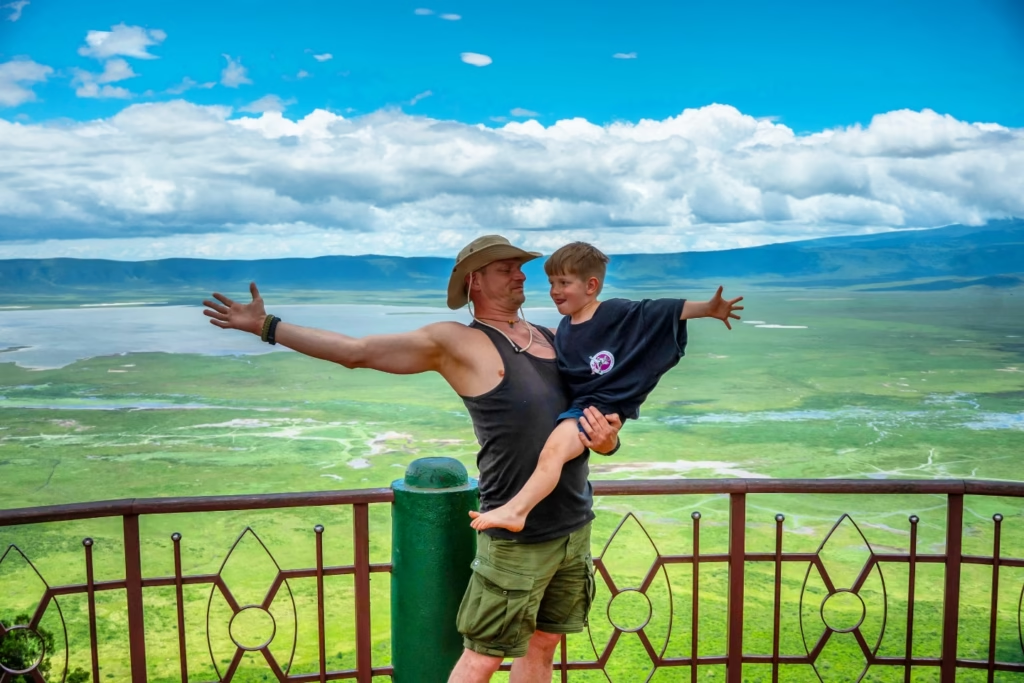
Ngorongoro Crater View
It is also not a cheap safari. Conservation fees, crater access charges, and accommodation costs make Ngorongoro one of the more expensive stops on the Northern Safari Circuit. That said, many travelers still consider it worth the investment because of its accessibility, reliable wildlife viewing, and realistic chance of spotting rare species like the black rhino.
This safari is especially well suited for first-time safari travelers who want strong wildlife sightings in a short period, photographers searching for dramatic scenery and predator action, luxury travelers seeking high-end crater rim lodges, and wildlife-focused visitors who value animal density over remote wilderness solitude.
Ngorongoro may not be Africa’s quietest safari destination anymore, but for sheer wildlife concentration and visual drama, it still earns its place among the continent’s greatest safari experiences.
🦓 PLAN YOUR TANZANIA SAFARI
Add Ngorongoro Crater to your Northern Tanzania safari route before finalizing your itinerary.
 Tell us your travel dates, budget, and preferences
 We craft your personalized 8-day Great Migration itinerary
 Confirm your booking & get ready for the adventure of a lifetime
1. What Makes a Ngorongoro Crater Safari Unique?
A Ngorongoro Crater safari stands apart from almost every other safari experience in Africa because of one defining fact: nowhere else combines such high wildlife density with such a compact and visually dramatic setting. While many African parks require long game drives and a bit of luck, Ngorongoro compresses an astonishing amount of wildlife into a single natural enclosure, making it one of the easiest places on the continent to experience the Big Five.
At the center of this experience is the crater itself — the world’s largest intact volcanic caldera. Formed when a massive volcano collapsed in on itself millions of years ago, the crater now stretches roughly 260 square kilometers across and plunges about 600 meters deep. The surrounding walls create a vast natural amphitheater, trapping water, fertile soil, and wildlife inside what many safari guides describe as a “natural wildlife bowl.”
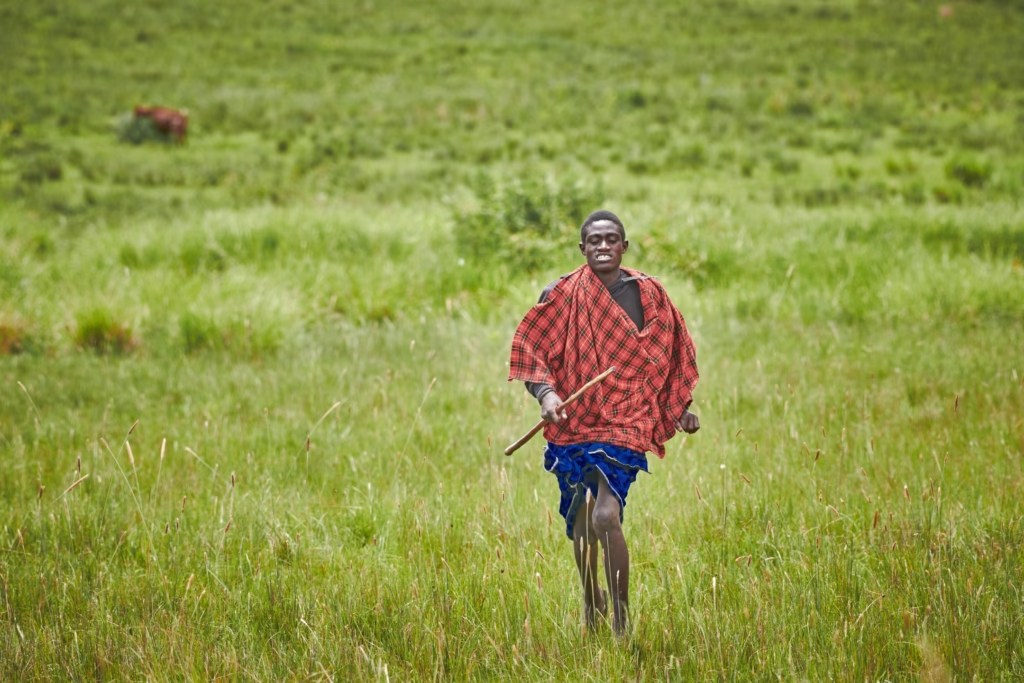
Maasai in the Ngorongoro Area
This unique geography is a major reason animals remain in the crater year-round. Permanent freshwater springs, swamps, forests, and open grazing plains provide everything wildlife needs within a relatively small area. Unlike migratory ecosystems where animals move seasonally over huge distances, many species in Ngorongoro stay within or around the crater for most of the year. That consistency gives visitors a much higher chance of seeing large mammals in a short amount of time.
Ngorongoro also sits in a prime position within Tanzania’s famous Northern Safari Circuit, alongside Serengeti National Park, Tarangire National Park, and Lake Manyara. Because it lies only a few hours from Arusha, it is one of the most accessible major safari destinations in East Africa. Many travelers visit the crater as part of a longer Northern Circuit itinerary, though it is also popular as a standalone day trip.
What makes Ngorongoro especially different from nearby parks is the style of safari it offers.
Serengeti is vast, open, and constantly changing, known for long-distance migration and a more classic wilderness feel. Tarangire is quieter, more spread out, and famous for giant elephant herds and baobab landscapes. Ngorongoro, by contrast, is concentrated. You are not covering enormous distances searching for wildlife; the wildlife is already there, often visible within minutes of descending to the crater floor.
That density is exactly why Ngorongoro has earned its reputation as one of Africa’s easiest Big Five safari destinations. Lions, buffalo, elephants, and hyenas are commonly seen during a single game drive, while the crater remains one of the few places in Tanzania where travelers have a realistic chance of spotting the critically endangered black rhino. Leopards are still elusive, but compared to many other parks, your odds here are relatively strong.
Of course, this concentration comes with trade-offs. Because wildlife sightings are predictable, vehicles often gather around major predator activity, especially during peak season. The experience can feel busy at times, particularly compared to the remote atmosphere of Serengeti. Still, for travelers who value reliable wildlife encounters, dramatic scenery, and efficient safari viewing, Ngorongoro remains one of the most rewarding safari destinations in Africa.
If seeing lions, rhinos, and elephants in a single day is high on your safari bucket list, Ngorongoro remains one of Tanzania’s strongest wildlife destinations.
🦓 PLAN YOUR TANZANIA SAFARI
Tell us your travel dates, budget, and preferences We craft your personalized 8-day Great Migration itinerary Confirm your booking & get ready for the adventure of a lifetime
2. Wildlife in Ngorongoro Crater
2.1 The Big Five Experience
One of the biggest reasons travelers choose a Ngorongoro Crater safari is the realistic possibility of seeing the Big Five within a single day. Few safari destinations in Africa offer this level of wildlife concentration in such a compact area. The crater floor supports a stable population of predators, grazers, and endangered species year-round, creating one of the most reliable wildlife-viewing experiences in Tanzania.
That said, Ngorongoro is not a private wilderness fantasy where animals magically appear without effort. Wildlife sightings are often excellent, but they are shared with many other vehicles, especially during peak safari months. The experience is spectacular — just not always solitary.
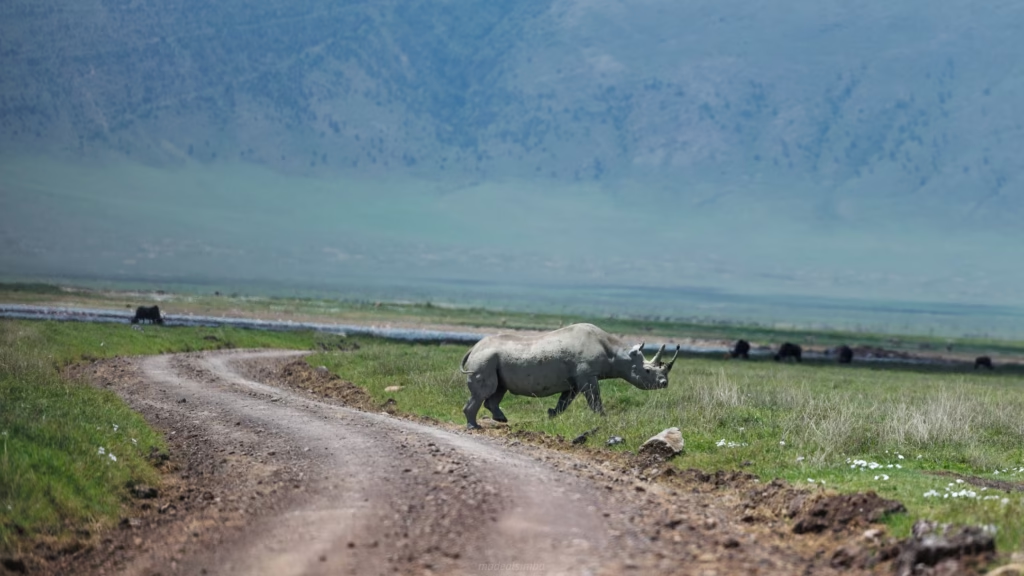
Rhino In the Ngorongoro Crater
Lions
Ngorongoro Crater is particularly famous for its lion population. Several resident prides live permanently on the crater floor, taking advantage of the abundant prey and open grasslands. Because the terrain is relatively unobstructed, lions are often easier to spot here than in more heavily wooded parks.
Visitors commonly see lions resting beside safari tracks, stalking wildebeest across the plains, or gathering near buffalo herds during cooler hours of the day. Early morning game drives often provide the best chance to witness active hunting behavior before the heat slows everything down.
The only downside? Lion sightings can attract clusters of safari vehicles, particularly when cubs or hunts are involved.
Elephants
The elephants of Ngorongoro are slightly different from the giant herds commonly seen in Tarangire. Here, sightings are usually centered around older bull elephants with impressive tusks rather than massive family groups.
These bulls often move through the Lerai Forest and nearby woodland areas along the crater floor, feeding quietly among acacia trees and marshes. Seeing a huge tusker emerge from the misty forest edge is one of the crater’s most memorable safari moments.
Because elephant numbers inside the crater are smaller compared to other parks, sightings feel more selective and often more dramatic.
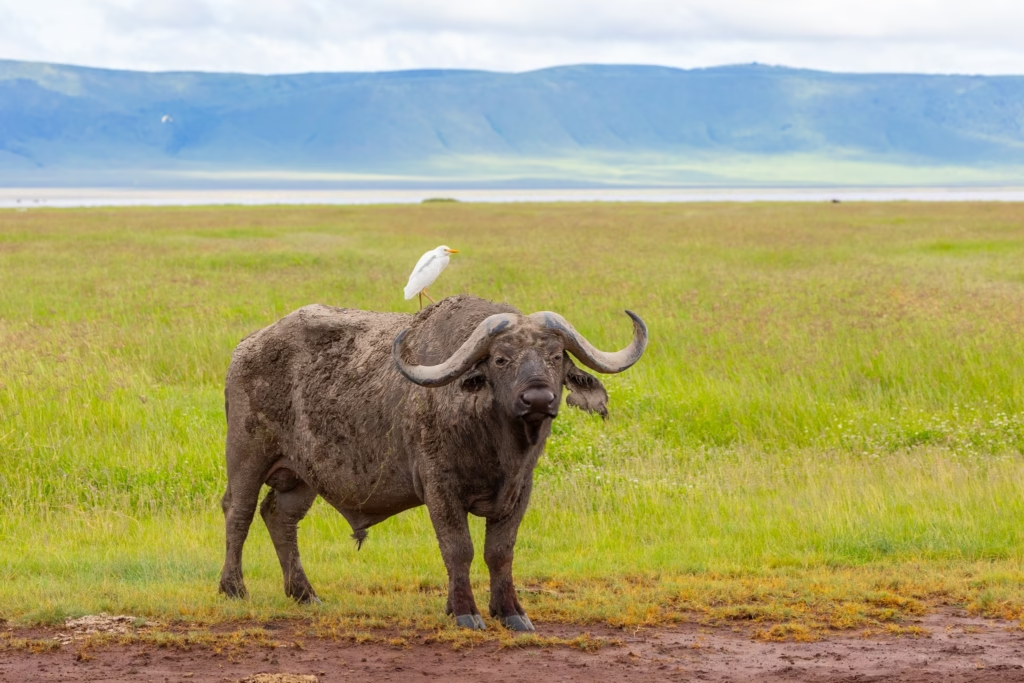
Buffalo in the Ngorongoro Crater
Buffalo
Buffalo are among the most common large animals in Ngorongoro Crater. Large herds roam the open plains throughout the year, frequently grazing alongside zebra and wildebeest.
Their constant presence also supports the crater’s predator population. Lions regularly monitor buffalo herds, creating some of Ngorongoro’s most intense wildlife interactions. While buffalo may not receive the same attention as lions or rhinos, they are a critical part of the crater ecosystem and one of the easiest Big Five animals to see during a safari.
Leopards
Leopards are present in Ngorongoro, but unlike lions, they remain elusive and unpredictable. Most sightings occur near forested areas around the crater rim or in denser woodland sections where these cats can stay hidden during the day.
Spotting a leopard here usually requires patience, timing, and a skilled guide who knows where individuals were last seen. Some travelers are lucky enough to encounter one draped across a tree branch or moving silently through the early morning shadows, while others may spend an entire day without a glimpse.
This unpredictability is part of what keeps leopard sightings exciting — and why seeing all five members of the Big Five in one day is never guaranteed.
Black Rhinos
For many travelers, the black rhino is the highlight of a Ngorongoro Crater safari. Critically endangered and heavily protected, black rhinos are difficult to see in many parts of Africa, but Ngorongoro remains one of the most reliable places in Tanzania to encounter them.
Most sightings happen at a distance across the open plains, where rhinos graze cautiously under close conservation monitoring. While you may not always get extremely close views, simply spotting one of these rare animals in the wild is a major safari achievement.
The possibility of seeing black rhinos is one of the key reasons Ngorongoro has earned its reputation as one of Africa’s premier Big Five safari destinations.
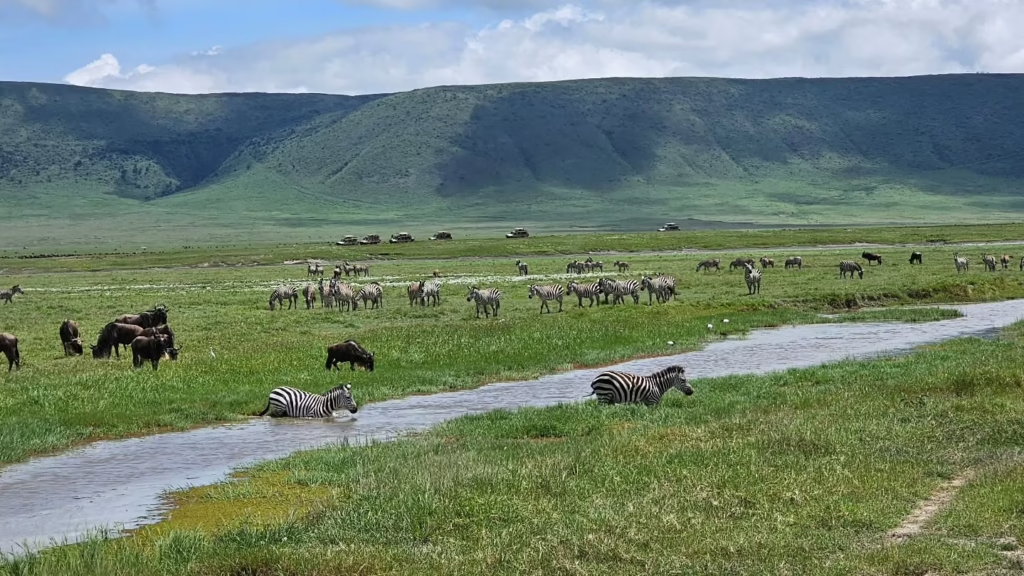
Ngorongoro Crater
2.2 Other Common Animals
While the Big Five may dominate the headlines, much of the real magic of a Ngorongoro Crater safari comes from the sheer abundance of other wildlife spread across the crater floor. The landscape is constantly moving — herds shifting across the plains, predators circling in the distance, and smaller animals filling every corner of the ecosystem with life.
Bring binoculars and keep your camera ready — some of Ngorongoro’s most memorable safari moments happen between the famous Big Five sightings.
🦓 PLAN YOUR TANZANIA SAFARI
Tell us your travel dates, budget, and preferences We craft your personalized 8-day Great Migration itinerary Confirm your booking & get ready for the adventure of a lifetime
Zebra
Zebras are among the most visible animals inside the crater and are usually seen in large groups grazing across the open grasslands. Their black-and-white patterns create striking photographic scenes against the green plains, especially during the rainy season when the crater looks especially lush.
Zebras also play an important ecological role, often feeding alongside wildebeest and buffalo in mixed herds that attract nearby predators.
Wildebeest
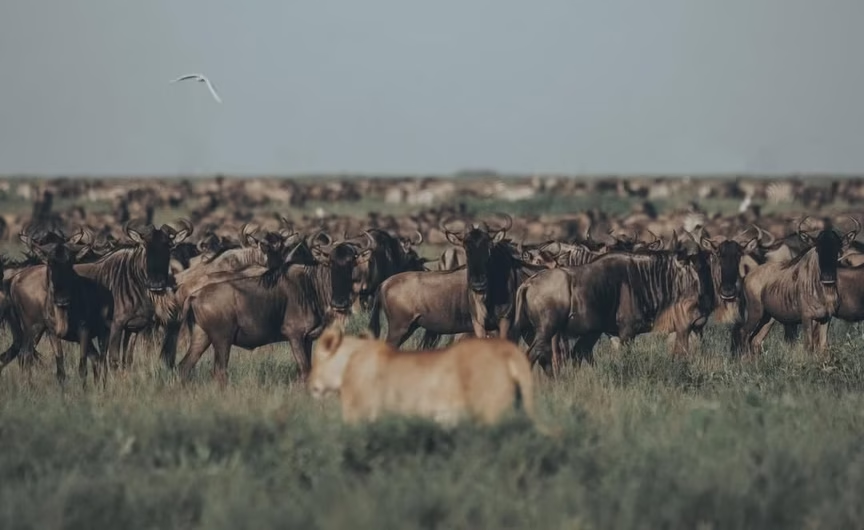
Thousands of wildebeest remain in the crater year-round, unlike the migratory herds of Serengeti that travel vast distances during the Great Migration. Their constant presence provides a stable food source for predators such as lions and hyenas, helping support Ngorongoro’s unusually dense carnivore population.
During calving periods, the crater becomes even more dramatic, with newborn calves drawing intense predator activity across the plains.
Hyenas
Spotted hyenas are extremely common in Ngorongoro and are often easier to see than lions. Far from being simple scavengers, these animals are highly efficient hunters and play a major role in the crater ecosystem.
Visitors regularly spot hyenas trotting between herds, resting near roadsides, or competing aggressively with lions over carcasses. Their eerie vocalizations and complex social behavior add another layer of drama to safari drives, especially in the early morning hours.
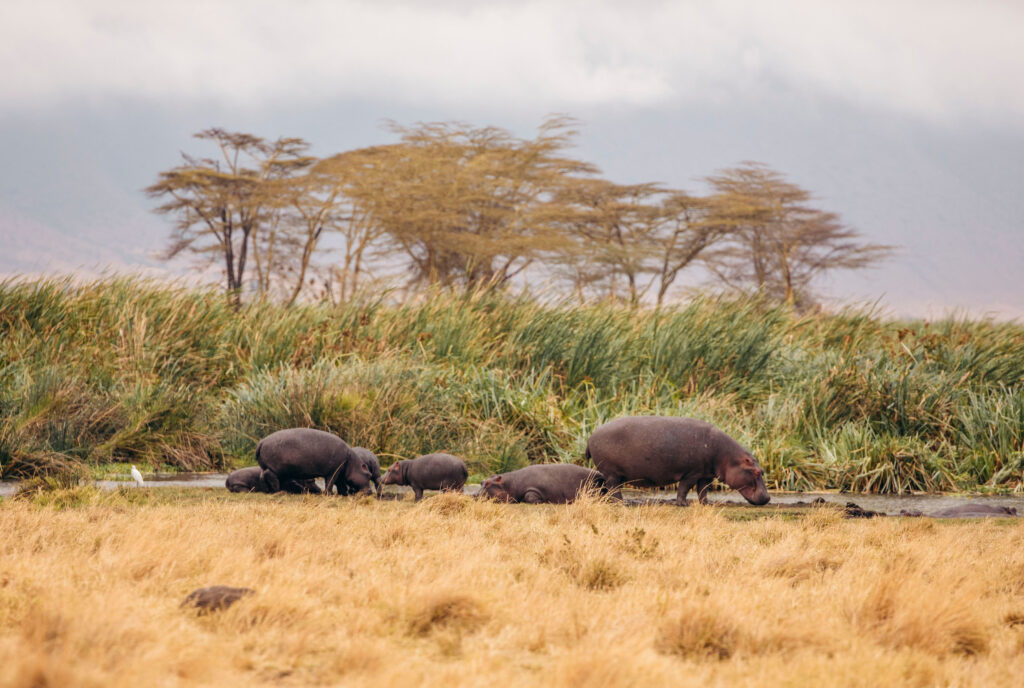
Hippo Poop Ngorongoro Crater
Hippos
Ngorongoro’s swamps and freshwater pools are home to large populations of hippos, particularly around the Ngoitokitok Springs and nearby wetlands. During the heat of the day, hippos spend hours submerged in muddy water, often packed tightly together in surprisingly crowded pools.
Late afternoon is usually the best time to see them becoming more active, lifting themselves slowly from the water to graze nearby grasslands.
Gazelles
Both Thomson’s gazelles and Grant’s gazelles are common throughout the crater. These elegant antelope species move gracefully across the plains, often in open areas where predators can easily spot them.
Thomson’s gazelles are smaller, faster, and more numerous, while Grant’s gazelles are larger and tend to appear in smaller groups. Their constant alertness adds tension to the landscape, particularly when predators are nearby.
Warthogs
Warthogs bring a slightly comic energy to the crater floor. Frequently seen kneeling awkwardly while grazing or sprinting across the plains with tails held upright, they are one of the more entertaining animals to watch during a safari.
Despite their appearance, warthogs are remarkably tough and adaptable, surviving alongside some of Africa’s top predators in open terrain with little natural cover.
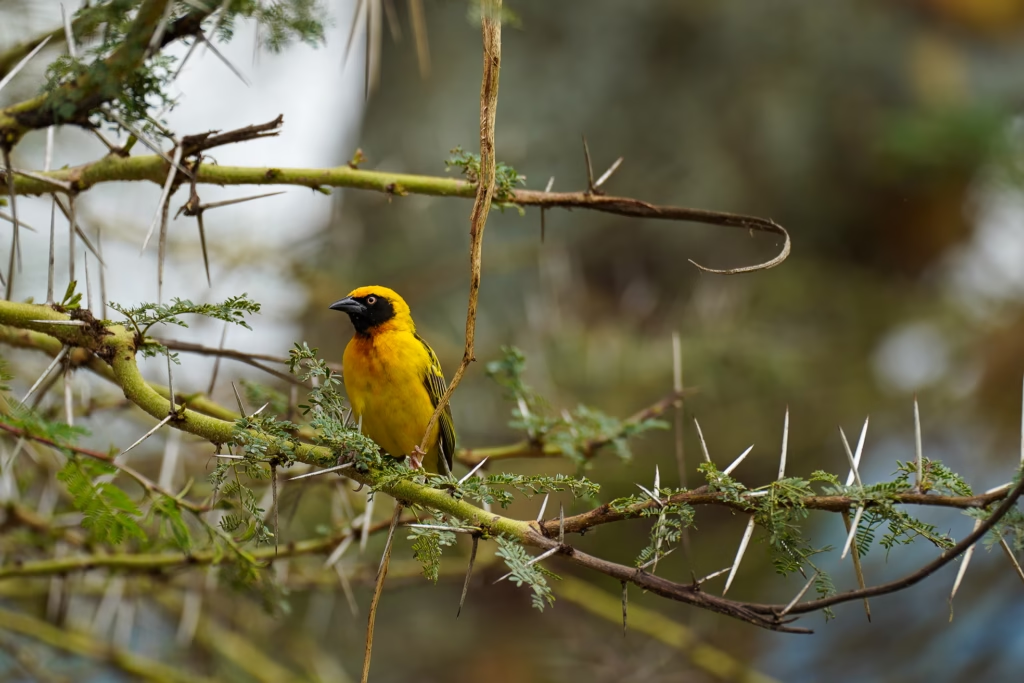
2.3 Birdlife Around Lake Magadi
Ngorongoro Crater is not only a mammal safari destination — it is also one of Tanzania’s underrated birdwatching locations. More than 500 bird species have been recorded in the wider conservation area, and Lake Magadi forms the center of much of this avian activity.
The shallow alkaline lake attracts waterbirds year-round, while grasslands and open plains support large terrestrial bird species that are difficult to see elsewhere.
Bird lovers and photographers should plan extra time around Lake Magadi, especially during the green season when flamingo activity is strongest.
🦓 PLAN YOUR TANZANIA SAFARI
Tell us your travel dates, budget, and preferences We craft your personalized 8-day Great Migration itinerary Confirm your booking & get ready for the adventure of a lifetime
Flamingos
One of the crater’s most photogenic sights is the appearance of pink flamingos gathered along the shores of Lake Magadi. Their numbers vary depending on water levels and algae conditions, but when present, they add vivid color to the crater landscape.
Morning light often creates especially beautiful reflections across the shallow water, making flamingos a favorite subject for photographers.
Secretary Birds
Tall, elegant, and unmistakable, secretary birds patrol the open grasslands in search of snakes and small prey. Unlike most birds of prey, they hunt primarily on foot, stalking slowly through the plains before striking with powerful kicks.
Their unusual appearance and hunting style make them one of the crater’s most memorable bird species.
Pelicans
Large white pelicans are commonly seen around the crater’s lakes and wetlands, either gliding low across the water or gathering in groups along the shoreline. Their size and synchronized feeding behavior create impressive scenes, particularly when combined with flamingos and storks around Lake Magadi.
Storks
Several stork species inhabit the crater wetlands, including marabou storks and yellow-billed storks. These birds are frequently spotted near swamps and hippo pools, where they feed on fish, insects, and carrion.
Though less glamorous than flamingos, storks add to the crater’s remarkable ecological diversity.
Kori Bustards
The Kori bustard — one of the heaviest flying birds in the world — is another highlight for bird enthusiasts visiting Ngorongoro. Usually seen walking slowly through open grasslands, these enormous birds are surprisingly well camouflaged despite their size.
Spotting one requires a sharp eye, but experienced guides are often quick to point them out during game drives.
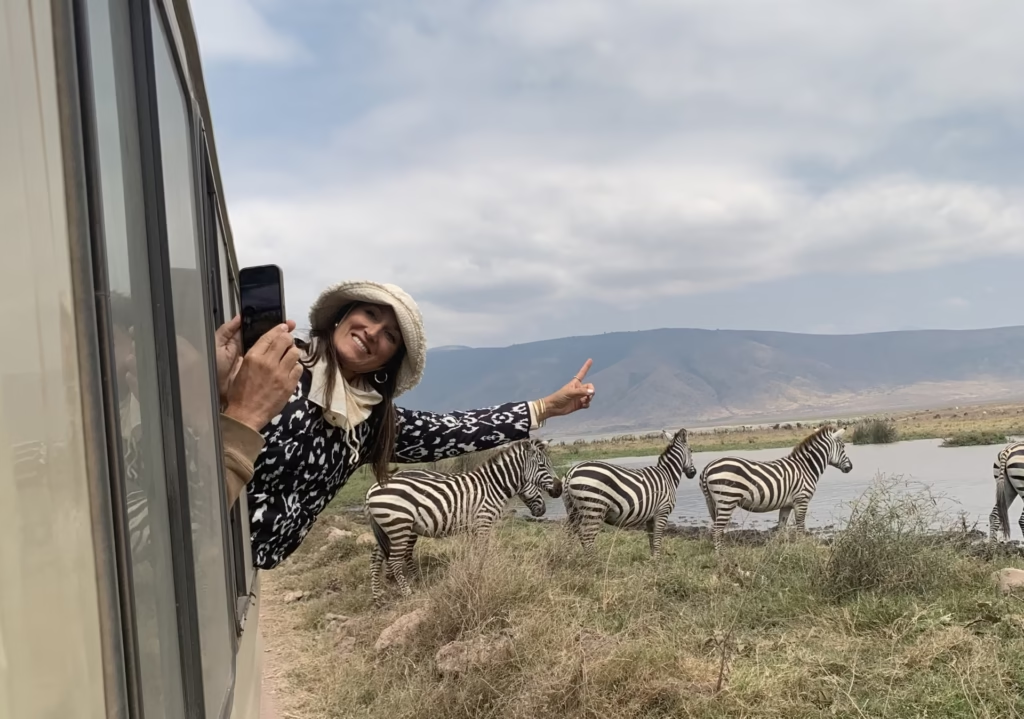
Ngorongoro Crater Wildlife View
2.4 What Wildlife Viewing Is Really Like
Wildlife viewing in Ngorongoro Crater is, in many ways, exactly what most first-time safari travelers hope Africa will feel like. Animals are everywhere. Within a relatively short game drive, it is completely normal to see zebras grazing beside wildebeest, hyenas pacing across the plains, buffalo herds gathering near wetlands, and lions resting only meters from the road.
The crater’s enclosed geography is what makes this possible. Because water and grazing are available year-round, wildlife does not need to migrate far, creating one of the highest concentrations of large mammals in Africa. For visitors with limited safari time, this density is a major advantage. You spend less time searching and more time actually observing animals.
For beginners, Ngorongoro is arguably one of the easiest safari destinations on the continent. Even travelers on a single-day crater tour have a strong chance of seeing multiple predators, large herbivores, and perhaps even four members of the Big Five before lunch. Compared to larger and more spread-out parks, the experience feels immediate and rewarding.
For a quieter and more atmospheric wildlife experience, aim for early morning crater descents and avoid peak midday safari traffic whenever possible.
🦓 PLAN YOUR TANZANIA SAFARI
Tell us your travel dates, budget, and preferences We craft your personalized 8-day Great Migration itinerary Confirm your booking & get ready for the adventure of a lifetime
But there is another side to that accessibility — and it is worth understanding before you arrive.
Because wildlife sightings are so reliable, Ngorongoro can become crowded, especially during peak travel months between June and October. When lions are active or a rhino appears in the open, safari vehicles often converge quickly. At times, a predator sighting may involve a long line of 4x4s positioned around the same area, with guides communicating over radio networks to share locations.
This does not necessarily ruin the experience, but it changes the atmosphere. Ngorongoro often feels more structured and concentrated than remote wilderness parks like Serengeti. Instead of complete isolation, you should expect a shared wildlife-viewing environment — particularly around famous sightings.
Rhinos, despite Ngorongoro’s reputation, are also not guaranteed. The crater remains one of Tanzania’s best places to see endangered black rhinos, but sightings depend on timing, visibility, and luck. Some visitors encounter them clearly grazing across the plains, while others only spot distant shapes through binoculars — and occasionally, not at all.
The key to enjoying a Ngorongoro Crater safari is realistic expectation. If you arrive expecting untouched solitude and private wildlife encounters, the crowds may disappoint you. But if your priority is seeing an extraordinary amount of wildlife in a dramatic landscape within a short time, Ngorongoro remains one of the most rewarding safari experiences in Africa.
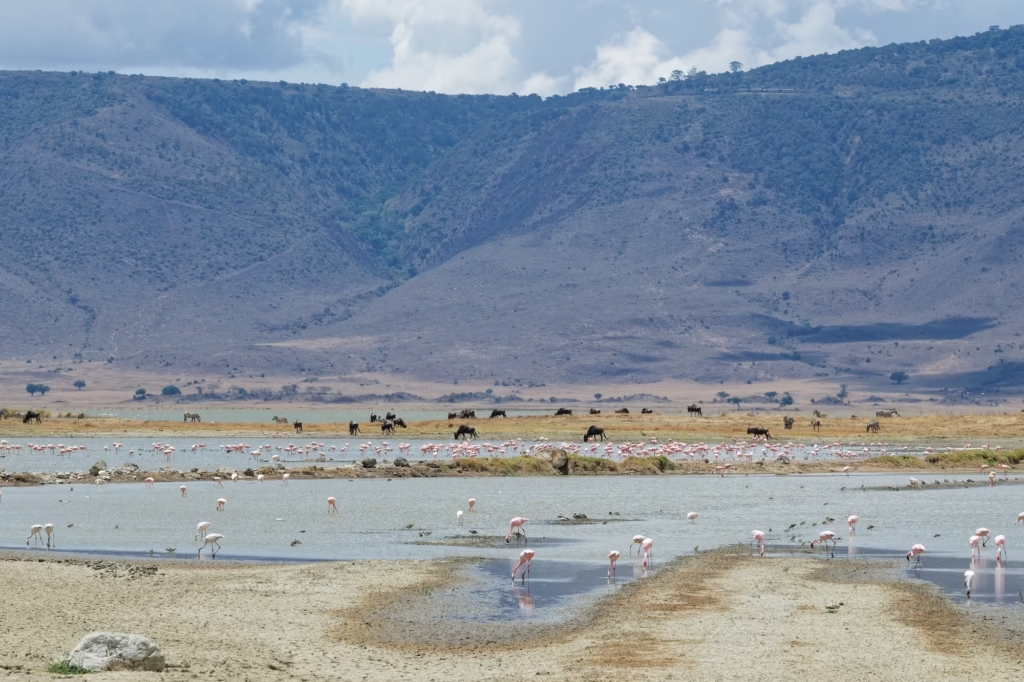
Ngorongoro Crater
3. Best Time for a Ngorongoro Crater Safari in 2026
Choosing Between Wildlife, Weather, and Crowds
Ngorongoro Crater is one of the few safari destinations in Tanzania where wildlife viewing remains strong throughout the year. Because permanent water sources and rich grazing areas keep animals inside the crater in every season, there is never truly a “bad” time to visit.
The better question is what kind of safari experience you want.
Some travelers prioritize maximum wildlife visibility and dry weather. Others prefer fewer vehicles, greener landscapes, or lower prices. In Ngorongoro, the time of year can dramatically change the atmosphere of the safari, even if the animals themselves remain relatively constant.
Traveling during peak safari season? Reserve crater lodges and private safari vehicles well in advance to secure the best wildlife experience.
🦓 PLAN YOUR TANZANIA SAFARI
Tell us your travel dates, budget, and preferences We craft your personalized 8-day Great Migration itinerary Confirm your booking & get ready for the adventure of a lifetime
3.1 June to October (Dry Season)
The dry season, running from June through October, is widely considered the best overall time for a Ngorongoro Crater safari — especially for first-time visitors. During these months, the grass becomes shorter, wildlife gathers more predictably around water sources, and visibility across the crater floor improves significantly.
This is when Ngorongoro feels most efficient as a wildlife destination. Lions are easier to spot resting on open plains, hyenas move more visibly through grazing areas, and large mammals tend to remain exposed for longer periods during daylight hours. Cooler temperatures on the crater rim also make early morning game drives particularly comfortable.
For photographers, the dry season offers cleaner sightlines and excellent golden-hour lighting, especially during sunrise descents into the crater.
But these advantages come with trade-offs.
Because this is peak safari season across northern Tanzania, the crater can become busy — sometimes very busy. Vehicle traffic around predator sightings is common, particularly during mid-morning hours when multiple safari groups converge around lions or rhinos. Travelers seeking solitude or a more remote wilderness atmosphere may find the crowds distracting.
Prices also rise noticeably during this period. Lodges on the crater rim often book out months in advance, and safari packages across the Northern Circuit tend to reach their highest rates between July and October.
The scenery itself changes too. While the dry season improves wildlife visibility, the crater floor becomes dustier and less lush compared to the green months earlier in the year. The landscapes are still dramatic, but they lose some of the vivid contrast and misty atmosphere seen during wetter seasons.
In simple terms, June to October is the best time for travelers who prioritize reliable wildlife viewing, easier predator sightings, and classic safari conditions — as long as they are comfortable sharing the experience with more visitors and paying premium-season prices.
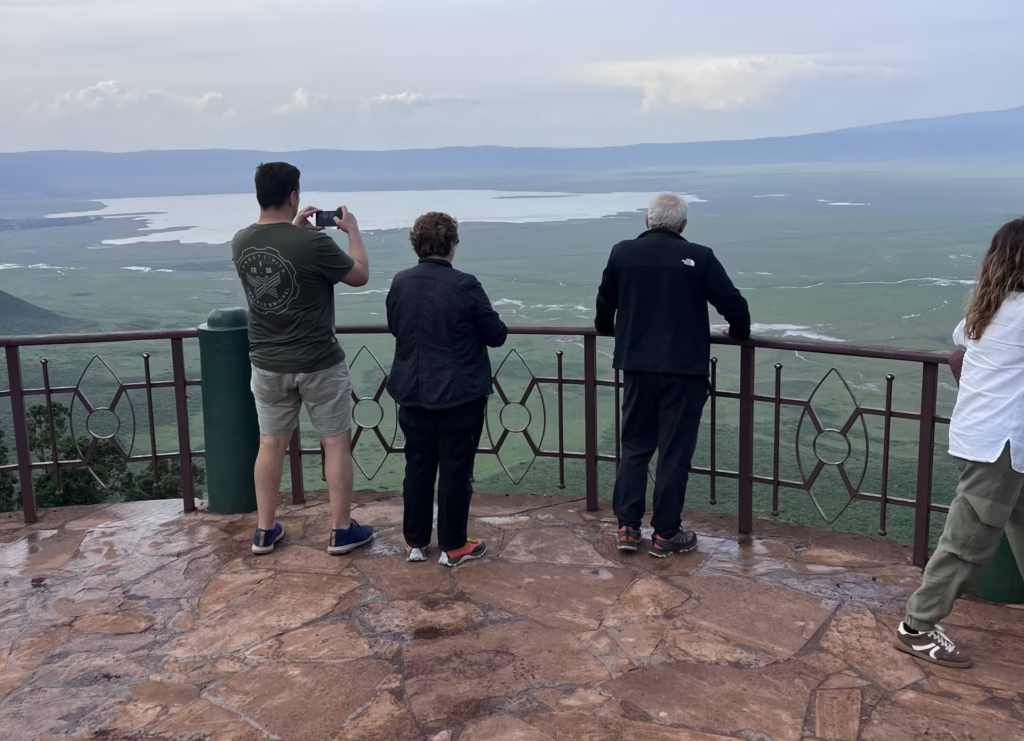
Crater View Point
3.2 December to February (Green Season & Calving)
From December to February, Ngorongoro Crater enters one of its most visually striking periods of the year. After the short rains of November, the crater floor transforms into a vibrant green landscape filled with fresh grass, clearer air, and dramatic cloud formations drifting across the caldera walls.
For many travelers, this is the crater at its most photogenic.
The lush scenery creates beautiful contrast against the dark volcanic slopes, while softer seasonal light gives photographers richer colors and more atmospheric images than the harsher dry-season conditions. Early mornings can be especially spectacular, with low mist hanging over the plains as wildlife emerges into the open.
This season also overlaps with the broader calving period across northern Tanzania’s safari ecosystem. Herbivores become more active, newborn animals appear across the plains, and predators respond accordingly. Lions and hyenas are often easier to observe during hunting activity, creating some of the most dramatic wildlife interactions of the year.
Photographers should seriously consider January and February for greener landscapes, dramatic skies, and active predator-prey scenes.
🦓 PLAN YOUR TANZANIA SAFARI
Tell us your travel dates, budget, and preferences We craft your personalized 8-day Great Migration itinerary Confirm your booking & get ready for the adventure of a lifetime
Birdlife is also excellent during these months. Seasonal water attracts flamingos and migratory species around Lake Magadi, adding even more movement and color to the landscape.
However, the green season is no secret anymore.
December and January are popular safari months due to holiday travel, meaning Ngorongoro can still feel busy despite being outside the traditional dry season peak. Safari lodges near the crater rim often experience high demand, especially during Christmas and New Year periods.
Road conditions can also become less predictable. While the crater remains accessible, occasional rainfall may create muddy sections along the descent roads and certain areas of the crater floor. Most professional safari operators handle these conditions without difficulty, but game drives may occasionally feel slower or rougher than during the dry months.
For travelers who value scenery, dramatic wildlife behavior, and softer photographic conditions, December to February offers one of the most balanced safari experiences in Ngorongoro.
3.3 March to May (Rainy Season)
The long rainy season, stretching roughly from March through May, is the least crowded — and arguably the most underrated — time to visit Ngorongoro Crater.
This period changes the atmosphere of the crater completely. Instead of dusty plains and busy vehicle lines, the landscape becomes deeply green, misty, and cinematic. Clouds roll dramatically over the crater rim, forests appear thicker and more vibrant, and the entire caldera feels quieter and more mysterious.
For travelers who enjoy mood, scenery, and a slower safari pace, this season can be incredibly rewarding.
One of the biggest advantages is the reduced number of tourists. Safari traffic drops significantly compared to peak months, meaning wildlife sightings often feel calmer and less congested. Predator sightings may still attract several vehicles, but the overall experience tends to feel less rushed and more intimate.
Accommodation prices also become more attractive during this period. Many lodges and safari operators lower rates during the rainy season, making Ngorongoro more accessible for travelers looking to experience the crater without peak-season costs.
Wildlife remains present year-round, so visitors still have strong chances of seeing lions, buffalo, elephants, zebras, and hyenas. The crater does not “shut down” during the rains.
Still, there are real compromises.
Heavy rainfall can create muddy roads and slower game drives, particularly after sustained storms. Visibility also becomes less predictable. Mist, rain, and dense cloud cover occasionally reduce long-distance viewing across the crater floor, which can affect photography and make spotting wildlife more difficult at times.
For travelers expecting endless sunshine and perfect safari conditions every day, this season may feel challenging. But for those willing to embrace dramatic weather, fewer crowds, and greener scenery, March to May offers a very different — and often more atmospheric — side of Ngorongoro Crater.
3.4 Best Overall Time Based on Travel Style
The best time for a Ngorongoro Crater safari ultimately depends on the kind of experience you want. Unlike some safari destinations that have a single “perfect” season, Ngorongoro changes character throughout the year. Wildlife remains consistently strong, but scenery, crowd levels, photography conditions, and safari costs shift significantly from season to season.
Here’s the simplest way to choose the right months for your travel style in 2026:
Travel Style | Best Months | Why It Works |
First-time safari travelers | June–October | Best wildlife visibility, easier predator sightings, dry weather, and reliable safari conditions. |
Photography enthusiasts | January–February | Lush green scenery, softer light, dramatic skies, and active predator-prey interactions during calving season. |
Budget-conscious travelers | April–May | Lower accommodation prices, fewer tourists, and seasonal safari discounts across the Northern Circuit. |
Travelers seeking fewer crowds | March–May | Quieter crater floor, calmer wildlife sightings, and a more atmospheric safari experience overall. |
If your priority is seeing as much wildlife as possible with minimal effort, the dry season between June and October remains the safest choice. Visibility is excellent, road conditions are easier, and the crater delivers the classic safari experience most travelers imagine.
Choose your safari season based on your priorities — wildlife density, photography, budget, or crowd levels can completely shape the Ngorongoro experience.
🦓 PLAN YOUR TANZANIA SAFARI
Tell us your travel dates, budget, and preferences We craft your personalized 8-day Great Migration itinerary Confirm your booking & get ready for the adventure of a lifetime
For photographers, however, January and February are often more rewarding. The crater becomes greener, the light softer, and the overall mood far more cinematic. Wildlife activity also intensifies during the calving period, creating opportunities for dramatic action shots and stronger landscape contrast.
Travelers looking to reduce costs should seriously consider April and May. While the rainy season brings mud and occasional visibility issues, Ngorongoro remains full of wildlife year-round, and accommodation prices often drop significantly compared to peak-season rates.
And for those who simply want a quieter experience, the rainy months from March to May can feel surprisingly refreshing. The crater loses much of its peak-season congestion, and the mist-covered landscapes create a wilder, more intimate atmosphere that many repeat safari travelers prefer.
In the end, there is no single “best” month for a Ngorongoro Crater safari — only the season that best matches your expectations, travel style, and tolerance for crowds, weather, and price.
4. Ngorongoro Crater Safari Costs in 2026
How Much Should You Budget?
A Ngorongoro Crater safari is rarely considered a cheap safari experience — even by Tanzanian standards. Between conservation charges, crater access fees, safari vehicles, and accommodation costs, Ngorongoro is one of the more expensive destinations on the Northern Safari Circuit.
Still, many travelers consider the cost worthwhile because few places in Africa offer such concentrated wildlife viewing in a single day. The key is understanding where your money actually goes and setting realistic expectations before booking.
Crater View Point
4.1 Conservation & Entry Fees
A significant portion of every Ngorongoro safari budget goes toward conservation and access fees managed by the Ngorongoro Conservation Area Authority (NCAA). These fees support wildlife protection, road maintenance, conservation projects, and management of the wider Ngorongoro Conservation Area.
For international visitors in 2026, the daily conservation fee is expected to remain around 80–85 USD per adult per day, although exact rates can change slightly depending on policy updates and operator structures. In addition to passenger fees, safari vehicles entering the crater also pay separate access and transit charges.
This is one of the reasons Ngorongoro safaris become expensive so quickly. Even before accommodation, food, or guide services are added, operators already face substantial entry costs simply to access the crater floor.
Vehicle fees are another important factor. Ngorongoro’s steep descent roads and rough terrain require durable 4×4 safari vehicles, usually with pop-up roofs for wildlife viewing. Maintaining these vehicles in crater conditions is expensive, particularly during rainy periods when mud and road damage increase wear and tear. Most reputable safari companies include these operational costs within the total package price.
Before booking the cheapest safari package, confirm whether crater fees, vehicle charges, and guide services are actually included.
🦓 PLAN YOUR TANZANIA SAFARI
Tell us your travel dates, budget, and preferences We craft your personalized 8-day Great Migration itinerary Confirm your booking & get ready for the adventure of a lifetime
Compared to many other African safari parks, Ngorongoro also has stricter management and conservation regulations, which contribute to higher operating expenses overall. Unlike larger parks where wildlife spreads across vast landscapes, Ngorongoro concentrates a massive number of visitors and animals inside a relatively small area. Managing that pressure requires extensive infrastructure, ranger presence, environmental monitoring, and controlled access systems.
In practical terms, this means that even “budget” Ngorongoro safaris are not truly low-cost. Once conservation fees, crater access, vehicle costs, fuel, and a professional guide are included, prices rise quickly compared to destinations with lower entry requirements.
For travelers planning a Northern Tanzania safari in 2026, it is important to see Ngorongoro not as the cheapest option — but as a premium wildlife experience where much of the cost directly supports conservation and access to one of Africa’s most unique safari ecosystems.
4.2 Budget Safari Costs
For travelers trying to experience Ngorongoro Crater without spending luxury-level money, budget safaris are still possible in 2026 — but “budget” in Ngorongoro usually means basic comfort rather than truly cheap travel.
The most affordable option is typically a shared day trip from Arusha. These tours combine multiple travelers into one safari vehicle, helping reduce transport and guide costs. Most departures begin very early in the morning, with a long drive to the conservation area followed by several hours on the crater floor before returning to Arusha later the same day.
A standard shared day trip generally includes:
- Transport in a 4×4 safari vehicle
- Driver-guide services
- Crater entry fees
- Packed or lodge lunch
- Basic game drive activities
In 2026, travelers should realistically expect prices of around 250–300 USD per person for a reliable shared crater day trip from Arusha. Extremely cheap offers do exist online, but these often exclude certain fees, use overcrowded vehicles, or compromise on guide quality and vehicle condition.
Traveling on a tighter budget? Shared safaris and camping tours can significantly reduce costs without sacrificing wildlife viewing opportunities.
🦓 PLAN YOUR TANZANIA SAFARI
Tell us your travel dates, budget, and preferences We craft your personalized 8-day Great Migration itinerary Confirm your booking & get ready for the adventure of a lifetime
Another popular low-cost option is the group camping safari. These tours typically combine Ngorongoro with other Northern Circuit parks such as Tarangire or Serengeti, using public campsites or simple tented accommodations instead of lodges.
Camping safaris can significantly lower accommodation costs, especially for younger travelers or backpackers comfortable with basic facilities. Meals are usually prepared by safari cooks, and travelers share both vehicles and campsites with larger groups.
Even so, Ngorongoro remains one of the pricier parks in Tanzania due to crater fees and conservation charges. Most realistic multi-day budget safaris that include Ngorongoro still average roughly 150–220 USD per person per day, depending on group size, season, and itinerary length.
The biggest thing budget travelers should understand is that cost-cutting has limits in Ngorongoro. Cheap vehicles, inexperienced guides, or rushed itineraries can dramatically affect the safari experience — particularly on rough crater roads where comfort and reliability matter more than many first-time visitors expect.
4.3 Mid-Range Safari Prices
Mid-range safaris are where Ngorongoro becomes far more comfortable without reaching full luxury pricing. This is also the category most international travelers choose, especially those combining Ngorongoro with Serengeti, Tarangire, and Lake Manyara as part of a longer Northern Tanzania safari.
Instead of camping, mid-range safaris usually include lodge stays or permanent tented camps with private rooms, proper beds, hot showers, and full meal service. Many accommodations are located near the crater rim or in nearby highland areas, offering cooler temperatures and scenic views after long game drives.
A major advantage of mid-range travel is flexibility. Travelers often book private safari vehicles with dedicated guides rather than joining large shared groups. This allows for:
- more flexible game-drive pacing
- better photography opportunities
- personalized wildlife tracking
- quieter overall safari experiences
Private guides also make a significant difference in Ngorongoro, where experienced drivers know how to position vehicles properly, avoid unnecessary crowds when possible, and improve chances of spotting elusive species like rhinos or leopards.
Most mid-range itineraries are sold as part of broader Northern Circuit combinations, typically including:
- Tarangire National Park
- Serengeti National Park
- Ngorongoro Crater
- sometimes Lake Manyara or cultural visits
For 2026, realistic mid-range safari pricing generally falls between 150–350 USD per person per day, depending on:
- group size
- lodge quality
- season
- number of safari days
- private vs. shared vehicle arrangements
Travelers should also expect prices to increase noticeably during peak months between June and October, when crater rim lodges and safari camps are in highest demand.
For many visitors, mid-range safaris offer the best balance between comfort, wildlife access, and overall value. They provide a significantly smoother experience than budget camping trips while remaining far more affordable than ultra-luxury crater lodges.
4.4 Luxury Ngorongoro Safari Costs
At the luxury end of the market, Ngorongoro Crater becomes less about simply seeing wildlife and more about experiencing one of Africa’s most dramatic safari landscapes in maximum comfort. In 2026, luxury safaris around the crater remain among the most expensive travel experiences in Tanzania — but they also offer some of the country’s most spectacular lodge settings and personalized safari services.
If crater rim views and personalized safari service matter to you, consider booking luxury accommodations early — especially for June to October travel.
🦓 PLAN YOUR TANZANIA SAFARI
Tell us your travel dates, budget, and preferences We craft your personalized 8-day Great Migration itinerary Confirm your booking & get ready for the adventure of a lifetime
The biggest factor behind luxury pricing is location.
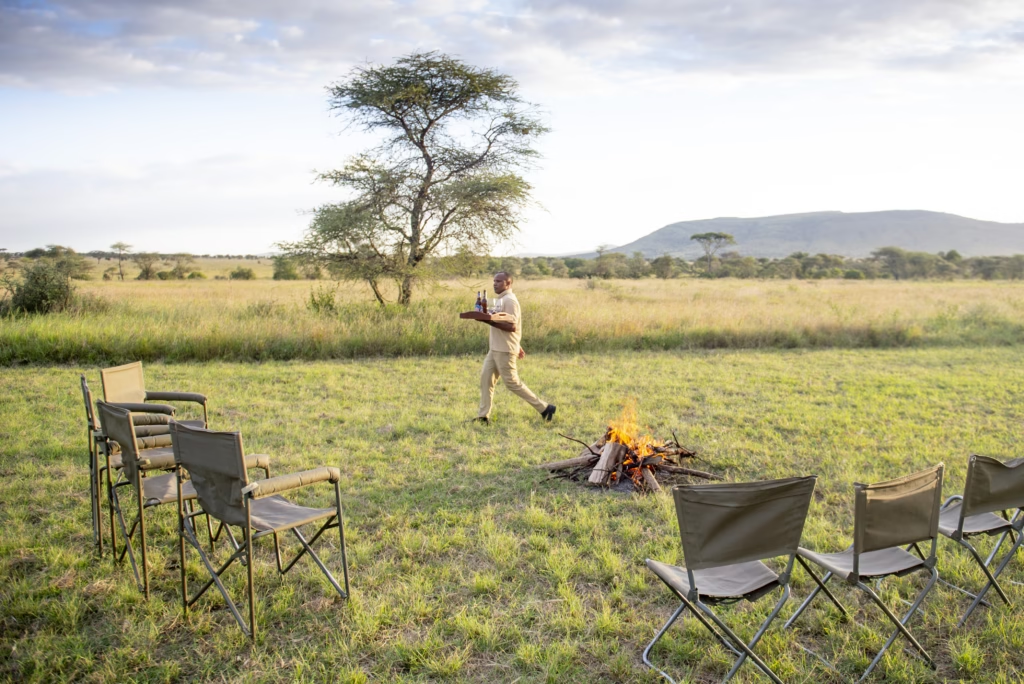
Crater rim lodges occupy some of the most exclusive real estate in East Africa, perched directly along the edge of the caldera with sweeping panoramic views into the crater below. Waking up above mist-covered crater walls while elephants move through nearby forest is part of what travelers are paying for.
These lodges typically include:
- spacious private suites
- premium dining experiences
- private decks overlooking the crater
- fireplaces for the cool highland evenings
- personalized safari services
- luxury transfers and concierge-level hospitality
Premium crater-view accommodations can range from roughly 500 USD to over 3,500 USD per person per night, depending on season, exclusivity, and lodge reputation. Peak-season pricing between June and October is especially high, and the best crater rim properties often sell out many months in advance.
Luxury safaris also tend to include upgraded safari logistics. Instead of long overland transfers from Arusha, some travelers choose fly-in safari experiences using small bush aircraft that connect northern Tanzania parks more efficiently. These itineraries reduce travel fatigue and maximize safari time, especially for shorter high-end trips.
Fly-in packages often combine:
- Serengeti luxury camps
- Ngorongoro crater lodges
- private safari guides
- charter or scheduled bush flights
- premium meals and drinks
- exclusive wildlife experiences
For travelers booking fully serviced luxury Northern Circuit safaris in 2026, total package costs can easily start around 1,300–2,500 USD per person for shorter itineraries, with high-end custom journeys rising significantly beyond that depending on accommodations and flight arrangements.
Luxury travel in Ngorongoro is ultimately about access, scenery, comfort, and efficiency — not necessarily better wildlife than budget travelers see on the crater floor.
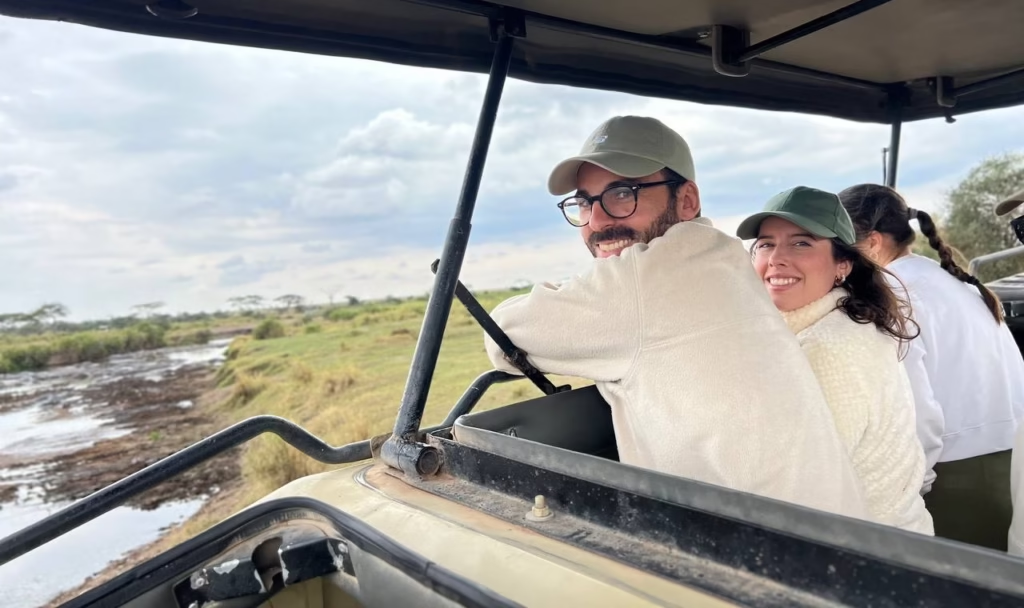
Wildlife View
4.5 Is Ngorongoro Worth the Price?
For many travelers, the answer is yes — but only if they understand what they are paying for.
Ngorongoro Crater offers something unusually rare in African safari travel: an exceptionally high concentration of wildlife in a relatively compact and accessible area. In practical terms, that means visitors can often see lions, buffalo, elephants, zebras, wildebeest, hyenas, hippos, and possibly even black rhinos within a single full-day game drive.
That level of efficiency is a major advantage, especially for travelers with limited safari time.
The crater is also convenient compared to many remote safari destinations. It is reachable from Arusha within a manageable drive and fits easily into broader Northern Tanzania itineraries alongside Serengeti and Tarangire. For first-time safari travelers, that accessibility reduces logistical complexity while still delivering a very high-quality wildlife experience.
One of Ngorongoro’s strongest selling points is the chance to see black rhinos. These critically endangered animals are difficult to encounter in many parts of East Africa, but the crater remains one of Tanzania’s most reliable rhino-viewing locations. For wildlife-focused travelers, that alone can justify the higher cost.
Still deciding? Compare Ngorongoro’s wildlife density and rhino-viewing potential against your overall safari goals before finalizing your itinerary.
🦓 PLAN YOUR TANZANIA SAFARI
Tell us your travel dates, budget, and preferences We craft your personalized 8-day Great Migration itinerary Confirm your booking & get ready for the adventure of a lifetime
Still, Ngorongoro is not perfect.
The crater can feel crowded during peak months, especially around predator sightings. Luxury travelers may enjoy exceptional lodges and service, but once vehicles descend onto the crater floor, everyone shares the same wildlife-viewing environment. Paying more improves comfort, privacy, food quality, and accommodations — but it does not create a private national park experience.
That is the essential trade-off.
Ngorongoro is expensive — but for many travelers, the concentration of wildlife justifies the price. If your priority is maximizing wildlife sightings, seeing dramatic landscapes, and experiencing one of Africa’s most iconic safari destinations within a relatively short timeframe, it remains one of the strongest safari investments in Tanzania.
If, however, you value solitude, remote wilderness, and quieter game drives above all else, parks like Serengeti, Ruaha, or Nyerere may feel more rewarding despite offering less predictable sightings.
5. Landscapes and Scenery
Why Ngorongoro Feels Different From Anywhere Else
A Ngorongoro Crater safari is not only about wildlife density — it is also about geography on an almost cinematic scale. Few safari destinations in Africa create such an immediate sense of enclosure and drama. As vehicles descend through the steep crater walls, the landscape unfolds below like a vast natural amphitheater, with forests, lakes, grasslands, and swamps compressed into a single volcanic basin.
That contrast is what makes Ngorongoro feel so different from parks like Serengeti or Tarangire. Instead of endless open horizons, the crater creates a self-contained ecosystem surrounded by towering green walls, giving the entire safari a more intimate and visually concentrated atmosphere.
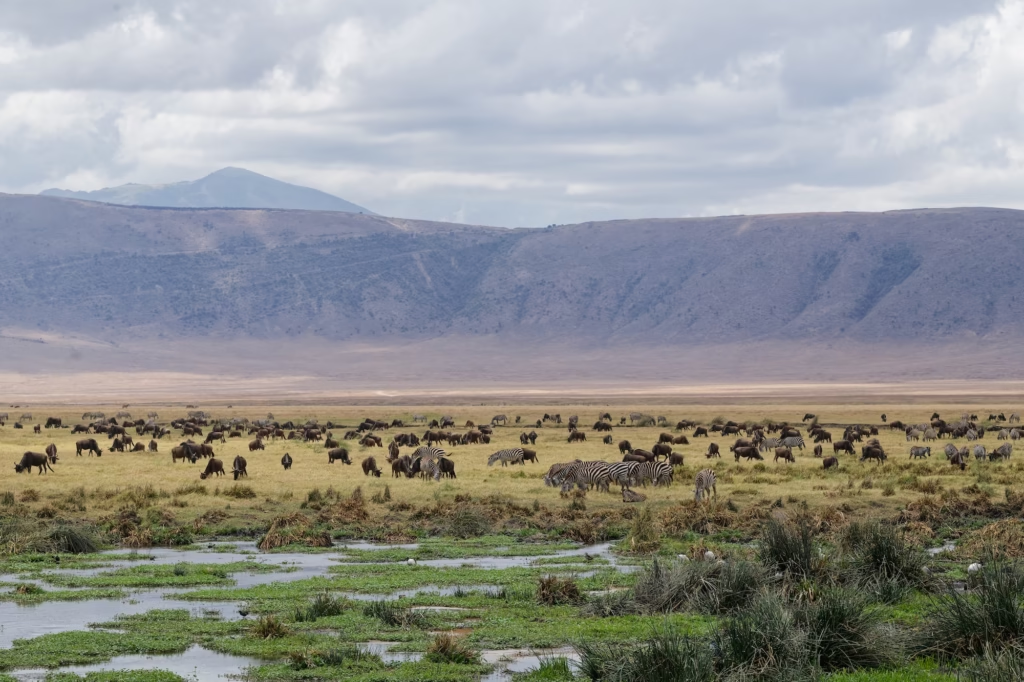
Crater Wildlife View
5.1 The Crater Floor
The crater floor itself is remarkably varied for such a compact area. Within a single game drive, the scenery shifts between open plains, dense woodland, freshwater wetlands, and alkaline lake edges, each supporting different wildlife and moods throughout the day.
The open grasslands dominate much of the crater floor and are usually the first landscapes visitors notice after descending from the rim. These plains support huge numbers of grazing animals including zebra, wildebeest, buffalo, and gazelles, which in turn attract predators such as lions and hyenas. During the green season, the grasslands become intensely vibrant, while the dry season transforms them into golden savannahs with clearer wildlife visibility.
One of the crater’s most distinctive areas is Lerai Forest, a beautiful patch of yellow-barked acacia woodland located along the crater floor. This forest creates a completely different atmosphere from the surrounding plains — cooler, quieter, and more shaded. It is one of the best places to encounter elephant bulls, especially older tuskers moving slowly through the trees. Leopards are also known to inhabit these wooded sections, though sightings remain rare and unpredictable.
The crater’s swamps and freshwater springs add another layer of ecological diversity. Areas such as Ngoitokitok Springs remain green throughout the year and attract hippos, waterbirds, buffalo, and elephants even during drier months. The wetlands create a striking visual contrast against the open grasslands, particularly in the morning when mist rises from the water and animals gather along the edges.
Together, these landscapes make the crater feel far more dynamic than many travelers expect. In a relatively small area, Ngorongoro combines multiple ecosystems into one enclosed environment — a major reason why both wildlife and scenery feel so dense, immediate, and constantly alive.
Don’t rush your game drives — Ngorongoro’s landscapes are just as memorable as the wildlife itself.
🦓 PLAN YOUR TANZANIA SAFARI
Tell us your travel dates, budget, and preferences We craft your personalized 8-day Great Migration itinerary Confirm your booking & get ready for the adventure of a lifetime
5.2 Lake Magadi and Flamingos
One of the most visually distinctive features of a Ngorongoro Crater safari is Lake Magadi, a shallow alkaline lake located on the crater floor. Depending on the season and rainfall levels, the lake constantly changes in size, color, and bird activity, giving the landscape a surprisingly dynamic character throughout the year.
During wetter months, seasonal water levels expand the lake’s surface area and attract larger concentrations of waterbirds. In drier periods, sections of the lake may appear smaller, saltier, and more reflective, creating dramatic contrasts against the surrounding grasslands and volcanic walls.
Lake Magadi is part of a soda lake ecosystem, meaning its alkaline waters support algae and microorganisms that attract flamingos and other specialized bird species. When conditions are right, thousands of flamingos gather along the shoreline, creating vivid bands of pink against the pale mineral-rich water.
The lake also draws pelicans, storks, herons, and other wetland birds, making this one of the crater’s richest birdwatching areas. Unlike the open plains dominated by mammals, Lake Magadi introduces a softer, quieter atmosphere where movement is slower and more reflective.
For photographers, the area can be exceptional — particularly during early morning or late afternoon when light conditions become more dramatic. Reflections on the shallow water, flamingos moving through mist, and wildlife silhouettes against the crater walls create some of Ngorongoro’s most iconic safari images.
Even travelers primarily focused on large mammals often find Lake Magadi unexpectedly memorable because it adds another layer of scenery and ecological contrast to the crater experience.
5.3 Crater Rim Views
While most safari activity happens on the crater floor, some of Ngorongoro’s most unforgettable scenery is actually found along the crater rim itself.
At over 2,200 meters above sea level, the rim offers sweeping panoramic views into the caldera below, especially during the early morning hours when clouds and mist drift slowly across the landscape. On clear days, the view feels enormous — a vast volcanic bowl filled with grasslands, forests, lakes, and tiny moving herds far beneath the rim road.
Sunrise is particularly dramatic here. As the first light breaks across the crater walls, fog often hangs over the floor while golden light illuminates the surrounding highlands. The changing weather conditions create constantly shifting scenery, which is one reason Ngorongoro feels more atmospheric than many flatter safari parks.
The crater rim is also surprisingly green and cool compared to the hotter plains below. Dense forests, highland vegetation, and eucalyptus groves dominate much of the area, creating an almost mountain-like environment. Temperatures can feel chilly in the mornings and evenings, especially during the dry season, which often surprises travelers arriving from warmer parts of Tanzania.
Many of Ngorongoro’s most luxurious lodges are positioned along the rim specifically because of these views. Watching clouds roll across the crater from a lodge terrace or waking up to mist-covered forests is part of what gives the destination its unique sense of scale and drama.
Together, the crater rim and floor create two completely different worlds within the same safari experience — one open and wildlife-filled, the other cool, elevated, and deeply scenic.
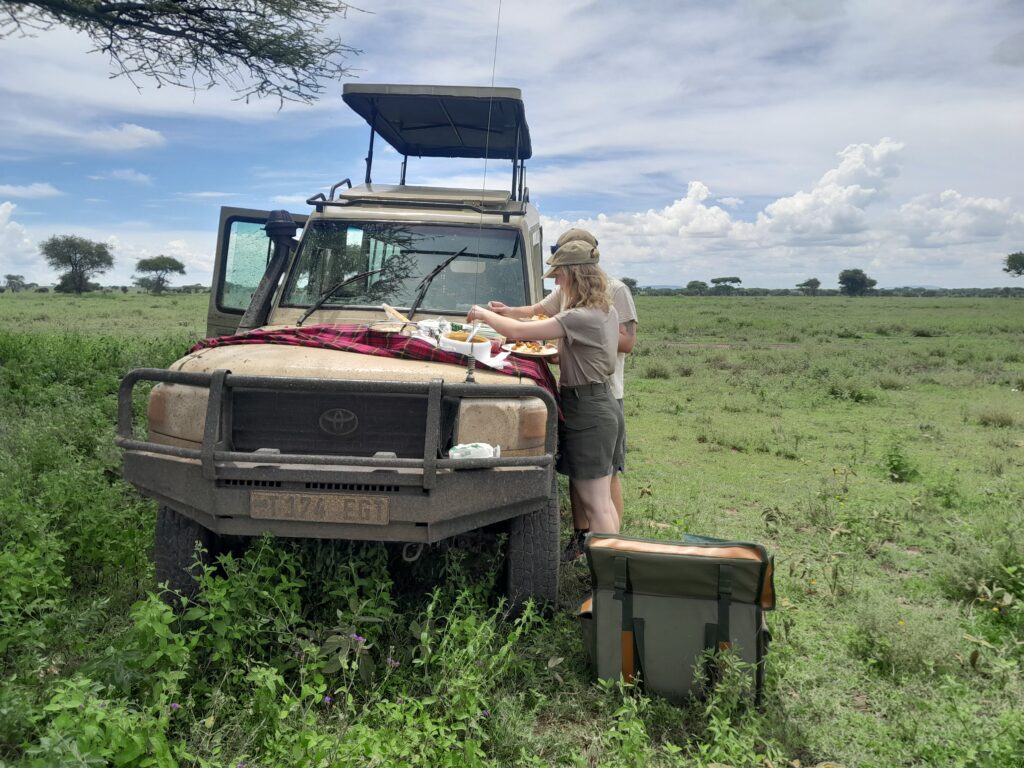
Lunch in Ngorongoro Ndutu Region
5.4 Beyond the Crater
Although the crater floor receives most of the attention, the wider Ngorongoro Conservation Area offers far more than a single safari drive. Beyond the famous caldera lies a vast landscape of highlands, volcanic terrain, archaeological sites, and living Maasai communities that give the region a much broader cultural and ecological identity.
One of the most significant sites in the area is Olduvai Gorge, often referred to as one of the most important paleoanthropological locations in the world. This steep ravine became internationally famous after the discoveries of early human fossils and stone tools by Louis and Mary Leakey, helping shape modern understanding of human evolution.
For many visitors, stopping at Olduvai Gorge adds historical depth to a safari itinerary. Instead of experiencing Ngorongoro only as a wildlife destination, travelers gain perspective on the region as part of humanity’s ancient story.
The conservation area is also home to Maasai communities who continue to live and graze livestock across parts of the highlands. Cultural visits offer travelers an opportunity to learn about traditional Maasai lifestyles, cattle culture, beadwork, and daily life within a conservation landscape shared with wildlife.
These experiences vary widely depending on the operator, and the best visits tend to feel conversational and respectful rather than staged performances designed purely for tourists. When approached thoughtfully, Maasai cultural experiences can add an important human dimension to the safari experience.
The surrounding highlands themselves are another major highlight. Rolling green hills, volcanic ridges, forested slopes, and mist-covered roads create scenery that feels dramatically different from the open plains of Serengeti. Driving through the Ngorongoro Highlands often feels more like traveling through a mountain landscape than a traditional safari environment.
This combination of wildlife, geology, archaeology, and culture is part of what makes Ngorongoro more layered and diverse than many travelers initially expect.
Managing expectations is part of enjoying Ngorongoro — plan around crowds rather than expecting complete wilderness isolation.
🦓 PLAN YOUR TANZANIA SAFARI
Tell us your travel dates, budget, and preferences We craft your personalized 8-day Great Migration itinerary Confirm your booking & get ready for the adventure of a lifetime
5.5 The Honest Reality of the Landscape
There is no question that Ngorongoro Crater is visually extraordinary. The scale of the caldera, the contrast between forests and open plains, and the sheer concentration of wildlife create one of the most impressive safari landscapes in Africa.
But the reality on the ground is not always the untouched wilderness scene shown in safari marketing.
Because Ngorongoro is one of Tanzania’s most accessible and reliable safari destinations, it attracts a large number of visitors throughout the year — especially during peak months. Midday vehicle congestion is common on the crater floor, particularly near predator sightings or rhino locations. At busy moments, several safari vehicles may gather around the same wildlife encounter, creating a more crowded atmosphere than many first-time visitors expect.
This is especially noticeable during the middle of the day when most safari vehicles are simultaneously active inside the crater. Popular roads and viewing areas can occasionally feel busy, reducing the sense of isolation people often associate with African safaris.
That said, timing changes the experience dramatically.
Early morning game drives are usually far more atmospheric. Before the crater becomes crowded, the landscape feels quieter, cooler, and more cinematic. Mist hangs low across the plains, predators remain active, and the soft sunrise light transforms the crater into one of the most photogenic environments in Tanzania.
Wildlife also tends to behave more naturally during these quieter hours, before vehicle activity increases later in the morning. For photographers and travelers seeking a more immersive atmosphere, entering the crater early is one of the best ways to experience Ngorongoro at its most beautiful.
The key is understanding that Ngorongoro is both spectacular and popular. Its beauty is absolutely real — but so is its popularity. Travelers who arrive with realistic expectations often leave far more impressed than those expecting total solitude in one of Africa’s busiest safari destinations.
Maasai in the Ngorongoro Conservation Area
6. Pros and Cons of a Ngorongoro Crater Safari
The Honest Verdict
A Ngorongoro Crater safari is one of the easiest wildlife experiences to recommend in Tanzania — but it is also one of the easiest to oversell.
The crater genuinely delivers extraordinary wildlife density, dramatic scenery, and a realistic chance of seeing the Big Five within a very short timeframe. For many travelers, especially first-time safari visitors, it becomes the highlight of an East African trip.
At the same time, Ngorongoro is not a remote, untouched wilderness experience. It is popular, expensive, and highly structured compared to larger safari ecosystems like Serengeti.
The key to enjoying it is understanding both sides clearly before you arrive.
If you want maximum wildlife sightings within limited time, Ngorongoro is one of the most efficient safari destinations in Africa.
🦓 PLAN YOUR TANZANIA SAFARI
Tell us your travel dates, budget, and preferences We craft your personalized 8-day Great Migration itinerary Confirm your booking & get ready for the adventure of a lifetime
6.1 What Ngorongoro Does Extremely Well
- Big Five Accessibility
Very few safari destinations in Africa offer such efficient wildlife viewing. Ngorongoro’s enclosed ecosystem keeps animals concentrated within a relatively small area, which dramatically increases the chances of successful sightings during a single game drive.
Lions, buffalo, zebras, wildebeest, hyenas, and hippos are commonly seen with minimal searching, while the crater remains one of Tanzania’s best locations for spotting endangered black rhinos. For travelers with limited time, this level of accessibility is a major advantage.
Instead of spending days tracking wildlife across vast distances, Ngorongoro compresses much of the safari experience into one compact environment.
- Strong Photography Opportunities
From a visual perspective, Ngorongoro is exceptionally photogenic. The combination of crater walls, open grasslands, misty forests, soda lakes, and dense wildlife creates constantly changing scenery throughout the day.
Photographers benefit from:
- open visibility across the plains
- dramatic sunrise light
- layered volcanic landscapes
- active predator-prey scenes
- birdlife around Lake Magadi
Even casual travelers often leave with striking wildlife images because animals are frequently close to safari vehicles and positioned against beautiful natural backdrops.
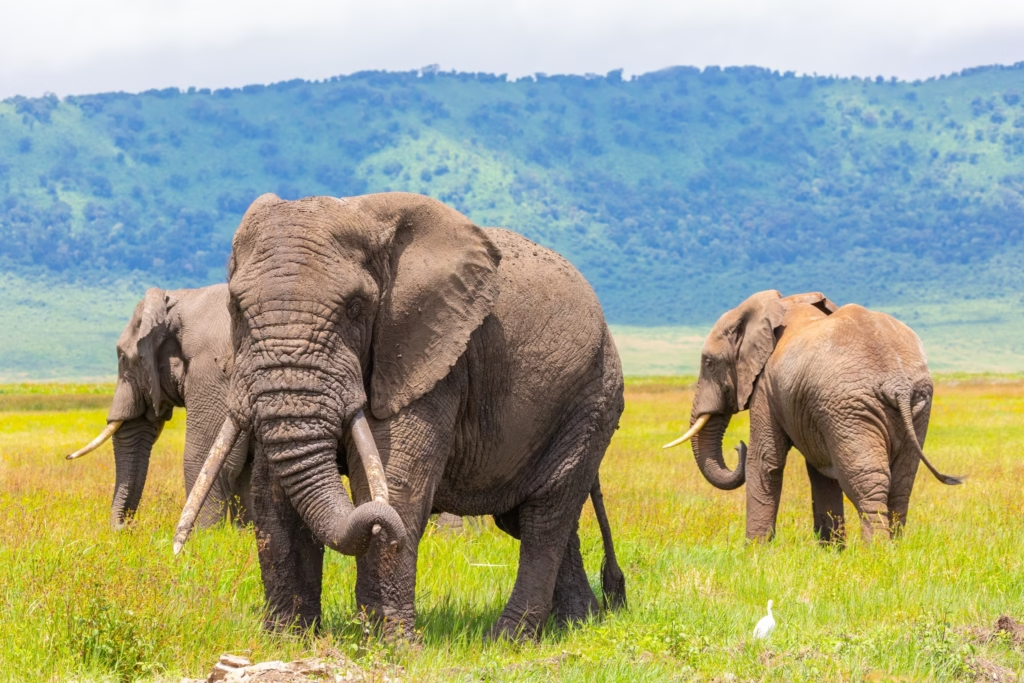
Ngorongoro Crater
- Short Travel Time from Arusha
Ngorongoro is also one of the most accessible major safari destinations in Tanzania. Located within the Northern Safari Circuit, it can be reached from Arusha within a manageable overland drive, making it realistic even for shorter itineraries.
This convenience makes the crater especially attractive for:
- travelers with limited vacation time
- families
- first-time safari visitors
- travelers combining multiple parks in one trip
Unlike more remote parks that require domestic flights or very long driving days, Ngorongoro fits relatively easily into standard Tanzania safari routes.
- Great for First-Time Safaris
For first-time safari travelers, Ngorongoro is hard to beat.
The wildlife is abundant, sightings are frequent, and the overall experience feels rewarding very quickly. Travelers do not need extensive safari patience or expert tracking knowledge to enjoy the crater because wildlife visibility is naturally high.
The crater also provides a strong introduction to African safari ecosystems without requiring difficult logistics or extremely long stays in remote wilderness areas.
For many visitors, Ngorongoro delivers the “classic safari feeling” they imagined before arriving in Africa.
Prefer quieter wilderness experiences? Pair Ngorongoro with Serengeti or Tarangire for a more balanced Tanzania safari.
🦓 PLAN YOUR TANZANIA SAFARI
Tell us your travel dates, budget, and preferences We craft your personalized 8-day Great Migration itinerary Confirm your booking & get ready for the adventure of a lifetime
6.2 Potential Downsides
- Expensive
Ngorongoro is one of Tanzania’s more expensive safari destinations once conservation fees, crater access, transportation, and accommodation are added together.
Even budget safaris can become costly compared to other parks, and crater rim lodges often charge premium prices because of their location and views.
Travelers expecting a cheap safari experience are often surprised by how quickly costs rise — especially during peak season.
- Crowded Wildlife Sightings
Because wildlife viewing is so reliable, Ngorongoro attracts large numbers of safari vehicles year-round. During busy months, predator sightings can become congested, with multiple vehicles gathering around the same lions or rhinos.
This is particularly noticeable in the middle of the day when most tours are simultaneously active inside the crater.
While the scenery remains beautiful, the experience can sometimes feel less wild and more organized than visitors expect.
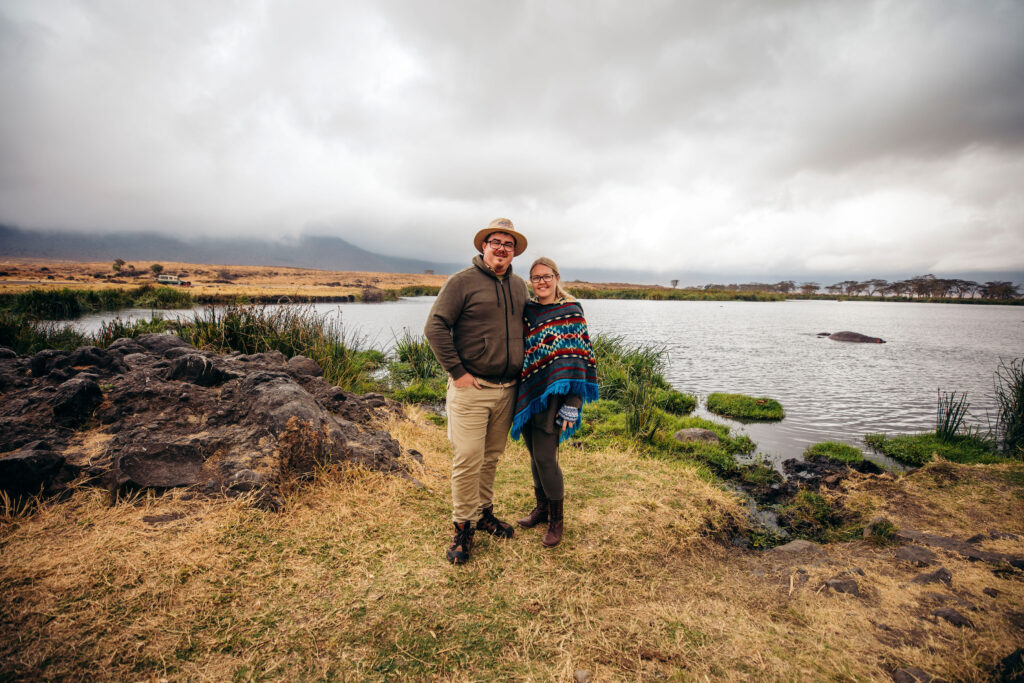
Hippo Pool in the Ngorongoro Crater
- Less Wilderness Feel Compared to Serengeti
Serengeti offers vast open horizons, migration movement, and a stronger sense of isolation. Ngorongoro feels more enclosed and concentrated by comparison.
The crater’s compact geography creates excellent wildlife visibility, but it also reduces the sense of unpredictability and exploration that defines larger wilderness ecosystems.
Travelers seeking remote bush experiences or long uninterrupted game drives may prefer parks like Serengeti, Ruaha, or Nyerere.
- Limited Ecosystem Variation
Although Ngorongoro contains forests, plains, wetlands, and lakes within the crater, the safari experience itself remains relatively geographically contained.
Compared to multi-day Serengeti safaris where landscapes constantly change over huge distances, Ngorongoro can feel more repetitive after extended time on the crater floor.
This is one reason many safari itineraries combine Ngorongoro with Serengeti or Tarangire rather than treating it as a standalone multi-day destination.
In the end, Ngorongoro works best when approached for what it truly is: one of Africa’s most concentrated and visually dramatic wildlife experiences — not necessarily its wildest or quietest. Travelers who understand that balance is usually the one who appreciates it most.
The quality of your guide and itinerary matters more than almost anything else — choose a reputable safari operator rather than booking on price alone.
🦓 PLAN YOUR TANZANIA SAFARI
Tell us your travel dates, budget, and preferences We craft your personalized 8-day Great Migration itinerary Confirm your booking & get ready for the adventure of a lifetime
7. How to Plan Your Ngorongoro Crater Safari in 2026
Planning a Ngorongoro Crater safari is relatively straightforward compared to many remote African safari destinations, but the quality of your experience depends heavily on timing, itinerary structure, guide quality, and realistic expectations.
Because the crater is one of Tanzania’s most visited safari areas, small planning decisions — such as when you enter the crater or whether you book privately — can significantly affect the atmosphere of the trip.
Here are the most important practical considerations for planning a successful Ngorongoro safari in 2026.
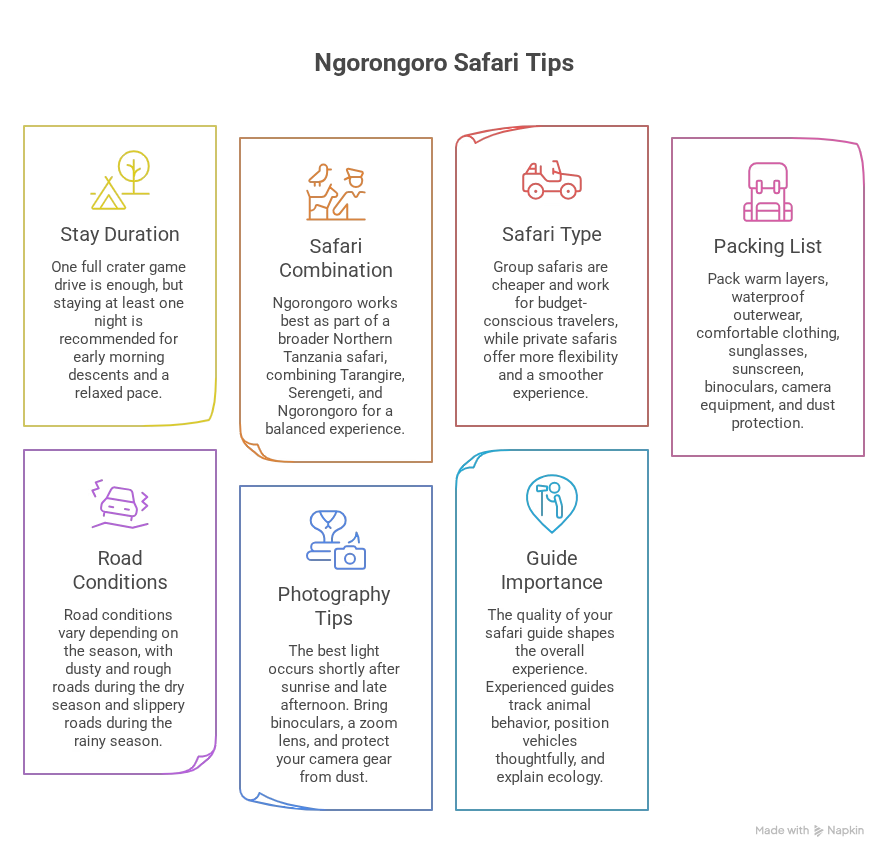
In a destination where multiple vehicles may compete for wildlife sightings, skilled guides can make the difference between a rushed sightseeing trip and a genuinely immersive safari experience.
For first-time visitors, especially, investing in a reputable operator with experienced guides is usually far more valuable than simply booking the cheapest available safari package.
8. Is a Ngorongoro Crater Safari Worth It in 2026?
For most travelers, the answer is yes — as long as expectations match reality.
A Ngorongoro Crater safari remains one of the most accessible and rewarding wildlife experiences in Africa. Few places offer such a high concentration of animals within such a compact and visually dramatic landscape. For first-time safari travelers, photographers, wildlife-focused visitors, and travelers with limited time, the crater delivers an experience that feels immediate, intense, and unforgettable.
This is where Ngorongoro truly excels.
You are likely to see lions, buffalo, zebras, wildebeest, hyenas, hippos, and perhaps even endangered black rhinos within a single day. The scenery is equally memorable, with mist-covered crater walls, open grasslands, forests, lakes, and volcanic highlands all compressed into one extraordinary ecosystem.
But Ngorongoro is not perfect — and understanding that actually improves the experience.
It is expensive compared to many safari destinations in Tanzania. Wildlife sightings can become crowded, especially during peak months, and the crater does not always provide the same feeling of remote wilderness that travelers find in Serengeti or Ruaha. The safari here is more concentrated, more structured, and more predictable.
For that reason, Ngorongoro works best when paired with other Northern Tanzania parks rather than treated as a standalone safari destination. Combining the crater with Serengeti adds scale, migration movement, and a stronger wilderness atmosphere, while Tarangire introduces quieter landscapes, giant elephant herds, and a more relaxed safari pace.
Together, these parks complement each other beautifully.
Ngorongoro may not be Africa’s quietest safari destination, but few places compress so much wildlife, scenery, and drama into a single day.
Ready to experience Ngorongoro Crater in 2026? Combine it with Serengeti and Tarangire to create one of the most complete safari journeys in East Africa.✨
🦓 PLAN YOUR TANZANIA SAFARI
Tell us your travel dates, budget, and preferences We craft your personalized 8-day Great Migration itinerary Confirm your booking & get ready for the adventure of a lifetime
9. Frequently Asked Questions About a Ngorongoro Crater Safari
1. Is Ngorongoro Crater worth visiting in 2026?
Yes — especially for travelers who want high wildlife density, dramatic scenery, and a realistic chance of seeing the Big Five within a short time. Ngorongoro remains one of the best safari destinations in Tanzania for first-time safari visitors and wildlife-focused travelers.
2. Can you see the Big Five in Ngorongoro Crater?
Yes, Ngorongoro is one of the few places in East Africa where seeing the Big Five in a single day is realistically possible. Lions, buffalo, and elephants are commonly seen, while black rhinos are one of the crater’s biggest highlights. Leopards are present but more difficult to spot.
3. What is the best time to visit Ngorongoro Crater?
The best time depends on your travel style:
- June–October: best wildlife visibility and dry weather
- January–February: green scenery and excellent photography
- March–May: fewer crowds and lower prices
Wildlife viewing remains strong throughout the year.
4. How much does a Ngorongoro Crater safari cost in 2026?
Costs vary widely depending on travel style:
- Shared day trips: around 250–300 USD per person
- Mid-range safaris: roughly 150–350 USD per person per day
- Luxury safaris: from 500 USD to several thousand USD per night
Conservation fees and crater access charges make Ngorongoro more expensive than many other parks in Tanzania.
5. How many days do you need for Ngorongoro Crater?
Most travelers spend one full day inside the crater itself, but staying at least one night near the crater rim is highly recommended. Many visitors combine Ngorongoro with Serengeti and Tarangire as part of a longer Northern Tanzania safari.
6. Is Ngorongoro Crater crowded?
It can be, especially during peak safari season between June and October. Predator sightings sometimes attract multiple safari vehicles, particularly around lions and rhinos. Early morning game drives usually feel quieter and more atmospheric.
7. What animals are commonly seen in Ngorongoro Crater?
Besides the Big Five, common animals include:
- zebras
- wildebeest
- hyenas
- hippos
- gazelles
- warthogs
The crater is also excellent for birdwatching, especially around Lake Magadi where flamingos and other waterbirds gather seasonally.
8. Should I combine Ngorongoro with Serengeti or Tarangire?
Absolutely. Ngorongoro works best as part of a broader Northern Tanzania safari. Serengeti offers larger wilderness and migration experiences, while Tarangire provides quieter game drives and huge elephant herds. Together, the parks create a far more complete safari experience.✨