
When Is the Sweet Spot for Seeing Everything on a Tanzania Safari?
Table of Contents
Toggle1.1 Introduction
The same land can feel like two different worlds. In one moment, Tanzania stretches out in dusty gold—sunburnt plains, thin horizons, animals gathering tightly around shrinking waterholes. In another, it erupts into green—thick grass, scattered herds, skies heavy with rain, life spilling in every direction. Same place. Completely different experience.
So here’s the question most travelers quietly carry: Can you really see everything in one trip? The Great Migration, the Big Five, dramatic river crossings, newborn calves, emerald landscapes—can it all align in a single, perfectly timed safari?
Here’s the honest answer: no. There is no perfect month—only a series of smart trade-offs. The moment you gain one spectacular advantage; you give up another. Peak wildlife visibility comes with crowds. Lush beauty brings hidden animals. Lower prices invite unpredictable weather.
This guide isn’t here to sell you a fantasy. It’s here to do something far more useful—help you find your personal sweet spot. The version of Tanzania that fits what you care about most, whether that’s raw drama, quiet intimacy, photographic beauty, or sheer value.
✨Feeling inspired but unsure where to start? Explore our expertly designed 8-day migration safari and see how the timing, locations, and wildlife moments come together into one seamless experience.✨
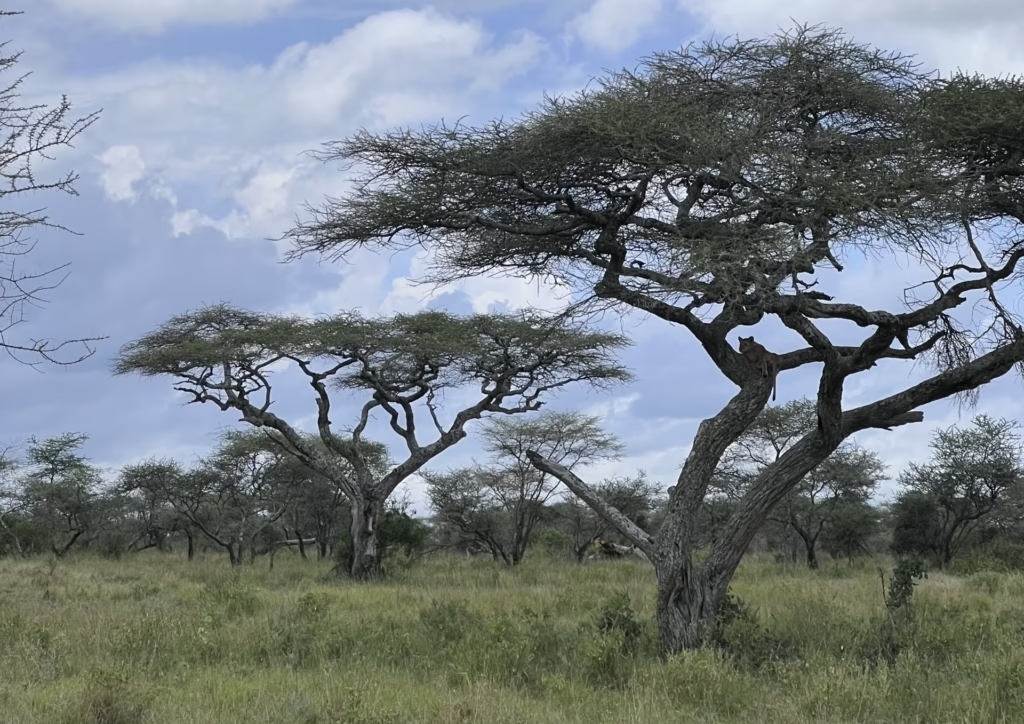
Tree Climbing Lion- Lake Manyara
2. Why No Perfect Month Exist
If you’re searching for a single, flawless window to experience everything Tanzania offers, you’re already working against the rhythm of the wild. Safari isn’t a staged performance—it’s a living system, shaped daily by rain, movement, and instinct. And nature, quite simply, doesn’t follow a fixed schedule.
Take the Great Migration, often treated like a calendar event. In reality, it’s a rain-driven journey. The herds move in search of fresh grazing, which means their timing shifts every year. A river crossing that happens in July one year might peak in August—or barely occur where expected—depending on where the rains have fallen. You’re not booking a show; you’re entering a moving story.
Then there’s geography. Tanzania isn’t one uniform safari zone—it’s a collection of ecosystems that peak at different times. The Northern Circuit—think the Serengeti and Ngorongoro—offers strong year-round viewing, but with shifting highlights. Meanwhile, the Southern parks like Ruaha or Nyerere come alive in the dry season and fade into near-inaccessibility during heavy rains. Choosing when to go is inseparable from choosing where.
📞 PLAN YOUR TANZANIA SAFARI
Tell us your travel dates, budget, and preferences — we will design your perfect safari.
 Free consultation Custom itinerary No obligation
 Get your safari plan within 24 hours
Certain moments do stand out. January to February transforms the southern Serengeti into a cradle of life, where thousands of wildebeest calves are born within weeks—drawing predators and delivering raw, emotional wildlife encounters. Fast forward to July through October, and attention shifts north, where dramatic river crossings define the migration’s most iconic scenes. These are peaks—but they don’t overlap.
And even within these “known” periods, unpredictability rules. Rains can arrive early, linger longer, or disappear entirely. One trip might bring crisp, dry air and perfect visibility; another might trade that for dramatic skies and sudden storms. Landscapes swing between extremes—powdery dust that hangs in the air, thick mud that slows movement, or lush grass that hides animals in plain sight. Each version changes not just what you see, but how you experience it.
So the idea of a “perfect month” begins to fall apart. Because perfection, in this context, isn’t universal—it’s personal.
👉 The real takeaway: the “perfect” time for a Tanzania safari depends entirely on what you value most.
3. The Core Trade-Offs (The Reality Check Section)
Every safari decision is a quiet negotiation. You’re not choosing the best time—you’re choosing what you’re willing to prioritize. And nowhere is that trade-off clearer than in Tanzania’s dry season.
🌵 3.1 Dry Season (June–October)
This is the season most people imagine when they picture a classic African safari. The grass thins, the skies clear, and the drama becomes easier to witness. If your goal is to maximize sightings and minimize uncertainty, this is the closest thing to a “safe bet.”
✅ Pros
Peak wildlife visibility
As water sources shrink, animals are drawn into tighter spaces—rivers, waterholes, and permanent springs. What was once scattered becomes concentrated. Predators follow prey. Encounters become frequent, sometimes relentless.
Iconic migration moments
This is when the Great Migration builds its reputation. In the north, wildebeest and zebra face the peril of river crossings—fast currents, waiting crocodiles, and chaos at the banks. It’s raw, cinematic, and unforgettable.
Reliable, predictable weather
Days are typically dry, sunny, and comfortable (around 20–30°C). Roads are accessible, game drives run smoothly, and visibility is consistently high. It’s the easiest season logistically—and that matters more than most expect.
⚠️ Cons
High prices (up to +50%)
Demand peaks—and so do costs. Lodges, flights, and park fees all climb sharply. What feels like a dream trip can quickly become a premium investment?
Crowds (especially August)
You won’t be alone. Popular areas—particularly river crossing نقاط in the northern Serengeti—can draw multiple vehicles to a single sighting. The wilderness is still vast, but the feeling of exclusivity can fade.
Less greenery, fewer newborns
The landscape shifts toward gold and dust. While beautiful in its own stark way, it lacks the lush vibrancy of wetter months. And with calving season long past, you’ll see fewer young animals and less of that tender, early-life drama.
✨The dry season delivers clarity, consistency, and spectacle—but at a cost. It’s not perfect. It’s powerful in specific ways. And whether those ways matter most to you… that’s the real decision.✨
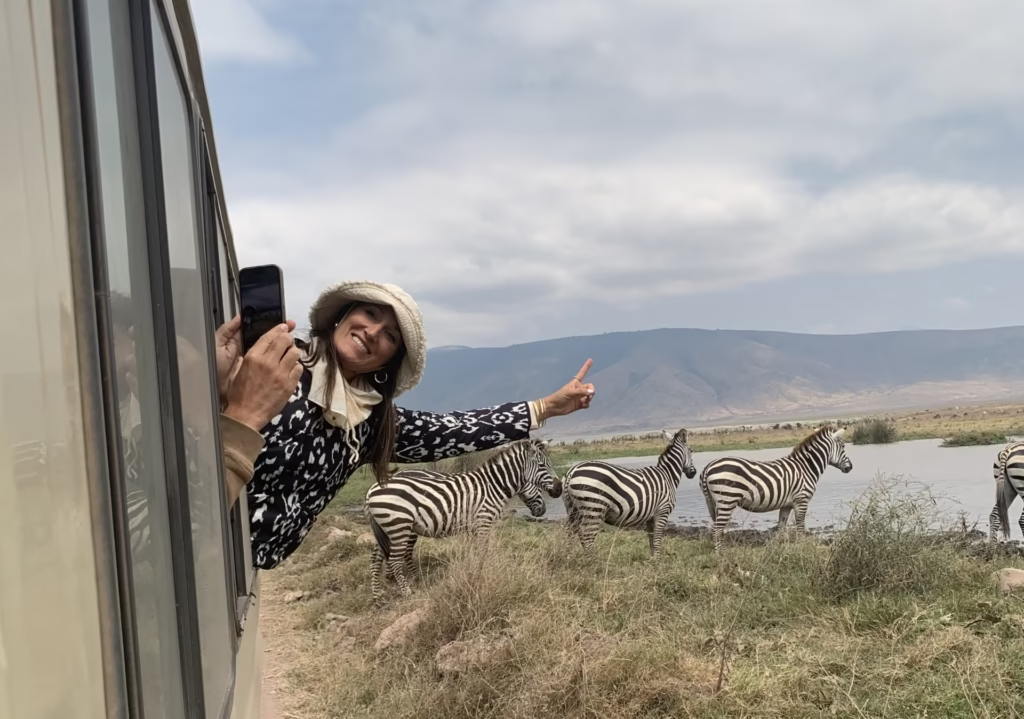
Ngorongoro Crater
🌿 3.2 Wet Season (March–May + November)
If the dry season is about clarity and control, the wet season is about atmosphere and abundance. This is Tanzania at its most alive—unpolished, unpredictable, and, for the right traveler, deeply rewarding. It’s less about ticking boxes and more about feeling the landscape.
✅ Pros
Dramatic landscapes (green, vibrant)
The transformation is immediate and striking. Plains that once looked sunburnt turn electric green. Skies build into towering clouds, light becomes softer, richer—perfect for photography. It’s not just a safari; it’s a visual spectacle.
Birdlife + newborn animals
This is peak season for birders, with migratory species arriving in full color and chorus. Across the plains, new life appears—young antelope, playful interactions, subtle predator movements. It’s quieter than the calving peak, but still full of life if you know where to look.
Fewer tourists, lower prices
The crowds thin out dramatically. You might find yourself alone at sightings that would be packed in peak season. And the cost? Often 30–50% lower. Luxury becomes more accessible, and the experience feels more intimate, more personal.
⚠️ Cons
Rain disruptions
Afternoon showers are common, and during the long rains (April–May), they can be heavy and persistent. Game drives may need to shift around weather windows, and plans require flexibility.
Harder wildlife spotting (spread out)
With water everywhere, animals don’t need to cluster. They disperse into the landscape, often hidden in tall grass or woodland. Sightings still happen—but they demand more patience and a sharper eye.
Possible lodge closures (April–May)
Some camps and lodges shut down during the heaviest rains, particularly in more remote areas. Accessibility can also be limited due to muddy roads, especially in southern parks.
✨The wet season isn’t lesser—it’s simply different. It trades predictability for mood, density for space, and spectacle for subtlety. For some, that’s a compromise. For others, it’s exactly where the magic lives.✨
⚖️ 3.3 Shoulder Season (January–February)
This is the quiet contender—the season that doesn’t shout for attention but quietly delivers one of the most emotionally charged safari experiences in Tanzania. It sits between extremes, offering a rare kind of balance: not too crowded, not too expensive, yet rich with life and drama in its own distinctive way.
✨Choose the right journey. Discover how a well-crafted migration safari aligns timing, wildlife movement, and comfort into one unforgettable trip.✨
✅ Pros
Calving season + predator action
Across the southern plains, thousands of wildebeest calves are born within a short window. It’s raw, intense, and deeply moving. But this abundance doesn’t go unnoticed—predators are never far behind. Lions, cheetahs, and hyenas become highly active, creating a constant undercurrent of tension. It’s not the chaos of river crossings—it’s something more intimate, more emotional.
Good balance of cost and crowds
You’re outside the peak rush, which means fewer vehicles at sightings and more breathing room overall. Prices tend to sit in a more reasonable range compared to the dry season, making this a sweet middle ground between affordability and quality experience.
⚠️ Cons
Taller grass = harder sightings
The landscape is still lush from recent rains, and that beauty comes with a trade-off. Grass can be high, making it easier for animals to disappear into the scenery. Spotting wildlife requires more patience—and a skilled guide becomes even more valuable.
Not migration crossing season
If your dream is to witness dramatic river crossings, this isn’t the time. The herds are concentrated in the south, focused on calving rather than movement. The spectacle here is quieter, grounded in life cycles rather than high-stakes crossings.
✨The shoulder season doesn’t try to be everything—and that’s exactly its strength. It offers a focused, meaningful slice of the safari experience. Less spectacle, perhaps—but often more connection.✨
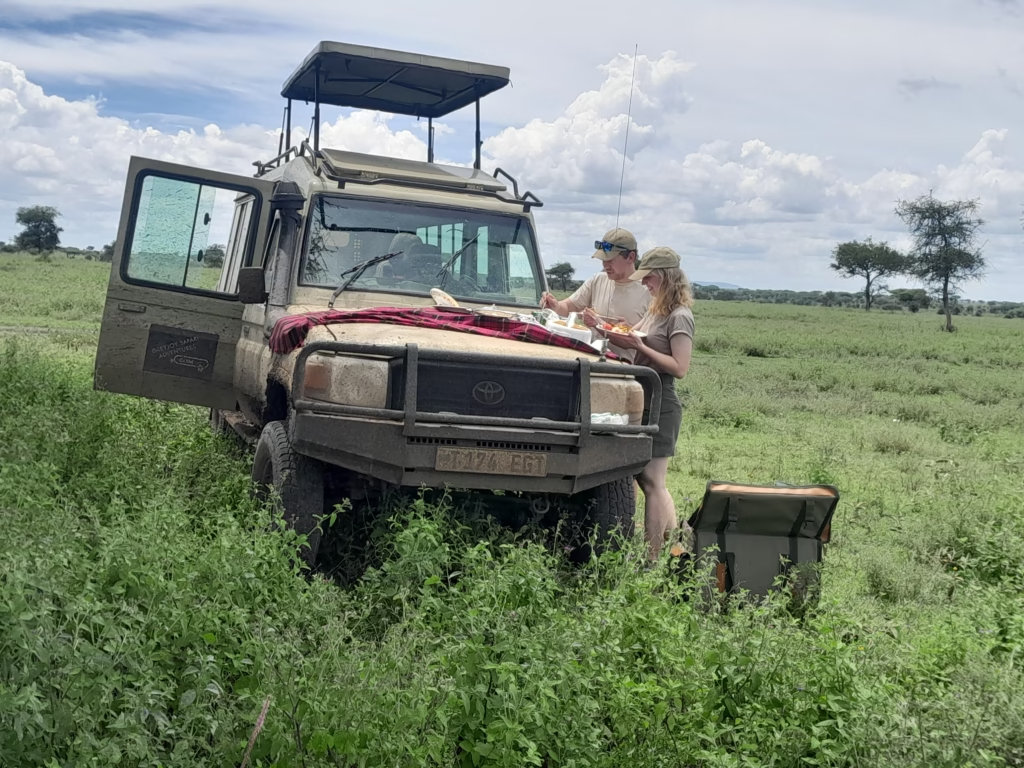
Quick Bush Lunch-Ndutu Region(Southern Serengeti)
4. The “Sweet Spot” Framework (Decision Engine)
How to Choose YOUR Best Time?
At this point, the illusion of a “perfect month” is gone—and that’s a good thing. Because what replaces it is far more powerful: control. Choosing the right time for your Tanzania safari isn’t about chasing perfection. It’s about aligning the experience with what matters most to you.
🎯 Step 1: Define Your Priority
Before you look at calendars, prices, or seasons, pause and ask a sharper question: What do I actually want from this safari? Not everything—just the one or two things that would make the trip unforgettable.
Because here’s the truth: you can’t optimize for everything at once. But you can optimize for what matters most.
- Big Five sightings?
If your goal is to confidently tick off lion, leopard, elephant, rhino, and buffalo, you’ll want conditions that make animals easier to find—not just present. - Migration drama?
Are you chasing adrenaline—the chaos of river crossings, the tension, the spectacle? Then timing becomes tightly linked to movement patterns, not just seasons. - Photography?
Light, color, atmosphere—these shift dramatically throughout the year. Do you want golden dust and stark contrast, or lush greens and moody skies? - Budget?
This isn’t just a constraint—it’s a strategic lever. Lower seasons can unlock experiences that would otherwise be out of reach, if you’re willing to accept a few trade-offs.
✨Get this step right, and everything else becomes easier. Get it wrong, and even a “perfectly timed” safari can feel slightly off.
Because the sweet spot isn’t on the calendar. It starts with your priorities.✨
📞 PLAN YOUR TANZANIA SAFARI
Tell us your travel dates, budget, and preferences — we will design your perfect safari.
Free consultation Custom itinerary No obligation
Get your safari plan within 24 hours
⚖️ Step 2: Choose Your Trade-Off Tolerance
Now that you know what you want, the next question is sharper—and more honest: What are you willing to deal with to get it? Because every advantage in a Tanzania safari comes paired with a compromise. The key isn’t avoiding trade-offs. It’s choosing the ones you’re comfortable living with.
Rain vs Crowds vs Cost
You can’t minimize all three at once. Want the best weather and easiest wildlife viewing? You’ll share it with more people—and pay for the privilege. Prefer quieter parks and better value? Then you may need to accept rain showers or slightly more effort in spotting animals. Every choice shifts the balance.
Comfort vs Authenticity
Do you want seamless, predictable days—clear skies, smooth roads, everything running like clockwork? Or are you drawn to something wilder—sudden storms, dramatic skies, fewer vehicles, and a deeper sense of immersion? One offers ease. The other offers atmosphere. Neither is better—just different experiences.
✨This step is where your safari becomes personal. Because the “right” time isn’t about avoiding downsides—it’s about choosing the kind of experience that feels right to you.✨
🧭 Step 3: Match Month to Location
Here’s where strategy replaces guesswork. Timing alone isn’t enough—you need to align when you go with where you go. Tanzania’s wildlife isn’t evenly distributed; it shifts across regions with the seasons.
- Southern Serengeti → January–February
This is where the herds gather to give birth. If calving season is your priority, this is your stage—wide plains, newborn life, and constant predator tension. - Northern Serengeti → July–September
The migration moves north, and with it comes the drama of river crossings. If you’re chasing iconic, high-intensity moments, this is where they unfold. - Southern Parks (Ruaha, Nyerere) → Dry Season only
These remote, less-visited parks shine when water is scarce and wildlife concentrates. During heavy rains, access becomes difficult and experiences less reliable—timing here is non-negotiable.
✨Get this alignment right, and your safari stops being a gamble. It becomes intentional—designed around movement, rhythm, and timing. And that’s where the real “sweet spot” begins to take shape.✨
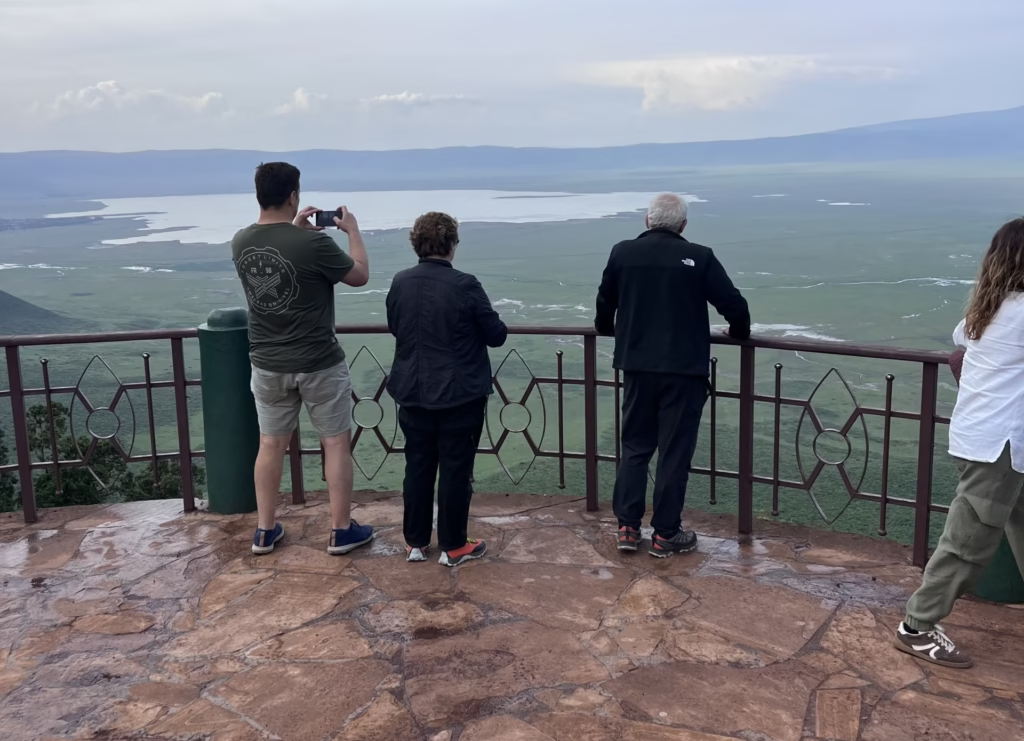
Ngorongoro View Point
🌴 Step 4: Factor Add-Ons
A Tanzania safari rarely exists in isolation. For many travelers, it’s part of a bigger story—beaches, mountains, recovery days, or once-in-a-lifetime challenges. And here’s where timing becomes even more strategic: your “perfect safari window” can shift depending on what you pair it with.
- Zanzibar → Best June–October
If your plan includes white turquoise water and slow coastal days, the dry season aligns beautifully. Clear skies, low humidity, and calm seas make this the ideal post-safari unwind. Go outside this window, and you risk rain interrupting that postcard-perfect finish. - Kilimanjaro → Best June–October / December–March
Climbing Africa’s highest peak demands its own timing logic. Dry, stable conditions increase summit success and safety. June–October offers crisp, reliable weather, while December–March provides another solid window with slightly warmer conditions. Aligning this with your safari can either simplify logistics—or complicate them if seasons clash.
The insight here is simple but often missed: your safari doesn’t exist in a vacuum. The more elements you add, the more intentional your timing needs to be.
✨Ready to turn your ideal timing into a real plan? Browse our curated routes across Serengeti, Ngorongoro, and Tarangire to build a safari that fits your exact travel style.✨
Further Articles for Reading
Why Serengeti National Park Is the Best Safari Destination in Africa
Discover why Serengeti is the best safari destination Africa, from Great Migration to diverse ecosystems, wildlife density, and unforgettable experiences.
Serengeti Animals You Must See in 2026✨
Discover Serengeti animals to see in 2026—from the Big Five to rare wildlife. Plan your safari with expert tips on.
Big 5 Safari Tanzania: Where to See Each Animal in 2026
Big 5 Safari Tanzania: Where to See Each Animal in 2026 The Promise of the Big 5 in Tanzania (2026...
Traveling to Tanzania in 2026: Visa, Vaccines, & Requirements
Traveling to Tanzania in 2026? Discover visa rules, entry requirements, vaccines, and expert travel tips for a seamless safari and...
🔄 Step 5: Build Flexibility
Even the best-laid safari plans need breathing room. Tanzania rewards those who allow for a little unpredictability—and punishes those who try to control every detail. Flexibility isn’t a backup plan; it’s part of the strategy.
- Morning game drives during wet months
Rains typically build in the afternoon, which means early starts become your advantage. Dawn drives offer clearer skies, active wildlife, and the kind of soft light photographers chase. Shift your rhythm, and the weather becomes manageable rather than disruptive. - Buffer days for weather shifts
A tight itinerary leaves no room for nature’s mood swings. Adding an extra day or two creates space—for a delayed sighting, a washed-out drive, or simply a moment worth revisiting. Often, it’s these unscheduled pockets that turn a good safari into a great one.
✨Control what you can. Adapt to what you can’t. That balance—that quiet flexibility—is where the real magic of a Tanzania safari lives.✨
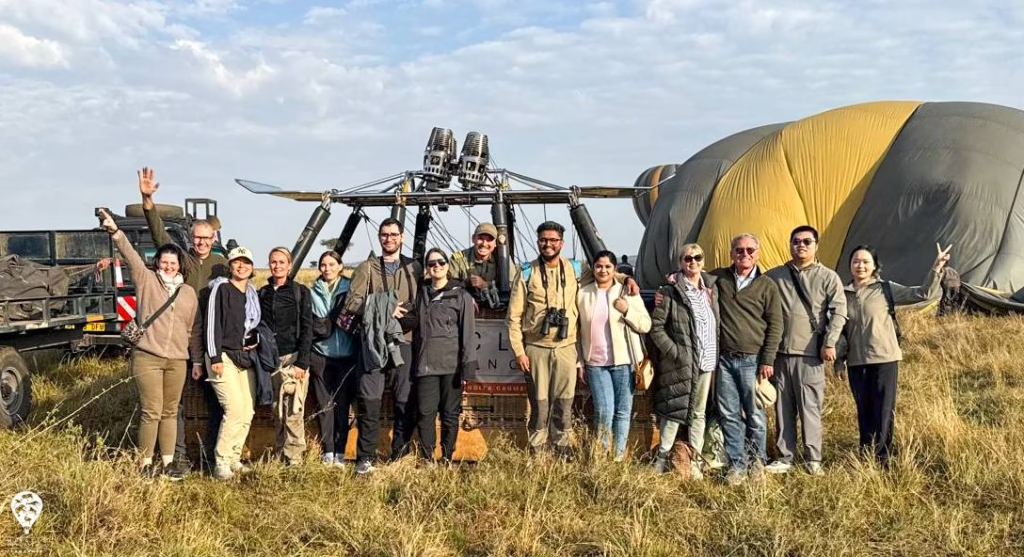
Hot Air Balloon Safari- Serengeti NP
5. The Real Answer: So… When Is the Sweet Spot?
The Closest Thing to “Seeing Everything”
After all the nuance, the shifting seasons, and the trade-offs, you’re still left with the same question: When should I actually go?
Here’s the clearest, most honest answer:
June to October is the best overall time for a Tanzania safari.
This is when the odds stack most heavily in your favor. Wildlife is easier to spot as animals gather around limited water sources. The weather is dry and predictable. Roads are accessible. And across multiple parks, the experience is consistently strong. If your goal is to maximize what you see—and reduce uncertainty—this window delivers.
But let’s be precise about what that means.
It’s not perfect. It’s just the most reliable.
You’ll trade lower prices for higher ones. Solitude for shared sightings. Lush green landscapes for golden, dust-toned plains. The magic is still there—but it comes in a different form.✨
✨If you’re considering June–October for the best overall experience, now is the time to act. Secure your spot on a premium
8-day Bib 5 & Culture experience before peak availability fills up.✨
👉 Maximum probability, not maximum perfection.
✨And sometimes, that’s exactly what you need—especially if it’s your first safari, or your one chance to experience Tanzania at its most consistently rewarding.✨
6. Recommendations by Traveler Type
Your Safari, Your Rules
Not all safaris are created equal—because not all travelers are. The “best” time shifts depending on who you’re traveling with, what excites you, and how you want the experience to feel. For families, the equation changes in a very specific way.
👨👩👧 6.1 Families
Best Time: January–February
Traveling with family—especially with children—calls for a balance between excitement, comfort, and manageability. You want enough action to keep everyone engaged, without the overwhelm of peak crowds or overly demanding conditions. That’s exactly where January and February shine.
Calving season = engaging + less chaotic
Across the southern plains, thousands of wildebeest calves are born within a short window. For kids, this is safari storytelling at its most immediate—new life, playful movement, and the constant possibility of predator encounters. It’s dynamic, but not chaotic in the way river crossings can be. The drama is there, just in a more digestible, emotionally rich form.
At the same time, you avoid the heaviest tourist traffic of the dry season. Fewer vehicles at sightings mean a calmer, more flexible experience—something that makes a real difference when traveling with younger attention spans.
Add in generally warm conditions and relatively low rainfall compared to later wet months, and you get a window that feels both alive and accessible. Not too intense. Not too quiet. Just right for sharing the experience as a family.
📞 PLAN YOUR TANZANIA SAFARI
Tell us your travel dates, budget, and preferences — we will design your perfect safari.
Free consultation Custom itinerary No obligation
Get your safari plan within 24 hours
💑 6.2 Couples / Honeymooners
Best Time: September
If a safari for you is about connection—shared moments, quiet luxury, and just enough drama to make it unforgettable—September hits a rare balance. It sits just after the peak rush of August, when the intensity of the migration is still alive, but the crowds begin to thin.
Balance of action + fewer crowds
You still get exceptional wildlife viewing—big cats, migration movement, golden landscapes—but with more space to breathe. Fewer vehicles at sightings, more intimate camp experiences, and a slower, more romantic rhythm overall.
The atmosphere shifts subtly. Sunsets feel quieter. Bush dinners feel more personal. The experience becomes less about ticking boxes and more about sharing moments—which is exactly what couples and honeymooners are really after.
💸 6.3 Budget Travelers
Best Time: March–May or November
If your goal is to experience Tanzania without stretching your budget to its limits, timing becomes your greatest advantage. The so-called “off-season” isn’t empty—it’s simply overlooked. And that creates opportunity.
Big savings, fewer tourists
During these months, prices can drop by 30–50%. Lodges offer better deals, parks feel quieter, and you gain a sense of space that’s hard to find in peak season. It’s a different kind of luxury—one defined by calm rather than cost.
Yes, rain becomes part of the equation, especially from March to May. But if you’re flexible and realistic, it rarely defines the entire experience. Instead, you trade a bit of predictability for significant savings—and often, a more personal connection with the landscape.
For the right traveler, this isn’t a compromise. It’s a strategic win.
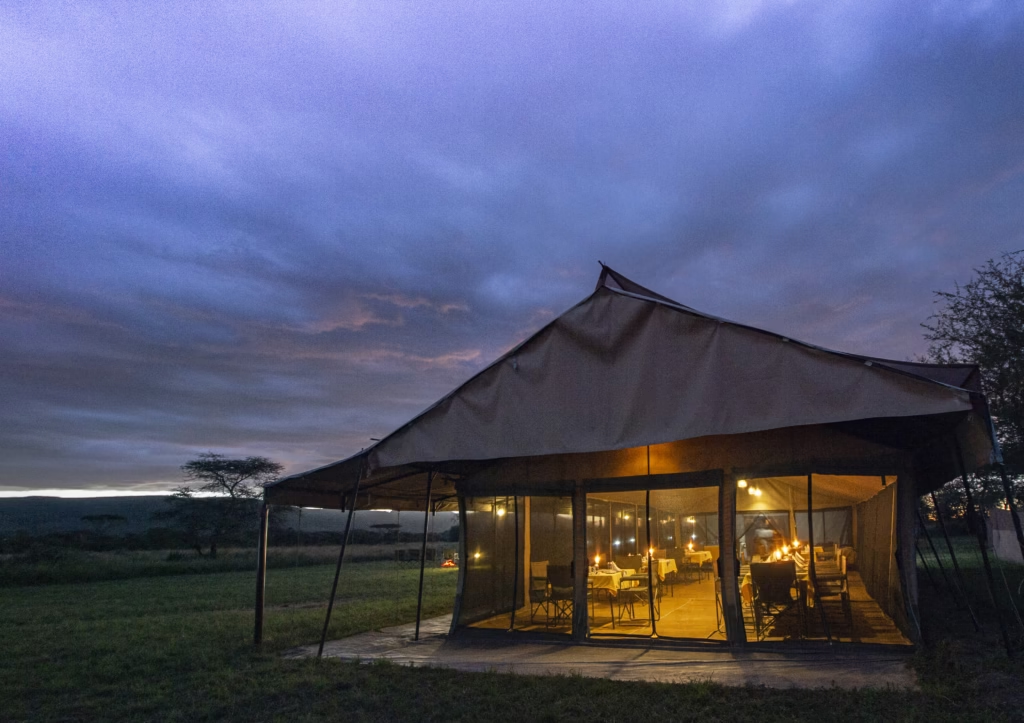
Tented Camp-Serengeti NP.
🛩 6.4 Luxury Travelers
Best Time: June–October
For luxury travelers, the goal isn’t just to see wildlife—it’s to experience it effortlessly. Every detail matters: smooth transfers, exceptional guiding, prime locations, and a sense that everything simply works. That level of precision depends heavily on timing—and the dry season delivers it.
Premium experience, seamless logistics
With clear skies and reliable conditions, flights run on schedule, roads stay accessible, and high-end camps operate at their best. Wildlife sightings are consistent, which means less time searching and more time experiencing.
This is also when Tanzania’s top-tier lodges truly shine—private decks overlooking waterholes, curated game drives, and service that feels intuitive rather than intrusive. Yes, it comes at a premium. But what you’re paying for isn’t just access—it’s effortless excellence.
📞 PLAN YOUR TANZANIA SAFARI
Tell us your travel dates, budget, and preferences — we will design your perfect safari.
Free consultation Custom itinerary No obligation
Get your safari plan within 24 hours
📸 6.5 Photographers & Birders
Best Time: November–April
If your safari is about capturing moments—through a lens or through observation—then the wet months unlock a completely different Tanzania. One that’s richer in color, softer in light, and alive with movement beyond the obvious.
Color, contrast, migratory birds
Landscapes turn vivid green, skies become dramatic canvases, and the light shifts into something far more nuanced—perfect for photography. Add to that the arrival of migratory birds, and suddenly the environment feels layered, detailed, and constantly changing.
Wildlife may be less concentrated, but visually, everything becomes more dynamic. This isn’t about quantity of sightings—it’s about quality of scenes. For those who look closely, it’s one of the most rewarding times to be in the field.
🧭 6.6 First-Time Visitors
Best Time: June–October
If this is your first safari, the goal is simple: you want it to deliver. You want to see the animals you’ve imagined, experience the landscapes you’ve dreamed about, and leave feeling like you didn’t miss out.
Best chance to “see it all”
The dry season stacks the odds in your favor. Wildlife is easier to find, conditions are predictable, and multiple parks perform consistently well. It’s the least complicated way to access the full spectrum of what Tanzania offers.
Is it the most nuanced experience? Not always. But it’s the most reliable introduction. And for a first-time visit, that confidence—that sense of it worked exactly as I hoped—is everything.
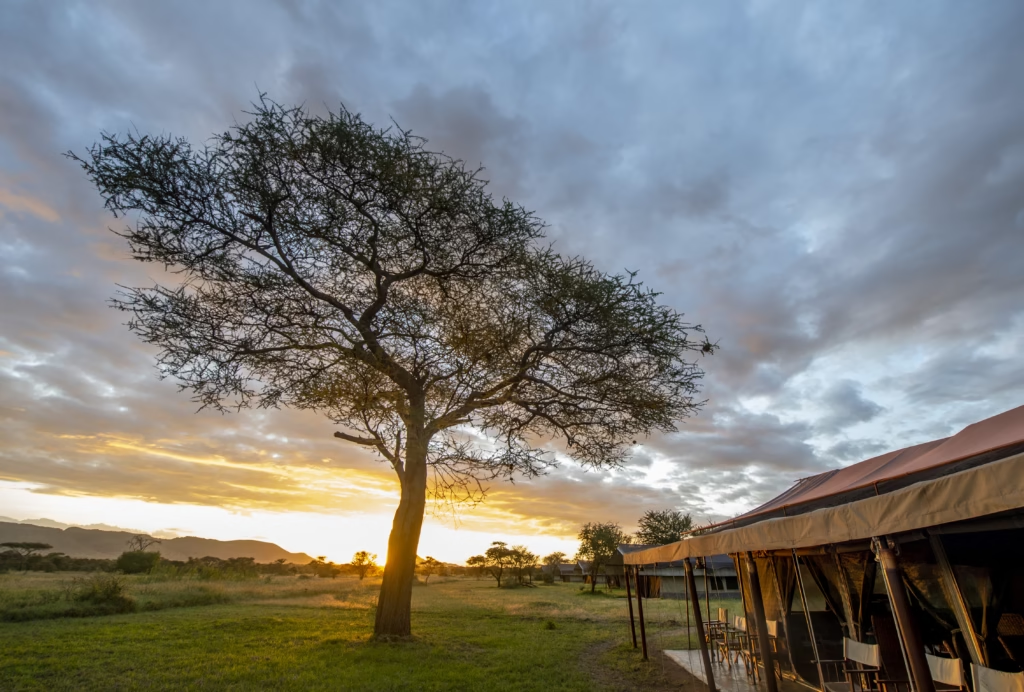
Golden Sunset View- Central Serengeti
7. Pro Tips Most Blogs Don’t Tell You
Most guides stop at seasons and wildlife. But the difference between a good safari and an unforgettable one often comes down to the details no one spells out. Here’s what experienced travelers—and seasoned guides—quietly know.✨
Book peak season 6–12 months ahead
The best camps, guides, and locations don’t wait around. If you’re targeting June–October, especially migration hotspots, availability disappears fast. Planning early isn’t just about securing a spot—it’s about securing the right spot.
Mix regions (north + south) instead of chasing perfection
Many travelers try to time one location perfectly. A smarter move? Combine regions. Pair the Northern Circuit’s consistency with the raw, uncrowded feel of southern parks. Instead of chasing a single “perfect moment,” you create a layered, richer experience across ecosystems.
Accept that unpredictability is part of the magic
No matter how well you plan, nature will rewrite parts of your itinerary. The migration may shift. The weather may surprise you. But this isn’t a flaw—it’s the essence of safari. The wild doesn’t perform on demand, and that’s exactly why it feels real.
The “missed moment” often becomes the most memorable one
You might not see the river crossing you imagined. But you might witness something else—quieter, rarer, completely unplanned. A lone predator at dusk. A silent sunrise over empty plains. These are the moments that stay with you—not because you planned them, but because you didn’t.
✨In the end, the best safaris aren’t perfectly executed. They’re felt. And these small shifts in mindset? They’re what turn a trip into a story worth telling.✨
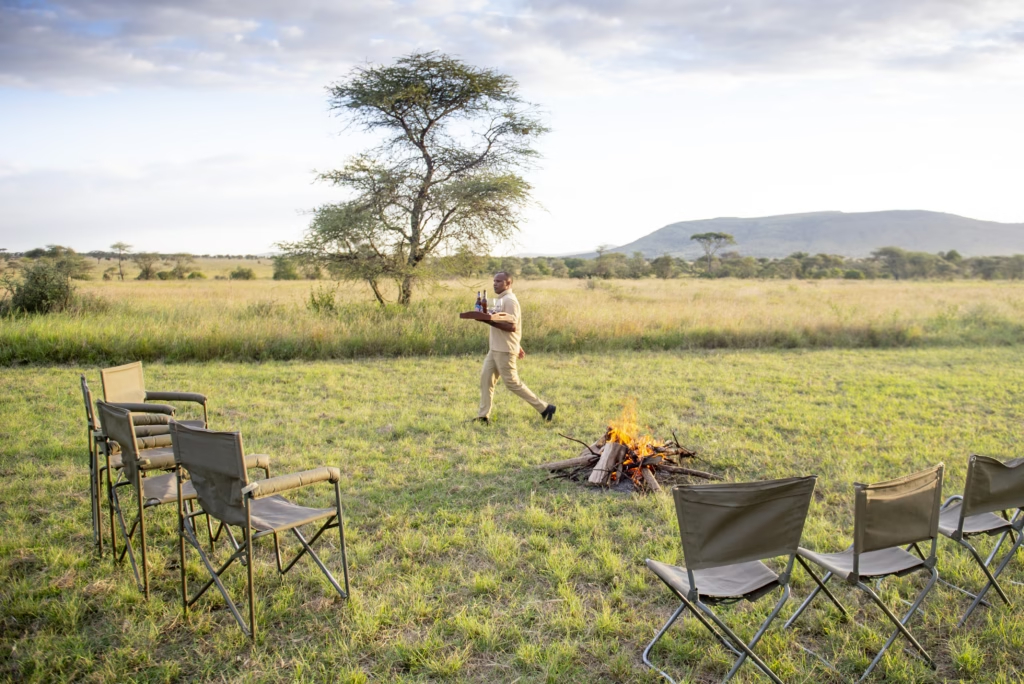
Bornfire-Serengeti NP
8. Conclusion: Redefining the “Perfect Safari”
✨By now, the idea of a “perfect” safari month should feel a little… outdated. Because what you’ve really uncovered isn’t a single ideal window—but something far more useful.✨
There is no perfect time—only perfect-for-you timing.
The best safari isn’t defined by a calendar. It’s defined by alignment—between what you want, what you value, and what you’re willing to trade to get it.
And those trade-offs? They’re not limitations. They’re opportunities.
Choosing fewer crowds might give you deeper, quieter moments. Accepting a bit of rain might reward you with richer landscapes and more intimate encounters. Every “compromise” is simply a different version of the experience waiting to unfold.
So instead of chasing everything, choose what matters. Instead of fearing what you might miss, lean into what you’ll gain.
✨Your perfect safari isn’t a fixed date—it’s a decision. Start planning your Tanzania adventure today and create a journey that matches exactly what you want to experience.✨
✨👉 The best safari isn’t when everything happens—it’s when the right things happen for you.✨
9. FAQs: Best Overall Time Tanzania Safari
1. What is the best overall time Tanzania safari?
The best overall time Tanzania safari is typically June to October, during the dry season. This period offers the most reliable wildlife viewing, clear weather, and excellent conditions across major parks.
2. Why is June to October considered the best overall time Tanzania safari?
This window concentrates animals around water sources, making sightings easier and more frequent. It also coincides with key migration moments and offers predictable weather—making it the most consistent choice for most travelers.
3. Is there a perfect month for a Tanzania safari?
No—there is no single perfect month. The best overall time Tanzania safari depends on your priorities, as each season offers different advantages and trade-offs in wildlife, weather, and cost.
4. Can I still enjoy a safari outside the best overall time Tanzania safari?
Absolutely. Months outside June–October offer unique experiences like calving season (January–February) or lush landscapes and birdlife (November–April). You may trade some visibility for fewer crowds and better prices.
5. How does the Great Migration affect the best overall time Tanzania safari?
The migration moves throughout the year, so timing depends on what you want to see. River crossings usually happen from July to October, while calving occurs in January–February. The “best” time depends on which stage interests you most.
6. Is the best overall time Tanzania safari also the most expensive?
Yes, generally. The dry season (June–October) is peak season, meaning higher prices and more demand. However, it also delivers the most reliable and rewarding wildlife experiences.
7. What is the best overall time Tanzania safari for first-time visitors?
8. How do I choose my personal best overall time Tanzania safari?
Start by identifying your priorities—wildlife events, budget, crowd levels, or photography. Then match those preferences to the season that offers the closest fit. The best time isn’t universal—it’s personal.
📞 PLAN YOUR TANZANIA SAFARI
Tell us your travel dates, budget, and preferences — we will design your perfect safari.
Free consultation Custom itinerary No obligation
Get your safari plan within 24 hours
Further Articles for Reading
Why Serengeti National Park Is the Best Safari Destination in Africa
Discover why Serengeti is the best safari destination Africa, from Great Migration to diverse ecosystems, wildlife density, and unforgettable experiences.
Serengeti Animals You Must See in 2026✨
Discover Serengeti animals to see in 2026—from the Big Five to rare wildlife. Plan your safari with expert tips on.
Big 5 Safari Tanzania: Where to See Each Animal in 2026
Big 5 Safari Tanzania: Where to See Each Animal in 2026 The Promise of the Big 5 in Tanzania (2026...
Traveling to Tanzania in 2026: Visa, Vaccines, & Requirements
Traveling to Tanzania in 2026? Discover visa rules, entry requirements, vaccines, and expert travel tips for a seamless safari and...