
Tarangire National Park: Elephant Capital of Tanzania.
Table of Contents
ToggleIntroduction: Why Tarangire Holds the Elephant Crown
In northern Tanzania, few safari destinations command attention quite like Tarangire National Park. Often called Tanzania’s “elephant capital,” the park is famous for its enormous seasonal elephant gatherings, where herds move steadily toward the life-giving Tarangire River during the dry season. In peak months, visitors can witness dozens—sometimes hundreds—of elephants spread across the riverbanks, creating one of East Africa’s most memorable wildlife scenes.
But Tarangire’s identity is shaped by more than sheer numbers. Ancient baobab trees tower over the landscape like natural monuments, while seasonal migration patterns dictate the rhythm of life inside the park. As water sources shrink elsewhere, wildlife funnels into Tarangire’s permanent river system, transforming the park into a refuge for elephants and countless other animals.
What makes Tarangire especially remarkable is its consistency. While sightings always depend on timing and location, Tarangire elephants remain one of Africa’s most reliable wildlife spectacles during the dry season. The combination of massive elephant herds, dramatic baobab forests, and predictable seasonal movement gives the park a character entirely its own—wild, raw, and unmistakably Tanzanian.
Visitors wanting to experience Tarangire’s elephant herds alongside the plains of the Serengeti and the wildlife-rich Ngorongoro Crater often combine these destinations into a multi-day northern Tanzania safari. Our 5-Day Private Safari – Serengeti, Ngorongoro & Tarangire is designed for travelers looking to experience Tanzania’s most iconic landscapes in a single journey.
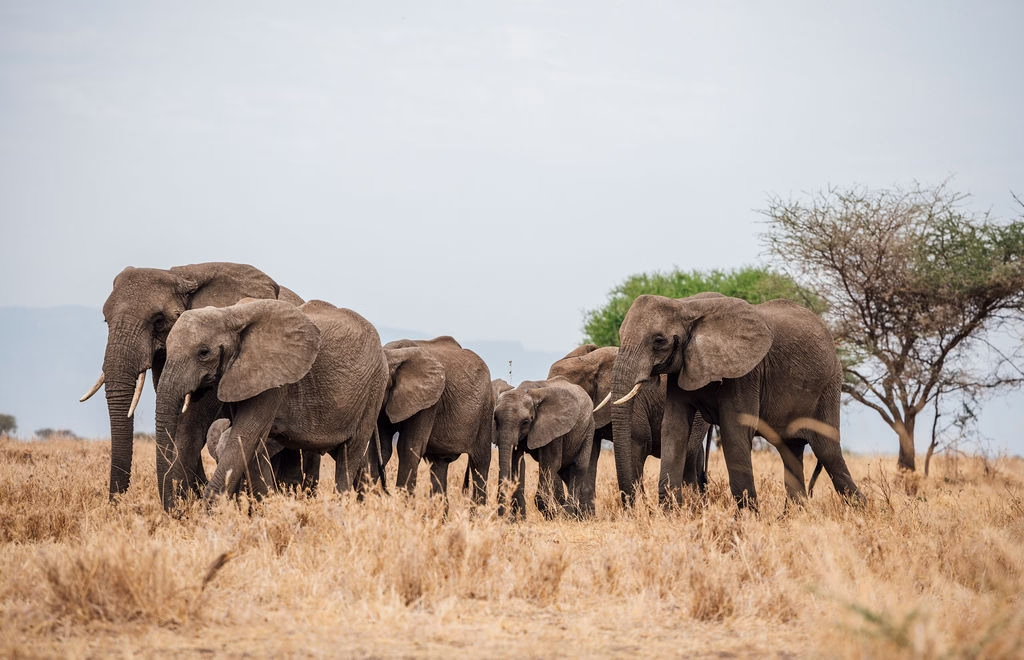
Tarangire elephant heards
2. Elephant Herds: The Giants of Tarangire
2.1 Overview of Elephant Population Dynamics
Tarangire National Park supports one of the largest concentrations of elephants in Tanzania, especially during the dry season when wildlife gathers around the permanent Tarangire River. Between June and October, elephant numbers inside the park can rise dramatically, with estimates reaching up to 2,000 individuals as migrating herds move in from surrounding ecosystems in search of reliable water.
This seasonal movement is what gives Tarangire its reputation as Tanzania’s elephant capital. Unlike parks where sightings can be scattered and unpredictable, Tarangire’s dry-season conditions naturally concentrate elephants into smaller areas, making encounters far more frequent. Large family groups often travel together, including calves protected within tightly bonded herds led by experienced matriarchs.
The park’s elephant population is not static throughout the year. During the rainy season, many herds disperse beyond the park boundaries as temporary water sources become available across the wider landscape. Once the dry months return, the Tarangire River becomes a lifeline again, drawing elephants back into the park in remarkable numbers. This annual cycle creates one of East Africa’s most dependable elephant-viewing experiences and explains why Tarangire elephants are so strongly associated with seasonal migration and river-based survival.
2.2 Migration Pattern Toward the Perennial Tarangire River
The movement of elephants in Tarangire National Park is closely tied to water. During the dry season, thousands of animals migrate from surrounding dispersal areas toward the permanent Tarangire River, one of the few reliable water sources in the region. As seasonal ponds and smaller rivers dry out across northern Tanzania, elephants steadily converge on the park in search of water, shade, and grazing land.
This migration creates the dramatic wildlife concentrations that define Tarangire’s reputation. Elephant herds often travel in large family groups, moving along established routes that eventually lead to the riverbanks. In peak dry months, especially from July through October, the river corridor becomes the center of activity, with elephants gathering throughout the day to drink, cool themselves, and interact socially.
The migration is not random—it follows a seasonal survival rhythm shaped by rainfall patterns and resource availability. Areas farther from the river may feel surprisingly quiet during dry periods, while river-adjacent zones can hold massive concentrations of wildlife at the same time. This natural funnel effect is one of the main reasons Tarangire offers such reliable elephant sightings compared to many other safari destinations in Tanzania.
Because elephant movement in Tarangire changes dramatically with rainfall and water availability, timing plays a major role in safari quality. Our Safari Planning Guide explains the best seasons, route combinations, and wildlife patterns across northern Tanzania to help travelers choose the right itinerary.
2.3 Herd Behavior in Tarangire
One of the most striking features of Tarangire National Park is the scale of its elephant gatherings during the dry season. Near the Tarangire River, separate family units often merge into enormous congregations, creating scenes where dozens—or even hundreds—of elephants can be seen moving, feeding, and drinking within the same area. These large formations are especially common when water sources become limited elsewhere in the ecosystem, forcing herds to concentrate around the riverbanks.
Despite the size of these gatherings, elephant society in Tarangire is deeply structured. Research and long-term monitoring within the park have identified approximately 26 distinct family groups, each led by experienced matriarchs that guide herd movement and protect younger members. These family bonds are central to elephant survival, shaping everything from migration patterns to feeding behavior and responses to danger.
Calves are a common sight throughout the park, particularly during the dry season when families gather in greater numbers. Young elephants stay close to their mothers and older females, often walking beneath larger bodies for protection from predators and environmental stress. The regular presence of calves is also an important indicator of population stability, suggesting that Tarangire’s elephant population has remained healthy over time with no major long-term decline linked to poaching inside the park.
Together, these layered social structures give Tarangire elephants a presence that feels both powerful and deeply connected—massive herds on the surface, but complex family relationships underneath.
🦓 PLAN YOUR TANZANIA SAFARI
 Tell us your travel dates, Budget, and Preferences
 We craft your personalized Tanzania Safari itinerary
 Confirm your Booking & get ready for the Adventure of a lifetime
2.4 Where Elephant Sightings Are Strongest
In Tarangire National Park, elephant sightings are closely tied to water availability, especially during the dry season. The highest-density viewing areas are found along the Tarangire River and its surrounding corridors, where elephants gather daily to drink, cool themselves, and feed on nearby vegetation. These river zones become natural wildlife highways, attracting not only elephants but also zebra, buffalo, wildebeest, and predators following the movement of prey.
For visitors hoping to see large herds, the riverbanks consistently offer the strongest opportunities. During peak dry months, elephants may spend hours moving between the water and shaded feeding areas, creating extended viewing experiences that are rare in many other safari destinations. It is also common to witness multiple family groups sharing the same space, particularly during late afternoon when temperatures begin to drop.
By contrast, sightings become less predictable in off-river regions of the park. Areas farther from permanent water sources often support lower elephant densities, especially during severe dry periods when herds concentrate near the river. While elephants can still appear in woodland areas, open savannahs, or southern sections of the park, encounters are usually more scattered and shorter in duration.
This uneven distribution is an important part of understanding Tarangire elephants. The park is famous for large herds, but those experiences are strongly shaped by season, water access, and location within the ecosystem rather than being evenly spread across the entire park.
2.5 An Important Reality About Wildlife Movement
While Tarangire National Park is widely celebrated for its elephant population, wildlife distribution inside the park is far from uniform. Animal concentrations shift constantly depending on water levels, vegetation conditions, seasonal migration, and human presence near certain routes or park boundaries. Visitors expecting elephants in every corner of the park may quickly realize that some areas feel remarkably quiet compared to the busy river corridors.
Water dependency is the single biggest factor shaping elephant movement in Tarangire. During the dry season, temporary water sources outside the park disappear, forcing wildlife to move toward the permanent Tarangire River. This creates dense concentrations in specific zones while leaving more distant areas with noticeably fewer animals. In wetter months, however, elephants spread across the wider ecosystem as rainfall opens access to seasonal water and fresh grazing land beyond the park itself.
Human activity can also influence herd behavior. Vehicle traffic, lodge activity, and movement near busy safari tracks may occasionally cause elephants to shift routes or avoid heavily disturbed areas, particularly when calves are present. Although Tarangire remains one of the best elephant destinations in East Africa, sightings still depend heavily on timing, location, and environmental conditions rather than guaranteed encounters everywhere.
This seasonal concentration is exactly why Tarangire elephants become so impressive during the dry months. As water sources shrink, herds gather dramatically around the river system, transforming the park into one of Africa’s most reliable locations for observing large elephant populations in the wild.
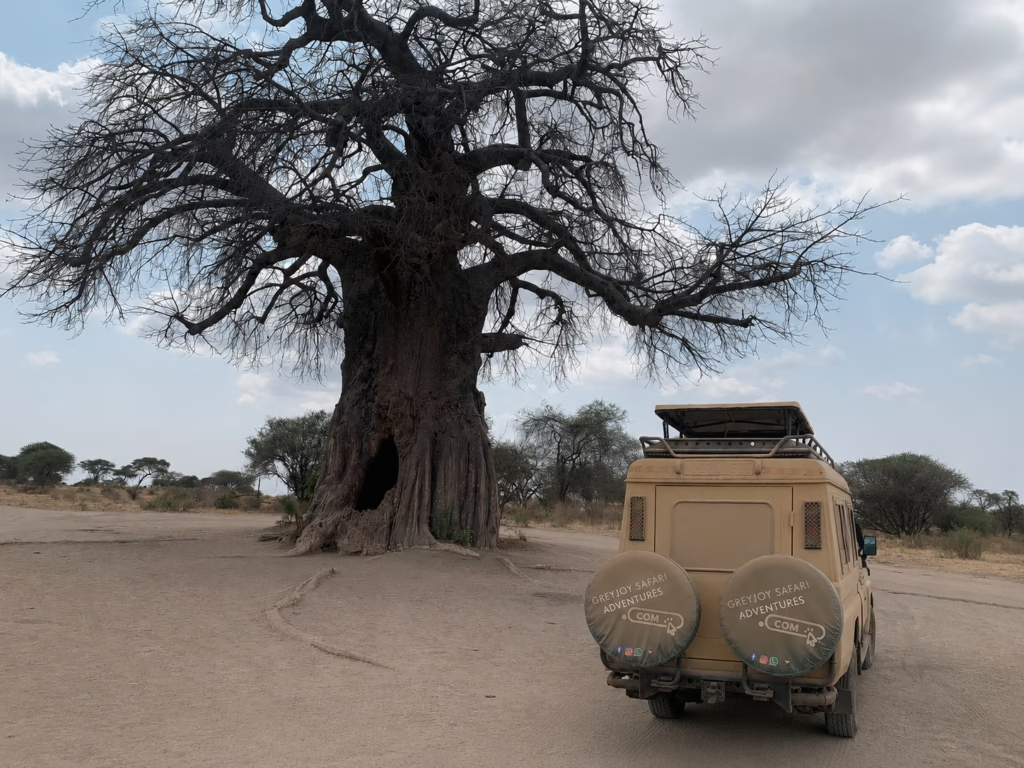
Boabab Tree
3.0 Baobab Forests: The Ancient Landscape of Giants
3.1 Northern Tarangire Dominated by Ancient Baobab Ecosystems
Beyond its elephant herds, Tarangire National Park is instantly recognizable for its extraordinary baobab landscapes. In the northern sections of the park, ancient baobab ecosystems dominate the scenery, rising above the savannah like massive natural monuments shaped by centuries of survival. These iconic trees give Tarangire a visual identity unlike any other safari destination in Tanzania.
Scattered across open grasslands, rocky hills, and woodland areas, the baobabs create a dramatic contrast against the dry African plains. Their enormous swollen trunks and twisted branches appear almost unreal, especially during the dry season when many stand leafless against dusty skies. Some of these giants are believed to be over 2,000 years old, surviving repeated drought cycles and harsh environmental conditions that would destroy less resilient species.
The northern part of Tarangire contains some of the densest and most photographed baobab concentrations in East Africa. These ancient ecosystems shape not only the park’s appearance but also its ecological rhythm, providing shade, shelter, and food for wildlife throughout the year. Combined with the movement of elephants across the landscape, the baobab forests help create the raw, timeless atmosphere that defines Tarangire’s wilderness.
3.2 Tree Characteristics
The baobab trees of Tarangire National Park are among the oldest living organisms in Africa, with some estimated to be more than 2,000 years old. Long before modern safari routes crossed the park, these ancient giants were already rooted deep within the landscape, surviving extreme droughts, seasonal floods, and centuries of environmental change. Their longevity gives Tarangire a sense of permanence that feels almost prehistoric.
What makes these trees especially striking is their enormous size. Mature baobabs can develop massive trunks reaching up to 12 meters wide, creating the appearance of trees swollen with water. This unusual structure is part of their survival strategy, allowing them to store thousands of liters of moisture during rainy periods and endure long dry seasons when the surrounding plains become harsh and dusty.
Their thick bark, broad bases, and irregular silhouettes make every baobab appear unique. Some stand isolated across open savannahs, while others cluster together in woodland areas, forming landscapes that feel both ancient and surreal. During sunrise and sunset, these towering trunks cast long shadows across the plains, becoming one of the defining visual symbols of Tarangire’s wilderness.
🦓 PLAN YOUR TANZANIA SAFARI
Tell us your travel dates, Budget, and Preferences We craft your personalized Tanzania Safari itinerary Confirm your Booking & get ready for the Adventure of a lifetime
3.3 Ecological Role of Tarangire’s Baobabs
The ancient baobabs of Tarangire National Park are far more than dramatic scenery. These trees play a critical ecological role in helping wildlife survive the park’s long dry seasons. Often called “trees of life,” baobabs function as natural water reservoirs, storing massive amounts of moisture inside their swollen trunks during the rainy months. This internal water-storage system allows them to survive extreme drought conditions that affect much of the surrounding savannah.
Baobabs also serve as an important food source for both wildlife and local communities. Their large fruits are rich in vitamin C, antioxidants, and nutrients, attracting birds, monkeys, and other animals that feed on them seasonally. Leaves, seeds, and bark have traditionally been used for food, medicine, rope, and fiber in surrounding communities, making the trees valuable far beyond the boundaries of the park itself.
For wildlife, baobabs provide essential shelter and shade in an environment where temperatures can become intense during the dry season. Elephants, giraffes, antelope, and predators frequently rest beneath their broad canopies to escape the midday heat. Birds nest within hollow trunks and branches, while smaller animals use the trees for protection and cover. Across the landscape of Tarangire, these ancient giants quietly support entire ecosystems, offering survival resources in one of Tanzania’s most seasonally demanding environments.
To explore more about wildlife, landscapes, accommodation options, and seasonal travel advice, visit our complete Tarangire National Park Guide for a deeper look at one of Tanzania’s most distinctive safari destinations.
3.4 Elephant Interaction with Baobab Trees
The relationship between elephants and baobab trees in Tarangire National Park is one of the park’s most fascinating ecological interactions. During the dry season, elephants are often seen stripping bark from baobab trunks using their tusks and powerful trunks. This behavior allows them to access moisture and nutrients stored beneath the bark, an important survival resource when water and fresh vegetation become scarce across the landscape.
Fresh feeding marks are common on many baobabs throughout Tarangire, with some trees carrying deep scars from repeated elephant activity over decades. In most cases, mature baobabs are remarkably resilient and can survive partial bark loss thanks to their ability to regenerate tissue and store large amounts of water internally. Their unusual structure makes them more resistant to damage than many other tree species found in the park.
However, this interaction also creates ecological tension. Heavy elephant pressure can weaken or eventually kill some baobab trees, particularly when bark stripping becomes extensive or repeated over long periods. In areas with high elephant concentrations, fallen or severely damaged baobabs are visible reminders of the balance between wildlife survival and ecosystem stress.
Rather than a simple story of destruction, this relationship reflects the natural dynamics of Tarangire’s environment. Elephants shape the landscape just as the baobabs support elephant survival, creating an ecosystem where both giants influence the future of the park.
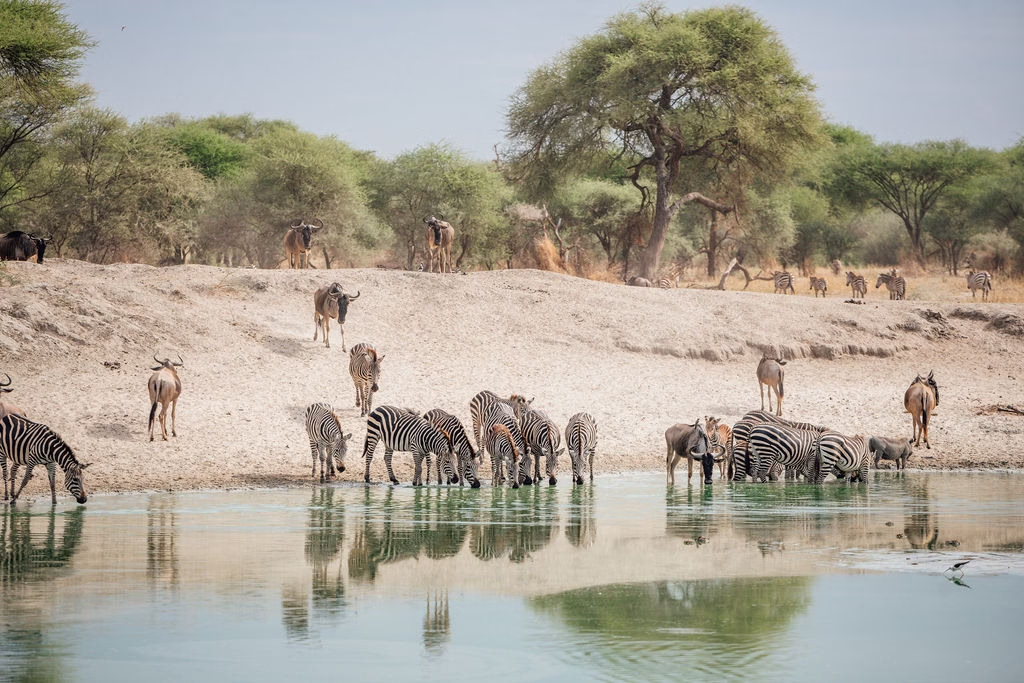
Tarangire River
3.5 Landscape Contrast Across Tarangire
One of the defining features of Tarangire National Park is the dramatic contrast between its northern and southern landscapes. In the northern sections of the park, ancient baobab zones dominate the scenery, creating a dry, rugged environment filled with towering trees, open savannahs, and scattered rocky hills. This is the classic image many travelers associate with Tarangire—vast plains dotted with giant baobabs and large elephant herds moving through dusty golden grass.
As the park stretches southward, however, the landscape begins to change noticeably. Dense baobab concentrations become less common, giving way to wetter environments shaped by seasonal swamps, river-fed wetlands, and thicker vegetation. These southern regions support different wildlife patterns, especially during the dry season when swamps continue providing water and green grazing areas long after surrounding land has dried out.
The contrast between these ecosystems gives Tarangire an unusual diversity compared to many safari parks in Tanzania. The north feels ancient, open, and dominated by giant trees, while the south offers a softer, greener atmosphere centered around wetlands and marshes. Together, these changing landscapes create a park that feels constantly evolving rather than visually uniform from one region to another.
🦓 PLAN YOUR TANZANIA SAFARI
Tell us your travel dates, Budget, and Preferences We craft your personalized Tanzania Safari itinerary Confirm your Booking & get ready for the Adventure of a lifetime
3.6 The “Trees of Life” and Tarangire’s Safari Atmosphere
The baobabs of Tarangire National Park do more than shape the ecosystem—they define the emotional and visual identity of the park itself. Often called “trees of life,” these ancient giants create a safari atmosphere that feels timeless, dramatic, and unmistakably African. Their towering silhouettes rise above the plains like natural monuments, instantly separating Tarangire from the more open grassland landscapes found elsewhere in Tanzania.
At sunrise, the trees stand dark against soft golden skies, while during sunset they cast long shadows across dusty savannahs filled with elephants and grazing wildlife. Their thick trunks, twisted branches, and weathered bark give the landscape an almost prehistoric character, especially in the dry season when the earth turns deep shades of gold and brown.
For many visitors, the baobabs become just as memorable as the wildlife itself. They frame safari photographs, provide shade during midday game drives, and create a sense of scale that makes elephant herds appear even more impressive. Combined with the movement of Tarangire elephants through the surrounding plains, these “trees of life” help create one of the most visually distinctive safari environments in East Africa.
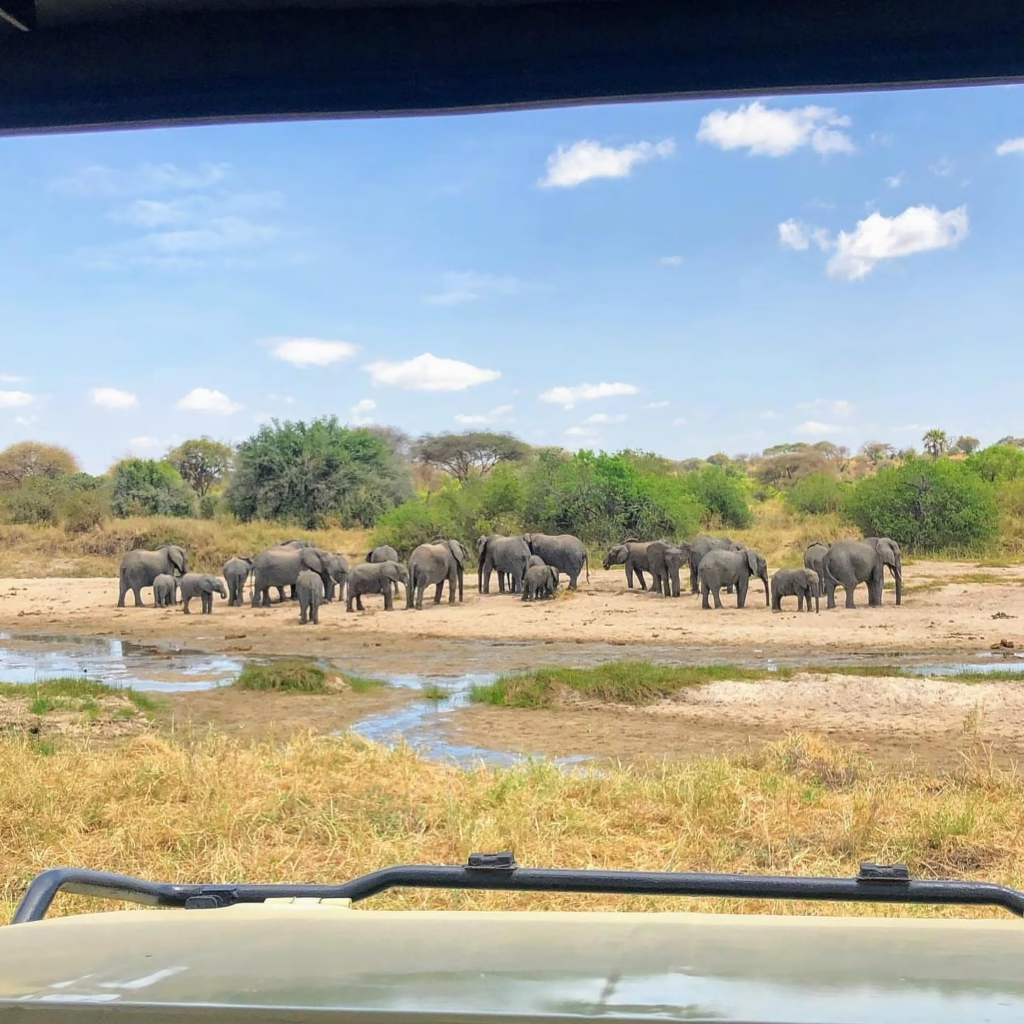
Elephant in Tarangire
4.0 Best Viewing Months for Tarangire Elephants
The visibility of Tarangire elephants changes dramatically throughout the year, making seasonality one of the most important factors when planning a safari in Tarangire National Park. Elephant movements are closely tied to rainfall, water availability, and migration patterns across the wider ecosystem. As conditions shift between dry and wet seasons, so does the density of wildlife inside the park.
During the dry season, elephants gather in large numbers around the permanent Tarangire River, creating some of the most reliable wildlife viewing opportunities in East Africa. Herds become highly concentrated, grass levels drop, and animals are easier to spot across open landscapes. This period is widely considered the best time for travelers focused specifically on elephant sightings.
In contrast, the rainy season transforms the park into a greener and more dispersed ecosystem. Seasonal water sources become available beyond the river corridor, allowing elephants to spread across larger areas inside and outside the park. Wildlife remains present, but sightings are typically less concentrated and more unpredictable compared to the peak dry months.
Understanding these seasonal visibility patterns is essential because Tarangire elephants are not equally distributed year-round. The park’s famous elephant spectacle depends heavily on timing, especially for visitors hoping to experience the massive dry-season congregations that made Tarangire internationally known.
4.1 🌤️ Dry Season (June–October)
The dry season is widely considered the best time to experience Tarangire elephants at their most impressive. From June through October, water sources across the surrounding ecosystem begin to disappear, forcing wildlife to move toward the permanent Tarangire River inside Tarangire National Park. During this period, elephant density reaches its highest levels, with populations inside the park estimated to climb to around 2,000 individuals.
The peak viewing months are typically September and October, when conditions are driest and wildlife concentrations become especially dramatic. Large herds gather along riverbanks, dusty tracks, and shaded feeding areas, creating some of the most reliable elephant sightings in East Africa. It is not unusual to see multiple family groups moving together in the same area, particularly during early morning and late afternoon game drives.
One of the major advantages of the dry season is the predictability of wildlife movement. As animals cluster near water, safari guides can often locate elephants more efficiently than during wetter months when herds disperse across wider territory. Shorter grass and thinner vegetation also improve visibility, making it easier to spot elephants, predators, and other wildlife from a distance.
However, the dry season also comes with trade-offs. Roads and landscapes become increasingly dusty, especially toward the end of the season when rainfall has been absent for months. Visitor numbers are generally higher as this period overlaps with Tanzania’s peak safari season, leading to busier game-viewing areas near the river. Accommodation rates and park-related travel costs also tend to rise during these months due to increased demand.
🦓 PLAN YOUR TANZANIA SAFARI
Tell us your travel dates, Budget, and Preferences We craft your personalized Tanzania Safari itinerary Confirm your Booking & get ready for the Adventure of a lifetime
4.2 🌧️ Wet Season (November–May)
The wet season brings a completely different atmosphere to Tarangire National Park. From November through May, rainfall transforms the dry savannah into a greener and more vibrant landscape, filling seasonal water sources across the wider ecosystem. As a result, Tarangire elephants no longer need to remain concentrated near the Tarangire River and begin dispersing across larger areas both inside and outside the park.
Although elephant sightings become less predictable during this period, the park takes on a quieter and more scenic character. Fresh grass covers the plains, baobab trees stand against greener backdrops, and seasonal wetlands attract large numbers of migratory and resident birds. For birdwatchers and photographers interested in dramatic landscapes rather than peak wildlife density, this can be one of the most visually rewarding times to visit.
The wet season also offers practical advantages for travelers. Accommodation prices are often lower than during the peak dry months, and safari routes generally feel less crowded. The softer light, greener scenery, and reduced tourism traffic create a calmer safari experience compared to the busier high season.
However, these benefits come with challenges. Because elephants spread across wider territory, large herd sightings become less common and more dependent on luck, timing, and guide experience. Heavy rainfall can also make some roads muddy, slippery, or temporarily difficult to navigate, particularly in remote areas of the park. For travelers focused specifically on seeing massive elephant congregations, the wet season is usually less reliable than the dry months.
Quick Comparison Table
Season | Elephant Density | Advantages | Limitations |
June–Oct (Dry) | High (up to 2,000) | River concentrations, best sightings | Crowds, dust, higher costs |
Nov–May (Wet) | Low–Medium | Green landscapes, birds, budget-friendly | Scattered elephants, rain risks |
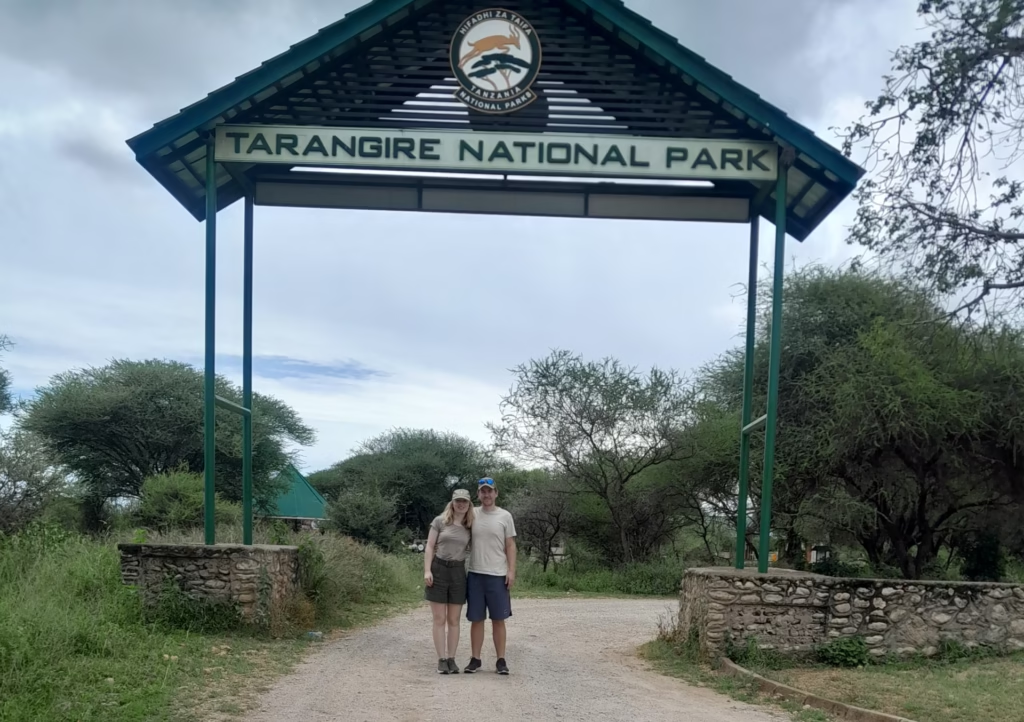
Tarangire National Park
5. Why Tarangire Elephants Are So Reliable (and Sometimes Misunderstood)
The reputation of Tarangire National Park as Tanzania’s elephant capital is rooted in one essential factor: the Tarangire River system. During the dry season, this permanent river becomes a critical survival source for wildlife across the surrounding ecosystem. As temporary water supplies disappear elsewhere, elephants migrate toward the river in large numbers, creating the dense concentrations that have made Tarangire famous among safari travelers.
This seasonal dependency is what makes Tarangire elephants so reliable during certain times of the year. Between June and October, especially in September and October, visitors have an excellent chance of seeing large herds gathered near water. The predictability of these dry-season movements is real and well-established, not simply safari mythology.
At the same time, Tarangire is sometimes misunderstood because marketing descriptions can oversimplify the experience. Some safari promotions create the impression that enormous elephant herds are visible everywhere in the park throughout the entire year. In reality, elephant distribution changes constantly with rainfall, vegetation, and water availability. During the wet season, elephants disperse across a much larger ecosystem, making sightings less concentrated and often less dramatic than the famous dry-season scenes.
For travelers, the most important expectation is understanding that Tarangire’s elephant spectacle is seasonal rather than permanent. The park genuinely offers some of East Africa’s best dry-season elephant viewing, but wildlife experiences still depend on timing, location, and natural conditions. Visitors who arrive with realistic expectations are more likely to appreciate what makes Tarangire special: not guaranteed performances, but a powerful natural migration system centered around water, survival, and movement across the landscape.
🦓 PLAN YOUR TANZANIA SAFARI
Tell us your travel dates, Budget, and Preferences We craft your personalized Tanzania Safari itinerary Confirm your Booking & get ready for the Adventure of a lifetime
Travelers comparing Tarangire’s dry-season wildlife patterns with other northern Tanzania destinations can also read our Ngorongoro Crater Safari: 2026 Travel Guide for Wildlife, Costs & Best Time, which breaks down seasonal safari conditions, wildlife visibility, and travel planning in greater detail.
6. What Else You’ll See in Tarangire
Although Tarangire National Park is best known for its elephants, the park supports a far wider range of wildlife shaped by its rivers, wetlands, woodlands, and seasonal migration patterns. Game drives regularly reveal giraffes moving between baobab trees, large buffalo herds gathering near water sources, and wildebeest crossing open plains alongside zebra and antelope. Predators are also present throughout the ecosystem, with lions commonly seen resting in tall grass, hunting near river corridors, or following herbivore movement during the dry season.
Tarangire is equally important for birdlife, especially during the wet season when seasonal swamps and greener conditions attract both resident and migratory species. Brightly colored bee-eaters, hornbills, kingfishers, ostriches, and birds of prey are frequently spotted across the park, while wetlands become active feeding grounds for water birds and migratory flocks. For birdwatchers, the rainy months can offer some of the richest avian diversity in northern Tanzania.
For travelers visiting Zanzibar who want a shorter safari focused on elephants and crater wildlife, our 2-Day Tarangire & Ngorongoro Crater from Zanzibar offers a compact northern Tanzania safari experience with direct connections from the island.
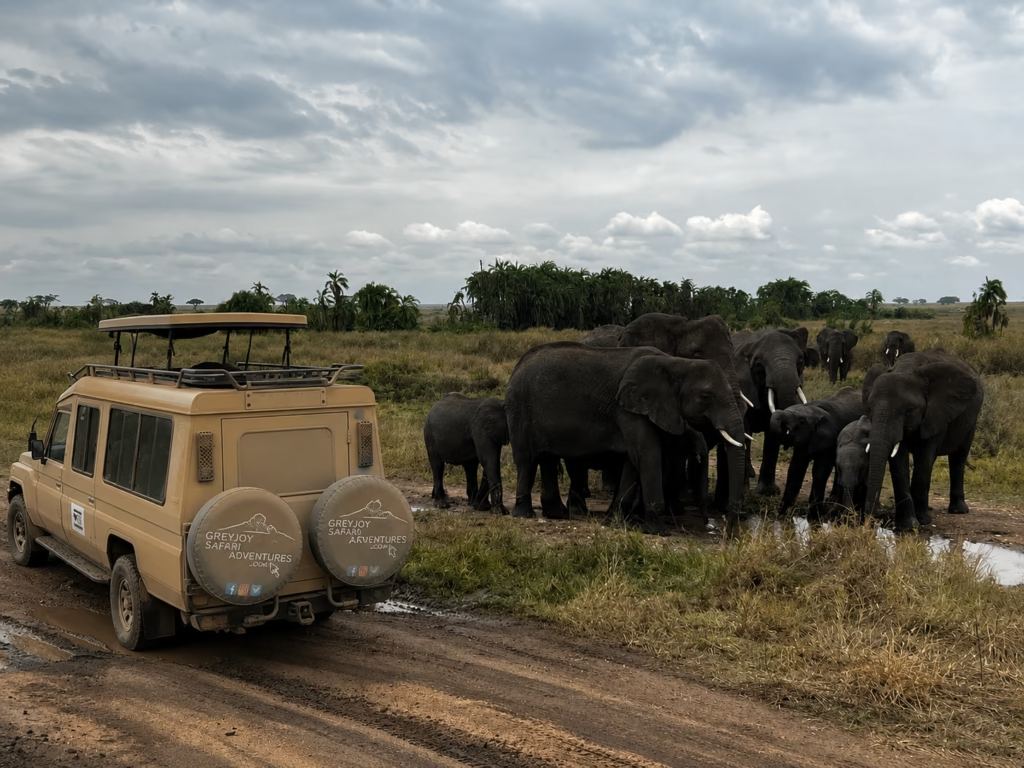
7. Conclusion: The Living Rhythm of Tarangire
Tarangire National Park has earned its reputation as Tanzania’s elephant stronghold through a combination of scale, seasonality, and survival-driven wildlife movement. Few safari destinations in Tanzania offer such dramatic dry-season elephant concentrations alongside landscapes that feel so ancient and distinct.
The identity of Tarangire rests on three defining pillars. The first is its massive elephant herds, which gather around the Tarangire River in extraordinary numbers during the dry months. The second is the park’s iconic baobab landscapes, where towering “trees of life” shape both the ecosystem and the visual atmosphere of the safari experience. The third is the park’s seasonal rhythm itself—a constantly changing cycle of migration, water dependency, and wildlife concentration that transforms the landscape throughout the year.
Understanding this seasonal logic is the key to experiencing Tarangire properly. The best safari experiences here are not simply about arriving at the right destination, but about visiting at the right time and understanding how rainfall, river systems, and animal movement shape the park’s wildlife patterns.
In the end, Tarangire elephants define one of Africa’s most seasonal yet powerful wildlife stories—a landscape where ancient trees, permanent water, and migrating herds come together to create a safari experience that feels both raw and timeless.
🦓 PLAN YOUR TANZANIA SAFARI
Tell us your travel dates, Budget, and Preferences We craft your personalized Tanzania Safari itinerary Confirm your Booking & get ready for the Adventure of a lifetime
8. Frequently Asked Questions About Tarangire National Park
1. Why is Tarangire National Park called Tanzania’s elephant capital?
Tarangire is known for hosting one of the largest elephant populations in Tanzania. During the dry season, up to 2,000 elephants may gather near the Tarangire River as wildlife migrates toward permanent water sources.
2. What is the best time to see Tarangire elephants?
The best elephant viewing months are typically June through October, with September and October offering the highest concentration of herds near the river system.
3. Are elephant sightings guaranteed in Tarangire?
No safari destination can guarantee wildlife sightings. However, Tarangire offers some of the most reliable dry-season elephant viewing in East Africa because elephants concentrate around permanent water sources.
4. What makes Tarangire different from other safari parks in Tanzania?
Tarangire stands out for its massive elephant herds, ancient baobab landscapes, and strong seasonal migration patterns. The combination of river ecosystems and towering baobab trees gives the park a unique atmosphere compared to parks like the Serengeti.
5. What animals besides elephants can be seen in Tarangire?
Visitors commonly see lions, giraffes, buffalo, wildebeest, zebras, antelope, warthogs, and many bird species. Predators are especially active near river corridors during the dry season.
6. Are baobab trees unique to Tarangire?
Baobab trees exist in several parts of Africa, but Tarangire National Park is famous for its dense concentrations of ancient baobabs, some believed to be over 2,000 years old.
7. Is the wet season a good time to visit Tarangire?
The wet season offers greener scenery, fewer crowds, and excellent birdwatching opportunities. However, elephants disperse across wider areas, making large herd sightings less predictable than during the dry season.
8. How far is Tarangire National Park from Arusha?
Tarangire is located approximately 2 to 3 hours by road from Arusha, making it one of the most accessible safari parks in northern Tanzania and a common starting point for multi-park safari itineraries.