
Is a 5-Day Tanzania Safari Enough or a Mistake?
You’ve seen the photos. A lion mid-stride in golden grass. Elephants marching through dust and light. The word Serengeti alone feels like a promise. Then reality taps you on the shoulder: limited vacation days, long-haul flights, budgets, responsibilities back home. And suddenly the question sharpens—is a 5-day Tanzania safari enough, or am I setting myself up for regret?
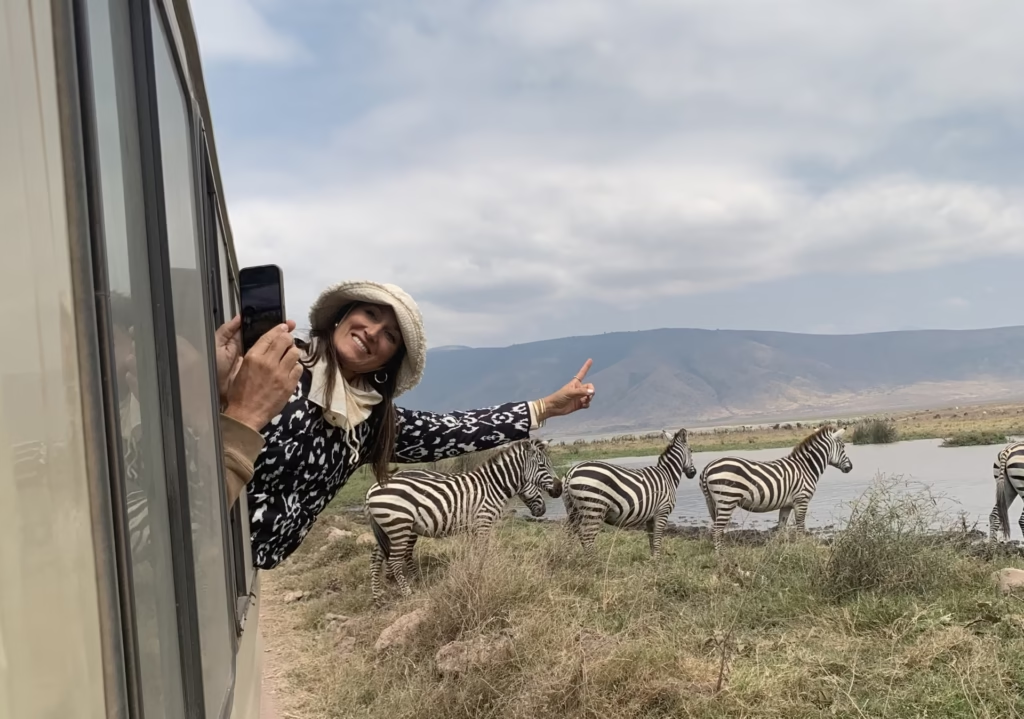
On paper, five days sounds generous. Enough time to chase the Big Five, descend into the Ngorongoro Crater, and roll across the endless plains of the Serengeti. Tanzania delivers big—iconic parks, dense wildlife, once-in-a-lifetime moments. But there’s tension beneath the promise. These landscapes are vast. The distances are real. And fitting Africa’s greatest wildlife show into a tight window can mean long drives, quick transitions, and a pace that doesn’t always match the dream.
So here’s the honest truth upfront: a 5-day Tanzania safari can be extraordinary—but it’s conditional. It works brilliantly for some travelers and quietly disappoints others. Whether it becomes the trip of a lifetime or a beautiful but rushed teaser depends entirely on how it’s designed, who it’s for, and what you expect it to deliver.
2. What a 5-Day Tanzania Safari Really Looks Like
Strip away the glossy brochures and a 5-day Tanzania safari follows a fairly predictable rhythm—because geography, not marketing, sets the rules. In most cases, you’ll cover two to three parks on the Northern Circuit, typically Tarangire, the Serengeti, and the Ngorongoro Crater. On paper, that lineup reads like a greatest-hits album. In practice, it’s a tight choreography designed to squeeze maximum impact into minimum time.
3. Realistic Wildlife Sightings in 5 Days
Let’s ground expectations in reality. A well-designed 5-day Tanzania safari can still deliver extraordinary wildlife—this is Tanzania, after all—but the sightings tend to follow clear patterns shaped by time, terrain, and probability.
What travelers commonly see
In most 5-day itineraries, sightings focus on high-density, high-reliability areas. Tarangire National Park is famous for a reason: large elephant herds, baobab-studded landscapes, and frequent encounters with giraffes, zebras, and buffalo. It’s often the easiest “wow” moment early in the trip.
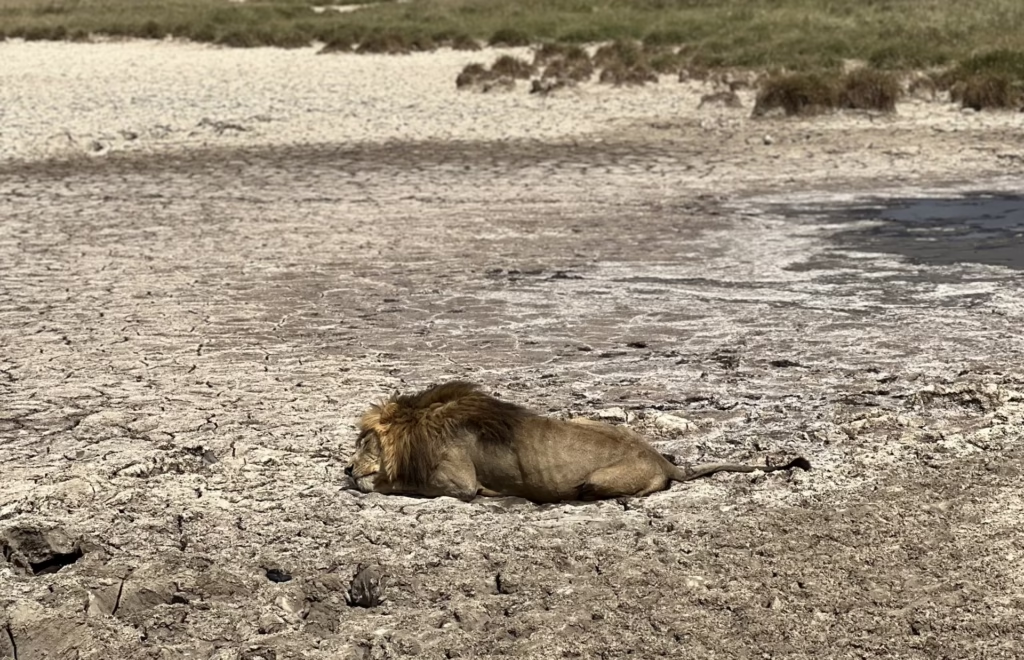
Move into Central Serengeti, and predator action takes center stage. Lions are commonly spotted lounging, mating, or on the move. Cheetahs, hyenas, and large herbivore herds are regular features, especially when timing aligns with the migration. Many travelers also witness dramatic moments—stalks, chases, or fresh kills—particularly around the Seronera River system.
Then there’s Ngorongoro Crater, where wildlife density does the heavy lifting. Within a single morning, it’s realistic to see lions, elephants, buffalo, hippos, and—if luck aligns—black rhinos. This is where many Big Five checklists get completed, fast and decisively.
What’s often missed or rushed
The trade-off is subtle but important. Leopards—elusive, solitary, and often hidden in trees—are frequently missed on short safaris. Rare behaviors, prolonged hunts, or multi-day tracking of a single pride or cheetah coalition are unlikely. When sightings happen late in the day, there’s often no option to return the next morning—you’re already scheduled to move on.
Why most itineraries prioritize Central Serengeti (Seronera)
With limited days, operators lean into probability. The Seronera region offers year-round water, dense prey populations, and consistently high predator activity. For a 5-day safari, it maximizes chances of quality sightings without gambling on distant migration corridors. It’s not the most remote or exclusive part of the Serengeti—but it’s the most reliable when every hour counts.
Suggested short time Itinerary focused on Central Serengeti (Seronera)
Feature List
Add multiple feature items, set different icons or images for each feature and also give custom links if needed.
Key Features
Choose your style from three different layouts and two unique icon background shapes.
Connector Line
Show a connector line between each icon, changes its color and style to fit your unique design.
Custom Styles
Easily customize every aspect of your list from widget styles but also you can give custom colors to each item as well.
4. The Hidden Cost: Drive Time, Fatigue & “Safari Blur”
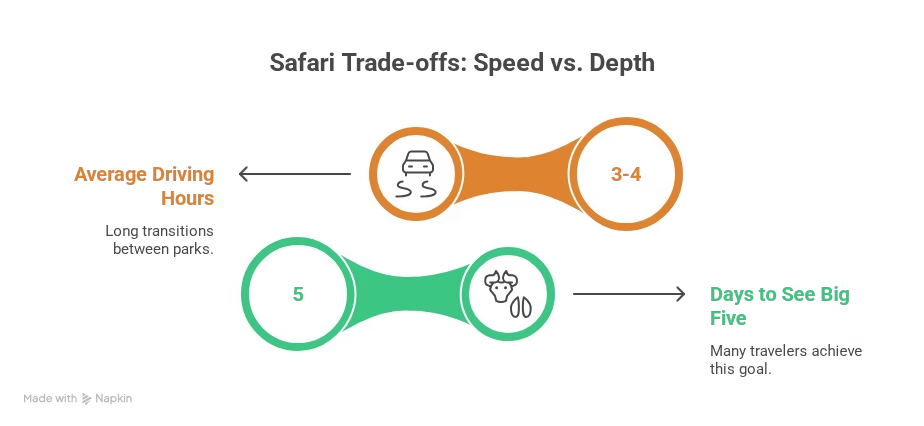
What most safari brochures quietly gloss over is not the wildlife—it’s the time between it. On a 5-day Tanzania safari, daily drive times of three to four hours are normal, and on some days, total transit can stretch even longer. Distances between parks on the Northern Circuit are real, and while the scenery is beautiful, time spent driving is time not spent tracking animals.
Add to that the physical reality of safari travel. Roads can be rough and dusty, especially inside the parks. Mornings start before sunrise, when wildlife is most active, and days often end with late arrivals at lodges after long transfers. By day three or four, even seasoned travelers begin to feel it—stiff backs, dulled focus, and a creeping sense of hurry that no luxury lodge fully erases.
This is where many guests experience what guides quietly call “safari blur.” You are seeing lions, elephants, and endless herds—but your senses are overloaded. Sightings stack back-to-back with little time to pause, process, or simply sit and watch. The animals are there, the photos are stunning, yet the emotional absorption—the deep feeling of being in the wild—can fade under fatigue. A 5-day safari shows you a lot. It just doesn’t always give you the space to truly live it.
5. 5 vs 7 vs 9 Days: A Reality-Based Comparison
The difference between a 5-, 7-, and 9-day Tanzania safari isn’t just two or four extra days—it’s a fundamental shift in how the experience feels. The parks may sound similar on paper, but the pace, pressure, and quality of wildlife encounters change dramatically as time increases.
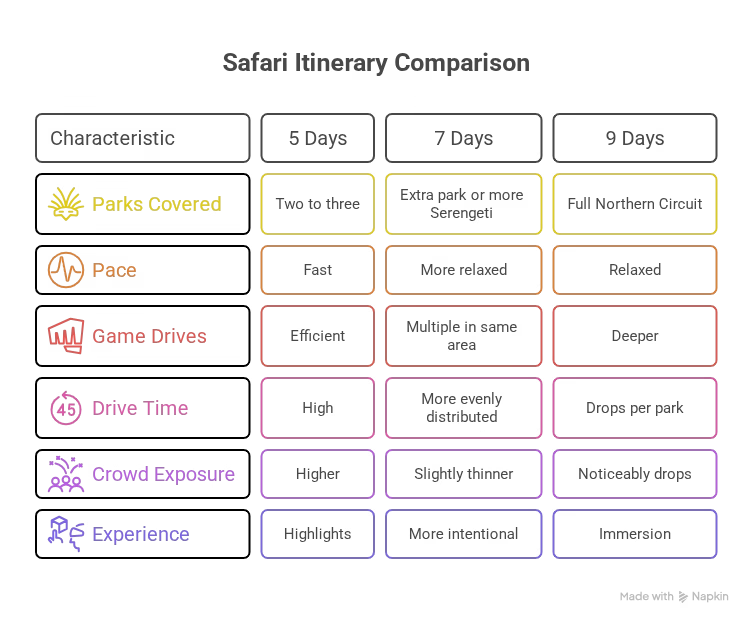
This is why longer safaris consistently deliver higher-quality experiences. Fewer moves mean less fatigue. More nights mean better timing. And better timing is often the difference between simply seeing wildlife and witnessing moments that stay with you long after the dust has settled.
6. Who a 5-Day Safari Is Actually Perfect For
Despite its limits, a 5-day Tanzania safari isn’t a compromise for everyone. In fact, for the right traveler, it can be the smartest and most satisfying choice—when expectations and design are aligned.
Time-limited travelers pairing safari with Zanzibar
If your trip blends wildlife with beach time, five days on safari often fits perfectly. It delivers the drama—lions, elephants, crater views—without crowding out time to unwind on white-sand beaches afterward. For many, this balance is exactly the point of the journey.
First-time visitors seeking a Big Five introduction
For safari newcomers, a 5-day itinerary works as a powerful introduction. You experience Tanzania’s most iconic parks, understand how game drives work, and often tick off the Big Five. It’s immersive enough to feel real, without demanding deep prior knowledge or endurance.
Budget-conscious travelers on group or camping safaris
Shorter itineraries keep costs manageable. Shared vehicles, camping or mid-range lodges, and efficient routing make a 5-day safari one of the most accessible ways to experience Tanzania’s wildlife without sacrificing quality sightings.
Fly-in luxury travelers minimizing road time
For those choosing fly-in safaris, five days can feel surprisingly relaxed. Small aircraft cut long road transfers, allowing more time in prime wildlife areas and less physical strain. In this format, the usual drawbacks of a short safari are significantly softened.
In short, a 5-day safari works best for travelers who value impact over immersion—those who want the essence of Tanzania, clearly and memorably, within a well-defined window
Planning a Trip to Tanzania?
Our team is always here to help
Please let us know if you have any questions
7. Who Should Avoid a 5-Day Safari (And Why)
For all its strengths, a 5-day Tanzania safari is not universally suited. For some travelers, the compressed pace can quietly undermine the very experience they came seeking. Knowing who shouldn’t choose it is just as important as knowing who should.
Wildlife enthusiasts craving deep Serengeti immersion
If your dream safari involves following a single lion pride for days, waiting patiently for a hunt to unfold, or tracking cheetahs across vast plains, five days will feel limiting. The Serengeti rewards time and repetition, and short itineraries simply don’t allow for that depth.
Families with children or travelers sensitive to motion
Long hours on rough roads, early wake-ups, and constant movement can be physically taxing. For young children or anyone prone to motion sickness, the pace of a 5-day safari can turn excitement into exhaustion—fast.
Suggested articles for reading
Feature List
Add multiple feature items, set different icons or images for each feature and also give custom links if needed.
Key Features
Choose your style from three different layouts and two unique icon background shapes.
Connector Line
Show a connector line between each icon, changes its color and style to fit your unique design.
Custom Styles
Easily customize every aspect of your list from widget styles but also you can give custom colors to each item as well.
Slow travelers who value rest, reflection, and rhythm
Some people travel to settle in, not to check off highlights. If you enjoy late mornings, lingering game drives, quiet afternoons at camp, and time to process what you’ve seen, a 5-day safari may feel like it’s always asking you to move on too soon.
Guests expecting National Geographic pacing
Those iconic wildlife documentaries are built on patience—hours of waiting, days in one location, and countless missed moments. A 5-day safari delivers sightings, not cinematic storytelling. If that’s your expectation, disappointment is likely.
In these cases, the issue isn’t Tanzania—it’s time. And adding just a few extra days can transform frustration into fulfillment.
8. Is a 5-Day Safari a Mistake? The Honest Verdict
So—is a 5-day Tanzania safari a mistake? No. But it is a teaser.
Done well, five days can be thrilling, emotional, and deeply memorable. You’ll see iconic wildlife, experience world-famous parks, and walk away with stories that last a lifetime. But it’s important to be clear about what you’re booking. A 5-day safari is about high-impact highlights, not slow immersion. It’s a concentrated taste of something vast.
The key is expectation-setting. Before booking, travelers should understand that time will be tight, movement will be frequent, and not every sighting can be lingered over. This isn’t a failure of the safari—it’s the natural trade-off of limited days in a very large landscape. When expectations are realistic, satisfaction is high. When they aren’t, frustration creeps in.
That’s why so many travelers return home saying the same thing: “I wish I had two more days.” Not because the safari fell short, but because it succeeded. Five days reveals just enough of Tanzania’s wild beauty to make you want more—more time, more stillness, more moments where the world slows down and the animals take the lead.
Planning a Trip to Tanzania?
Our team is always here to help
Please let us know if you have any questions
9. How to Make a 5-Day Safari Feel Like 7 (Smart Design Tips)
If five days is all you have, design becomes everything. A well-planned 5-day safari can feel expansive and unhurried—if you resist the urge to do too much. These choices make the difference between a rushed checklist and a deeply satisfying experience.
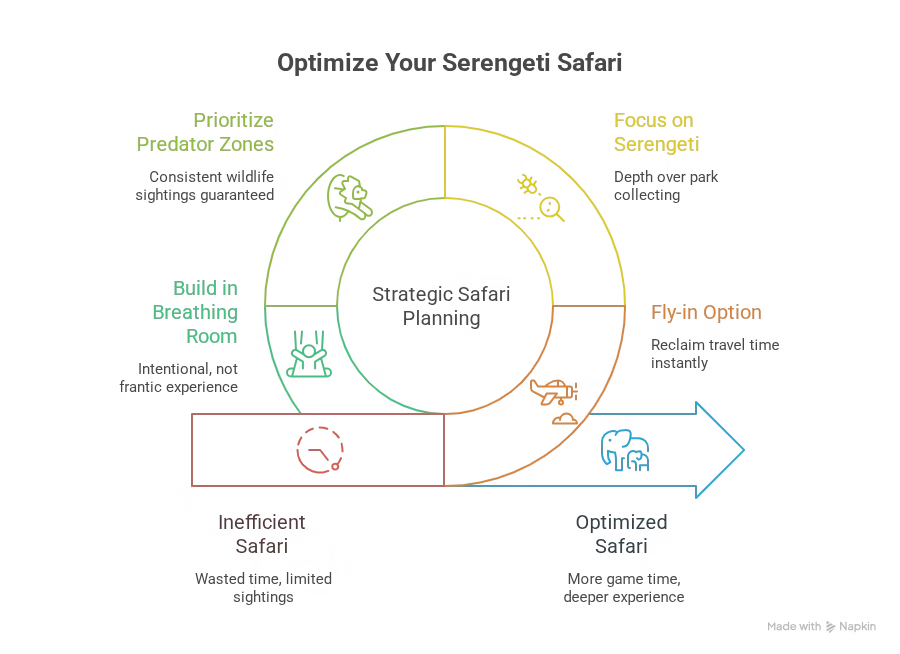
With smart design, five days doesn’t have to feel short—it just has to feel focused
10. Final Takeaway: Choose Time, Not Just Parks
When planning a safari, it’s tempting to focus on names—Serengeti, Ngorongoro, Tarangire—and assume that ticking them off guarantees a great experience. In reality, what matters far more is experience density: how much meaningful wildlife time you get each day, how rushed you feel moving between places, and how present you are when the moments unfold. Time, not park count, is the real luxury.
A 5-day safari works beautifully when it’s designed for impact—fewer parks, smart routing, clear expectations. It’s ideal if you’re short on time, pairing safari with a beach escape, or looking for a powerful first introduction to Tanzania’s wildlife. But if you crave depth, slower pacing, and the freedom to let the wilderness set the agenda, five days will feel like the beginning, not the destination.
That’s why many travelers naturally upgrade. Adding just two or three days transforms the experience: fewer long drives, more repeat sightings, quieter moments, and a deeper emotional connection to the land. If five days opens the door, seven or nine days let you truly step inside—and that’s where Tanzania’s safari magic fully reveals itself.
Suggested longer time Itinerary
Feature List
Add multiple feature items, set different icons or images for each feature and also give custom links if needed.
Key Features
Choose your style from three different layouts and two unique icon background shapes.
Connector Line
Show a connector line between each icon, changes its color and style to fit your unique design.
Custom Styles
Easily customize every aspect of your list from widget styles but also you can give custom colors to each item as well.
✨Frequently Asked Questions: 5-Day Tanzania Safari✨
1. Can you really see the Big Five in just 5 days?
Yes, it’s possible—especially when visiting Tarangire, Central Serengeti, and Ngorongoro Crater. However, sightings depend on timing, luck, and itinerary design, not guarantees.
2. Will a 5-day safari feel rushed?
For many travelers, yes. You’ll cover long distances in a short time. The experience is exciting but fast-paced, with limited downtime between parks.
3. How much time is actually spent driving during a 5-day safari?
Expect an average of 3–4 hours of driving per day, sometimes more. On some days, total transit time can exceed game drive time.
4. Is a 5-day safari suitable for first-time visitors to Africa?
Absolutely—if expectations are realistic. It’s a strong introduction to African wildlife and landscapes, often leaving first-timers eager to return.
5. Is a 5-day safari good for families with children?
It depends on the children’s age and stamina. Long drives and early mornings can be challenging for younger kids or anyone prone to motion sickness.
6. How does a fly-in safari change the 5-day experience?
Fly-in safaris dramatically reduce road travel, making a 5-day itinerary feel far more relaxed and wildlife-focused—especially for luxury travelers.
7. What wildlife is hardest to see on a short safari?
Leopards and rare behaviors like extended hunts are the most commonly missed due to limited time and the need to keep moving.
8. Is a 5-day safari worth it if I’m combining it with Zanzibar?
Yes. It’s one of the most popular combinations and works well when the safari is treated as a high-impact adventure followed by beach recovery.
9. Why do so many people recommend 7 days instead of 5?
Two extra days reduce fatigue, allow multiple nights in key parks, and significantly improve the depth and quality of wildlife encounters.
10. Will I regret booking only 5 days?
Most travelers don’t regret it—but many say the same thing afterward: “I wish I had more time.” Five days often sparks the desire for a longer return safari.✨