
How many game drives on a Tanzania safari?
Table of Contents
ToggleThe Question Every Safari Traveler Asks.
Almost every traveler planning a Tanzania safari eventually asks the same question: How many game drives do we really need? Is it better to pack the days with endless hours in the vehicle to maximize sightings—or to slow the pace, savor the moments, and let the wilderness unfold naturally? The tension between more drives and better experiences sits at the heart of safari planning.
Here’s the truth: seasoned guides rarely say out loud to the local guide that there is no single “correct” number of game drives. What works brilliantly for a photographer chasing the Great Migration may feel exhausting to a first-time safari guest or a family traveling with children. Park size, wildlife density, your energy levels, and trip length all shape the ideal rhythm.
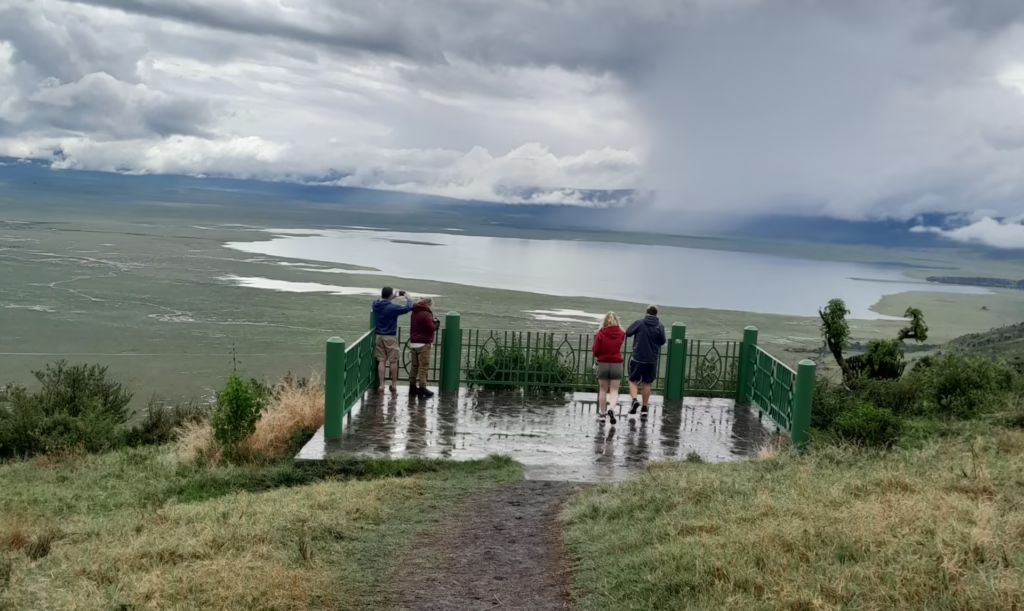
Ngorongoro Crater View Poit
In this guide, I’ll break it down clearly and practically. You’ll learn how a typical safari day is structured, the differences between morning, afternoon, and full-day game drives, and why parks like the Serengeti, Tarangire, and Ngorongoro demand very different approaches. We’ll also look honestly at the balance between increasing wildlife sightings and avoiding safari fatigue—and finish with clear, local guide experience-based recommendations on how many game drives make sense for trips of 3, 5, or 7 days.
—we invite you to explore our detailed itinerary: 6-Day Wildebeest Migration & Big Cat Adventure. It’s a fantastic reference to see how a seamless safari day unfolds from start to finish.
1.What Is a “Typical” Tanzania Safari Day?
A classic Tanzania safari day follows a rhythm refined over decades—one that aligns human comfort with the natural behavior of wildlife. Rather than staying out all day, most itineraries are designed around two focused game drives that deliver the highest-quality sightings without unnecessary exhaustion.
The standard safari structure usually includes:
• Morning game drive – Departing around 6:30 AM, when the air is cool and predators are still active from the night hunt.
• Afternoon game drive – Setting out again around 3:30 PM, as temperatures drop and animals return to water sources before sunset.
This rhythm works because it mirrors nature itself. Wildlife follows daily activity cycles—big cats hunt in the cooler hours, herbivores move and graze in the early morning and late afternoon, and midday heat pushes most animals into shade. By avoiding the harshest hours, safaris maximize sightings while minimizing discomfort.
From a practical standpoint, splitting the day also protects guest comfort. Midday breaks allow time for lunch, rest, swimming, or simply enjoying the lodge—crucial for maintaining energy over multiple days in dusty, bumpy conditions.
Across a typical safari, this structure translates into a total of 4 to 14 game drives over 3 to 7 days, depending on park selection, travel pace, and personal preferences. It’s a balance designed not just to see wildlife—but to enjoy the journey fully.
2. Understanding the Three Main Types of Game Drives
Not all game drives are created equal. In Tanzania, drives are carefully timed to match wildlife behavior, park scale, and guest endurance. Understanding the three main types helps you choose a safari pace that delivers the best sightings without sacrificing enjoyment
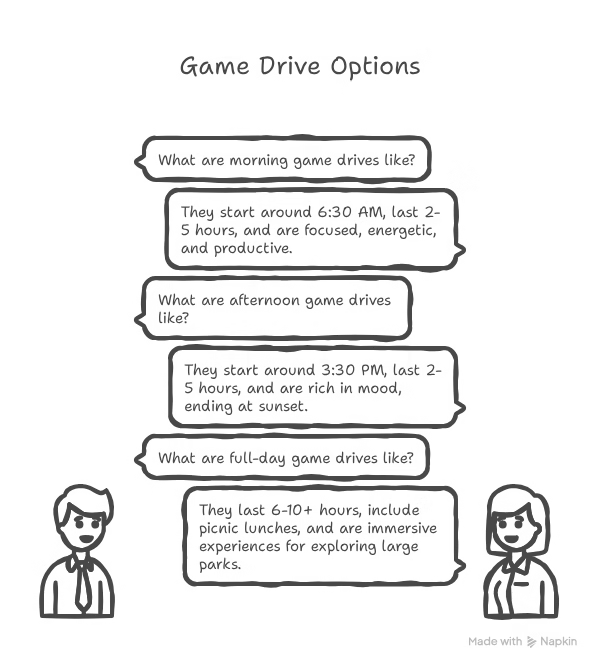
The trade-off is clear: full-day drives offer unmatched exploration and flexibility, but they demand stamina. Long hours on rough roads can be tiring, making them rewarding yet best balanced with lighter days to avoid safari fatigue.
3. Why Park Size Changes Everything
In Tanzania, the number and style of game drives you need is shaped as much by geography as by wildlife. Park size, terrain, and animal distribution determine how long you must stay out and how many days are required to truly experience each destination. Understanding these differences is key to planning a balanced safari
3.1 Serengeti National Park
The Serengeti is immense, covering approximately 14,750 km² of open plains, river systems, and woodlands. Its sheer scale means wildlife is spread across vast distances and constantly on the move—especially during the Great Migration.
Because of this, the Serengeti requires multiple days to explore properly, often supported by extended or full-day game drives. Short visits can feel rushed, while longer stays allow guides to track movement patterns, adapt routes, and wait patiently for meaningful encounters.
The Serengeti is ideal for migration followers, photographers, and travelers who value slow, immersive safaris—where time, not speed, delivers the most unforgettable moments.
3.2 Tarangire National Park
At around 2,850 km², Tarangire is significantly smaller than the Serengeti, yet exceptionally rich in wildlife—particularly during the dry season. Its compact size makes it perfectly suited for 1 to 2 days of standard morning and afternoon game drives.
Tarangire is renowned for its large elephant herds, ancient baobab-dotted landscapes, and wildlife that congregates along the Tarangire River. Sightings are often concentrated, meaning you can experience a great deal without spending long hours driving.
This makes Tarangire an excellent introduction to safari life or a rewarding addition to a multi-park itinerary without adding physical strain
3.3 Ngorongoro Crater
The Ngorongoro Crater offers a completely different safari dynamic. While the wider conservation area is vast, the crater floor itself is compact—around 260 km²—and strictly regulated. Game drives here are limited to approximately 6 hours maximum.
What the crater lacks in size, it makes up for in density. Wildlife is concentrated within the caldera, creating one of the highest chances of seeing the Big Five in a single, intense session.
Ngorongoro is less about distance and exploration, and more about efficiency—an extraordinary burst of sightings that delivers powerful impact in a short, carefully managed drive
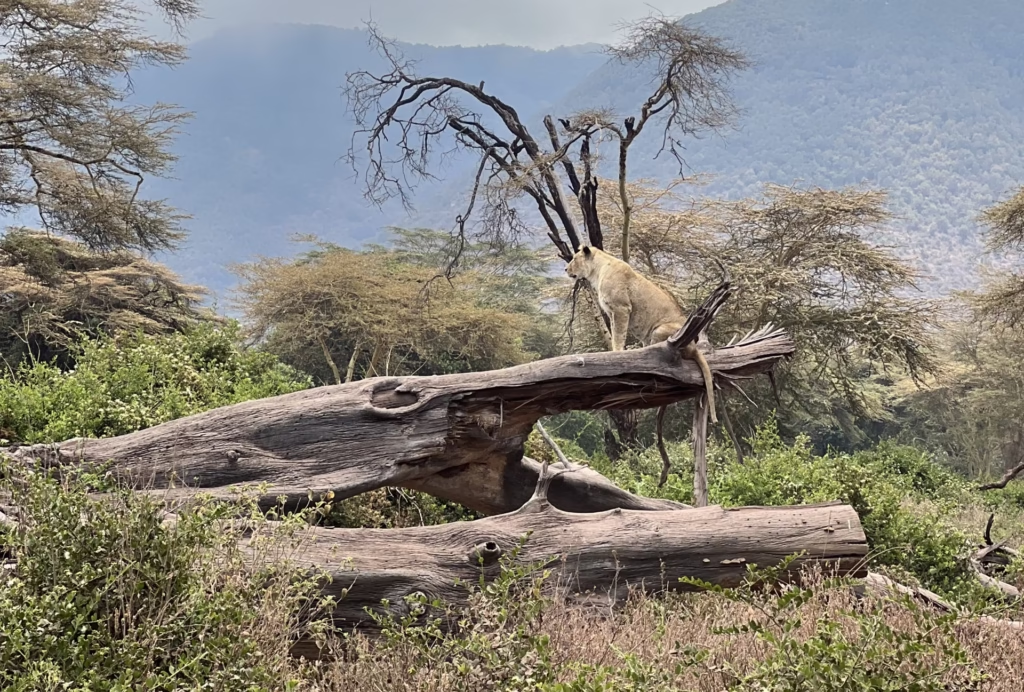
Lion in Ngorongoro Crater
4. More Drives vs Better Experiences: Managing Safari Fatigue
It’s tempting to believe that the more game drives you do, the better your safari will be—and in many cases, that’s partly true. Extra time in the bush naturally increases the probability of sightings, especially for elusive predators or rare behavior. Long hours of patience can be rewarded with unforgettable moments: a lion hunt at dawn, a river crossing during the migration, or the quiet miracle of a newborn calf taking its first steps.✨
✨However, there’s a tipping point. Overdoing game drives comes with real physical costs. Constant exposure to dust, heat, and bumpy roads can wear travelers down quickly. After three to four consecutive days of heavy driving, even the most enthusiastic safari-goers can experience burnout—where fatigue dulls excitement and incredible sightings start to blur together.
This is why shorter, well-timed drives often deliver better overall experiences for certain travelers. Families, first-time safari guests (How to Plan a Tanzania Safari: Step-by-Step Guide for First Timers?), and those who prioritize comfort, lodge time, and atmosphere tend to enjoy fewer but higher-quality drives. Rested guests are more alert, more engaged, and more likely to appreciate each encounter rather than simply ticking off sightings truly.
In the end, the best safaris aren’t about squeezing in every possible drive—they’re about finding the sweet spot where energy, curiosity, and wonder stay perfectly in balance.
5. Recommended Number of Game Drives by Trip Length
While every safari should be tailored, experience across Tanzania’s northern circuit reveals clear patterns in what works best. The goal is to maximize meaningful wildlife encounters without exhausting yourself along the way. Below is a practical, quick-scan guide to help you match trip length with the right number of game drives.✨
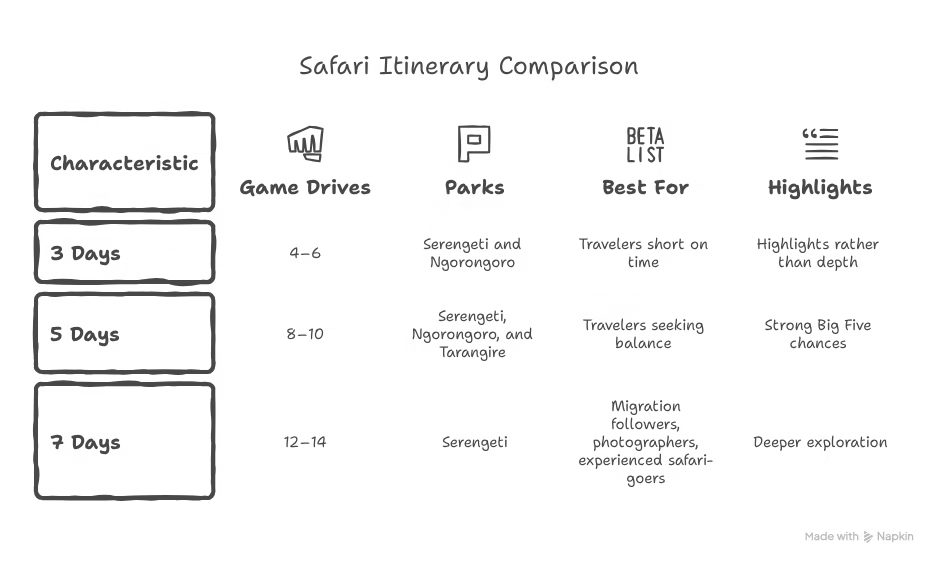
Safari Itinerary Comparison.
Expert Rule of Thumb
For truly meaningful exposure to Tanzania’s northern circuit, four or more full safari days is the minimum recommended. This allows enough time for wildlife patterns to emerge, guide strategies to adapt, and the experience to move beyond sightseeing into genuine immersion
6. How to Personalize Your Safari Pace
No two safari travelers experience Tanzania in quite the same way—and that’s exactly how it should be. The ideal safari pace is a personal equation shaped by how you travel, what excites you most, and how much energy you want to give to each day in the bush.
Key factors to consider start with your energy levels. Some travelers thrive on early mornings and long days in the vehicle, while others prefer shorter drives balanced with time to relax at the lodge. Your park combinations also matter: pairing vast parks like the Serengeti with more compact ones such as Tarangire or Ngorongoro naturally creates a smoother rhythm. Finally, consider your focus—photography-driven safaris often benefit from longer, slower drives, while leisure-focused trips shine with fewer outings and more time to enjoy scenery, meals, and downtime.
This is where working with local Arusha-based safari operators makes a real difference. Their intimate knowledge of route logic ensures you’re not spending unnecessary hours driving between parks. (Check out our “Best time to visit Tanzania for safari”). They respond to real-time conditions—weather changes, wildlife movements, road access—rather than rigid plans. Most importantly, they offer flexible pacing, adjusting drive lengths and schedules as your energy and interests evolve during the trip.
✨A personalized safari isn’t about doing more—it’s about doing what fits you best, at exactly the right pace.✨
Planning a Trip to Tanzania?
Our team is always here to help
Please let us know if you have any questions
7. Final Takeaway: Quality Beats Quantity
A truly great Tanzania safari isn’t measured by how many hours you spend in a vehicle, but by how fully you experience each moment in the wild. A well-paced safari consistently delivers strong wildlife sightings, creates lasting, vivid memories, and allows you to enjoy the journey without physical strain or fatigue.
When the rhythm is right, sights feel earned rather than hurried, mornings remain exciting instead of exhausting, and every drive retains its sense of anticipation. You stay present, curious, and connected—to the landscape, the animals, and the experience itself.
In the end, the best safaris are not rushed checklists of encounters. They are felt—slowly, deeply, and long after you’ve left the savannah behind
FAQ'S
1. Is it better to do more game drives to see more animals?
Not always. While more drives can increase your chances of rare sightings, quality matters more than quantity. Well-timed morning and afternoon drives often deliver excellent wildlife encounters without causing fatigue, especially over multi-day safaris
2. Can I skip afternoon game drives and still have a great safari?
Yes. Some travelers prefer early mornings followed by relaxed afternoons at the lodge. This works particularly well in parks with high wildlife density or for guests prioritizing comfort, photography editing time, or family-friendly pacing
3. Are full-day game drives suitable for first-time safari travelers?
They can be, but they’re not essential. Full-day drives are best for large parks like the Serengeti or for travelers focused on migration tracking. First-time visitors often enjoy shorter, more structured drives that balance excitement with rest.✨
4. How many consecutive safari days is too many?
For most travelers, three to four heavy game-drive days in a row is the upper limit before fatigue sets in. Mixing intensive days with lighter drives or lodge downtime helps maintain energy and enjoyment throughout the trip.
5. Can my safari pace be adjusted during the trip?
Absolutely. When traveling with experienced local operators, itineraries can often be adapted in real time—shortening drives, extending productive sightings, or adding rest time based on how you’re feeling and what’s happening in the park.