
Why February Is One of the Best Month for a Tanzania Safari.
Everyone tells you the same thing: “Go on safari between June and October.” It’s repeated so often it feels like a rule, not a recommendation. Dry season. Clear skies. Guaranteed wildlife. Simple. Safe. Predictable. But here’s the truth most people don’t hear—the best safari isn’t always the most obvious one. Because while the crowds gather in the dry months, something extraordinary is happening quietly in February. The landscapes turn green. The air clears of dust. And across the plains of the Serengeti, life doesn’t just continue—it explodes.
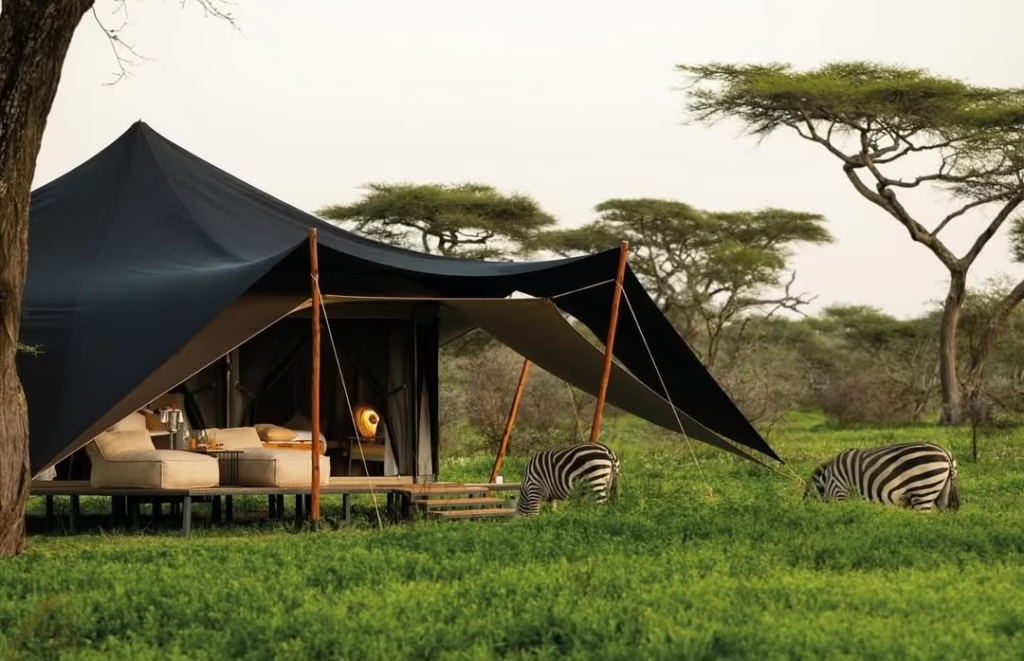
This is the season when the wild feels alive in a different way. Not just animals gathering around water, but entire ecosystems awakening. Thousands of wildebeest calves take their first steps every single day. Predators move with purpose. The drama is constant, unscripted, and raw.
And unlike the peak season rush, you’re not sharing every sighting with a convoy of vehicles. February offers something rare in modern travel—space. Time. A sense that the wilderness is unfolding just for you.
Then there’s the part no one talks about enough: value. The same landscapes. The same wildlife. But often at significantly lower prices, with better availability and more flexibility to shape your journey.
So while the dry season sells certainty, February offers something far more compelling—experience.
It may not be the most popular time to visit Tanzania. But for travelers who want more than just ticking off wildlife sightings—who want to feel the rhythm of the wild, witness life at its most intense, and explore without the crowds—February isn’t just a good time to go. It might be one of the best.
Our Top February Packages
Feature List
Add multiple feature items, set different icons or images for each feature and also give custom links if needed.
Key Features
Choose your style from three different layouts and two unique icon background shapes.
Connector Line
Show a connector line between each icon, changes its color and style to fit your unique design.
Custom Styles
Easily customize every aspect of your list from widget styles but also you can give custom colors to each item as well.
1. Understanding February — Tanzania’s “Green Season” Explained
To understand why February stands out, you first need to understand the rhythm of Tanzania’s seasons—not just in terms of weather, but in how the entire ecosystem breathes
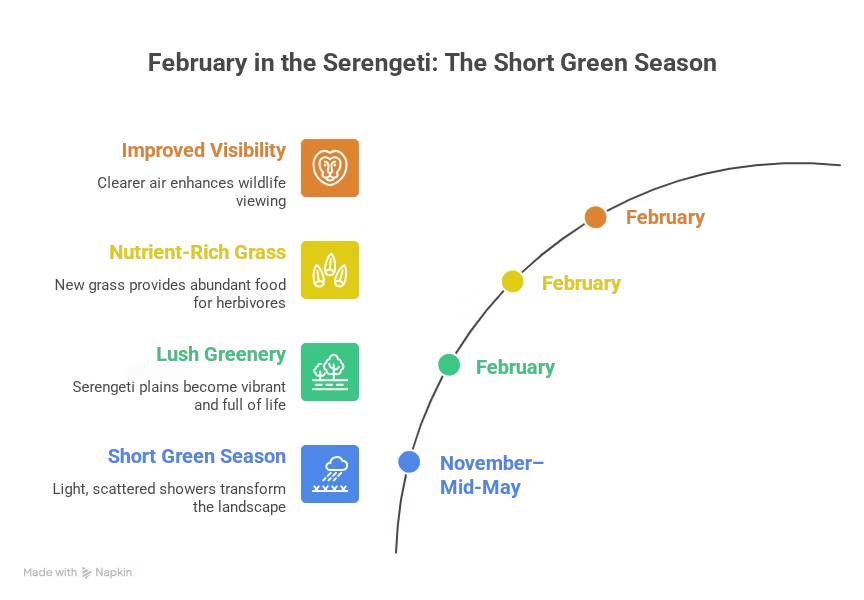
Of course, this beauty comes with a trade-off.
February is not as predictable as the dry season. Rain can arrive unexpectedly, and in some areas, especially remote or less-traveled routes, roads may become muddy and more challenging to navigate. While rainfall in northern Tanzania during February is generally moderate—around 60–70mm for the month (approximately 6–7cm in Arusha)—it’s enough to remind you that nature is still in control.
And that’s really the essence of the green season.
It offers a safari that feels more natural, less curated. Less certain, perhaps—but also more rewarding. A landscape in motion. A wilderness that isn’t just surviving, but thriving.
For travelers willing to trade a little predictability for richness, February reveals Tanzania at its most vibrant.
2. The Great Migration — Peak Calving Season in Southern Serengeti
If there is one moment that defines a February safari in Tanzania, it is this: the season of new life on the endless plains of the southern Serengeti.
By February, the Great Migration has settled into the Southern Serengeti and the Ndutu Plains, a vast, open landscape that stretches into the Ngorongoro Conservation Area. Here, the herds pause—not to rest, but to give birth.
And the scale is almost impossible to grasp.
During this short window, up to 8,000 wildebeest calves are born every single day, adding up to nearly 500,000 newborns over just a few weeks. It’s one of the largest synchronized birthing events on Earth. Everywhere you look, there is movement—mothers, calves, and the constant rhythm of a migration that never truly stops.
But this isn’t random. It’s precise.
February’s timing is driven by biology. The rains have transformed the southern plains into a carpet of short, nutrient-rich grasses, packed with calcium and protein—perfect for nursing mothers and fast-growing calves. It’s a natural strategy: give birth where food is richest, where survival chances are highest.
And yet, survival is never guaranteed.
Because where there is life, there is also predation.
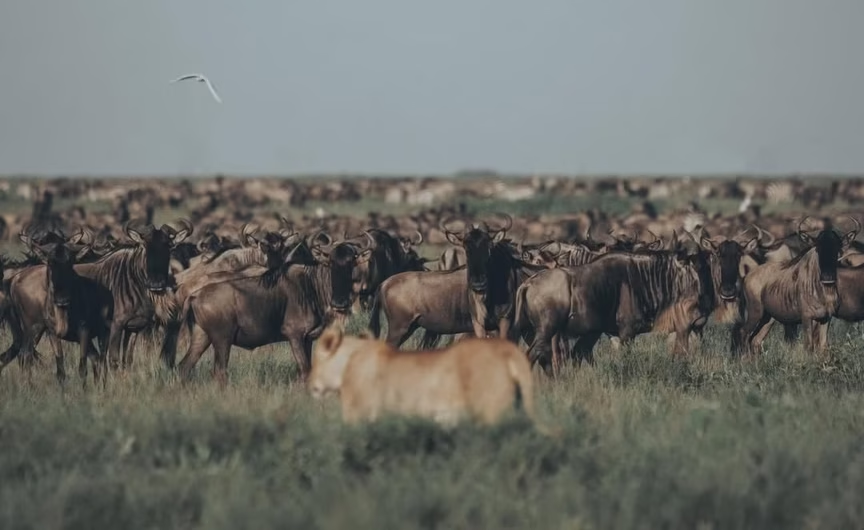
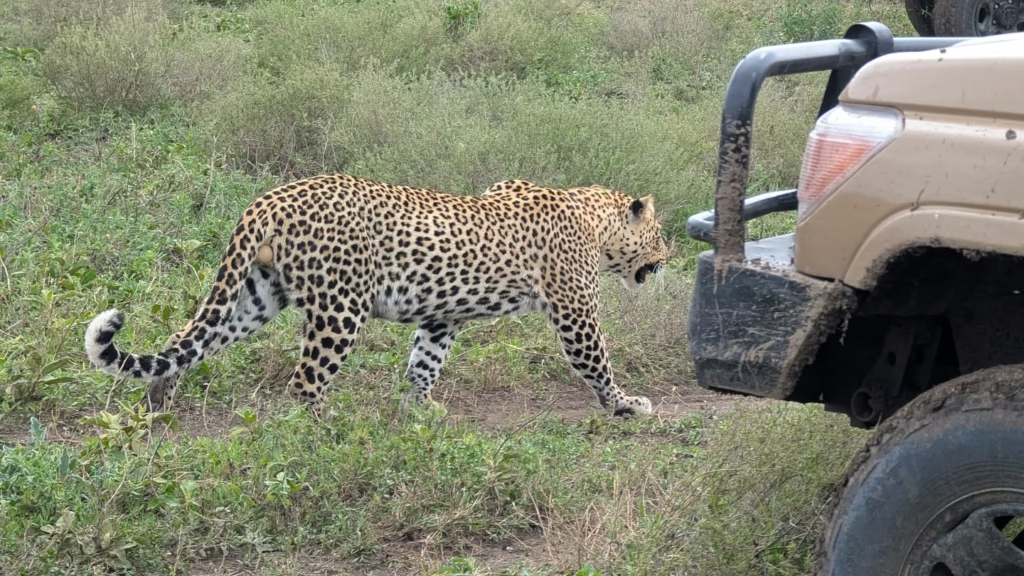
Lions move through the grass with quiet intent. Cheetahs scan the open plains, built for speed in a landscape with nowhere to hide. Leopards linger along the edges, patient and calculating. The abundance of vulnerable newborns turns this region into one of the most intense predator-prey arenas in Africa.
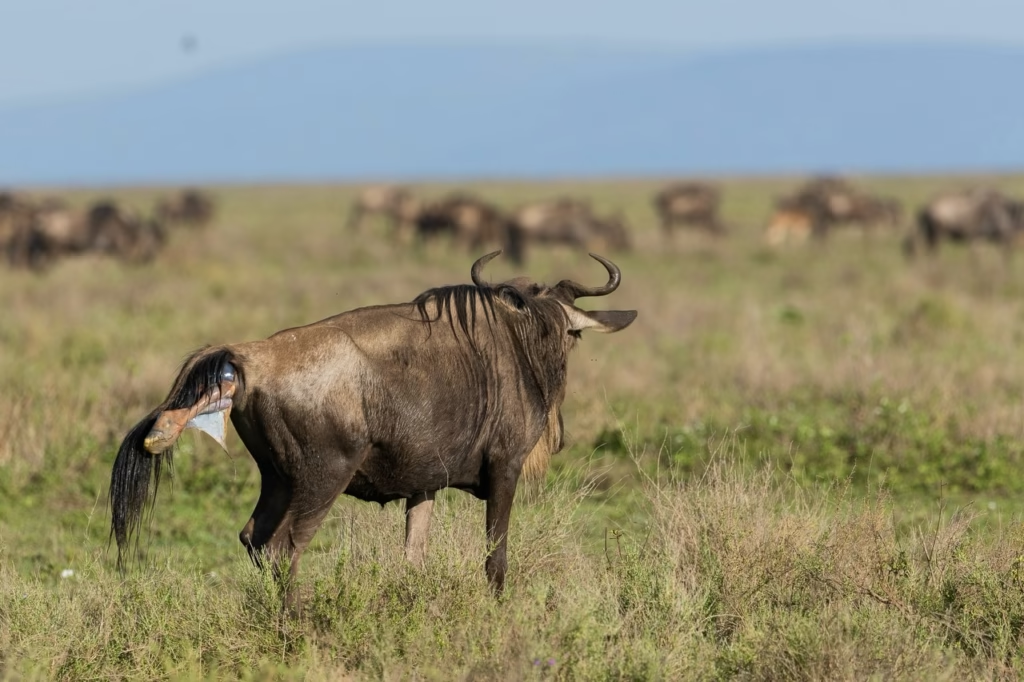
What makes it even more extraordinary is how quickly the young must adapt.
A wildebeest calf is on its feet within minutes of being born—walking, then running shortly after. It has to. In a world filled with danger, hesitation is not an option. From the very beginning, survival is instinct.
This combination—massive herds, constant births, and active predators—creates a safari experience unlike any other. It’s not just about spotting animals; it’s about witnessing life at its most immediate and most fragile.
There is always something happening. A chase in the distance. A newborn taking its first steps. A herd shifting across the horizon like a living river.
This is why February stands apart.
Not for predictability, but for intensity. Not just for wildlife, but for raw, unscripted moments that unfold in real time.
If the dry season is about observation, February is about experience—being present at one of nature’s most powerful cycles.
3. Predator Action — Nature at Its Rawest
February doesn’t just bring new life to the Serengeti—it brings tension.
Because in the wild, abundance doesn’t go unnoticed. And during calving season, the balance between life and survival becomes impossible to ignore.
With hundreds of thousands of newborn wildebeest calves spread across the southern plains, predators are drawn in with purpose. This is not coincidence—it’s instinct. For lions, cheetahs, hyenas, and leopards, February represents one of the most food-rich periods of the year. And where food is predictable, predators become active, visible, and bold.
This is why calving season is widely considered peak predator season.
Unlike the dry months, when animals cluster around water and predators rely on patience and concealment, February changes the game. The open plains of the southern Serengeti offer little cover, forcing hunts to unfold in full view. Cheetahs sprint across short grass. Lions coordinate in groups. Hyenas test the edges of herds.
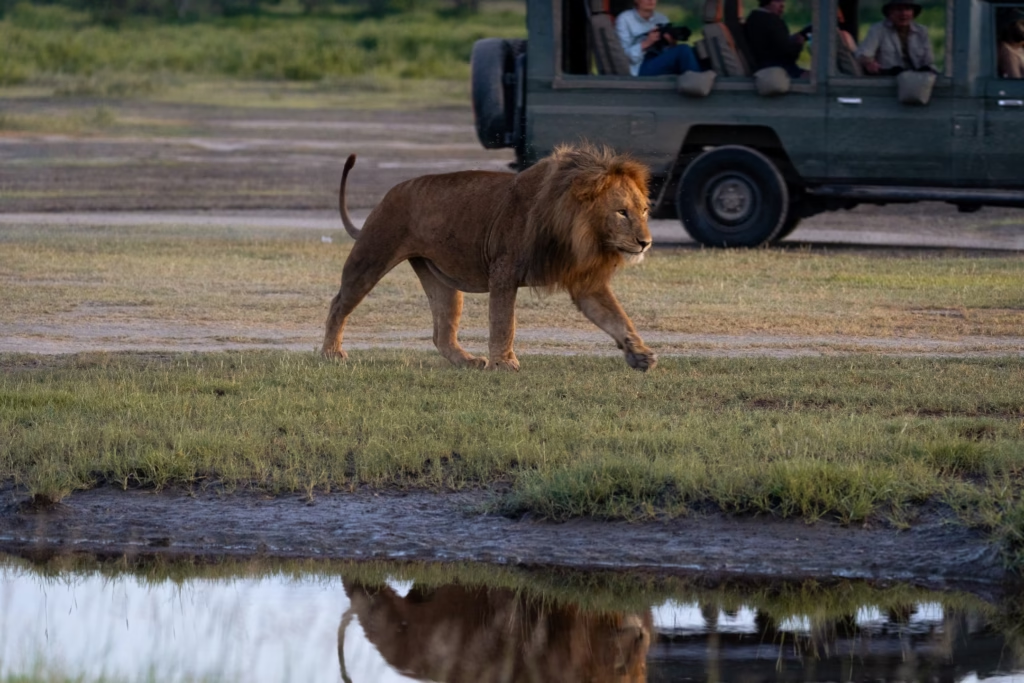
There is nowhere to hide—and that’s what makes it so compelling.
Sightings often feel more immediate, more dynamic. Instead of waiting hours for movement, you’re more likely to witness real-time interactions—stalks, chases, near-misses, and sometimes, successful hunts. It’s nature stripped of distance and illusion.
But it’s important to understand what you’re seeing.
This isn’t performance. There are no scripts, no guarantees, no curated outcomes. What unfolds in front of you is raw, unscripted nature—moments of beauty, tension, and sometimes loss. And that’s precisely why it matters. Because it’s real.
For many travelers, this is the moment safari becomes something deeper than sightseeing. It becomes understanding—of ecosystems, of survival, of the fragile balance that sustains life here.
And for photographers, February is gold.
The combination of active predators, open landscapes, dramatic skies, and constant movement creates opportunities that are hard to match in any other season. The light is softer after rains, the backgrounds are richer, and the action is frequent. It’s not just about capturing animals—it’s about capturing stories in motion.
Planning a Trip to Tanzania?
Our team is always here to help
Please let us know if you have any questions.
4. Lush Landscapes & Clearer Viewing Conditions
There’s a moment, just after the rains pass, when the Serengeti feels almost reborn. The air is fresh. The light softens. And the land—once dry and brittle—glows in deep, living green.
This is February’s quiet advantage.
The rains don’t just change the color of the landscape—they reshape how wildlife moves and behaves. Fresh grass spreads across the plains, rich in nutrients, allowing herbivores to graze more freely instead of clustering tightly around water sources. The result is a more natural, evenly distributed wildlife experience, where sightings feel less predictable, but often more authentic.
And then there’s the air itself.
During the dry season, vehicles kick up fine dust that lingers in the atmosphere, softening visibility and dulling colors. In February, that dust settles. The rain clears the sky, leaving behind crisp, clean viewing conditions. Animals stand out sharply against the green backdrop, and distant sightings become clearer.
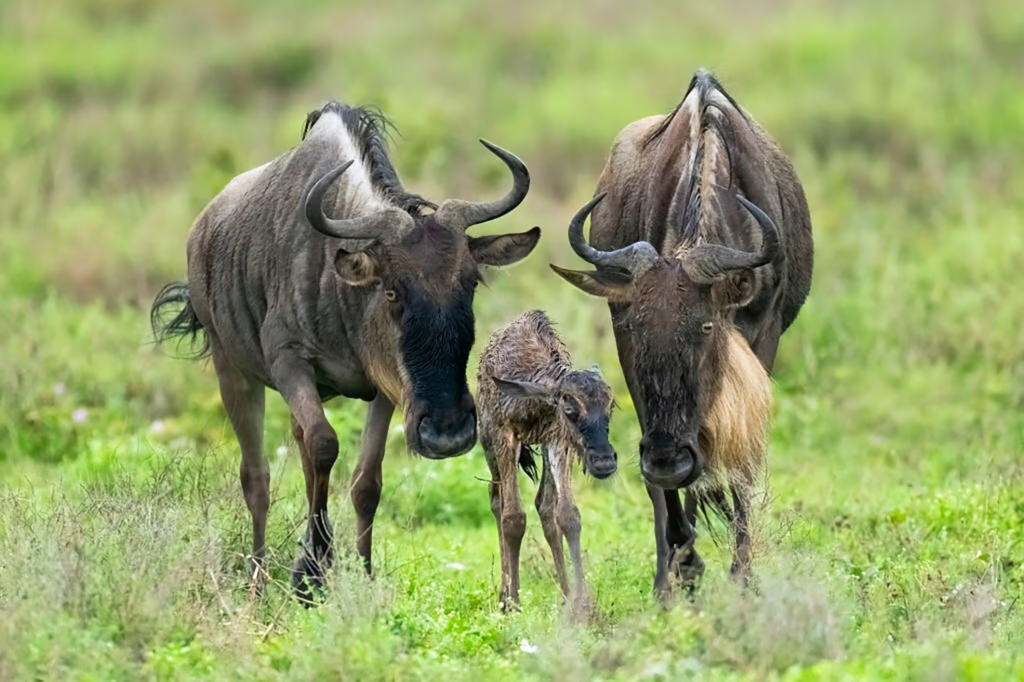
For photographers, this alone changes everything.
Colors are richer. Details are sharper. The contrast between wildlife and environment becomes more dynamic. And when the clouds roll in after a light shower, the sky transforms into something cinematic—layers of grey, gold, and blue stretching across the horizon, often broken by dramatic rays of sunlight.
These are the moments that define February. Not just what you see—but how you see it.
It’s also a powerful reminder that the Serengeti is not one fixed image.
Most travelers imagine it as endless golden plains under a harsh sun. And while that’s true in the dry months, February reveals a different side entirely—a green Serengeti, softer, more vibrant, and constantly shifting.
Two seasons. Two completely different stories.
One is stark and iconic. The other is alive and expressive.
And for those looking to experience—and capture—the Serengeti in its full range, February offers a perspective that many never expect… but rarely forget.
5. Fewer Crowds — A More Exclusive Safari Experience
There’s an unspoken reality about peak safari season: the wildlife is incredible—but you’re rarely alone.
Between July and August, Tanzania’s most famous parks fill with visitors drawn by the Great Migration crossings and guaranteed dry weather. It’s the time when sightings are reliable—but also when multiple vehicles can gather around a single moment, engines idling, cameras clicking, the sense of wilderness quietly diluted.
February tells a different story.
Because it falls outside the traditional peak window, the number of travelers drops significantly. The parks feel more open, more spacious, more personal. When you arrive at a sighting, you’re often sharing it with just a few vehicles—or sometimes, no one at all.
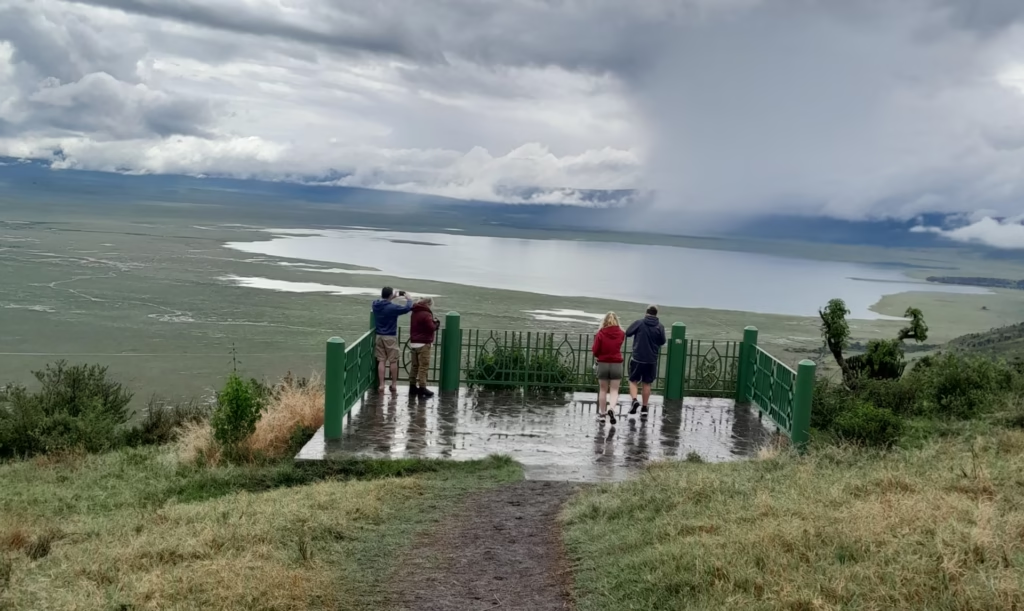
And that changes everything.
Instead of rushing between crowded stops, your experience becomes slower, more immersive. You spend more time observing behavior, understanding movement, and simply being present in the landscape. It’s not about ticking sightings off a list—it’s about experiencing them fully.
This also extends to your relationship with your guide.
With fewer vehicles and less pressure to compete for positions, guides have more freedom to interpret, explain, and adapt the experience to you. Conversations become deeper. Game drives feel less rushed. The entire safari becomes more tailored, more human.
Learn on Tanzania Safari
Feature List
Add multiple feature items, set different icons or images for each feature and also give custom links if needed.
Key Features
Choose your style from three different layouts and two unique icon background shapes.
Connector Line
Show a connector line between each icon, changes its color and style to fit your unique design.
Custom Styles
Easily customize every aspect of your list from widget styles but also you can give custom colors to each item as well.
Of course, there are exceptions.
During February, the Ndutu Plains and southern Serengeti, where the migration gathers for calving season, do attract attention. You may encounter moderate concentrations of vehicles, especially around active wildlife scenes. But even here, the atmosphere is typically far more relaxed than the high-season intensity of river crossings.
For certain travelers, this balance is exactly what they’re looking for.
Photographers benefit from cleaner compositions and more time at sightings. Honeymooners find a setting that feels private and intimate, not crowded or rushed. And repeat safari travelers—those who have already experienced the peak season—often return in February precisely because it offers something different: space, depth, and authenticity.
Because in the end, a safari isn’t just about what you see. It’s about how it feels to be there.
And in February, the wilderness feels a little more like it belongs to you.
6. Better Value — High-End Safari for Less
Luxury and value rarely go hand in hand. But February is one of those rare moments in the safari calendar where they do.
Because it sits just outside the peak dry season, February is considered a shoulder season—and that positioning creates a significant advantage for travelers. On average, safari prices can be 20–40% lower compared to July and August, even though the wildlife experience remains exceptional.
In practical terms, that means access to the same iconic parks, the same experienced guides, and often the same lodges—at a noticeably better rate.
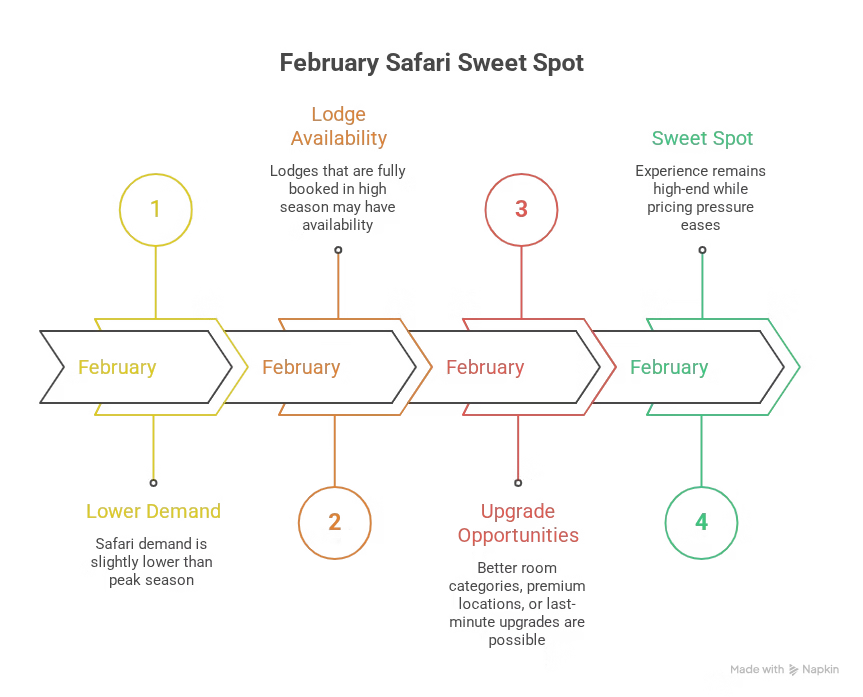
Of course, some costs don’t change.
Park fees, which typically range from $60–$80 per person per day, are set by the authorities and remain consistent year-round. These are fixed conservation fees, regardless of when you travel.
But everything around those fees—accommodation, logistics, availability—becomes more flexible.
And that’s where February quietly stands out.
Because it allows you to experience a premium safari not by spending more—but by choosing the right time.
7. Ideal Safari Circuit — Where to Go in February
Timing matters on safari—but where you go matters just as much. And in February, choosing the right circuit can make the difference between a good trip and an unforgettable one.
The clear winner during this time is Tanzania’s Northern Circuit—a region that performs consistently well during the green season and offers the richest combination of wildlife, landscapes, and accessibility.
At the heart of it is the Serengeti, particularly the southern and central regions. In February, the southern plains come alive with the Great Migration’s calving season, making it one of the most active wildlife areas in Africa. The central Serengeti (Seronera) complements this with year-round game viewing, including resident predators
Top February Packages
Feature List
Add multiple feature items, set different icons or images for each feature and also give custom links if needed.
Key Features
Choose your style from three different layouts and two unique icon background shapes.
Connector Line
Show a connector line between each icon, changes its color and style to fit your unique design.
Custom Styles
Easily customize every aspect of your list from widget styles but also you can give custom colors to each item as well.
Connected to this ecosystem are the Ndutu Plains, a crucial extension of the southern Serengeti within the Ngorongoro Conservation Area. This is where much of the calving action takes place, and it becomes a focal point for both wildlife enthusiasts and photographers.
Then there is the Ngorongoro Crater—a destination that remains reliable throughout the year. Its enclosed ecosystem supports a high density of wildlife, including the Big Five, making it an essential stop on a February itinerary. The cooler highland climate also provides a refreshing contrast to the plains below.
Tarangire National Park can also be included, though its experience is more seasonal. While it doesn’t have the same wildlife concentrations as the dry months, it still offers beautiful landscapes, large elephant herds, and a quieter, more relaxed atmosphere—ideal for those seeking variety.
Where February becomes more challenging is in the southern parks, such as Ruaha and Selous (Nyerere National Park). These regions experience heavier and more consistent rainfall, which can make roads difficult to navigate and limit wildlife visibility. For this reason, they are generally not recommended during this time of year.
For those looking to extend their journey, Zanzibar offers a natural contrast to the safari experience—white-sand beaches, turquoise waters, and a slower pace. However, it’s important to note that February can be hot and humid, with temperatures reaching up to 35°C (95°F). It’s perfect for relaxation, but best balanced with light activities and coastal breezes.
In many ways, February is about alignment—matching the season with the right locations.
And when you follow the rhythm of the land—focusing on the Northern Circuit—you position yourself exactly where Tanzania is at its most vibrant.
8. Weather Reality — What You Need to Know
February sits in that in-between space—not fully dry, not heavily wet. And understanding this balance is key to planning your safari with the right expectations.
The rains during this time are typically short and sporadic, not continuous. You might experience a brief shower in the afternoon or overnight, followed by clear skies and sunshine. It’s less about days of rain, and more about moments of rain—refreshing, often dramatic, and rarely disruptive for an entire game drive.
Temperatures remain comfortably warm. Daytime averages hover around 28–30°C (82–86°F), creating ideal conditions for wildlife viewing. Early mornings and evenings, however, can feel noticeably cooler, especially when you’re out on a game drive. Expect temperatures to drop to around 16°C (61°F)—sometimes lower in higher-altitude areas.
Planning a Trip to Tanzania?
Our team is always here to help
Please let us know if you have any questions.
The Ngorongoro Highlands can be surprisingly cold, particularly at night and early morning, occasionally dipping close to freezing temperatures. A warm layer is not optional here—it’s essential.
On the other end of the spectrum, Zanzibar can feel intense in February. With temperatures climbing up to 35°C (95°F), combined with humidity, it becomes hot and tropical. Perfect for the beach—but best approached at a slower pace.
Weather also has a practical impact on how you move.
Rain can make certain tracks muddy and more challenging, particularly in less-traveled areas. This is why a proper 4×4 safari vehicle is essential during this season. In most well-established northern circuit routes, experienced guides navigate conditions smoothly—but flexibility is always part of the experience.
Learn More About Tanzania Weather
Feature List
Add multiple feature items, set different icons or images for each feature and also give custom links if needed.
There can also be occasional flight delays or schedule adjustments, especially for small bush flights, depending on weather conditions. These are usually manageable, but it’s wise to keep your itinerary slightly flexible.
Packing smart makes all the difference.
Think light rain gear—a waterproof jacket rather than heavy coats. Add layers for changing temperatures: something warm for early mornings and evenings, and breathable clothing for the daytime heat. Comfortable footwear, sun protection, and a sense of adaptability will carry you far.
Because February doesn’t offer perfect weather.
What it offers instead is something more dynamic—a safari shaped by nature, not controlled by it. And for many travelers, that’s exactly where the magic lies.
9. Who February Is Perfect For (And Who It’s Not)
February is not the “safe” choice. It’s the informed choice.
It’s a month that rewards the traveler who understands that safari is not just about checking animals off a list—but about timing, rhythm, and experience. And for the right kind of traveler, it can be one of the most powerful times to be in Tanzania.

If you are a first-time traveler looking for guaranteed sunshine, predictable conditions, and the classic dry-season experience, other months may feel more comfortable. The dry season offers reliability—and for many, that peace of mind matters.
Similarly, if your priority is completely dry weather, February may not be the best fit. Rain, even if light and sporadic, is part of the experience. Flexibility is required.
And that’s really the point.
February is not universally the “best” time to visit Tanzania. It doesn’t try to be.
What it offers instead is something more nuanced—a richer, more immersive, and often more intimate safari experience for those willing to embrace a little unpredictability.
10. February vs Peak Season — Which Should You Choose?
Choosing when to go on safari often comes down to a simple question: Do you want certainty… or do you want depth?
Because February and the peak dry season (June–October) offer two very different interpretations of the same wilderness. Neither is wrong. But each delivers a distinct experience.
Let’s break it down.
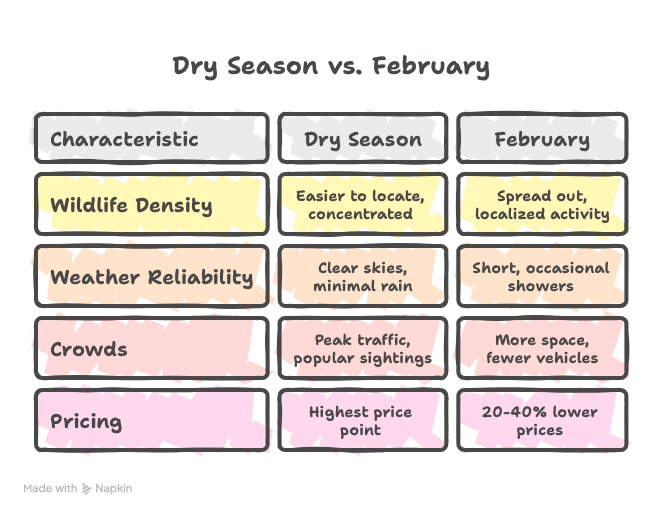
So how do you decide?
Think of it as a choice between certainty and experience.
If you want predictable weather, easy logistics, and classic safari conditions, the dry season is the safe and reliable option.
But if you’re drawn to something more immersive—fewer crowds, richer landscapes, active wildlife behavior, and better value—then February becomes incredibly compelling.
Because February doesn’t just show you wildlife.
- It shows you the story behind it.
- And that’s the difference.
- The dry season offers convenience.
- February offers depth.
11. Practical Travel Tips for a February Safari
A February safari isn’t about perfection—it’s about preparation and positioning. With the right approach, you don’t just manage the season… you make the most of it.
Start with location.
During February, the Great Migration is concentrated in the southern Serengeti and Ndutu Plains, and this is where demand quietly builds. While the overall season is less crowded, lodges and camps in these key areas fill up quickly, especially those closest to the action. Booking early ensures you’re not just in the Serengeti—but in the right part of it.
Then comes mobility.
Rain, even if light, can make certain tracks soft or muddy, particularly in off-road areas like Ndutu. This is why a proper 4×4 safari vehicle is non-negotiable. Experienced guides and well-equipped vehicles make a significant difference—not just for comfort, but for access to wildlife.
Feature List
Add multiple feature items, set different icons or images for each feature and also give custom links if needed.
Key Features
Choose your style from three different layouts and two unique icon background shapes.
Flexibility is your advantage.
Unlike the rigid schedules often required in peak season, February allows for a more adaptable itinerary. Weather may shift. Wildlife may move. The best experiences often come from adjusting in the moment—spending more time where activity is highest, or changing routes based on conditions. A flexible mindset turns uncertainty into opportunity.
If you’re combining safari with a beach escape, timing matters.
Zanzibar is a natural extension, offering a complete contrast to the savannah—but February can be hot and humid. The key is balance. Plan your safari first, when energy levels are high, then transition to Zanzibar for a slower, more relaxed pace. Early morning and late afternoon activities work best in the heat.
And finally, consider duration.
A 4 to 7-day safari is ideal in February. It gives you enough time to explore multiple areas—Serengeti, Ndutu, Ngorongoro—while also allowing for flexibility if weather or wildlife patterns shift. Shorter trips can still work, but having a few extra days increases your chances of experiencing the season at its best.
Because in February, success isn’t just about where you go.
CONCLUSION — The Hidden Peak of the Wild
February doesn’t announce itself the way the dry season does. It doesn’t promise certainty, or perfect skies, or easy answers.
What it offers is something quieter—but far more powerful.
A safari where the wilderness feels alive, not staged. Where the plains are green, the air is clear, and every day carries the possibility of something unexpected. This is the season of beginnings—of calves taking their first steps, of predators moving with purpose, of ecosystems at full capacity.
It’s not just about seeing wildlife.
It’s about feeling the pulse of it. The tension. The movement. The fragile balance between survival and loss. February is when the Serengeti tells its most complete story—not just of animals, but of life itself.
In many ways, it is a secret high season. Not defined by crowds or calendars, but by the intensity of what unfolds on the ground. A season known less by the masses—and more by those who seek something deeper.
Planning a Trip to Tanzania?
Our team is always here to help
Please let us know if you have any questions.
So the choice becomes simple.
If you want guaranteed sun, clear skies, and predictability, the dry season will serve you well.
But if you want to witness Tanzania at its most raw, dynamic, and alive—
If you want to experience not just the wildlife, but the story behind it—
Then February is not just an alternative. “It might be the moment you’ve been looking for all along.”
FAQs — Why February Is One of the Best Months for a Tanzania Safari
1. Is February a good time to go on safari in Tanzania?
Yes—February is one of the most rewarding times to visit, especially for wildlife activity. It’s calving season in the southern Serengeti, meaning high concentrations of animals and increased predator action, all within greener, more scenic landscapes.✨
2. Does it rain a lot in Tanzania in February?
Not usually. February falls within the green season, but rainfall is typically light and short-lived—often brief showers followed by sunshine. It rarely rains all day, so most game drives continue as planned.✨
3. Where is the best place to go in February for a safari?
The best areas are the Southern Serengeti and Ndutu Plains, where the Great Migration gathers for calving season. Ngorongoro Crater and Central Serengeti are also excellent additions to your itinerary.
4. Can you see the Great Migration in February?
Yes—and in a very special way. February is peak calving season, when hundreds of thousands of wildebeest give birth. This attracts predators, making it one of the most action-packed periods of the migration.
5. Is February crowded for safaris in Tanzania?
No, it’s generally less crowded than peak dry season months like July and August. While areas like Ndutu can have moderate activity due to the migration, overall, the experience feels more exclusive and less congested.
6. Is February a good time for photography?
Absolutely. The green landscapes, clear air (less dust), and dramatic skies after rain create excellent conditions for photography. Combined with active wildlife behavior, February is a favorite for many photographers.
7. Is a February safari cheaper than peak season?
Yes. February is considered a shoulder season, so prices are often 20–40% lower than peak months. This can allow for better accommodation options or longer stays within the same budget.
8. Is February suitable for first-time safari travelers?
It can be, but it depends on your expectations. If you prefer guaranteed dry weather and predictability, the dry season may suit you better. However, if you’re open to some flexibility and want a more dynamic, less crowded experience, February can be incredibly rewarding—even for first-time visitors.