Serengeti without migration
Discover if you can enjoy the Serengeti without migration. Learn about resident wildlife, predator density, best areas, and when to visit for great safaris.
Serengeti without migration Read More »
Discover if you can enjoy the Serengeti without migration. Learn about resident wildlife, predator density, best areas, and when to visit for great safaris.
Serengeti without migration Read More »
Is safari in Tanzania safe? Yes—discover how parks, guides, vehicles, and lodges keep travelers safe while enjoying unforgettable wildlife adventures.
is safari in Tanzania safe Read More »
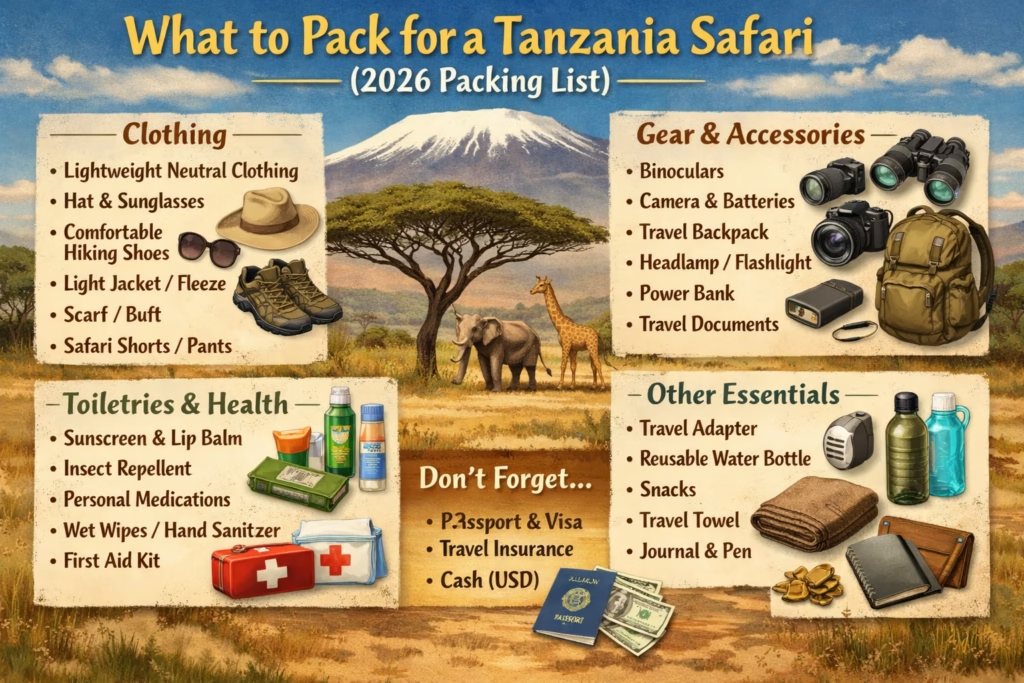
Tanzania safari packing list: Discover what to pack for a 2026 Tanzania safari—clothing, gear, medication, and camera essentials for a comfortable wildlife adventure
Tanzania safari packing list Read More »
Tanzania Safari Mistakes to avoid before your trip—learn packing tips, timing, hidden costs, and how to plan the perfect safari without regrets.
Tanzania safari mistakes Read More »
Which is the Best Tanzania National Park for First Time Safari Travelers? You’ve dreamed about Africa for years—the golden light over endless plains, lions resting in the shade, elephants moving slowly across the horizon. But now that you’re actually planning your first safari in Tanzania, the excitement quickly turns into confusion. There are 22 national parks. Dozens of itineraries. Northern Circuit, Southern Circuit, Serengeti, Ngorongoro, Tarangire, Ruaha… every website tells you something different. One says you must see the Great Migration. Another warns about crowds. A third insists you should go off the beaten path. Serengeti National Park – Nabi Gate Suddenly, what should feel like a once-in-a-lifetime adventure becomes overwhelming. Too many choices. Too many opinions. And one lingering fear: what if you choose the wrong park and miss the experience you’ve always imagined? Here’s the truth most first-time travelers don’t hear—more options don’t make your safari better. They make it harder to get it right. If you’re planning your first safari in Tanzania, you don’t need 10 options. You need one clear answer. And there is one national park that consistently delivers the experience people dream of. 2. Why Choosing a Tanzania Safari Is So Overwhelming Planning your first safari in Tanzania should feel exciting. Instead, for most travelers, it feels like stepping into a maze—one with too many paths, too many opinions, and no clear direction. Tanzania Has Too Many Options On paper, more choice sounds like a good thing. Tanzania has 22 national parks, each with its own landscapes, wildlife, and promises. But for a first-time traveler, this abundance creates confusion, not clarity. You’re suddenly asked to decide between the Northern Circuit or Southern Circuit—without really knowing what that means. Then come the safari styles: budget group tours, mid-range private safaris, luxury fly-in experiences. Each option sounds compelling. Each comes with trade-offs. What starts as a dream quickly becomes a series of decisions you don’t feel equipped to make? Leopard in Serngeti The Beginner’s Trap Faced with so many choices, most first-time travelers fall into the same trap: they try to do everything. They build itineraries that jump from park to park, trying to tick every box—Serengeti, Ngorongoro, Tarangire, maybe even more—believing that more destinations will equal a better safari. But the opposite often happens. Long driving hours replace game viewing. Experiences feel rushed. And instead of immersing yourself in the wild, you spend your trip moving between it. Add to that the conflicting advice online—some saying avoid crowds, others saying follow the migration—and it becomes almost impossible to know what actually matters. The Reality Not all parks are equal for a first safari. The Northern Circuit—home to Serengeti, Ngorongoro, and Tarangire—is easier to access, better developed, and offers more reliable wildlife sightings. It’s where most first-time travelers go for a reason. On the other hand, Southern parks like Ruaha or Nyerere (Selous) are more remote. They often require flights, higher budgets, and come with less predictable wildlife encounters—especially for beginners who don’t yet understand safari dynamics. Then there’s the Great Migration, one of the biggest draws to Tanzania. But its movement is seasonal, complex, and often misunderstood. Travelers try to “time it perfectly,” adding another layer of uncertainty to an already complicated decision. This is where many people get stuck—overthinking, over-planning, and still unsure if they’re making the right choice. And that’s exactly why simplifying your decision is not just helpful—it’s essential. Planning a Trip to Tanzania? Our team is always here to help Please let us know if you have any questions. 3. The Clear Answer: Serengeti Is the Best Tanzania National Park for First-Time Safari After all the research, comparisons, and conflicting advice, here is the simple, clear answer most first-time travelers are looking for: Serengeti National Park is the best Tanzania national park for first-time safari travelers due to its year-round wildlife, iconic landscapes, and the highest chances of unforgettable sightings. If your goal is to experience what you’ve always imagined when you think of an African safari—vast golden plains, predators on the hunt, and herds stretching to the horizon—the Serengeti delivers that experience more consistently than anywhere else in Tanzania. It removes the uncertainty. It increases your chances of success. And most importantly, it gives you the kind of safari that first-time travelers remember for the rest of their lives. Serengeti National Park Safaris 4. Why Serengeti Works So Well for First-Time Travelers. Choosing your first safari destination is really about one thing: maximizing your chances of an unforgettable experience. The Serengeti doesn’t just promise that—it consistently delivers it. Here’s why. 4.1 Year-Round Wildlife Density The Serengeti is one of the few places in Africa where wildlife is not seasonal—it’s constant. Lions rest under acacia trees. Cheetahs scan the plains. Leopards hide in riverine forests. And surrounding them are vast numbers of herbivores—zebras, gazelles, wildebeest—moving, grazing, and attracting predators. For a first-time traveler, this means one thing: your chances of seeing wildlife are incredibly high, no matter when you visit. 4.2 The Great Migration (Even Outside Peak Season) The Serengeti hosts one of the greatest wildlife spectacles on Earth—the Great Migration, with over 1.5 million wildebeest and zebras moving in a continuous cycle. But here’s what many first-time travelers misunderstand: it’s not just about dramatic river crossings. The migration is happening all year round—whether it’s calving season in the south, herds moving through central Serengeti, or crossing rivers in the north. So even if you don’t visit at peak crossing season, you’re still likely to witness part of this extraordinary movement. Tanzania Northern Circuit National Park 4.3 The Classic “Africa” You Imagine If you’ve ever pictured an African safari in your mind, you were probably imagining the Serengeti. Endless golden plains stretching to the horizon. Lone acacia trees silhouetted against the sky. A pride of lions resting in the shade, while a herd of elephants moves slowly in the distance. This is the landscape that defines Africa—and it’s exactly what first-time travelers hope to experience. 4.4 Scale = Reliability At
Best Tanzania National Park for First Time Safari Read More »
Discover why February is one of the best months for a Tanzania safari—experience the Great Migration calving season, fewer crowds, lush landscapes, and better value, all while witnessing wildlife at its most active and dramatic.
Best Month for a Tanzania Safari Read More »
Discover what to expect in Ndutu calving season during the February —daily wildebeest births, intense predator action, weather realities, and expert tips to plan the ultimate Tanzania safari.
Ndutu Calving Season: What to Expect in February Read More »
Is a 5-day Tanzania safari enough? Honest insight on wildlife, pace, fatigue, and who it truly suits.
Is a 5-Day Tanzania Safari Enough or a Mistake? Read More »
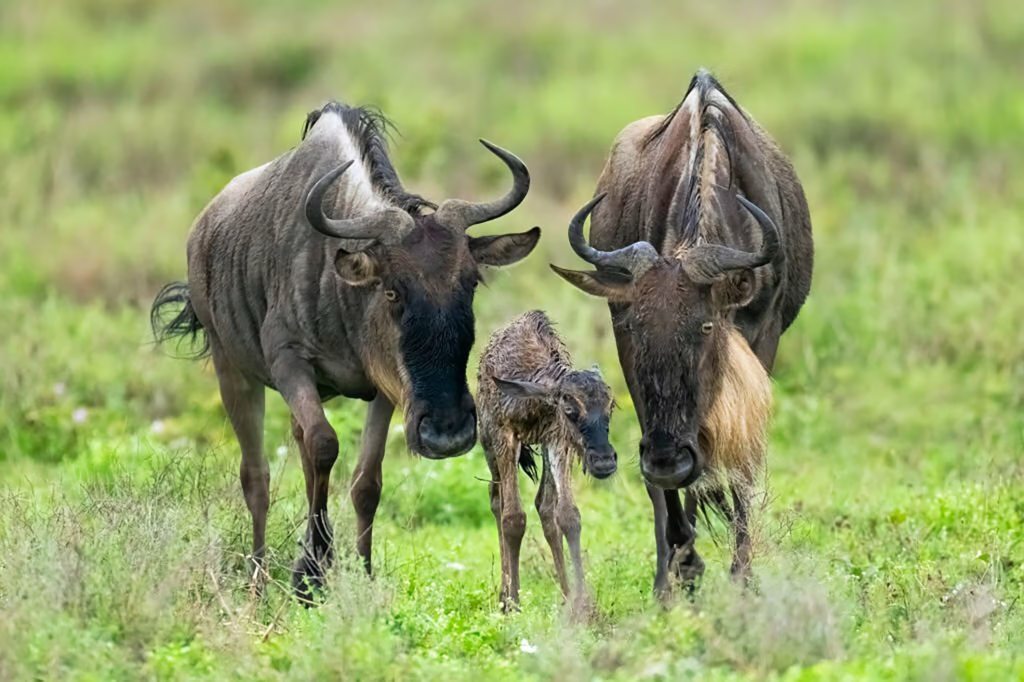
When Is the Great Migration in 2026? The short, honest answer: the Great Migration in 2026 happens all year long. There is no single start date, no fixed finale, and no one “best week.” Instead, it’s a continuous, circular movement of roughly 1.5 million wildebeest, joined by zebra and gazelle, flowing across the Serengeti ecosystem and into Kenya’s Maasai Mara—month by month, place by place. Why does the exact timing in 2026 matter so much? Because where the herds are determining everything: which camps you should book, which airstrips you fly into, what kind of wildlife action you’ll see, and how crowded (or blissfully quiet) your safari will be. River crossings, calving season, predator density, photography conditions—each peak happens in a different location at a different time. Get the timing right, and the experience feels cinematic. Get it wrong, and you may be hundreds of kilometers from the action. What drives this epic movement isn’t a calendar—it’s rain, fresh grazing, and ancient instinct. Seasonal rains awaken new grass, the herds follow it, predators follow the herds, and the cycle repeats. In 2026, as in every year, the migration responds to nature first and forecasts second—making understanding the pattern far more important than chasing exact dates. This guide breaks down where the Great Migration is each month in 2026, so you can plan with clarity, confidence, and realistic expectations—no myths, no guesswork, just the rhythm of the wild. 2. Understanding the Great Migration. The Great Migration is not a straight line from Point A to Point B—it is a vast, living loop played out across the Serengeti–Maasai Mara ecosystem, one of the last remaining intact wildlife corridors on Earth. Spanning northern Tanzania and southwestern Kenya, this ecosystem includes the Southern Serengeti, Central Serengeti, Western Corridor, Northern Serengeti, and the Maasai Mara, all seamlessly connected by grasslands, rivers, and ancient migratory paths. No fences. No borders. Just movement. At the heart of this journey are approximately 1.5 million wildebeest, accompanied by hundreds of thousands of zebra and Thomson’s gazelle. Wildebeest lead the charge, driven by an almost primal sensitivity to rain and fresh grass. Zebras follow, grazing taller grasses and opening the plains, while gazelles pick off the finer shoots behind them. Together, they form a moving ecosystem—one that feeds not only the land but also some of Africa’s highest concentrations of predators. So why does the migration feel predictable, yet never guaranteed? Because while the overall pattern is consistent, the exact timing shifts. Long rains, short rains, droughts, and localized storms can accelerate, delay, or reroute the herds by days or even weeks. Historical data allows experts to forecast movements with strong accuracy, but nature always keeps the final say. The migration follows a rhythm—reliable in structure, flexible in execution. Understanding this is key: the Great Migration is not a single event to chase, but a series of interconnected chapters. Miss one moment, and another—equally powerful—unfolds somewhere else. That’s what makes it timeless, and endlessly compelling. 3. Great Migration 2026: Month-by-Month Movement Calendar (Overview) In short, the calendar helps you match your expectations to the right place and time—so you’re not just visiting during the migration year, but arriving exactly where its story is unfolding. 4. January 2026 – Calving Begins in Southern Serengeti January marks the quiet beginning of the most explosive chapter of the Great Migration. As the short rains fade, vast herds settle across the open plains of Ndutu and the Ngorongoro Conservation Area, drawn by mineral-rich grasses that are perfect for newborn calves. By around early January, the first wildebeest calves begin to drop—often within minutes of birth, they are standing, wobbling, and running. This is not a river-crossing month, but it is one of the most intense predator periods of the entire year. With thousands of calves born each day, predators converge on the southern plains. Lions, cheetahs, hyenas, and leopards are everywhere, taking advantage of the abundance of vulnerable prey. The action is constant, raw, and often unfolding in full view across open grassland. January is best suited for wildlife photographers, predator enthusiasts, and travelers who want to witness life beginning—and ending—in its most unfiltered form. The scenery is green, skies are dramatic, and visibility is excellent, with fewer vehicles than peak river-crossing months. It’s also ideal for guests who value behavior, interaction, and storytelling over sheer spectacle. ✨Camps & Access (at a glance): Seasonal and permanent camps around Ndutu dominate this month, with access via road from Arusha or short flights into Ndutu Airstrip. Camp positioning is critical, and flexibility is a major advantage during this phase of the migration. 5. February–March 2026 – Peak Calving Season February and March represent the absolute heart of the calving season. The herds remain largely stationary in the southern Serengeti, concentrated around the Ndutu plains and surrounding grasslands, where food and water are still abundant. Movement is minimal—not because the herds are resting, but because everything they need is right here. The scale of calving during this period is staggering. By mid-February, hundreds of thousands of calves flood the plains, with births happening in synchronized waves. This abundance fuels intense and highly visible predator behavior. Cheetahs stalk the open flats, lions target nursery groups, hyenas work relentlessly, and leopards take advantage of cover along woodland edges. Predator sightings are not incidental—they are constant, purposeful, and often unfolding in daylight. Visually, this is one of the most beautiful times of year in the Serengeti. The plains are lush and emerald-green, scattered with wildflowers, while towering clouds build dramatic skies that are a gift to photographers. Light shifts quickly, storms roll in and out, and the landscape feels alive and fresh rather than dusty and dry. ✨February–March is ideal for a slow, immersive safari style—long game drives, minimal transit, and camps positioned close to calving hotspots. Access is typically via Ndutu or nearby southern airstrips, or by overland routes from Central Serengeti. This is a season for patience, observation, and deep wildlife storytelling rather than chasing distance or
When Is the Great Migration in 2026? Read More »
Tanzania safari cost in 2026: Daily rates range from $180 to $1,500+. Get a clear breakdown of budget, mid-range & luxury safaris, hidden costs, and sample itineraries.
How Much Does a Tanzania Safari Cost in 2026? Read More »