
Why Serengeti National Park Is the Best Safari Destination in Africa
Table of Contents
Toggle1. Introduction: The Ultimate Safari Question
What truly defines the best safari destination Africa? Is it the sheer number of animals, the diversity of landscapes, or that rare, electric moment when nature unfolds in its rawest form right in front of you? Across the continent, iconic destinations promise unforgettable encounters—from the watery labyrinths of the Okavango Delta to the ultra-exclusive game viewing of Sabi Sands Game Reserve. Each offers something extraordinary. But only one delivers it all—consistently, at scale, and with unmatched intensity.
Enter Serengeti National Park—a name that doesn’t just appear in safari conversations, it defines them. Spanning vast, seemingly endless plains teeming with life, the Serengeti has become the gold standard against which all other safari destinations are measured. It is not simply a park; it is a living, breathing ecosystem where drama, survival, and beauty collide daily.
Despite strong contenders, the Serengeti stands apart. Its immense scale, staggering wildlife density, and world-famous natural spectacles elevate it beyond comparison. While other destinations specialize in niche experiences, the Serengeti delivers the full, unfiltered essence of Africa—making a compelling case for why it remains the undisputed answer to the question: What is the best safari destination Africa?
🌍 2. Diverse Ecosystems: A Living, Breathing Wilderness
2.1 Overview of Serengeti’s 1.5 Million Hectares
Stretching across an astonishing 1.5 million hectares, Serengeti National Park is not a single landscape—it’s a dynamic mosaic of ecosystems that shift, breathe, and evolve with the rhythms of nature. This vastness is precisely what elevates it in the conversation around the best safari destination Africa. Here, variety isn’t a feature—it’s the foundation.
At its heart lie the open grasslands of the southern plains, a golden, seemingly endless expanse where visibility stretches to the horizon. These plains are the stage for some of the highest concentrations of grazing animals on Earth, drawn by nutrient-rich volcanic soils.
Move north, and the terrain transforms into lush woodlands, where rolling hills and thicker vegetation provide refuge for elephants, giraffes, and elusive predators. This shift in landscape creates a completely different safari experience—more intimate, more layered.
To the west, the Serengeti reveals its acacia-dotted savannah, known as the western corridor. Here, scattered trees break the skyline, offering shade and strategic vantage points for wildlife. This region acts as a critical passageway, especially during seasonal wildlife movements.
Threading through these ecosystems are the riverine forests of the Grumeti River, where dense vegetation hugs the water’s edge. These fertile corridors attract year-round wildlife, from massive crocodiles lurking beneath the surface to herds gathering to drink—turning quiet riverbanks into scenes of sudden, gripping drama.
Together, these habitats form a seamless ecological gradient—each distinct, yet deeply interconnected. It’s this layered complexity that ensures the Serengeti is never static, never predictable, and never anything less than extraordinary
Want to explore multiple ecosystems in one trip?
The Serengeti delivers it all.
2.2 Unique Features & Biodiversity Highlights
What truly sharpens the identity of Serengeti National Park—and strengthens its claim as the best safari destination Africa—are the subtle, powerful forces shaping life beneath the surface. This is not just wilderness; it’s a finely tuned ecological engine.
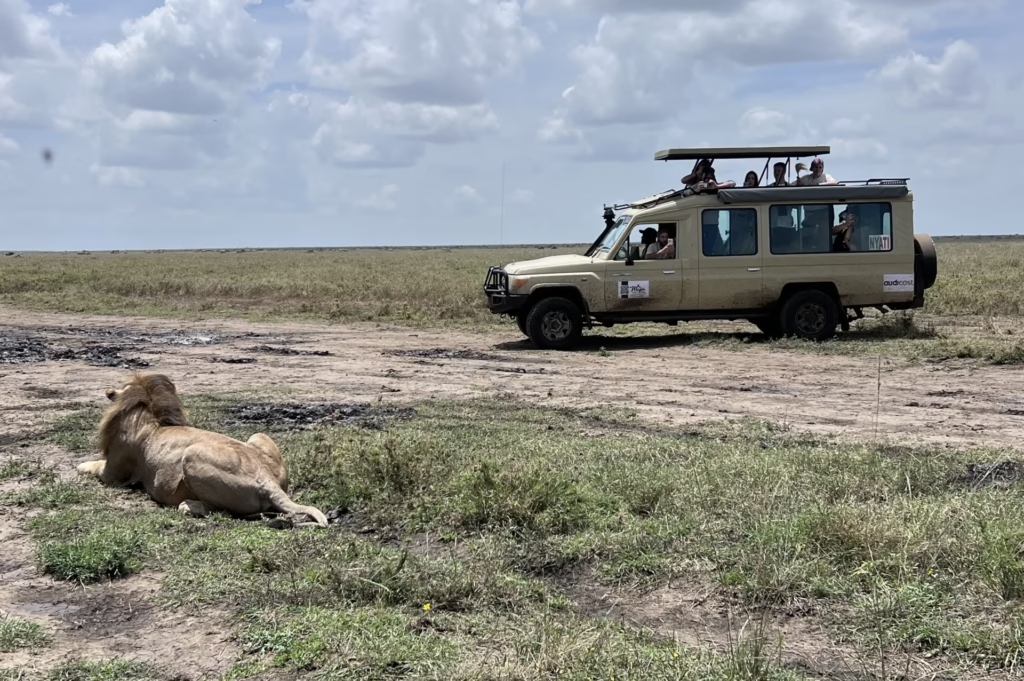
Scattered across the plains rise the iconic kopjes—ancient granite outcrops that punctuate the horizon like natural watchtowers. These rocky islands are more than scenic landmarks; they are strategic strongholds. Lions sprawl across their sunlit surfaces, leopards retreat into their crevices, and countless smaller species find shelter within their shadows.
Beneath the sweeping beauty lies an intricate system of rainfall gradients. The Serengeti doesn’t receive uniform rain—some regions are lush and green, while others remain dry and sparse. This variation drives the movement of animals, dictates grazing patterns, and ensures a constant, dynamic flow of life across the ecosystem.
Then there’s the soil diversity—particularly the mineral-rich volcanic soils of the southern plains. These soils produce highly nutritious grasses, fueling massive herbivore populations and, in turn, sustaining one of the highest predator densities on Earth. It’s a chain reaction of life, powered from the ground up.
And the result? A staggering level of biodiversity:
- Over 500 bird species, from vivid lilac-breasted rollers to formidable raptors scanning the plains
- A thriving presence of primates and large herbivores year-round, from baboons and vervet monkeys to elephants, giraffes, and antelope herds
This layered interplay of geology, climate, and life creates a system that is not only rich—but resilient. In the Serengeti, every detail matters, and every element works in concert to deliver a safari experience that is as complex as it is unforgettable.✨
2.3 Comparison: More Ecological Variety Than Kruger National Park
While Kruger National Park is celebrated for its accessibility and impressive wildlife, its landscapes are relatively more uniform—dominated by bushveld and managed road networks that shape the safari experience. In contrast, Serengeti National Park unfolds as a vast, untamed canvas of shifting ecosystems.
From sweeping grasslands to wooded hills, from acacia savannah to river-lined forests, the Serengeti offers a broader ecological spectrum within a single, continuous wilderness. There are fewer artificial boundaries, less visible human structuring, and a stronger sense of raw, uninterrupted nature. This diversity doesn’t just enhance scenery—it multiplies the kinds of wildlife encounters possible in a single journey.
2.4 Insight: Why Ecosystem Diversity = Consistent Wildlife Sightings
Here’s the hidden advantage: diversity creates reliability.
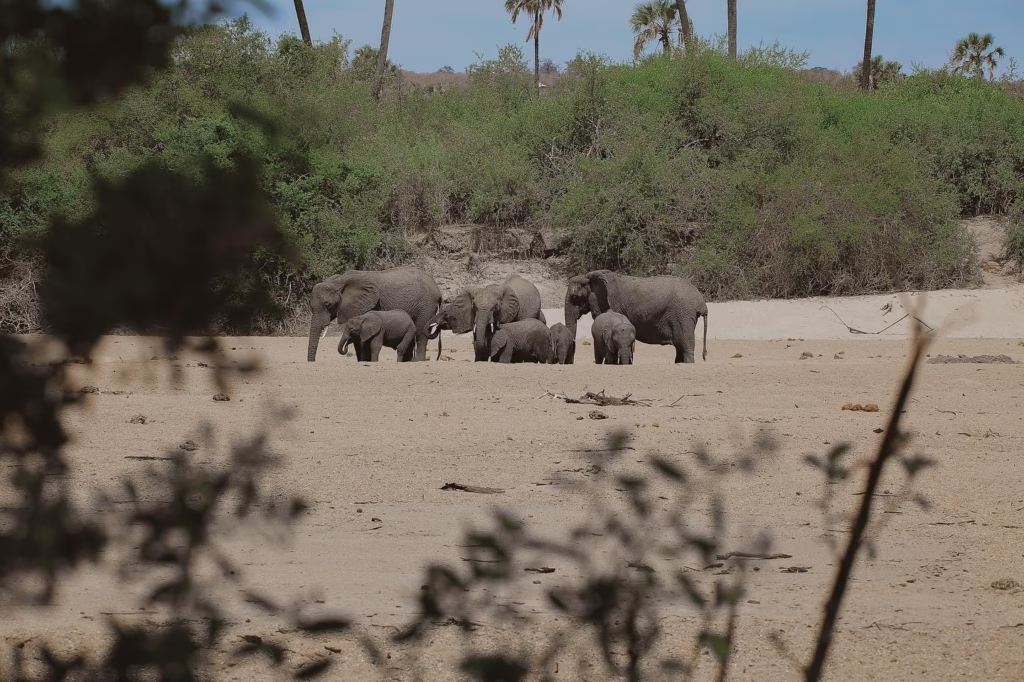
In a landscape as varied as the Serengeti, different habitats support different species at different times—meaning wildlife is never concentrated in just one place or season. When one area dries, another thrives. When grazers move, predators follow. When rivers shrink, animals gather.
This constant ecological interplay ensures that no matter when or where you explore within Serengeti National Park, there is always life in motion. You’re not chasing luck—you’re stepping into a system designed for continuity.
That’s the real magic: while other parks may offer great sightings sometimes, the Serengeti delivers them consistently—making every game drive feel like a front-row seat to nature’s ongoing performance.✨
🐃 3. The Great Migration: Nature’s Most Dramatic Show
3.1 The Defining Phenomenon of the Serengeti
If the soul of Serengeti National Park could be captured in a single moment, it would be the thunder of hooves rolling across the plains—the Great Migration. This is not just an event; it is the defining rhythm of the Serengeti, a relentless, year-round journey driven by instinct, survival, and the search for fresh grazing.
At a scale that defies imagination, the migration is the largest unaltered movement of land animals on Earth. Picture this:
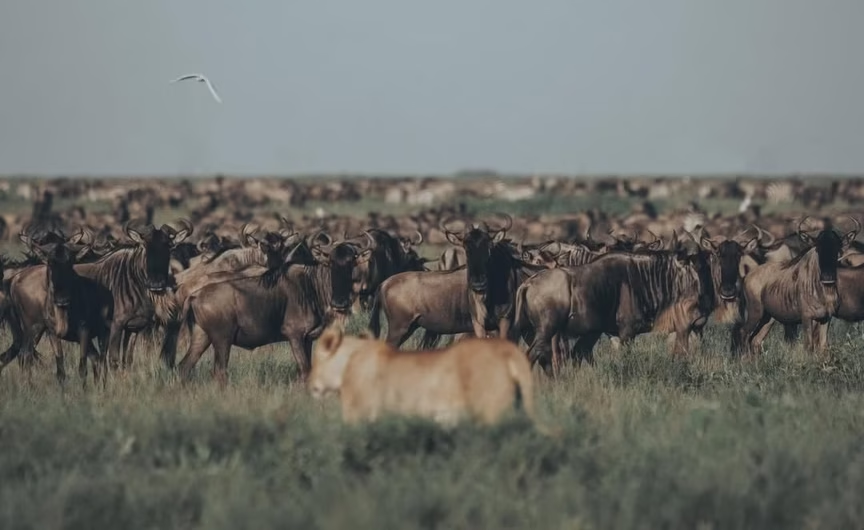
- Around 2 million wildebeest forming the backbone of the spectacle
- Over 900,000 gazelles, swift and alert, weaving through the herds
- Approximately 300,000 zebras, their stripes flickering like moving patterns across the landscape
Together, they create a living, breathing tide of wildlife that stretches beyond the horizon. The ground trembles, the air fills with sound, and every movement signals both opportunity and danger. Predators track the herds. Rivers become battlegrounds. Survival is never guaranteed.
This sheer scale—raw, unscripted, and constantly in motion—is what elevates the Serengeti beyond a typical safari. It transforms it into something far more powerful: a front-row seat to one of nature’s greatest dramas, unfolding in real time.✨
3.2 Predator Dynamics: Lions, Cheetahs, Crocodiles
Where there is movement on this scale, predators are never far behind. In Serengeti National Park, the Great Migration doesn’t just attract attention—it fuels one of the most intense predator-prey interactions on Earth.
Lions dominate the plains with calculated patience. Moving in coordinated prides, they shadow the herds, waiting for moments of weakness—an injured wildebeest, a separated calf, a split-second lapse in awareness. Their power lies not just in strength, but in strategy.
Cheetahs, by contrast, are precision hunters of speed and timing. Built for explosive acceleration, they target smaller, more agile prey like gazelles. On the open plains, where cover is scarce, their hunts unfold in breathtaking bursts—short, sharp, and often decisive.
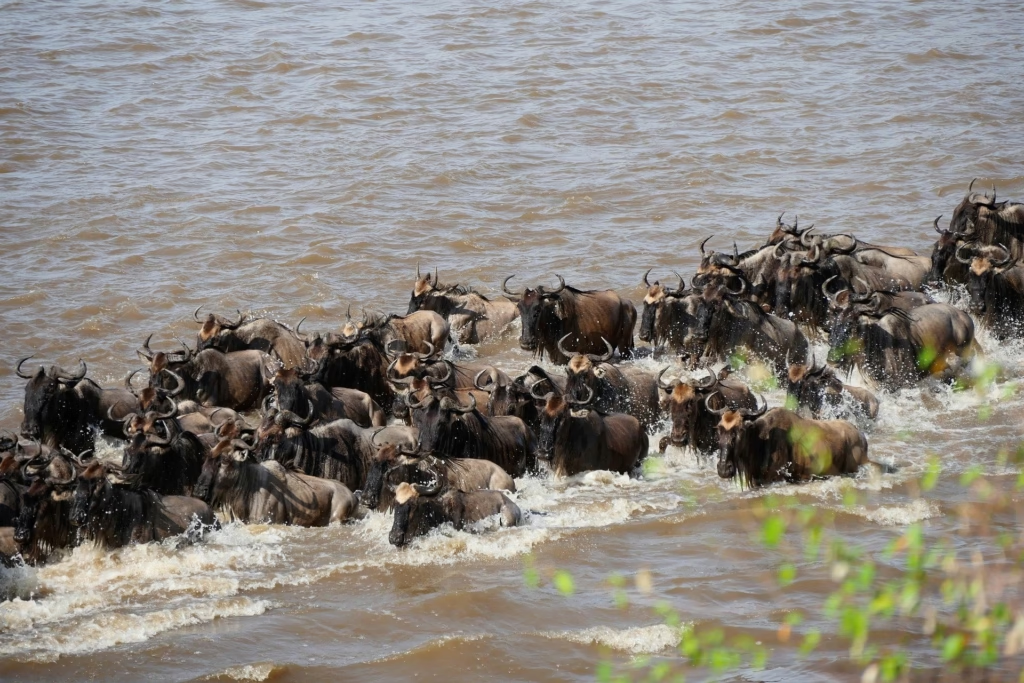
And then there are the silent arbiters of the rivers: crocodiles lurking in waters like the Grumeti River. Patient to the point of stillness, they wait for the chaos of crossings—when herds plunge into the water, disoriented and vulnerable. In an instant, calm surfaces erupt into violent struggle.
Together, these predators transform the migration into more than a journey—it becomes a high-stakes theatre of survival. Every step the herds take is shadowed by risk, and every encounter tells a story where instinct, speed, and timing decide the outcome.✨
Ready for front-row seats to nature’s drama?
Book your Serengeti safari experience.
3.3 Seasonal Cycle Breakdown
The Great Migration in Serengeti National Park is not a single event—it’s a continuous, circular journey guided by rainfall, grass growth, and survival instinct. Understanding its seasonal rhythm transforms a safari from chance into strategy.
- Calving Season (January–March):
The southern plains come alive as hundreds of thousands of wildebeest give birth within a remarkably short window. This abundance of newborns creates both opportunity and danger—lush grazing for herbivores, and a hunting frenzy for predators drawn to vulnerable calves. - Movement North (April–July):
As the rains fade, the herds begin their steady push northwest and northward. The landscape shifts, and so does the pace—long columns of animals stretch across the plains, navigating changing terrain in search of fresh pasture. - River Crossings (August–October):
This is the migration at its most dramatic. At rivers like the Grumeti River and the Mara River, hesitation meets instinct. Herds gather at the banks, tension builds, and then—sudden chaos. Water churns, crocodiles strike, and survival becomes a split-second calculation. These crossings are unpredictable, raw, and unforgettable. - Return South (November):
With the short rains beginning, the herds turn back toward the southern Serengeti. The cycle resets, the plains regenerate, and the migration prepares to begin again—endless, instinctive, and perfectly timed with nature’s pulse.
This seasonal flow ensures that the Serengeti is never static. It’s a living loop of movement and renewal, where every month offers a different chapter of the same extraordinary story.✨
3.4 Unique Selling Point: The Largest Unaltered Animal Migration on Earth
What sets Serengeti National Park apart—decisively—in the race for the best safari destination Africa is this: the Great Migration is not staged, fenced, or redirected. It is the largest unaltered animal movement left on Earth.
Across roughly 1,000 kilometers, millions of animals move as they have for centuries, guided only by rain, grass, and instinct. There are no artificial barriers dictating their path, no human choreography shaping their timing. It is nature at its most authentic—vast, raw, and completely unscripted.
This purity is rare. In a world where wilderness is increasingly managed, the Serengeti remains one of the last places where ecological processes unfold at full scale. The result? A spectacle that isn’t just seen—it’s felt.
3.5 Balanced Perspective: Unpredictability & Peak-Season Crowds
But with greatness comes complexity. The very thing that makes the migration extraordinary—its wild, unscripted nature—also makes it unpredictable. Timing can shift with rainfall patterns, meaning river crossings may happen earlier, later, or not exactly where expected. A perfect moment isn’t guaranteed—it’s earned through patience and presence.
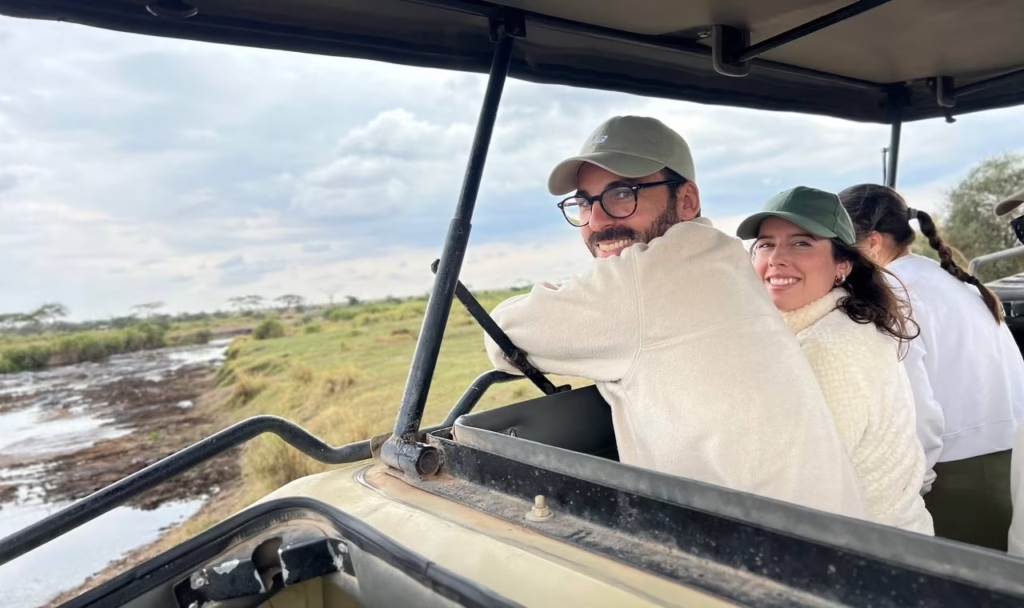
Then there’s the reality of peak-season crowds. Iconic moments, especially river crossings at places like the Mara River, can draw significant numbers of safari vehicles. The drama remains intact, but the sense of solitude can briefly fade.
Yet, here’s the paradox: even at its busiest, the Serengeti’s immense scale absorbs the crowds. Move beyond the hotspots, and silence returns. Space opens. The wilderness reclaims its dominance.
In the end, these trade-offs don’t diminish the experience—they humanize it. They remind you that you’re witnessing something real, something untamed, and something that refuses to perform on demand. And that, perhaps, is exactly why it matters.✨
🏛️ 4. UNESCO World Heritage Status: Global Recognition
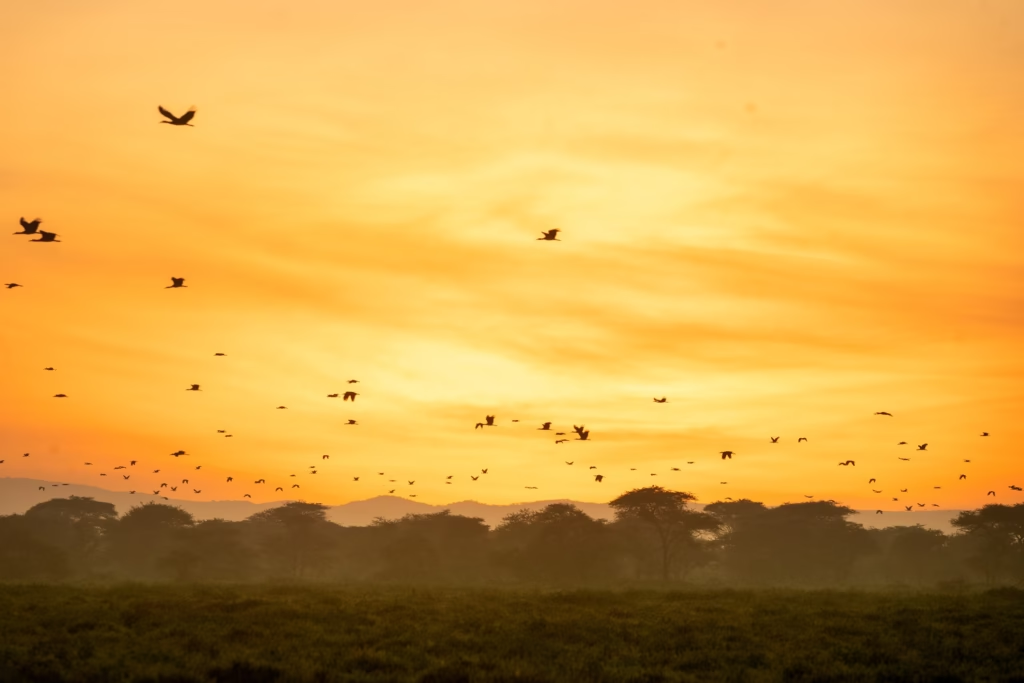
Few places on Earth carry the weight of global recognition quite like Serengeti National Park. In 1981, it was officially designated a UNESCO World Heritage Site—a status reserved for locations of outstanding universal value. This wasn’t just a title; it was an acknowledgment that the Serengeti is not only Africa’s treasure, but the world’s.
The designation rests on two powerful criteria:
- (vii): Exceptional natural beauty
The Serengeti’s landscapes are nothing short of iconic—endless plains, dramatic skies, and the sweeping movement of millions of animals across the horizon. The Great Migration transforms these vistas into living art, where scale and motion combine to create scenes that feel almost otherworldly. - (x): Biodiversity and conservation value
Beneath its beauty lies extraordinary ecological importance. The Serengeti sustains one of the highest concentrations of wildlife on the planet, supporting complex predator-prey relationships and safeguarding species that depend on this intact ecosystem for survival.
This dual recognition—of both beauty and biological significance—cements the Serengeti’s position not just as a premier safari destination, but as a global benchmark for what wilderness should be: vast, vibrant, and fiercely protected.✨
4.2 Ecosystem Connectivity
One of the most powerful—and often overlooked—reasons behind the global importance of Serengeti National Park is that it does not exist in isolation. It is the beating heart of a much larger, interconnected ecosystem that stretches beyond borders and boundaries.
To the north, the Serengeti seamlessly links with the Maasai Mara National Reserve in Kenya. Together, they form a continuous landscape that allows the Great Migration to unfold without interruption. Wildlife moves freely across this international boundary, reinforcing one of the last truly transboundary ecosystems on Earth.
To the southeast, the Serengeti connects with the Ngorongoro Conservation Area—a region that blends conservation with human presence. This area provides critical breeding grounds and seasonal grazing zones, especially for wildebeest during calving season, ensuring the migration cycle remains intact.
This connectivity is not just geographic—it’s ecological. It allows species to migrate, adapt, and survive across varying conditions, preserving the natural rhythms that define the Serengeti. Without these links, the system would fragment. With them, it thrives—vast, fluid, and remarkably resilient.✨
4.3 Wildlife Significance
At the core of Serengeti National Park lies one of the most intense and balanced wildlife systems on the planet—a place where life exists in constant interaction, tension, and renewal. This is where predator and prey densities reach extraordinary levels, creating a dynamic ecosystem that is both stable and electrifying to witness.
Vast herds of herbivores—wildebeest, zebras, and antelope—provide a continuous food source, sustaining formidable predator populations. Lions, cheetahs, leopards, and hyenas don’t just survive here—they thrive. Every hunt, every escape, every silent stalk contributes to a finely tuned ecological balance that has remained largely intact for generations.
Beyond abundance, the Serengeti also plays a critical role in protecting endangered species. Among the most notable is the rare and elusive black rhinoceros, a symbol of conservation efforts across Africa. Equally significant is the presence of the highly endangered African wild dog, a species that depends on large, connected landscapes to survive.
This combination—sheer volume of wildlife and the protection of vulnerable species—elevates the Serengeti from a spectacular destination to a globally significant sanctuary. It is not just a place to observe nature, but a place where nature continues to endure against the odds.✨
Experience a UNESCO World Heritage Site firsthand
—start your safari plans.
4.4 Conservation Challenges
Even a place as vast and resilient as Serengeti National Park is not immune to pressure. Beneath its sweeping beauty lies an ongoing effort to protect what makes it extraordinary.
Poaching remains one of the most persistent threats. While large-scale commercial poaching has been reduced through strict enforcement, illegal hunting still occurs—targeting both high-value species and smaller game. Each loss, however small, disrupts the delicate balance of this ecosystem.
Then there are infrastructure pressures. As surrounding regions develop, proposals for roads, settlements, and expanded tourism facilities pose potential risks. Even well-intentioned development can fragment habitats, alter migration routes, and introduce long-term ecological strain if not carefully managed.
These challenges highlight a critical truth: the Serengeti’s survival is not guaranteed—it is actively protected, every single day.
4.5 Insight: Why UNESCO Status Reinforces Global Safari Leadership
This is precisely where UNESCO recognition becomes more than symbolic—it becomes strategic. The World Heritage status of Serengeti National Park places it under global watch, ensuring that conservation efforts are not only local priorities but international responsibilities.
UNESCO designation attracts funding, scientific research, and policy attention, strengthening protection measures against threats like poaching and unchecked development. It also sets a benchmark—holding the Serengeti to the highest standards of preservation and ecological integrity.
For travelers, this status carries weight. It signals that what they are witnessing is not just exceptional, but globally recognized as irreplaceable. And for the broader safari landscape, it cements the Serengeti’s role as a leader—not only in experience, but in conservation excellence.
In short, UNESCO status doesn’t just honor the Serengeti—it helps safeguard its future, ensuring it remains the gold standard for generations to come.✨
🏆 5. Why Serengeti Ranks #1 Safari Destination in Africa
5.1 Review-Based Credibility (Top-Rated in 2026 Analyses)
Rankings come and go—but when both travelers and experts consistently agree, it signals something deeper. In 2026 analyses of thousands of verified reviews, Serengeti National Park secured its place at the very top, earning one of the highest average ratings among all African safari destinations. This isn’t hype—it’s lived experience, echoed across countless journeys.
What drives this near-universal acclaim? A combination of reliability, intensity, and scale that few places can match:
- Reliable Big Five sightings (with rare rhinos):
The Serengeti offers consistent encounters with lions, elephants, buffalo, and leopards, while the elusive black rhino adds a rare and rewarding dimension for those fortunate enough to spot one. - Exceptional big cat encounters:
Few places on Earth rival the Serengeti when it comes to predators. Lions roam in powerful prides, cheetahs streak across open plains, and leopards linger in the shadows—creating a safari defined by drama and proximity. - Endless plains = cinematic safari experience:
The Serengeti’s vast, uninterrupted landscapes don’t just host wildlife—they elevate it. Every sighting feels amplified against the backdrop of sweeping horizons, turning even a quiet moment into something visually unforgettable.
Together, these strengths form a compelling case: the Serengeti doesn’t just meet expectations—it consistently exceeds them, earning its reputation as the best safari destination Africa through experience, not just reputation.✨
5.2 Comparison with Competitors
Africa is rich with extraordinary safari destinations—but what elevates Serengeti National Park to the top is how it combines what others specialize in.
Take Lower Zambezi National Park. It offers an intimate, immersive safari with riverfront beauty and excellent wildlife encounters. But its smaller scale means fewer sweeping spectacles. The Serengeti, by contrast, delivers not just sightings—but mass movement, where entire landscapes come alive.
Then there’s the Okavango Delta—a masterpiece of waterways, channels, and floodplains. It excels in a wetland niche, offering unique experiences like mokoro (canoe) safaris. Yet, it is inherently different. Where the Delta is intricate and water-bound, the Serengeti is vast and open—defined by endless plains and long-distance wildlife drama that simply cannot exist in a fragmented, water-based environment.
Finally, Kruger National Park stands out for its accessibility and infrastructure. It’s one of the easiest parks to explore, even independently. But with that convenience comes a more structured, sometimes less wild feel. Compared to the Serengeti’s raw, expansive ecosystem, Kruger offers a more contained experience, with less of the overwhelming scale that defines truly iconic safaris.
Each of these destinations is exceptional in its own right. But the Serengeti’s edge lies in its ability to deliver scale, diversity, and spectacle all at once—not as separate experiences, but as one seamless, unforgettable whole.✨
See why travelers rank Serengeti #1
—experience it yourself.
5.3 Honest Drawbacks & The Core Argument
No destination—no matter how iconic—is without its trade-offs, and Serengeti National Park is no exception. Its global reputation naturally draws attention, and with that comes a few realities worth acknowledging.
- Crowds during migration:
Peak moments—especially river crossings—can attract clusters of safari vehicles. While the drama of the scene remains undeniable, the sense of solitude can briefly give way to shared anticipation. - Higher costs:
A Serengeti safari often comes at a premium. Park fees, logistics, and high-quality lodges can make it more expensive than more accessible destinations. It’s an investment—one that reflects the exclusivity and scale of the experience. - Seasonal dryness:
During certain months, particularly in the dry season, parts of the landscape can appear harsh and less visually lush. Yet even in these conditions, wildlife visibility often improves, revealing a different kind of beauty—raw and unfiltered.
And still, despite these drawbacks, the conclusion remains remarkably clear:
Scale + consistency + spectacle = dominance.
The Serengeti doesn’t just offer great moments—it delivers them again and again, across seasons, across landscapes, and across expectations. Its vastness absorbs crowds, its ecosystems ensure constant wildlife activity, and its natural events—like the Great Migration—stand unmatched anywhere on Earth.
In the end, the imperfections don’t weaken its position—they reinforce its authenticity. And that is exactly why the Serengeti continues to lead the conversation as the best safari destination Africa.✨
6. 🕒 Best Time to Visit Serengeti
Timing your visit to Serengeti National Park can transform a great safari into an unforgettable one. While the Serengeti offers wildlife year-round, certain months highlight its unique spectacles and increase your chances of witnessing iconic moments.
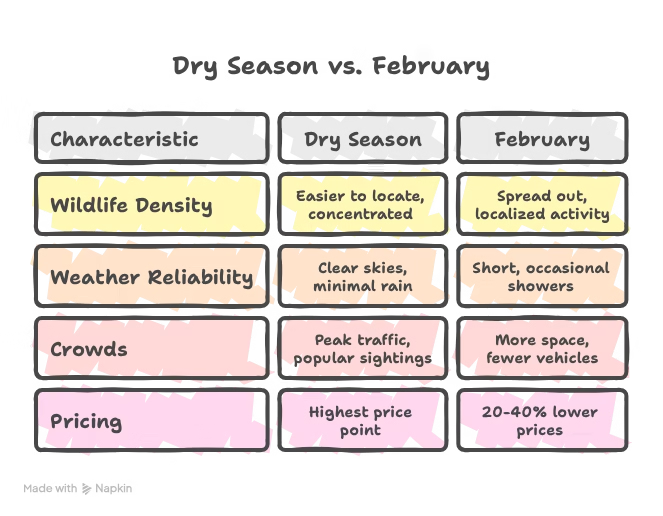
- June to October (Dry Season & Northern Migration):
These months are widely regarded as the peak safari season. Water sources shrink, drawing wildlife together and making animal sightings more predictable. This period also coincides with the northern migration through the Mara River, producing some of the most dramatic river crossings. - January to March (Calving Season in the South):
The southern plains come alive with the birth of thousands of wildebeest calves. Predator activity is high, offering thrilling encounters with lions, cheetahs, and hyenas. It’s an unparalleled opportunity for photographers and wildlife enthusiasts, though sightings are more dispersed than during the dry season. - April to May (Short Rains & Lush Plains):
The landscape bursts with fresh greenery, and fewer tourists visit during these months, creating a quieter, more intimate safari. Wildlife is spread out, so sightings require patience, but the lush scenery makes every drive visually stunning.
Ultimately, the best time depends on your priorities: dramatic river crossings and concentrated wildlife, newborn calves and predator action, or serene, green landscapes with fewer crowds. No matter when you go, the Serengeti’s sheer scale and diversity ensure that every safari offers a front-row seat to nature’s extraordinary theater.✨
Don’t wait—your Serengeti adventure starts with one step.
Make your dream safari real
7. 🦁 Safari Tips for First-Time Travelers
Embarking on your first safari in Serengeti National Park is thrilling—but a little preparation can turn excitement into an unforgettable, smooth experience. Here are key tips to help you make the most of your adventure:
- Plan Around Wildlife Patterns:
Research the timing of the Great Migration or calving season. Even within the Serengeti, knowing where herds are likely to be can maximize sightings and reduce hours spent searching. - Choose the Right Safari Style:
Decide between guided game drives, private vehicle tours, or walking safaris. Guided drives provide local expertise, while private vehicles offer flexibility and personalized pacing. - Pack Smart and Light:
Neutral-colored clothing (beige, khaki, olive) blends with the environment and reduces visibility to wildlife. Don’t forget sun protection, a good hat, binoculars, and a camera with a zoom lens. - Mind the Early Mornings:
Wildlife is most active at dawn and dusk. Early morning drives often yield the best encounters, so be prepared for early wake-up calls. - Respect the Rules:
Stay inside vehicles unless instructed, maintain safe distances, and never feed wildlife. Observing without interference keeps both you and the animals safe. - Hydrate and Be Flexible:
The Serengeti is vast and conditions can change quickly. Carry water, embrace the unpredictability, and savor each unplanned moment—it’s part of the magic. - Engage Local Knowledge:
Guides are storytellers as much as navigators. Ask questions about animal behavior, migration patterns, and local ecology—this insight transforms a simple drive into a richer, memorable experience.
By keeping these tips in mind, first-time travelers can navigate the Serengeti confidently, turning every sunrise, every horizon, and every animal encounter into an unforgettable safari memory.✨
8. 💰 Cost Breakdown of a Serengeti Safari
Experiencing Serengeti National Park comes with a premium—but understanding the components of the cost helps first-time travelers plan effectively and get the most value from their adventure. Here’s a breakdown:
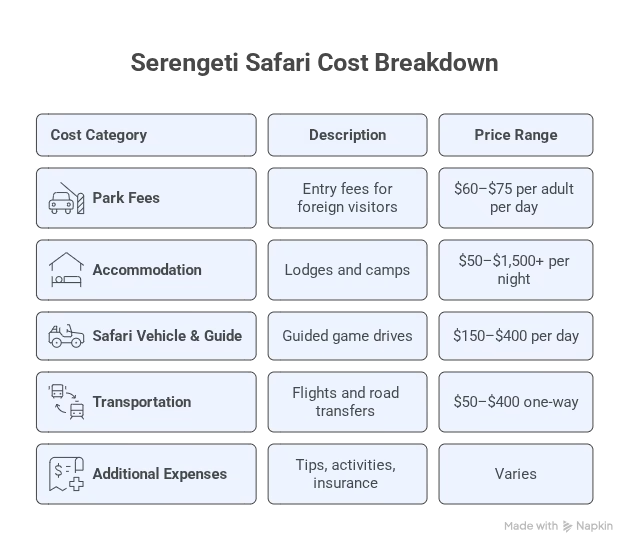
While a Serengeti safari is a significant investment, the cost reflects unparalleled wildlife access, expert guidance, and immersive experiences in one of the world’s most iconic wilderness areas. Proper planning ensures your safari is both memorable and cost-effective.✨
9. ⚖️ The Verdict: Is Serengeti Truly the Best Safari Destination in Africa?✨
So, is Serengeti National Park truly the best safari destination Africa? When you weigh the evidence—its vast ecosystems, unmatched wildlife density, and the raw spectacle of the Great Migration—the answer becomes hard to dispute. Again and again, the Serengeti proves itself not just exceptional, but definitive.
And yet, honesty matters. It isn’t perfect. There are moments of crowding, higher costs, and seasons when the land feels stark and unforgiving. But perfection was never the point. What the Serengeti offers is something far more powerful: a complete, immersive, and consistently extraordinary safari experience that few places on Earth can rival.
Because here, nature doesn’t perform on cue—it unfolds. Slowly. Violently. Beautifully.
In the end, the Serengeti is more than a destination. It is the last great wildlife theater on Earth—a place where every horizon holds possibility, every sound signals life, and every moment reminds you that the wild still exists, vast and unbroken. And that is why it stands, undeniably, at the top.✨
Don’t wait—your Serengeti adventure starts with one step.
Make your dream safari real
10. Frequently Asked Questions: Why Serengeti National Park Is the Best Safari Destination in Africa✨
1. What makes Serengeti National Park the top safari destination in Africa?
The Serengeti stands out for its vast scale, unmatched wildlife density, and iconic spectacles like the Great Migration, offering an immersive safari experience that few other parks can match.
2. When is the best time to visit the Serengeti?
Peak wildlife viewing occurs June–October during the northern migration, while January–March is ideal for calving season. The dry season offers concentrated wildlife sightings, and the short rains (April–May) create lush landscapes with fewer crowds.
3. How does the Serengeti compare to other safari destinations like Kruger or Okavango Delta?
Unlike Kruger, which is more accessible but smaller in scale, and the Okavango Delta, which focuses on waterways and wetland experiences, the Serengeti combines vast open plains, diverse ecosystems, and large-scale wildlife movements in one destination.
4. What wildlife can visitors expect to see in the Serengeti?
Visitors can encounter the Big Five (lion, leopard, elephant, buffalo, rhino—though rhinos are rare), cheetahs, hyenas, zebras, wildebeest, gazelles, and over 500 bird species, making it one of the richest wildlife regions in the world.
5. How does the Great Migration work?
The migration is a circular, seasonal movement of around 2 million wildebeest, 900,000 gazelles, and 300,000 zebras across the Serengeti and Maasai Mara. It peaks at river crossings between August and October, offering some of the most dramatic wildlife moments on Earth.
6. What challenges does Serengeti National Park face?
Key challenges include poaching, infrastructure pressures, and seasonal unpredictability. UNESCO World Heritage status helps protect the park by providing global recognition, funding, and conservation support.
7. How expensive is a safari in the Serengeti?
Costs vary widely depending on accommodation and safari style. Luxury lodges can exceed $1,500 per night, mid-range options range from $200–$500, and budget camps start around $50 per night. Park fees, guided drives, and optional extras like balloon safaris add to the total.
8. What tips are essential for first-time Serengeti travelers?
Pack neutral clothing, binoculars, sun protection, and insect repellent, plan around wildlife patterns, choose the right safari style, and rise early for the best sightings. Respect park rules and stay flexible—nature rarely follows a schedule.
Further Articles to explore
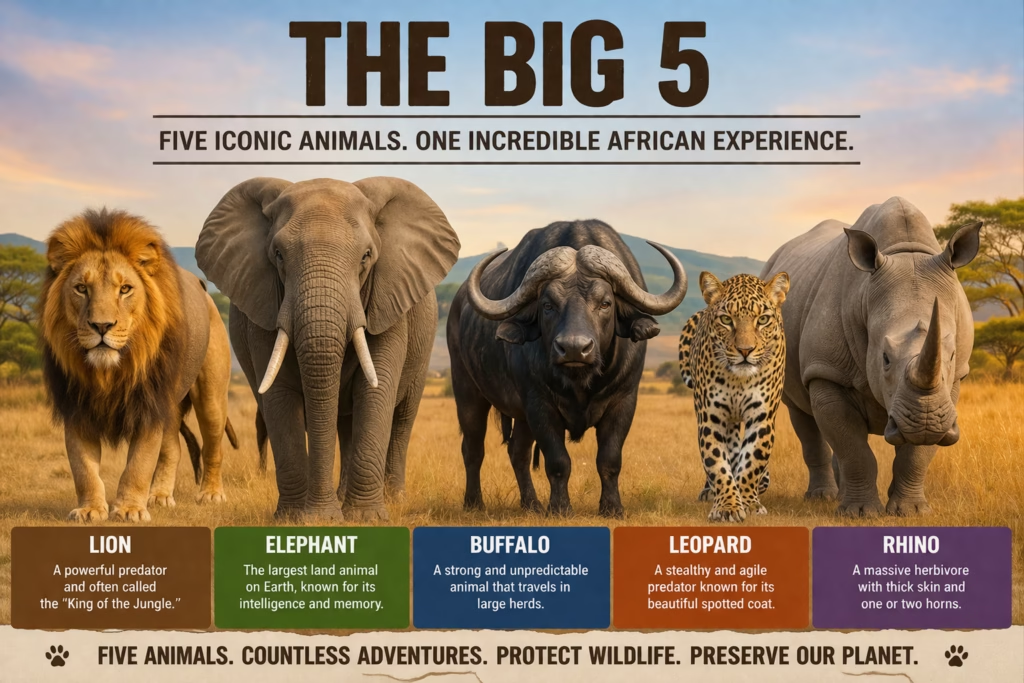
Serengeti Animals You Must See in 2026✨
Discover Serengeti animals to see in 2026—from the Big Five to rare wildlife. Plan your safari with expert tips on
Big 5 Safari Tanzania: Where to See Each Animal in 2026
Big 5 Safari Tanzania: Where to See Each Animal in 2026 The Promise of the Big 5 in Tanzania (2026..

Serengeti National Park: Complete 2026 Travel Guide
Serengeti National Park: Complete 2026 Travel Guide 1. Introduction There’s a version of Serengeti National Park that lives in your.
Why Do Some Safaris See More Animals Than Others in the Same Park?
Discover why some safaris see more animals than others. Learn how guide expertise, timing, routes, and vehicle positioning make every