Why Do Some Safaris See More Animals Than Others in the Same Park?
Table of Contents
Toggle1. Introduction: Same Park, Different Results✨
Two safari vehicles enter the same park at the same time. The same golden light. The same endless plains. The same promise of wildlife. Yet, just an hour later, their stories couldn’t be more different. One vehicle is surrounded—lions draped across the road, cubs tumbling in the dust, cameras clicking in a quiet frenzy. The guide whispers, the engine is off, and the moment feels almost unreal. A few kilometers away, the second vehicle scans the horizon. A few antelope flicker in the distance. The radio is silent. The excitement? Fading. Same park. Same day. Completely different outcome.
So the question becomes unavoidable: why some safaris see more animals when everything—on paper—looks identical?
The answer isn’t luck. It’s not chance. And it’s definitely not random.
What separates an average game drive from an unforgettable one is a system—built on guide expertise, precise timing, intelligent routing, and strategic positioning. Once you understand this, you stop seeing safaris as unpredictable… and start seeing them as skillfully orchestrated experiences. ✨
Want to avoid a “quiet” safari and maximize your sightings from day one?
👉 Chat with us on WhatsApp for a customized safari plan built around peak wildlife moments.
2. The Reality of Wildlife: Why Sightings Are Never Guaranteed✨
Wildlife doesn’t operate on a schedule. There’s no script, no fixed stage, no guarantee of appearances. Every movement in the wild is driven by a shifting equation—food availability, water sources, weather conditions, and, in places like the Serengeti, the relentless rhythm of migration.
A pride of lions seen lounging under an acacia tree this morning could be miles away by afternoon, following prey. Elephants may cluster near waterholes one day, then disperse across vast terrain after a sudden rain. Even predators, often thought predictable, adapt constantly—changing hunting grounds, resting patterns, and movement routes based on subtle environmental cues.
This is why even in the world’s most iconic safari destinations—parks known for dense wildlife populations—sightings can vary dramatically from one day to the next. The same road that delivered a leopard sighting yesterday might feel completely empty today.
But here’s where the real distinction begins. While wildlife itself is unpredictable, the way a safari unfolds is not entirely left to chance. The difference lies in how guides interpret, anticipate, and respond to this ever-changing environment. In a landscape defined by uncertainty, expertise becomes the closest thing to an advantage. ✨
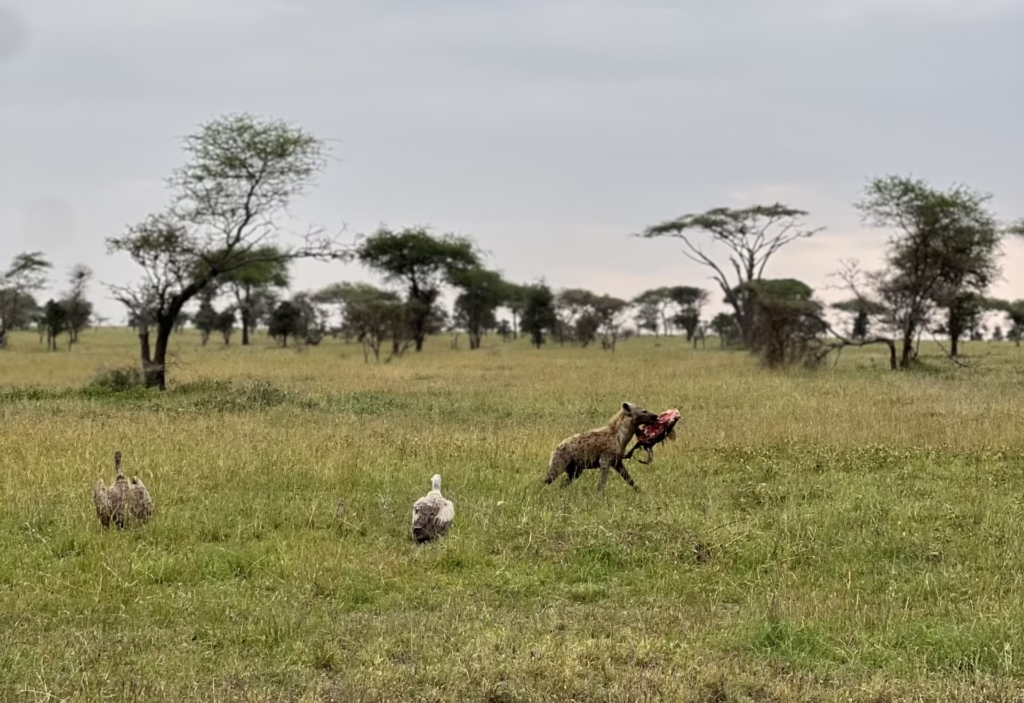
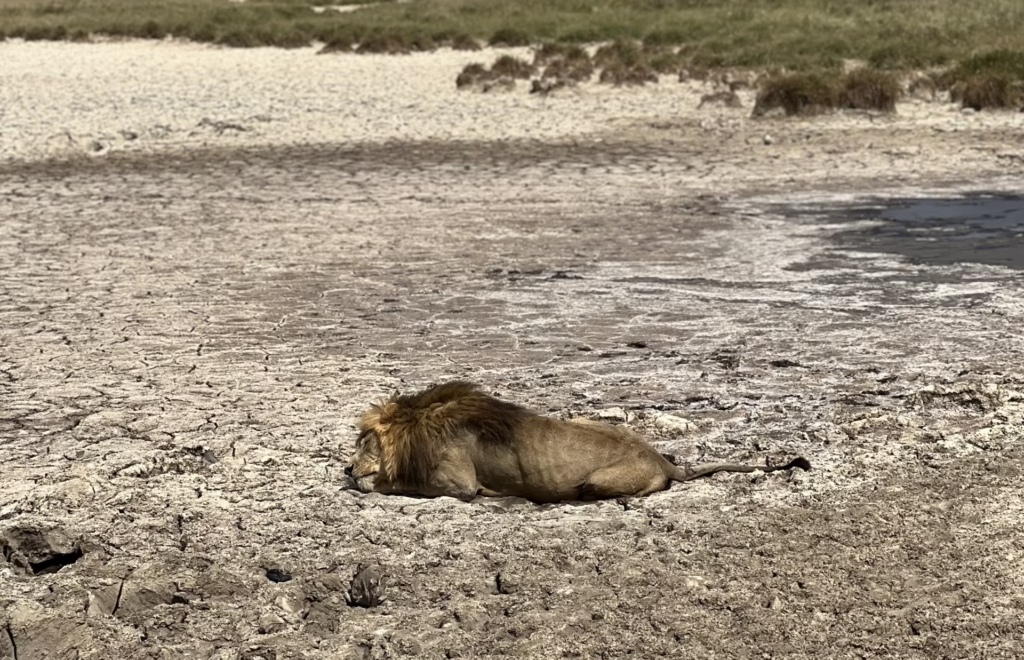
Hyena in Serengeti
3. Guide Experience: The Single Biggest Advantage✨
If you truly want to understand why some safaris see more animals, start with the person behind the wheel. The guide is not just a driver—they are an interpreter of the wild, reading a landscape that, to most eyes, looks silent and empty.
An expert guide doesn’t wait to see animals. They predict them. A set of fresh tracks pressed into the dust. Droppings still moist in the morning air. A sudden chorus of alarm calls from birds or impalas. Even a broken branch angled unnaturally can signal movement just minutes ahead. This is what professionals call “reading the bush”—a layered awareness built from years, often decades, in the field.
Now contrast that with an inexperienced guide. Without this depth of understanding, the drive becomes reactive—moving from one visible sighting to another, often relying on chance or radio calls. The vehicle may cover the same ground, but without intention. It’s the difference between searching and knowing where to look.
At the heart of this lies tracking—not luck, but discipline. A practiced guide mentally reconstructs an animal’s path, direction, speed, and even behavior from subtle signs. It’s part science, part instinct, sharpened through repetition. Over time, this knowledge compounds. Each sighting builds context for the next. Each season refines judgment.
And that’s the quiet truth most travelers never see: the best safaris are not accidental. They are engineered through experience.
Micro takeaway: A better guide doesn’t just improve your chances—it multiplies them. In the wild, expertise is the closest thing to a guarantee. ✨
The difference between seeing and missing often comes down to your guide.
👉 Contact us to secure a safari led by highly experienced, top-rated guides.
4. Timing & Route Strategy: Being in the Right Place at the Right Time✨
In safari, timing isn’t a detail—it’s a decisive advantage. The bush runs on a rhythm, and the guides who understand it unlock a completely different level of wildlife encounters.
The most productive game drive windows are precise: early morning (6–9 AM) and late afternoon (3 PM to sunset). These are the hours when the savannah comes alive. Predators return from night hunts or prepare for evening action, herbivores move out to graze, and the oppressive midday heat hasn’t yet pushed life into hiding. By contrast, midday often feels quiet—not because animals are gone, but because they’ve retreated into shade, conserving energy and avoiding exposure.
Understanding this daily cycle is only half the equation. The real edge comes from route intelligence. In the dry season, when water becomes scarce, experienced guides prioritize areas around rivers and waterholes—natural gathering points where prey concentrates and predators inevitably follow. These aren’t guesses; they’re calculated decisions based on seasonal patterns.
Being in the right place at the right time isn’t luck—it’s planning.
👉 Let us design your itinerary around the best times and routes for wildlife sightings.
But there’s another, often overlooked layer: crowd dynamics. Popular routes—especially those known for frequent sightings—can become congested. Too many vehicles, too much noise, and suddenly the moment is diluted or even disrupted. Skilled guides often veer off these predictable paths, using less-traveled tracks to find quieter, more natural encounters. Fewer vehicles, less pressure, better behavior from wildlife.
This is where the contrast sharpens:
- Fixed routes follow routine—predictable, safe, but often limiting.
- Adaptive routing responds in real time—adjusting to fresh signs, weather shifts, and subtle cues in the environment.
The best guides don’t just follow roads—they read time, space, and movement as one interconnected system.
Micro takeaway: Top guides don’t just drive—they position. In safari, success isn’t about covering ground; it’s about being exactly where you need to be, exactly when it matters. ✨
5. Radio Communication: The Hidden Network Behind Sightings✨
Beneath the quiet hum of a safari lies an invisible system most guests barely notice: a web of two-way radio communication connecting guides across the landscape. When used well, it’s a powerful tool. When overused, it can quietly reshape the entire experience.
Guides don’t simply announce, “There are lions here.” Communication is often coded—short, precise, and designed to limit unnecessary traffic. A few clipped words, a location reference, sometimes even subtle phrasing to avoid alerting every vehicle at once. Within seconds, multiple guides can triangulate a sighting and decide whether to move in.
The advantages are obvious. Radios dramatically reduce search time, allowing guides to locate animals quickly instead of relying solely on tracking. For less experienced guides, this levels the playing field—giving them access to sightings they might otherwise miss. For travelers on short itineraries, it increases the probability of seeing key species within limited time.
But this efficiency comes at a cost.
Featured Articles
Can You Enjoy the Serengeti Without Following the Migration?
Discover if you can enjoy the Serengeti without migration. Learn about resident wildlife, predator density, best areas, and when to...
is safari in Tanzania safe?
Is safari in Tanzania safe? Yes—discover how parks, guides, vehicles, and lodges keep travelers safe while enjoying unforgettable wildlife adventures.
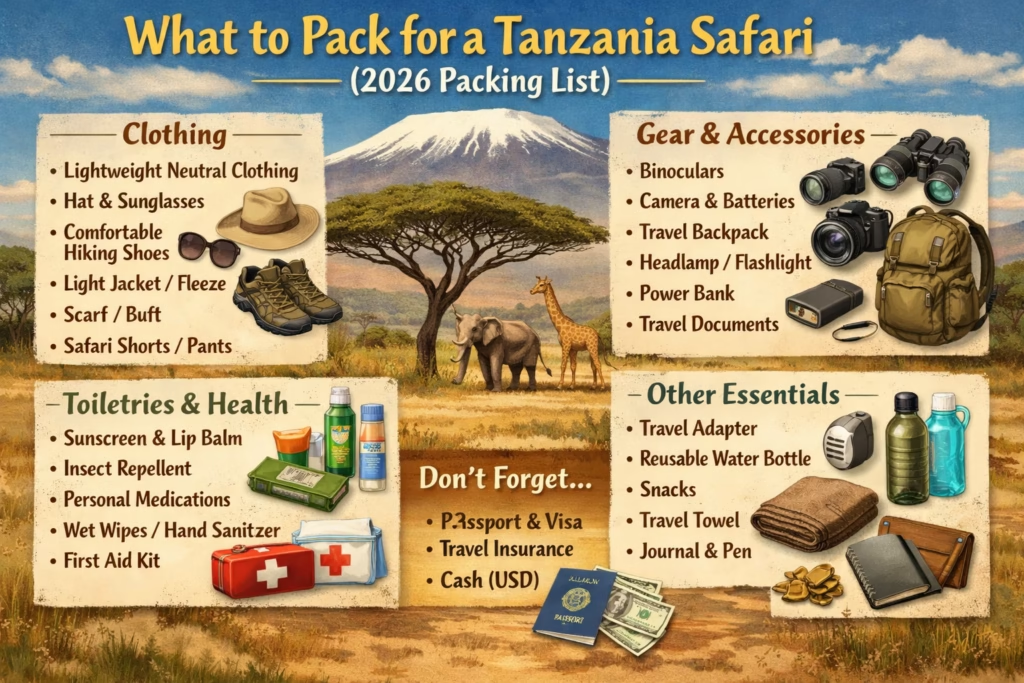
What to Pack for a Tanzania Safari (2026 Packing List)
Tanzania safari packing list: Discover what to pack for a 2026 Tanzania safari—clothing, gear, medication, and camera essentials for a...
What Do Safari Guests Regret Not Knowing Before Visiting Tanzania?
Tanzania Safari Mistakes to avoid before your trip—learn packing tips, timing, hidden costs, and how to plan the perfect safari...
When too many vehicles converge on a single sighting, the atmosphere changes. What began as a natural encounter can quickly feel staged—engines idling, cameras clicking in clusters, guides negotiating space. In some cases, this overcrowding can stress animals, subtly altering their behavior. Predators may abandon a hunt. Elephants may shift direction. The wild, in these moments, becomes aware of the audience.
There’s also a more intangible loss: authenticity. The magic of a safari often lies in discovery—the slow build, the anticipation, the sudden reward. When every sighting is relayed instantly, that sense of exploration can be replaced by a sequence of coordinates. Efficient, yes—but less immersive.
This is where the distinction between good and exceptional guides becomes clear. Elite guides use radios selectively, not dependently. They trust their ability to read tracks, interpret behavior, and anticipate movement. For them, the radio is a support system—not the foundation. Their best sightings often come not from calls received, but from patterns understood.
Micro takeaway: Radios increase efficiency—but not always quality. The best safaris strike a balance, using communication to enhance the experience, not define it. ✨
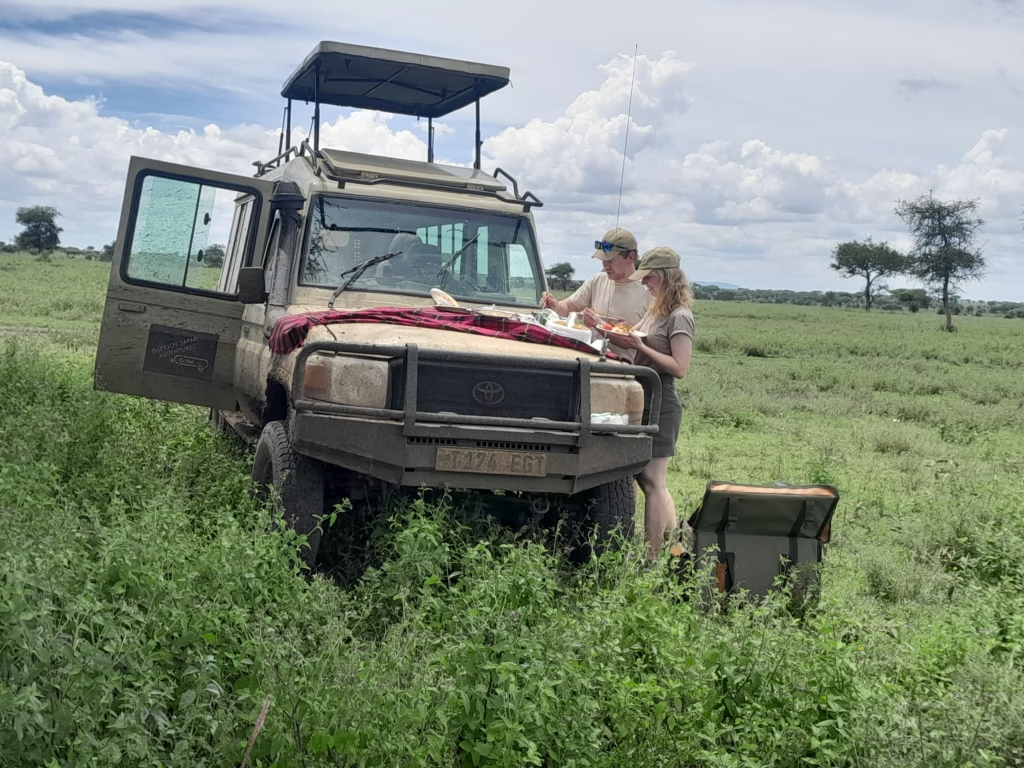
Bush Lunch in Ndutu
6. Vehicle Positioning: The Art of the Perfect Sightline✨
Seeing wildlife is one thing. Seeing it well—close, undisturbed, and fully visible—is another discipline entirely. This is where vehicle positioning becomes an art form, and often, the invisible difference between an average sighting and a breathtaking one.
It starts with approach strategy. A skilled guide reads wind direction instinctively and moves downwind, ensuring their scent doesn’t drift toward the animals. In the wild, smell is often the first alarm system. Approach from the wrong direction, and the moment is gone before it even begins.
Then comes distance control—a delicate balance. Too close, and animals feel threatened, shifting behavior or retreating entirely. Too far, and the experience loses its intensity and detail. Expert guides understand each species’ tolerance zone, easing the vehicle into position without triggering stress. It’s controlled, patient, almost surgical.
But positioning isn’t just about proximity—it’s about angle. The best guides don’t stop at the first view; they refine it. They consider light direction, background, and line of sight. For photographers, this means clean compositions—no obstructing bushes, no harsh backlight. For guests, it means unobstructed, immersive viewing where every movement is visible.
The type of vehicle amplifies this advantage. Open-sided safari jeeps offer near 360-degree visibility, allowing guests to pivot freely with the action. Within the vehicle itself, seat positioning matters:
- Front seats → unobstructed, first-line views
- Middle seats → balanced visibility
- Back seats → often higher, but slightly restricted angles
Close encounters don’t happen by chance—they’re carefully positioned.
👉 Request a tailor-made safari with expert-guided game drives for optimal viewing.
In private reserves, another layer unlocks: off-road driving. Unlike many national parks where vehicles must stay on designated tracks, private concessions allow guides to carefully leave the road and position directly alongside wildlife. This creates intimate, uninterrupted encounters. In contrast, national parks impose distance—meaning positioning must be even more strategic from fixed roads.
When this skill is missing, the consequences are immediate. Poor positioning leads to disturbance—engines revved too loudly, vehicles cutting off movement paths, or approaching head-on. The result? Animals scatter, tension rises, and not only is the moment lost, but it also affects other vehicles in the area. One mistake can ripple outward, reducing sightings for everyone.
This is why the best sightings often feel effortless. The vehicle is perfectly placed. The animals are calm. The view is clean. But behind that calm is calculated precision.
Micro takeaway: Positioning can make or break a sighting—even when animals are right there. In safari, it’s not just about finding wildlife—it’s about how you arrive in their world. ✨
7. The Compound Effect: Why Some Safaris Consistently Win✨
What sets a truly exceptional safari apart is not a single tactic or stroke of luck—it’s the seamless integration of multiple factors into a well-orchestrated system. Guide experience, timing, radio communication, and vehicle positioning do more than exist independently; when combined, they amplify each other, creating what we call the compound effect of safari success.
Consider a highly experienced guide. Their knowledge of animal behavior allows them to anticipate movements before anyone else sees a sign. Now, pair that skill with perfect timing—arriving at a waterhole just as elephants emerge from the shade, or positioning near a predator’s hunting ground during peak activity hours. Alone, either factor improves sightings. Together, they dramatically increase the odds of not just seeing animals, but seeing them in action, up close, and in memorable contexts.
Add strategic vehicle positioning into the mix. The guide approaches downwind, using terrain and elevation to maintain stealth while maximizing visibility. Guests are in the front seats of an open-sided jeep, cameras ready, but the animals remain undisturbed. Now sprinkle in radio communication, allowing the guide to exchange real-time updates with nearby teams or spotters—without overloading the site. Even less experienced vehicles nearby can catch sightings without compromising the lead guide’s advantage.
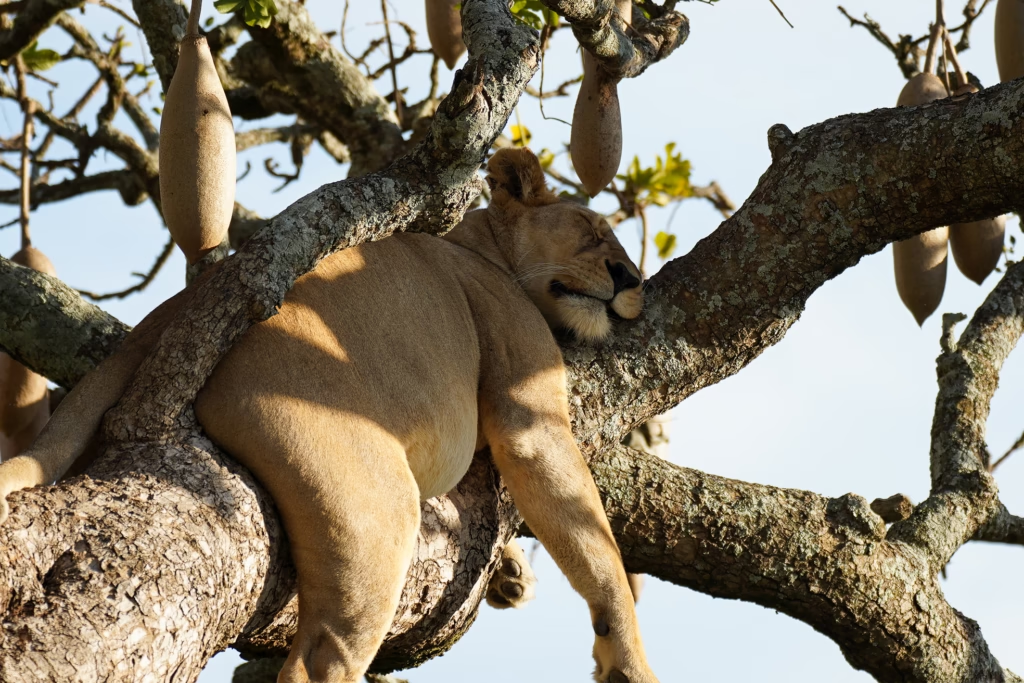
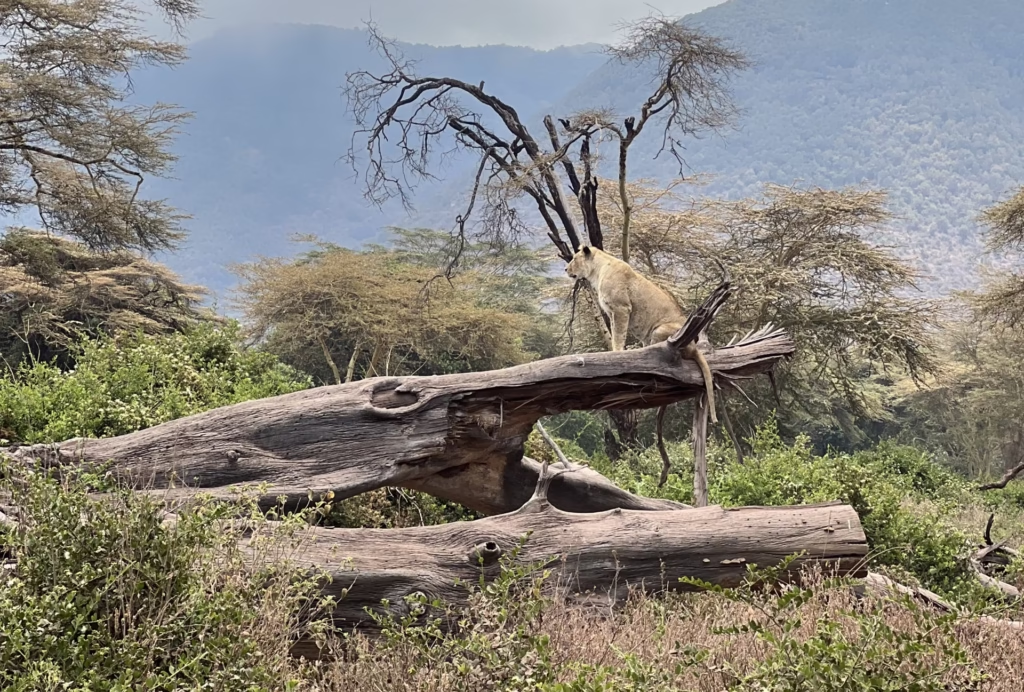
Tree Climbing Lion in Central Serengeti
The synergy here is clear: each element multiplies the others. Timing alone can yield some animals; experience alone can uncover subtle tracks. But combine expertise, timing, communication, and positioning, and the safari experience transforms from ordinary to extraordinary. The guide isn’t just reacting—they’re orchestrating a series of calculated decisions that culminate in more consistent, higher-quality sightings.
In other words, the secret behind why some safaris consistently outperform others isn’t luck—it’s a system of interlocking strategies. Each factor reinforces the next, creating a feedback loop that maximizes success. When you understand this, it becomes evident: in the wild, the best wildlife encounters are engineered, not accidental.
Micro takeaway: Exceptional safaris don’t rely on one advantage—they exploit the compound effect, turning skill, timing, and strategy into an almost unstoppable formula for sightings. ✨
8. Practical Advice for Travelers: How to Choose the Right Safari✨
Choosing the right safari isn’t just about picking a park or a lodge—it’s about aligning your expectations with expertise, strategy, and the style of experience you want. If you’ve ever wondered why some safaris see more animals, the answer often starts before you even set foot in the park: it begins with the choices you make when booking.
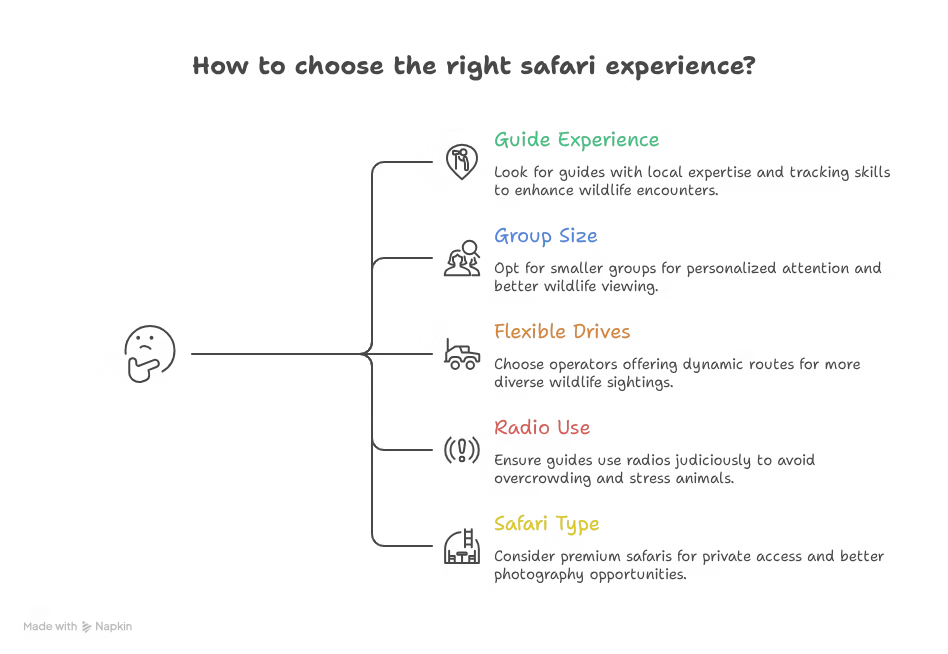
Ultimately, a thoughtful traveler looks beyond the lodge or vehicle. They consider the combination of guide expertise, group size, route flexibility, communication strategy, and subtle positioning advantages. Making informed choices here is the single most effective way to tilt the odds in your favor—and enjoy a safari where sightings aren’t left to chance but carefully maximized.
Micro takeaway: Choose guides and operators who prioritize skill, strategy, and adaptive planning—because a great safari begins long before the first animal appears. ✨
9. Conclusion: It’s Not Luck—It’s Strategy✨
So why do some safaris see more animals than others, even in the same park? The answer comes full circle: it’s not luck—it’s strategy. Every sighting, every unforgettable encounter, is the product of deliberate choices made by guides who understand the rhythms of the wild. From reading subtle signs in the bush, to timing drives around animal activity, to selecting quiet routes and positioning vehicles with precision—every element compounds into a safari experience that consistently delivers.
Wildlife is unpredictable. You cannot order a lion, a leopard, or a herd of elephants to appear on cue. But what you can control is how you approach it. Guides with skill, experience, and intuition turn unpredictability into opportunity. They anticipate movement, interpret cues that others overlook, and orchestrate each drive so that chance favors the prepared. This is why some safaris consistently outperform others—and why travelers often walk away feeling they witnessed something truly extraordinary.
The right safari does more than show animals—it opens a window into the living, breathing ecosystem. It reveals the wild in its raw, intricate, and stunning complexity. It transforms fleeting glimpses into moments of connection, curiosity, and awe. When human skill meets nature’s rhythm, safari becomes not just a tour, but a revelation.
In the end, seeing more animals is not a matter of luck—it’s a testament to expertise, preparation, and respect for the untamed world you’re lucky enough to enter. ✨
Ready to experience a safari where every drive delivers?
👉 Start planning your Tanzania safari today—message us now for a free personalized itinerary.
FAQs – Why Some Safaris See More Animals✨
1. Why do some safaris see more animals than others in the same park?
Sightings depend largely on guide experience, timing, route selection, vehicle positioning, and sometimes radio communication. Skilled guides anticipate animal behavior and know where and when to be for the best chances.
2. Does luck play a role in safari wildlife sightings?
While wildlife is unpredictable, luck is only a small factor. Most consistent sightings come from guides’ expertise, strategic planning, and understanding of animal patterns.
3. What role does a guide’s experience play in wildlife spotting?
Experienced guides “read the bush”—they interpret tracks, droppings, alarm calls, and subtle environmental signs. This knowledge allows them to predict where animals are likely to be, rather than just reacting to visible sightings.
4. When is the best time of day to see animals on safari?
Early morning (6–9 AM) and late afternoon (3 PM–sunset) are peak periods. Animals are most active during these times, moving for feeding, hunting, or social interactions before retreating from midday heat.
5. How does route selection affect animal sightings?
Guides who avoid crowded or popular circuits and use adaptive routes can find quieter areas where animals are less disturbed. Seasonal knowledge—such as waterhole activity in dry months—also improves sighting opportunities.
6. What is the impact of radio communication between safari guides?
Radios help guides share real-time sightings, increasing chances of finding animals quickly. However, overuse can lead to vehicle congestion, stressed animals, and disrupted natural behavior. Experienced guides often rely on instinct over constant radio updates.
7. How does vehicle positioning affect what I see?
Positioning downwind, maintaining distance, and using elevated or open-sided vehicles allows better visibility and prevents disturbing wildlife. Poor positioning can scatter animals and reduce sightings for everyone.
8. Can a budget safari still provide good wildlife sightings?
Yes, but the experience may depend more on guide skill than vehicle comfort or extras. Even on smaller budgets, choosing a knowledgeable guide and following optimal timing and routes can significantly improve the number and quality of sightings.✨