
When Is the Great Migration in 2026?
Table of Contents
ToggleThe short, honest answer: the Great Migration in 2026 happens all year long. There is no single start date, no fixed finale, and no one “best week.” Instead, it’s a continuous, circular movement of roughly 1.5 million wildebeest, joined by zebra and gazelle, flowing across the Serengeti ecosystem and into Kenya’s Maasai Mara—month by month, place by place.
Why does the exact timing in 2026 matter so much? Because where the herds are determining everything: which camps you should book, which airstrips you fly into, what kind of wildlife action you’ll see, and how crowded (or blissfully quiet) your safari will be. River crossings, calving season, predator density, photography conditions—each peak happens in a different location at a different time. Get the timing right, and the experience feels cinematic. Get it wrong, and you may be hundreds of kilometers from the action.
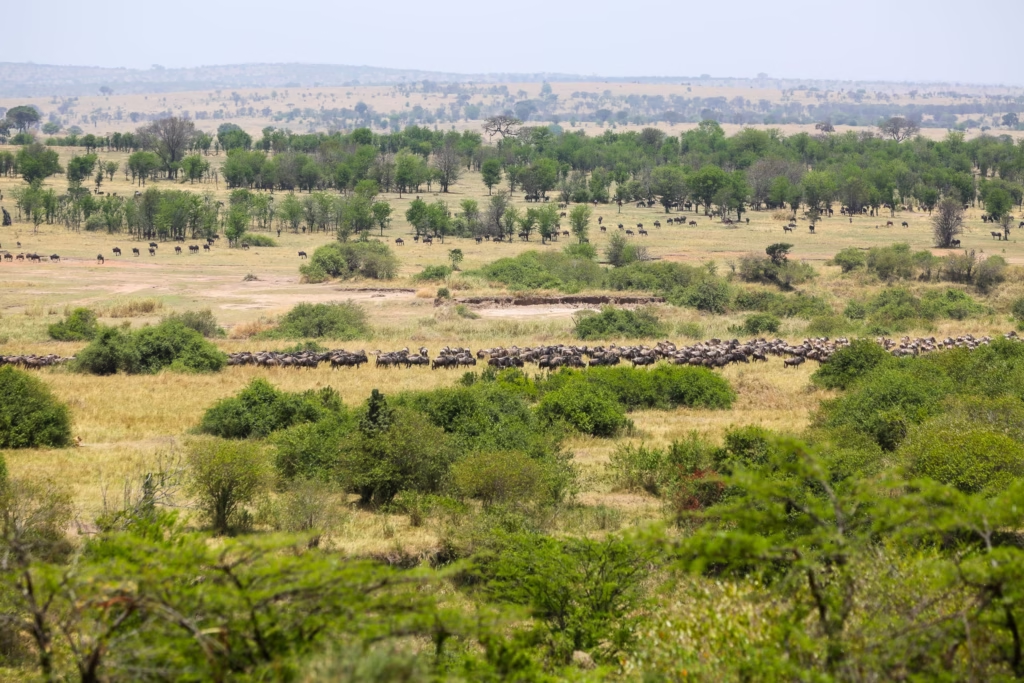
What drives this epic movement isn’t a calendar—it’s rain, fresh grazing, and ancient instinct. Seasonal rains awaken new grass, the herds follow it, predators follow the herds, and the cycle repeats. In 2026, as in every year, the migration responds to nature first and forecasts second—making understanding the pattern far more important than chasing exact dates.
This guide breaks down where the Great Migration is each month in 2026, so you can plan with clarity, confidence, and realistic expectations—no myths, no guesswork, just the rhythm of the wild.
2. Understanding the Great Migration.
The Great Migration is not a straight line from Point A to Point B—it is a vast, living loop played out across the Serengeti–Maasai Mara ecosystem, one of the last remaining intact wildlife corridors on Earth. Spanning northern Tanzania and southwestern Kenya, this ecosystem includes the Southern Serengeti, Central Serengeti, Western Corridor, Northern Serengeti, and the Maasai Mara, all seamlessly connected by grasslands, rivers, and ancient migratory paths. No fences. No borders. Just movement.
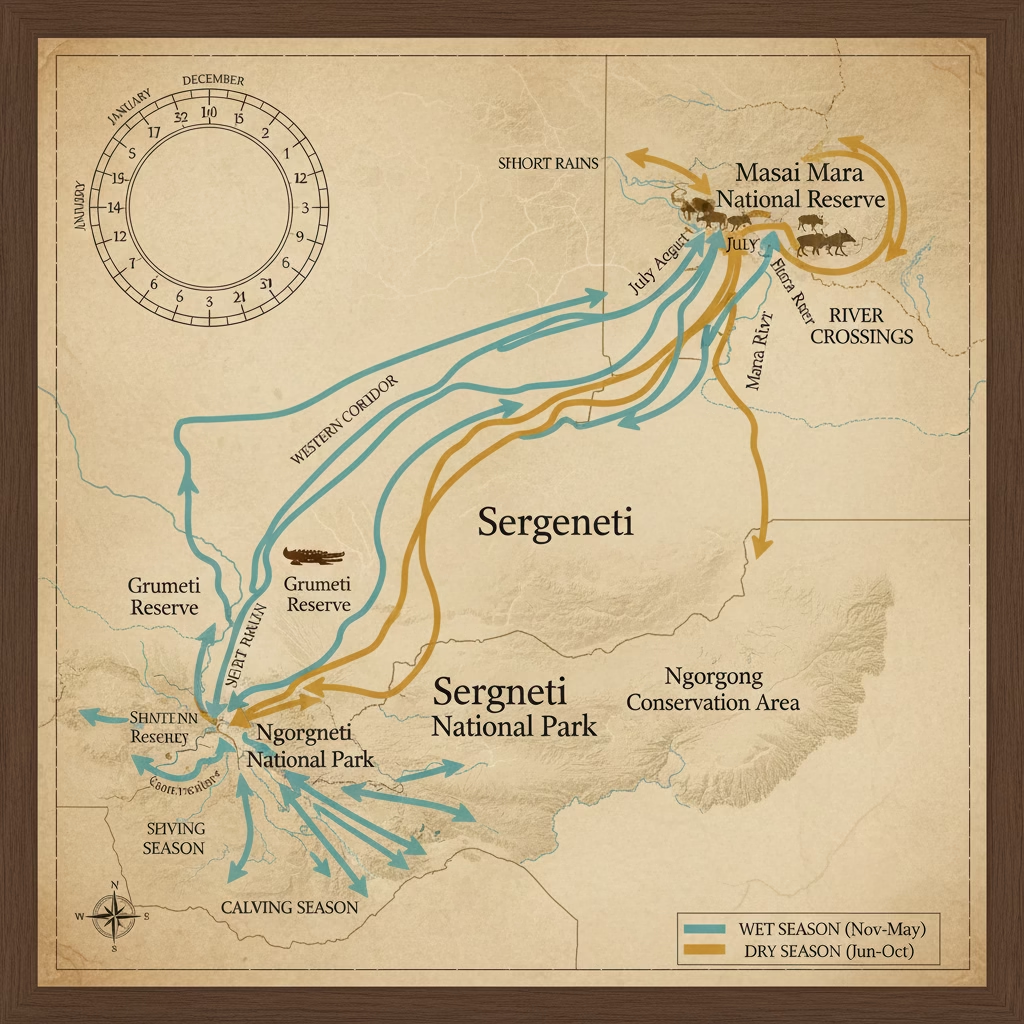
At the heart of this journey are approximately 1.5 million wildebeest, accompanied by hundreds of thousands of zebra and Thomson’s gazelle. Wildebeest lead the charge, driven by an almost primal sensitivity to rain and fresh grass. Zebras follow, grazing taller grasses and opening the plains, while gazelles pick off the finer shoots behind them. Together, they form a moving ecosystem—one that feeds not only the land but also some of Africa’s highest concentrations of predators.
So why does the migration feel predictable, yet never guaranteed? Because while the overall pattern is consistent, the exact timing shifts. Long rains, short rains, droughts, and localized storms can accelerate, delay, or reroute the herds by days or even weeks. Historical data allows experts to forecast movements with strong accuracy, but nature always keeps the final say. The migration follows a rhythm—reliable in structure, flexible in execution.
Understanding this is key: the Great Migration is not a single event to chase, but a series of interconnected chapters. Miss one moment, and another—equally powerful—unfolds somewhere else. That’s what makes it timeless, and endlessly compelling.
3. Great Migration 2026: Month-by-Month Movement Calendar (Overview)
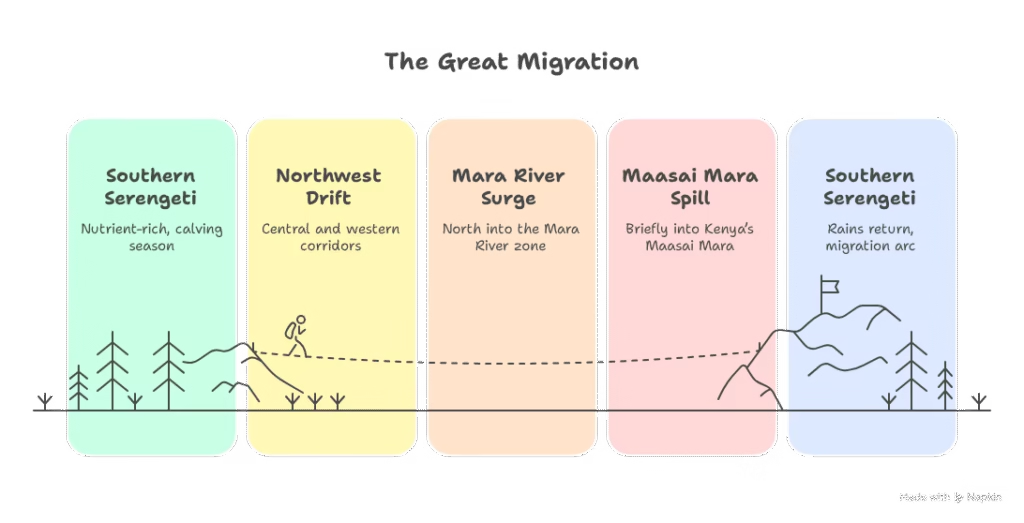
In short, the calendar helps you match your expectations to the right place and time—so you’re not just visiting during the migration year, but arriving exactly where its story is unfolding.
4. January 2026 – Calving Begins in Southern Serengeti
January marks the quiet beginning of the most explosive chapter of the Great Migration. As the short rains fade, vast herds settle across the open plains of Ndutu and the Ngorongoro Conservation Area, drawn by mineral-rich grasses that are perfect for newborn calves. By around early January, the first wildebeest calves begin to drop—often within minutes of birth, they are standing, wobbling, and running.
This is not a river-crossing month, but it is one of the most intense predator periods of the entire year. With thousands of calves born each day, predators converge on the southern plains. Lions, cheetahs, hyenas, and leopards are everywhere, taking advantage of the abundance of vulnerable prey. The action is constant, raw, and often unfolding in full view across open grassland.
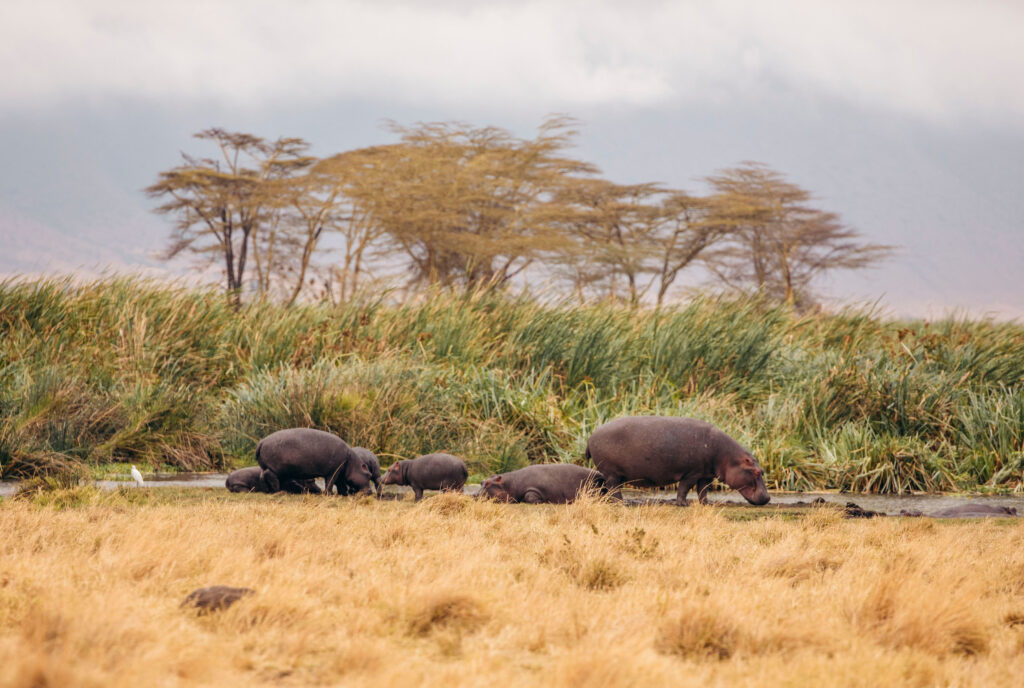
January is best suited for wildlife photographers, predator enthusiasts, and travelers who want to witness life beginning—and ending—in its most unfiltered form. The scenery is green, skies are dramatic, and visibility is excellent, with fewer vehicles than peak river-crossing months. It’s also ideal for guests who value behavior, interaction, and storytelling over sheer spectacle.
✨Camps & Access (at a glance): Seasonal and permanent camps around Ndutu dominate this month, with access via road from Arusha or short flights into Ndutu Airstrip. Camp positioning is critical, and flexibility is a major advantage during this phase of the migration.
5. February–March 2026 – Peak Calving Season
February and March represent the absolute heart of the calving season. The herds remain largely stationary in the southern Serengeti, concentrated around the Ndutu plains and surrounding grasslands, where food and water are still abundant. Movement is minimal—not because the herds are resting, but because everything they need is right here.
The scale of calving during this period is staggering. By mid-February, hundreds of thousands of calves flood the plains, with births happening in synchronized waves. This abundance fuels intense and highly visible predator behavior. Cheetahs stalk the open flats, lions target nursery groups, hyenas work relentlessly, and leopards take advantage of cover along woodland edges. Predator sightings are not incidental—they are constant, purposeful, and often unfolding in daylight.
Visually, this is one of the most beautiful times of year in the Serengeti. The plains are lush and emerald-green, scattered with wildflowers, while towering clouds build dramatic skies that are a gift to photographers. Light shifts quickly, storms roll in and out, and the landscape feels alive and fresh rather than dusty and dry.
✨February–March is ideal for a slow, immersive safari style—long game drives, minimal transit, and camps positioned close to calving hotspots. Access is typically via Ndutu or nearby southern airstrips, or by overland routes from Central Serengeti. This is a season for patience, observation, and deep wildlife storytelling rather than chasing distance or ticking off locations.
6. April–May 2026 – The Northward Push Begins
April and May signal a clear shift in momentum. As the long rains settle over the Serengeti, the great herds begin their northward push, peeling away from the southern plains and stretching out toward the Central Serengeti and Western Corridor. Movement becomes more visible now—long, purposeful columns of wildebeest threading through Moru Kopjes, Seronera, and gradually westward toward the Grumeti region.

The long rains shape everything during this period. Showers tend to be intermittent rather than constant, transforming the landscape into a mosaic of fresh grass, reflective pools, and brooding skies. While some travelers avoid these months, the reality on the ground is often dramatic and rewarding: fewer vehicles, rich colors, and wildlife spread across vast, open spaces rather than clustered at obvious hotspots.
This is why April–May is often called the quiet insider window. Crowds thin out, camps are calmer, and sightings feel more intimate. Predators—especially lions and cheetahs—trail the moving herds, taking advantage of the dispersal rather than the density seen during calving. For experienced safari-goers, this phase offers a deeper sense of the migration as a journey, not just a spectacle.
✨Camps and corridors to watch: The Central Serengeti (Seronera area) and routes leading into the Western Corridor become increasingly important, with camps positioned along these movement paths offering front-row seats to the transition. Flexibility and well-located camps matter more than ticking off landmarks during this fluid, evolving phase.
Planning a Trip to Tanzania?
Our team is always here to help
Please let us know if you have any questions
7. June–July 2026 – Grumeti River Crossings
By June, the migration tightens its focus on the Western Corridor of the Serengeti, where one of the most underestimated yet powerful moments of the journey unfolds—the Grumeti River crossings. As the herds funnel westward, they are forced to confront dark, slow-moving channels patrolled by some of Africa’s largest Nile crocodiles. Unlike the chaos of the Mara, these crossings often come with an eerie buildup: long hesitation, sudden commitment, then explosive violence in confined spaces.
Crocodiles dominate this chapter. Massive, ancient reptiles lie in wait, while lions and hyenas patrol the riverbanks, targeting the exhausted and injured. Crossings may not happen daily, but when they do, they are intense, raw, and deeply dramatic. This is the migration at its most primal—less spectacle, more survival.
The Grumeti crossings differ sharply from the famous Mara River events. Here, crossings are fewer, narrower, and less predictable, often involving smaller groups rather than vast herds piling in at once. There are typically fewer vehicles, shorter viewing distances, and a stronger sense of anticipation rather than repetition. For many seasoned safari travelers, this makes Grumeti feel more authentic and less staged by comparison.
✨Best timing within the window: Late June into July offers the highest probability of crossings, as herd density increases and water levels stabilize. Patience is essential—guests may wait hours or days—but the reward is a crossing that feels earned, witnessed without crowds, and remembered long after louder moments elsewhere.
List of Suggested Itinerary
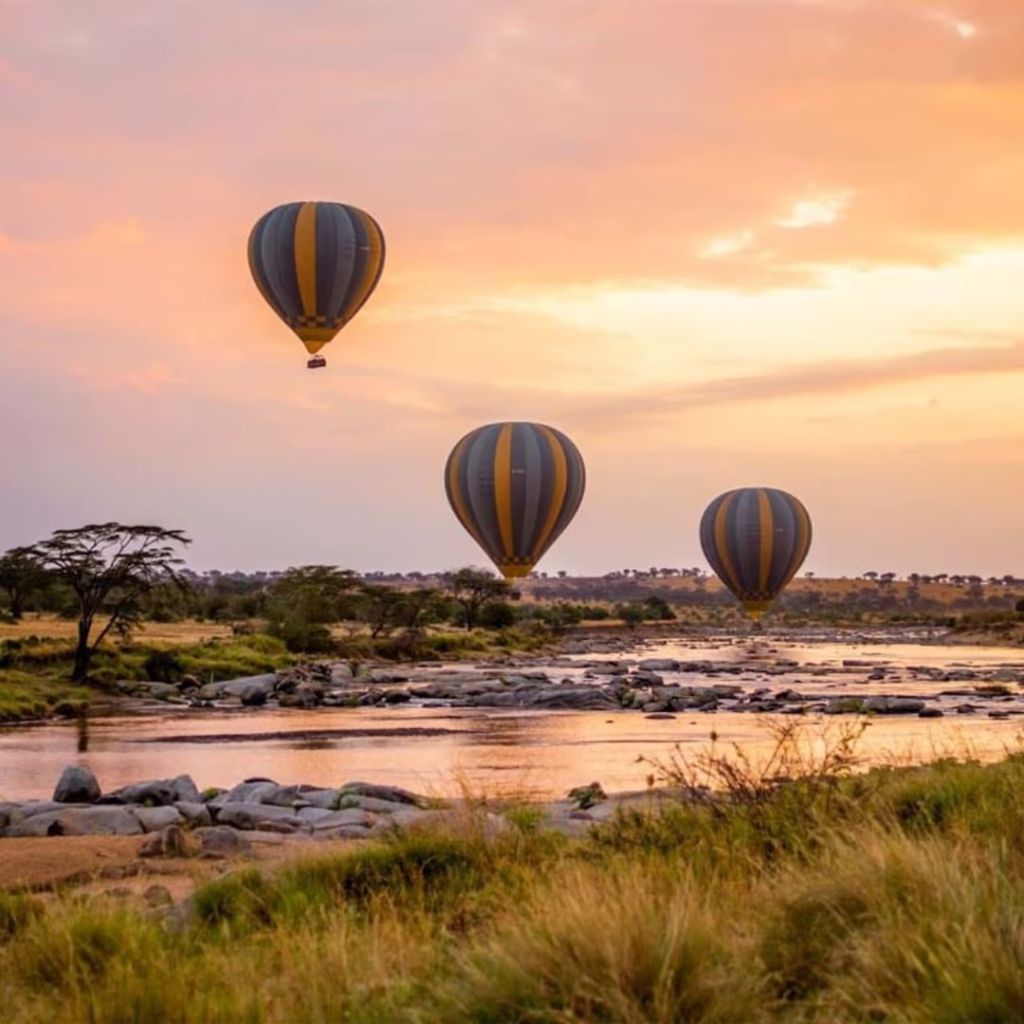
5-Day Wildebeest River Crossing Safari
This journey gives you a front-row seat to one of nature’s greatest spectacles—the Great Wildebeest Migration. In the northern Serengeti,
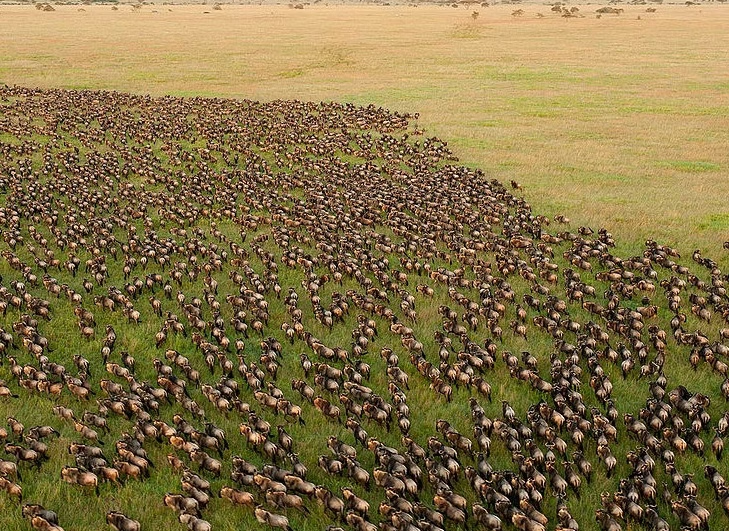
6-Day Ndutu Calving Season Safari
Thousands of newborns are born on the lush short-grass plains, attracting a high concentration of predators like lions, cheetahs, and hyenas—making for thrilling game viewing opportunities.

7-Day Private Camping Great Migration Experience
Stay in comfortable budget camps that bring you close to nature and under the stars, offering a true safari experience.
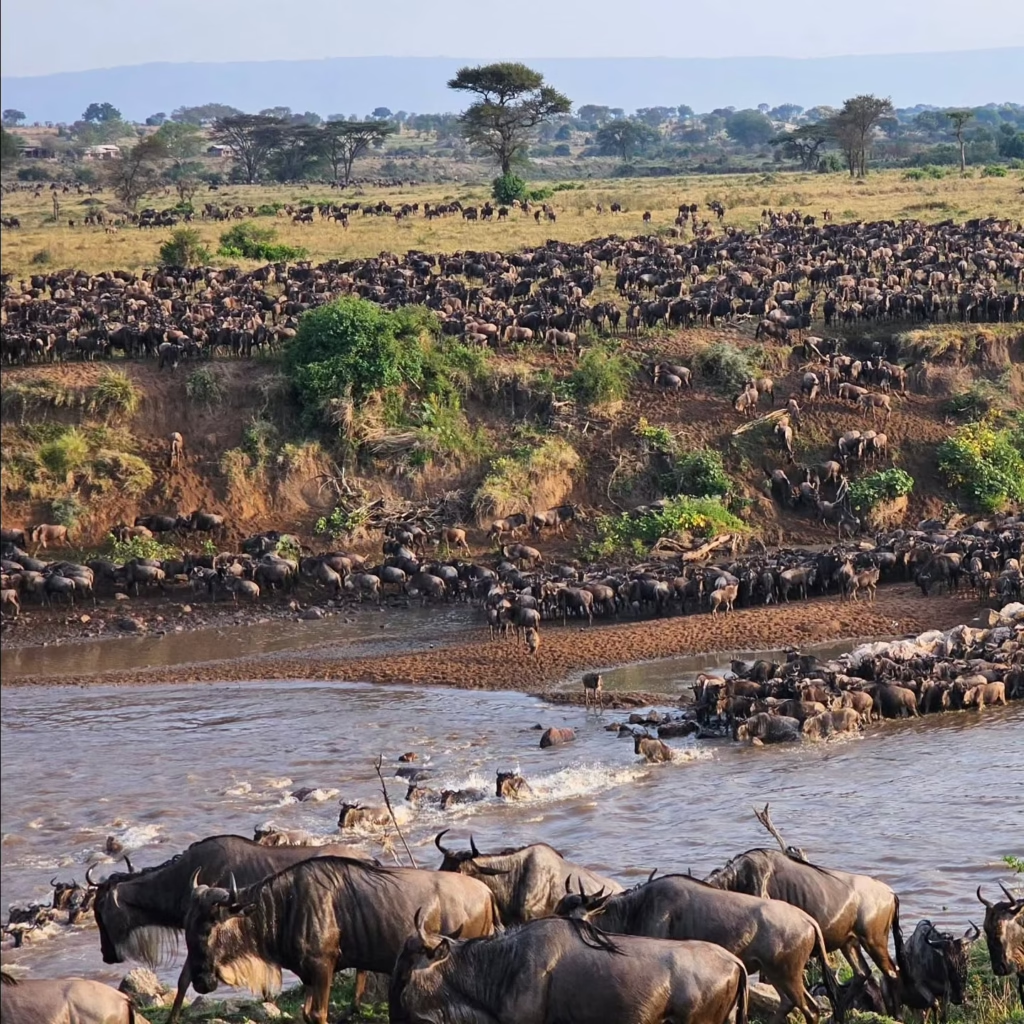
9-Day Wildebeest Migration Footsteps
Unforgettable 9-day safari, thoughtfully crafted to immerse you in the heart of the Serengeti wildebeest migration and rich local culture — the dramatic river crossings in Northern Serengeti.
8. August–October 2026 – Mara River Crossings
From August through October, the migration reaches its most famous—and most ferocious—chapter. The herds surge into the Northern Serengeti, massing along the banks of the Mara River before spilling into Kenya’s Maasai Mara. This is the period most people imagine when they think of the Great Migration: steep riverbanks, panicked herds, and water churning with muscle and fear.
Unlike Grumeti, Mara River crossings can happen multiple times a day. Herds may cross in the morning, retreat, then surge again at a different point—sometimes back and forth between Tanzania and Kenya. These crossings are not scheduled events; they’re triggered by pressure, instinct, and group momentum. One crossing can involve a few hundred animals, the next tens of thousands, each attempt carrying real risk.
✨Strategic camp positioning is critical. Camps in the Northern Serengeti (Kogatende region) offer flexibility to follow the herds without border constraints, while proximity to multiple crossing points increases chances dramatically. In this phase, location outweighs luxury—being in the right place at the right time is everything.
9. November–December 2026 – The Southern Return
As the short rains arrive in November, the migration pivots once more. Fresh grass begins to green the central and eastern Serengeti, triggering the southward return from the Northern Serengeti and Maasai Mara. The herds loosen their tight formations, flowing back in broad, sweeping movements rather than dramatic bottlenecks. This is transition in motion—purposeful, but unhurried.
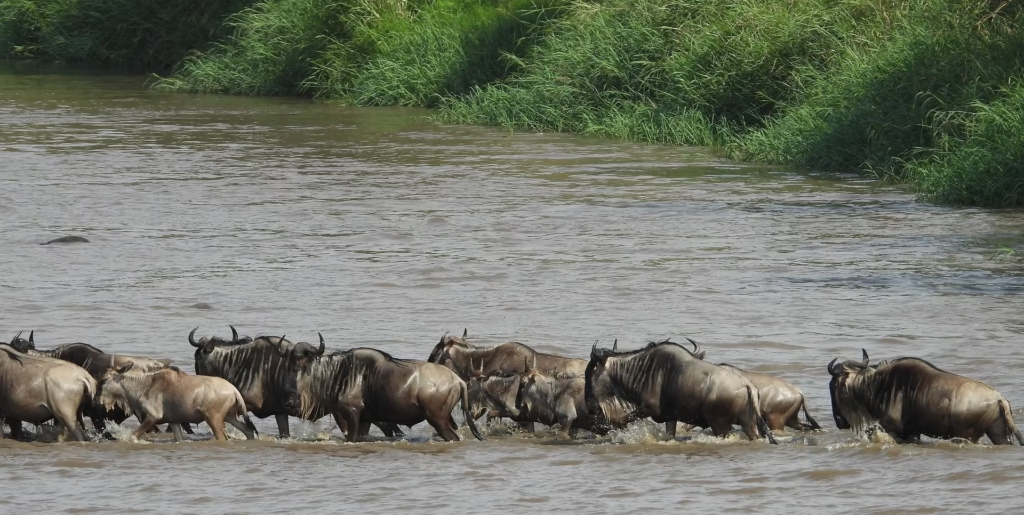
The landscapes during November and December are constantly changing. Dust gives way to fresh growth, skies deepen, and the herds become more dispersed, spreading across wide plains instead of clustering at rivers. Predator pressure remains, but encounters feel more opportunistic than concentrated, with lions and hyenas trailing the movement rather than waiting in ambush.
Beneath the surface, something important is building. Females are heavily pregnant, and the pre-calving phase quietly takes shape. While births are still weeks away, the instinct to return south is already locked in, guided by generations of inherited memory and the promise of nutrient-rich grazing.
This season is often underrated—and that’s precisely its advantage. Crowds thin out, rates soften, and the experience feels expansive and unrushed. For travelers who value atmosphere, movement, and a sense of the migration as a continuous cycle rather than isolated highlights, November–December offers a deeply rewarding and often overlooked window.
10. Great Migration 2026 at a Glance (Summary Table)
Below is a clear, practical snapshot of the Great Migration in 2026—showing where the herds are each month, what’s happening on the ground, and how to position yourself for the best experience. Think of this as your quick-reference planning tool.
Month | Herd Position | Key Events | Peak Predators | Best Camps / Routes |
January | Southern Serengeti / Ndutu | Calving begins; first newborns | Lions, hyenas, cheetahs | Ndutu camps; Arusha–Ndutu fly or drive |
February | Southern Serengeti / Ndutu | Peak calving intensifies | Cheetahs, lions, leopards | Ndutu & southern Serengeti camps |
March | Southern Serengeti | Late peak calving; minimal movement | Lions, hyenas | Ndutu; Seronera–south routes |
April | Central Serengeti | Northward movement begins; long rains | Lions following herds | Seronera & Moru Kopjes camps |
May | Central to Western Serengeti | Long migration columns form | Lions, cheetahs | Western Corridor routes |
June | Western Serengeti / Grumeti | Grumeti River crossings start | Crocodiles, hyenas | Grumeti camps; Grumeti airstrip |
July | Western to Northern Serengeti | Peak Grumeti crossings; move north | Crocodiles, lions | Western & northern transition camps |
August | Northern Serengeti / Mara River | Mara River crossings begin | Crocodiles, lions, hyenas | Kogatende camps; northern flights |
September | Northern Serengeti / Maasai Mara | Peak Mara crossings | Crocodiles, lions | Northern Serengeti or Mara camps |
October | Northern Serengeti / Maasai Mara | Late crossings; grazing spreads | Lions, hyenas | Northern camps with flexibility |
November | Northern to Central Serengeti | Southward return begins | Trailing predators | Lobo & eastern Serengeti routes |
December | Central to Southern Serengeti | Pre-calving buildup | Lions, hyenas | Southern Serengeti / Ndutu access |
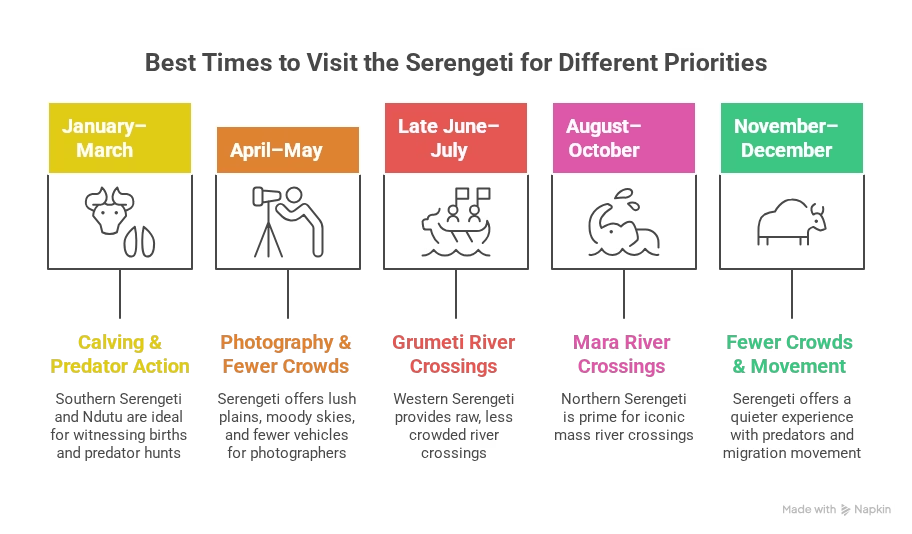
11. Best Time to Visit the Great Migration in 2026 (By Interest)
There is no universal “best time” to see the Great Migration in 2026—only the best time for what you care about most. Below is a clear breakdown to help match your interests with the right months and locations.
12. How Accurate Are Migration Predictions for 2026?
Migration predictions for 2026 are highly reliable in pattern, but never exact in timing. Decades of observation show that the Great Migration follows the same broad circular route every year—south for calving, west and north for river crossings, then back again. This historical consistency allows guides and safari planners to forecast movements with confidence at a regional level. What cannot be fixed to a calendar is the exact day the herds arrive or move on.
The biggest variable is rainfall reality. Long rains and short rains do not follow human schedules, and even localized storms can shift herd movement by days or weeks. A good rain in one pocket of the Serengeti can hold the herds longer; a dry spell can accelerate their push north. This is why two travelers visiting in the same month but different years can have entirely different experiences—both authentic, both correct.
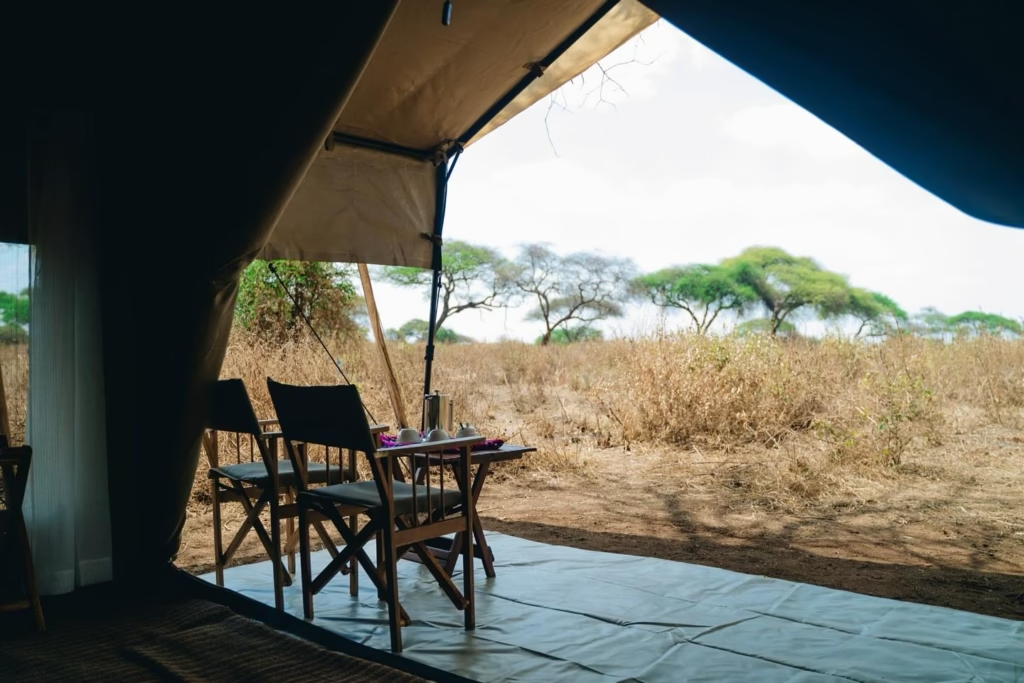
This is where early sightings play a critical role. Real-time tracking from guides, pilots, and on-the-ground camps provides valuable confirmation of where the bulk of the herds are actually concentrated. These sightings don’t replace historical knowledge—they refine it, helping operators adjust routes, camp choices, and daily game-drive strategies as conditions evolve.
Above all, successful migration safaris depend on flexible planning. Choosing camps positioned along movement corridors, allowing extra nights in key areas, and working with guides who can adapt quickly makes far more difference than chasing fixed dates. In 2026, as always, those who plan with nature—not against it—will be rewarded with the richest experiences.
Suggested Articles for further Readings
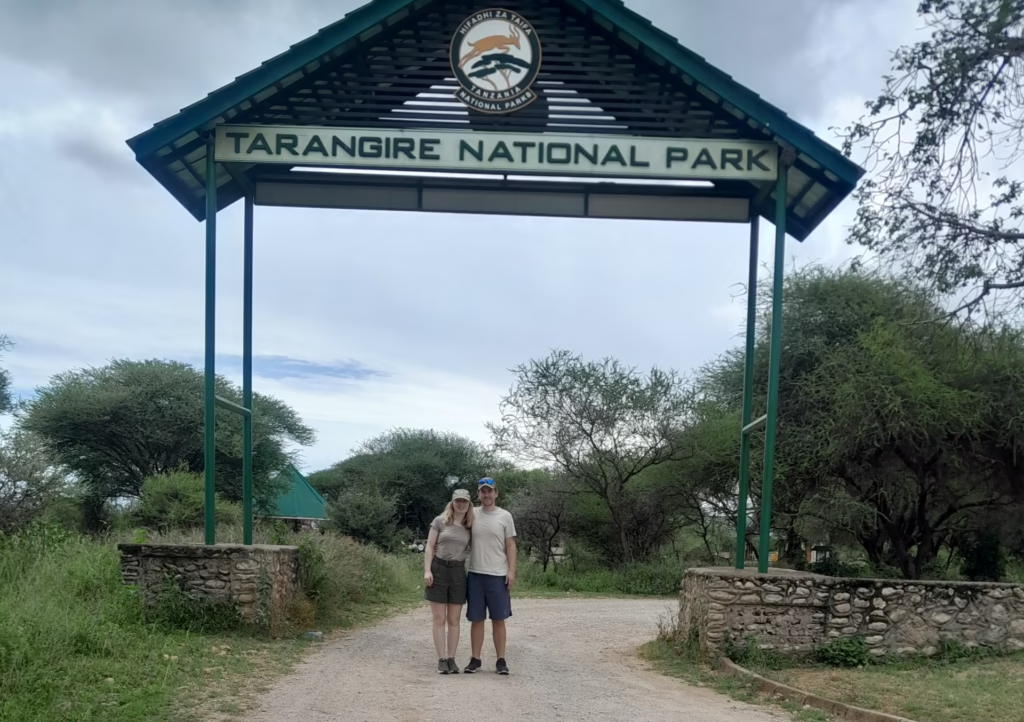
When Is the Best Time to Visit Tanzania for Safari?
Tanzania is one of the rare safari destinations where wildlife viewing is rewarding throughout the year.
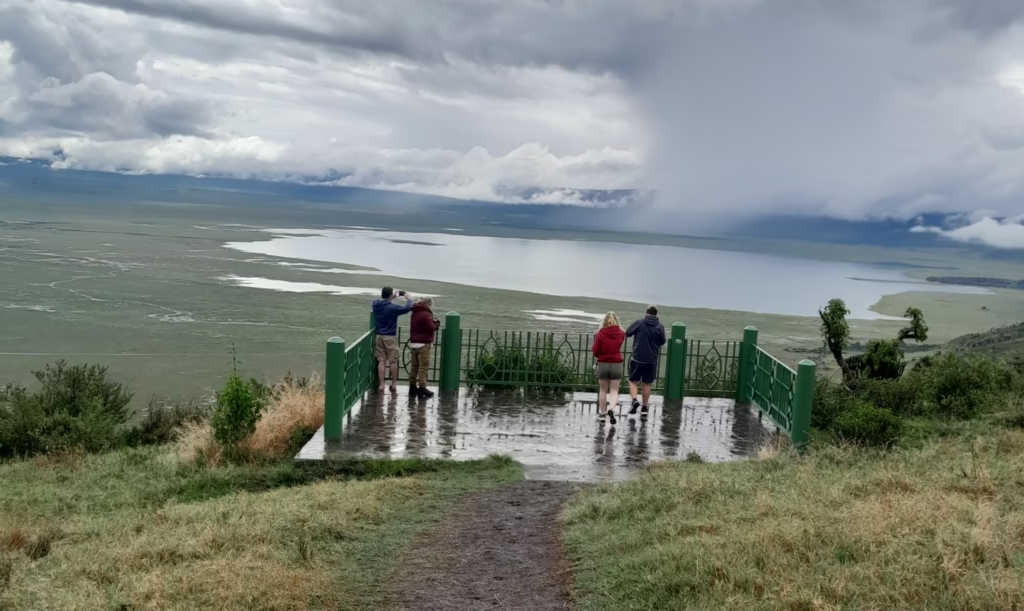
How many game drives on a Tanzania safari?
The Question Every Safari Traveler Asks.
How to Plan a Tanzania Safari: Step-by-Step Guide for First Timers?
Planning a Tanzania safari is not like booking a regular holiday—and for first-timers, that’s both the excitement and the challenge.
How Much Does a Tanzania Safari Cost in 2026?
Safari pricing isn’t just about luxury versus budget.
13. Tools & Resources to Track the Migration in Real Time
Because the Great Migration responds to rain rather than dates, the smartest planning combines historical knowledge with live information. The following tools help bridge that gap—turning predictions into real-world positioning.
Sightings Trackers
Real-time sightings trackers are among the most valuable resources for 2026 planning. These platforms aggregate updates from guides, pilots, camps, and safari operators on the ground, showing where the main herds are currently concentrated. Used correctly, they help fine-tune routes, adjust camp choices, and confirm whether key areas—like Ndutu, Grumeti, or the Mara River—are active at that moment.
Forecast Calendars
Migration forecast calendars combine historical movement patterns with rainfall expectations to project where the herds are most likely to be month by month. While they should never be treated as fixed schedules, they provide an excellent planning framework, especially when booking camps and internal flights well in advance for 2026. Think of them as probability maps, not promises.
Camp and Lodge Guides
Detailed camp and lodge guides are essential for translating migration data into an actual safari experience. These resources highlight which camps are best positioned during each phase, which operate seasonally, and which offer the flexibility to move with the herds. In migration safaris, location consistently matters more than star ratings—and the right guide helps you choose accordingly.
Used together, these tools allow travelers to plan with confidence while staying responsive to nature’s final decisions. The migration may be wild, but with the right resources, it never has to be a guess.
14. Final Thoughts: Planning Your Great Migration Safari in 2026
The Great Migration in 2026 is best understood not as a box to tick or a date to chase, but as a moving story—one that unfolds across landscapes, seasons, and moments of quiet and chaos alike. Each month reveals a different chapter, and none of them are lesser, only different in tone and texture. The magic lies in arriving where the story is happening, not where the hype says it should be.
Successful planning starts with matching expectations to the right months. River crossings, calving, predator action, open landscapes, moody skies, or solitude—each comes with its own timing and geography. When expectations and season align, the safari feels effortless and deeply rewarding. When they don’t, even the most luxurious setup can feel misplaced.
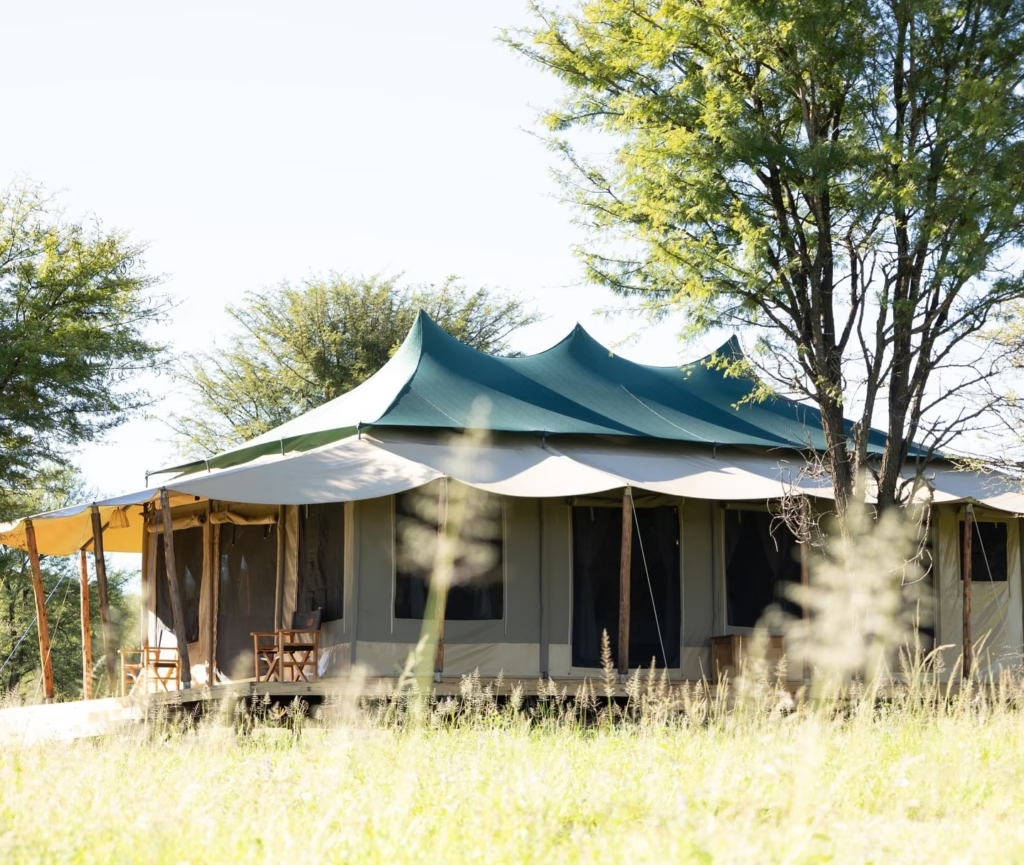
Which leads to the most important rule of all: camp location matters more than luxury. A perfectly placed tented camp near active migration routes will always outperform a five-star lodge far from the herds. Proximity, flexibility, and knowledgeable guiding shape the experience far more than thread count or infinity pools.
Planning a Trip to Tanzania?
Our team is always here to help
Please let us know if you have any questions
Tanzania Safari Cost FAQs (2026)
1. How much does a Tanzania safari cost in 2026?
Costs vary widely depending on travel style, season, and itinerary. Daily rates range from $180–$250 for budget safaris, $350–$600 for mid-range, and $900–$1,500+ for luxury experiences. A 5–7 day safari typically costs $2,000–$10,000+ per person, excluding international flights and tips.
2. What factors influence safari prices the most?
The main cost drivers are national park and conservation fees, accommodation, safari vehicle and guide, and the season of travel. Hidden costs such as tips, drinks, optional activities, and internal flights can also add 10–20% to your total budget.
3. Are there cheaper times to go on safari?
Yes. The low season (March–May) offers 20–50% discounts, while the shoulder seasons (Nov–Feb) provide good wildlife viewing at 10–30% lower costs than peak season. Peak season (June–October) is the most expensive due to the Great Wildebeest Migration and dry conditions.
4. What’s included in a typical safari package?
Most packages include accommodation, meals, park fees, daily game drives, and a professional guide with a 4x4 vehicle. Extras like drinks, laundry, optional activities, visas, and internal flights may not be included—always confirm with your operator.
5. How can I save money without compromising the safari experience?
- Travel during shoulder or low seasons
- Join a shared group safari instead of private
- Combine high- and low-fee parks to reduce costs
- Stay in lodges or camps outside park boundaries
These strategies lower costs while maintaining excellent wildlife experiences.
6. Are Tanzania safaris more expensive than other African destinations?
Tanzania is slightly higher than Kenya or South Africa for similar itineraries, but it offers larger parks, higher wildlife density, and iconic experiences like the Serengeti Migration and Ngorongoro Crater. Botswana can be more expensive, but Tanzania offers more flexible budget options.
7. Do internal flights save time and affect the budget?
Yes. Fly-in safaris reduce long drives and maximize game viewing, especially in the Serengeti, but each leg usually costs $300+ per person. They are common in luxury itineraries and significantly increase the total cost.
8. How much should I tip my guide or camp staff?
Tipping is customary. General guidelines are $20–$30 per day for your driver-guide and $10–$15 per day for camp staff or chef, usually split among team members.
9. Can I do a safari on a tight budget?
Absolutely. Budget safaris with shared vehicles, basic camps, and careful park selection can cost as little as $180 per day while still delivering great wildlife viewing. Planning and seasonal flexibility are key.
10. Are park fees included in all safari packages?
Not always. Some packages exclude fees, particularly for high-cost parks like Serengeti and Ngorongoro, which can add $80+ per day per adult. Always confirm inclusions before booking to avoid unexpected costs.