
Tanzania Safari What to Expect on the Adventure of a Lifetime?
Table of Contents
ToggleWhat Does a Tanzania Safari Really Feel Like?
So, you’re wondering Tanzania safari what to expect?
Start by forgetting the idea that a safari is simply a luxury holiday with a guaranteed parade of lions, elephants and leopards on cue. Tanzania is wilder—and far more unpredictable—than that.
A Tanzania safari begins early. Often very early. You may be drinking coffee before sunrise, climbing into a 4×4 while the air is still cold, and heading into the bush as the first light spreads across the landscape. Later, you might spend several hours on dusty, sometimes bumpy roads, scanning the grasslands for movement. Your phone may lose its signal. The weather can change quickly. And there may be moments when you drive for a long time and see surprisingly little.
Then, without warning, everything can change.
A pride of lions appears beside the road. A herd of elephants emerges from the bush. A leopard is spotted resting high in a tree. Thousands of wildebeest stretch across the horizon. Suddenly, the hours of driving and waiting make perfect sense.
That contrast is at the heart of the Tanzania safari experience.
Expect the extraordinary—and the ordinary
A realistic safari means being prepared for both sides of the adventure.
You should expect:
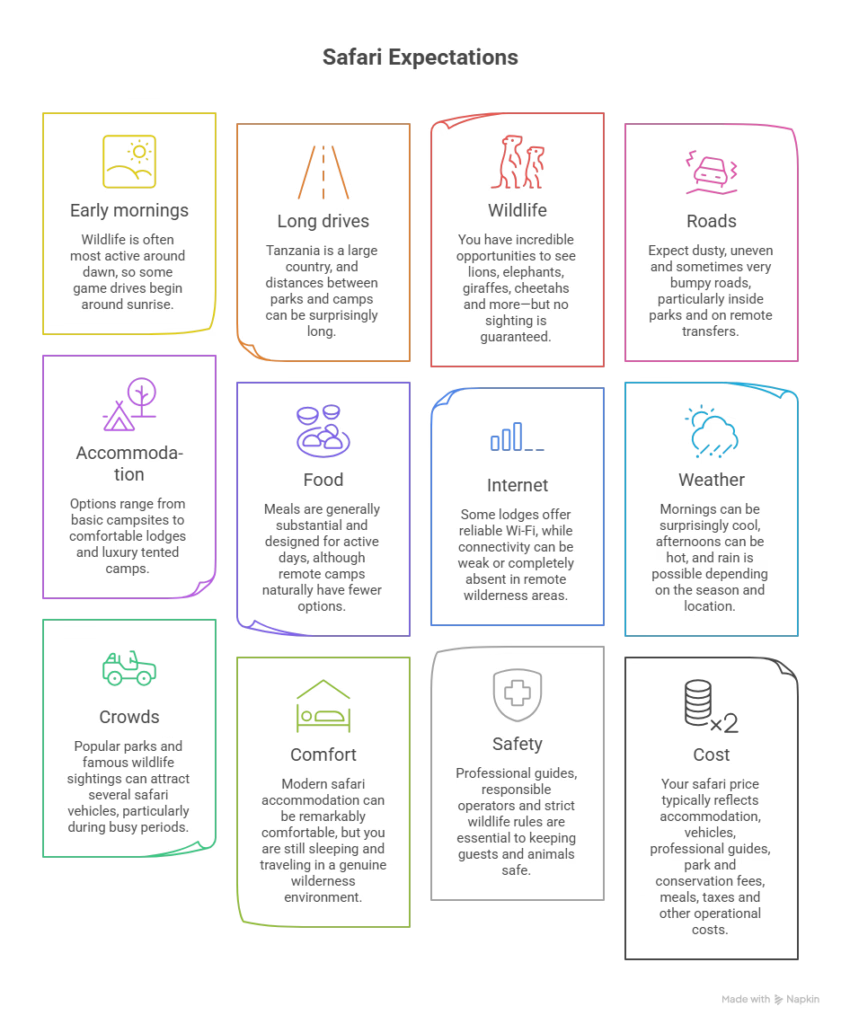
- Early mornings, because wildlife is often most active around dawn.
- Long game drives, sometimes lasting several hours.
- Dust, bumps and rough roads, particularly on long journeys between remote areas.
- Extraordinary wildlife encounters, from elephants and giraffes to lions, cheetahs and, with some luck, elusive leopards.
- Changing weather, with cool mornings, hot afternoons and occasional rain depending on the season.
- Remote landscapes, where the nearest town—and sometimes the nearest phone signal—can be a long way away.
- Limited connectivity, particularly in remote parts of the Serengeti and other wilderness areas.
- Comfortable accommodation, ranging from well-appointed lodges to luxury tented camps, while still remaining firmly connected to the natural environment.
- Quiet stretches of game viewing, when the animals simply aren’t where you hoped they would be.
- Unexpected moments, when a seemingly ordinary game drive suddenly becomes one of the most memorable experiences of your life.
This is important because wildlife is not scheduled.
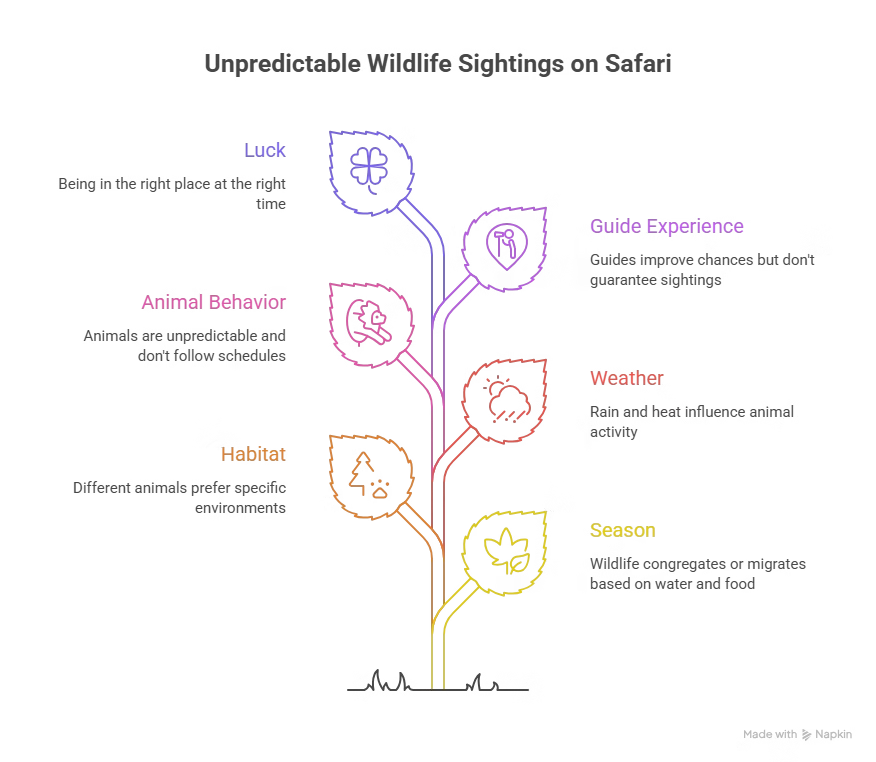
A safari is not like visiting a zoo, where you can walk to an enclosure and know exactly what you are going to see. Wild animals move according to food, water, weather, territory and instinct. Your guide can use experience, local knowledge and information from other guides to improve your chances, but nobody can tell a lion where to sit.
And that uncertainty is not a weakness of a Tanzania safari.
It is the point.
You are entering a living ecosystem rather than watching a performance designed for visitors. Sometimes the reward is a spectacular predator sighting. Sometimes it is watching elephants move silently through golden grass. Sometimes it is simply sitting beneath a vast African sky with nothing happening for twenty minutes—and realizing that, somehow, that is exactly what you came for.
The best way to approach a Tanzania safari, therefore, is with high expectations for the experience, but realistic expectations for what nature will deliver.
Come prepared for early starts, long drives, dust and unpredictability. In return, you give yourself the freedom to appreciate the moments you could never have planned—and those are often the moments you remember long after you have left Tanzania.
Tanzania Safari: What to Expect at a Glance
If this is your first safari, knowing what the experience actually involves can make a big difference. A Tanzania safari is a mix of incredible wildlife, long days outdoors, comfortable accommodation and genuine wilderness—and some parts may be quite different from what you imagine before arriving.
The short answer to “What should I expect?”
Expect less certainty than a conventional holiday—and more possibility.
You may spend hours driving through the Serengeti without seeing a major predator, only to encounter a leopard minutes later. You may wake before sunrise in cold air, spend the morning bouncing along a dusty track, and return to a beautifully prepared lunch at a comfortable camp.
That combination is what makes a Tanzania safari different.
It is not simply about ticking animals off a list. It is about experiencing a vast, functioning ecosystem where weather, wildlife, landscape and timing are constantly changing.
The more realistic your expectations are before you arrive, the more you can appreciate what happens when the unexpected finally appears.
3. A Typical Tanzania Safari Day
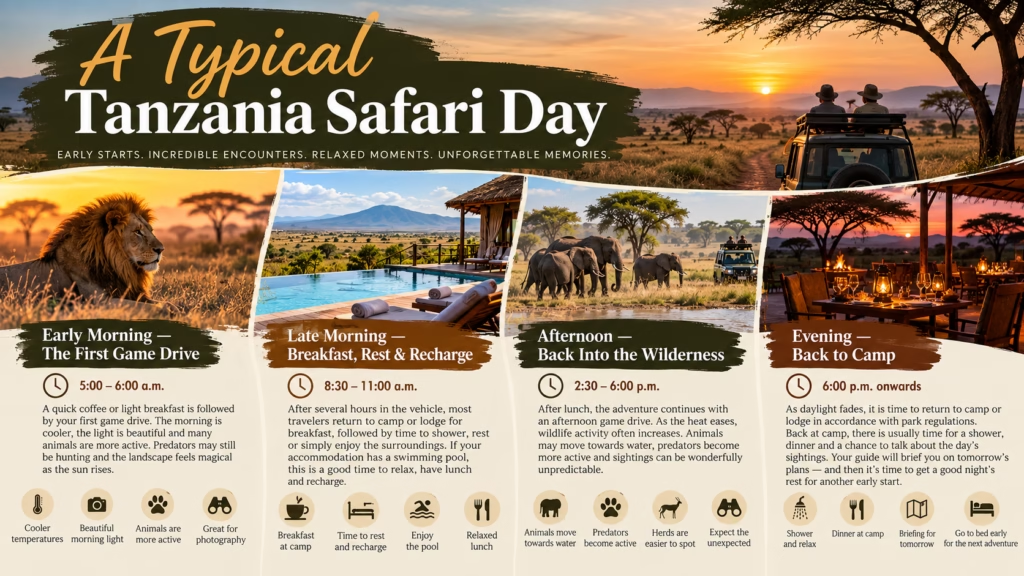
A Tanzania safari does not follow the rhythm of a typical beach holiday. Your day is shaped by sunrise, wildlife activity, park regulations and the movement of animals. That often means early starts, long hours outdoors and plenty of time simply watching and waiting.
The schedule can vary depending on the park, season, accommodation and whether you choose morning and afternoon drives or a full-day excursion. But a typical safari day often looks something like this.
The Reality: Safari Can Be Tiring
One of the most important things to understand before booking a Tanzania safari is that wildlife viewing takes time.
A full game-drive day can involve six to eight hours or more in a safari vehicle. Some of that time may be spent actively watching animals; some may involve driving between areas, searching for wildlife or simply waiting.
The roads can be dusty and bumpy. The sun can be intense. You may spend an hour searching for a leopard and find nothing.
But then your guide might suddenly slow down.
Everyone looks towards the bushes.
A movement catches your eye.
And there it is.
That is safari: long periods of anticipation interrupted by moments that can stay with you for the rest of your life.
4. What Wildlife Can You Expect on a Tanzania Safari?
For many travelers, wildlife is the heart of a Tanzania safari. And with good reason. Tanzania is home to some of Africa’s most famous wildlife landscapes, from the vast plains of the Serengeti to the wildlife-rich Ngorongoro Crater and the elephant country of Tarangire.
But there is one important rule to remember before you arrive:
Safari is about probability, not certainty.
You are entering a wild ecosystem, not a wildlife park with scheduled appearances. Your chances of seeing particular animals can be excellent, but no responsible guide or safari operator can guarantee exactly what you will encounter.
The Big Five
Tanzania is home to Africa’s famous Big Five:
- Lion — One of the most frequently encountered big cats on the northern safari circuit, particularly in areas with abundant prey.
- Leopard — Powerful, elusive and often difficult to spot. Leopards may rest in trees, dense vegetation or shaded areas during the heat of the day.
- Elephant — Commonly seen in several Tanzanian parks, with Tarangire particularly well known for its large elephant populations.
- Buffalo — Often encountered in herds, sometimes numbering in the hundreds.
- Rhino — One of the more difficult Big Five animals to encounter because populations are much smaller and sightings are less predictable.
And here’s the important part: seeing all five is never guaranteed.
You might see lions and elephants repeatedly while spending days searching for a leopard or rhino. Another traveler on a completely different route may have the opposite experience.
A good safari is therefore not about collecting five names on a checklist. It is about understanding that every sighting happens on nature’s terms.
Beyond the Big Five
The Big Five may dominate safari brochures, but they are only part of the story.
Depending on where and when you travel, you could encounter:
- Cheetahs scanning the open plains for prey.
- Wildebeest moving in enormous herds across the Serengeti.
- Zebras often traveling alongside wildebeest.
- Giraffes browsing among acacia trees.
- Hippos crowded into rivers and pools.
- Crocodiles lying motionless along waterways.
- Hyenas moving through the grasslands or gathering around a kill.
- Jackals hunting and scavenging across open terrain.
- Gazelles and other antelope, from tiny dik-diks to larger species.
- Monkeys and baboons moving through woodland and along the edges of camps.
- Hundreds of bird species, including eagles, vultures, flamingos, hornbills, kingfishers and colorful smaller birds.
For birdwatchers, Tanzania can be an entirely different safari experience. You don’t need a lion to make a game drive worthwhile. A martial eagle soaring overhead, a flock of flamingos covering a lake shore or a brightly colored kingfisher sitting beside the vehicle can be memorable sightings in their own right.
The Reality of Wildlife Viewing
This is perhaps the most important thing to understand about a Tanzania safari:
You are never guaranteed a particular animal on a particular day.
One morning might produce little more than a few antelope, birds and distant zebras. You may spend an hour following tracks without finding the predator you hoped for.
Then, on another drive, everything can happen within minutes.
A guide spots movement in the grass. You approach slowly and discover a pride of lions. A few kilometers later, elephants cross the road. Before the drive is over, someone spots a leopard resting in a tree.
That unpredictability is part of what makes a safari exciting.
What Determines What You See?
5. What to Expect from the Great Migration in Tanzania
Few wildlife spectacles are as famous as Tanzania’s Great Migration. Every year, enormous herds of wildebeest, accompanied by zebras and other grazing animals, move through the Serengeti ecosystem in search of fresh grass and water.
For travelers, however, there is an important detail that is often missed:
The Great Migration is not a single event that happens in one place on one date.
It is a continuous, seasonal movement—and understanding that can completely change how you plan your safari.
The Migration Is Not One Event
The migration follows the conditions of the ecosystem rather than a fixed tourist calendar.
The herds are constantly responding to:
- Rainfall — Rain determines where fresh grass grows and where water becomes available.
- Grazing conditions — Huge herds must continually move toward areas with enough nutritious grass to support them.
- Water availability — As water sources change throughout the year, wildlife movement changes with them.
- Seasonal conditions — Different periods bring the herds into different parts of the Serengeti and, eventually, across the border into Kenya.
- Animal behavior — Even within the same season, the timing and location of the herds can vary.
This means that saying you are visiting Tanzania “during the migration” does not automatically tell you where the wildebeest will be.
One month might place you in an area with enormous herds, while a nearby region may be relatively quiet. Even within the same week, animals can move considerably.
That is why the location of your safari matters just as much as the month you travel.
Calving Season — January to February
For many travelers, the beginning of the year offers one of the most fascinating phases of the migration.
During approximately January and February, large numbers of wildebeest gather in the southern Serengeti and Ndutu area, where seasonal rains create fresh grazing.
This is the famous calving season.
Thousands of newborn wildebeest arrive during a relatively concentrated period, creating an extraordinary scene of life on the plains. But where there are vulnerable young animals, predators are never far away.
Lions, cheetahs, hyenas and other predators take advantage of the abundance of young prey.
The result can be dramatic:
- Newborn wildebeest taking their first steps.
- Large herds spread across the plains.
- Predators watching from nearby.
- Fast-paced hunts.
- Constant movement between grazing areas.
For wildlife photographers and travelers interested in predator-prey behavior, this period can be particularly compelling.
But even here, expectations matter. The exact timing and location of the herds can change with rainfall and local conditions.
The Dry Season — June to October
As the year progresses, the migration moves through different parts of the Serengeti ecosystem.
From roughly June through October, travelers may encounter large concentrations of wildebeest and zebras, with the northern Serengeti becoming particularly important during parts of this period.
This is also the season associated with the famous Mara and Grumeti river crossings.
When conditions and animal movements align, thousands of wildebeest may gather at a riverbank before attempting to cross. The scenes can be spectacular—and sometimes chaotic.
But there is a crucial distinction between planning for a river-crossing season and guaranteeing a river crossing.
A River Crossing Is Never Guaranteed
This is one of the biggest misconceptions about the Great Migration.
Booking a safari for July, August or September does not mean you will automatically see a river crossing.
The animals may:
- Reach the river earlier or later than expected.
- Gather at a crossing point and remain there for days.
- Cross when you are in another area.
- Choose a different crossing point.
- Turn around instead of crossing.
- Move through the region without producing the dramatic scene you imagined.
Even when thousands of animals are nearby, nature does not perform on schedule.
A responsible safari operator should therefore talk about opportunities for witnessing a river crossing, rather than promising that one will happen during your trip.
And this is exactly what makes the Great Migration so extraordinary.
You are not watching a scheduled show. You are witnessing millions of animals respond to one of the oldest forces in nature: the search for food, water and survival.
The smartest approach is to choose your travel period and safari location according to the type of migration experience you want, while leaving room for nature to decide the final details.
6. What to Expect from Tanzania's Main Safari Parks
One of the most important decisions when planning a Tanzania safari is where to go. Tanzania is not one uniform safari destination. Each park has its own landscapes, wildlife patterns, atmosphere and practical considerations.
The classic northern circuit—particularly Serengeti, Ngorongoro, Tarangire and Lake Manyara—is popular because it combines very different ecosystems within one journey. Further south and west, parks such as Ruaha, Nyerere, Katavi and Mahale offer a different style of safari, often with a stronger sense of remoteness.
Here is what you can realistically expect from each.
Serengeti National Park
The Serengeti is the destination many travelers picture when they imagine an African safari: enormous open plains, scattered acacia trees, large herds and predators moving through the landscape.
Expect:
- Huge landscapes that can make you feel as though the horizon has no end.
- Excellent predator opportunities, particularly for lions and, depending on the area and conditions, cheetahs and leopards.
- Large herds of wildebeest, zebras and other grazing animals.
- Migration activity at different times of the year.
- Long distances, particularly when moving between different parts of the park.
- More vehicles around famous sightings, especially when a particularly sought-after animal is spotted.
The Serengeti is not just about individual animal sightings. One of its greatest strengths is the feeling of being inside a vast, functioning ecosystem.
Best suited to: Travelers who want the classic African safari experience and are willing to spend several days exploring a large wilderness area.
Ngorongoro Crater
The Ngorongoro Crater offers a very different experience. Descending into the crater feels almost like entering a natural amphitheatre, with grasslands, woodland, water and wildlife enclosed within the crater walls.
Expect:
- High wildlife density within a relatively compact area.
- Dramatic scenery, with the crater walls providing a spectacular backdrop.
- Shorter but often productive game viewing, making it particularly useful for itineraries where time is limited.
- More vehicles around major sightings, especially when predators or other sought-after animals are found.
The crater can be an excellent place to see a variety of wildlife in a single game drive, but it is important to understand what it is—and what it isn’t.
It is spectacular, but it is not necessarily the wildest or most secluded safari experience in Tanzania. Its accessibility and concentrated wildlife also make it one of the places where you are more likely to encounter several safari vehicles at a popular sighting.
Think of Ngorongoro as a remarkable wildlife landscape with exceptional scenery and concentration, rather than expecting complete solitude.
Tarangire National Park
Tarangire has a character all of its own.
The park is particularly associated with large elephant populations, ancient baobabs and seasonal wildlife concentrations, especially around sources of water.
Expect:
- Elephants, sometimes in impressive numbers.
- Baobab trees that give the landscape a distinctive appearance.
- Seasonal concentrations of wildlife around the Tarangire River and other water sources.
- Beautiful landscapes, combining woodland, grassland and dramatic trees.
- Potentially quieter game viewing than some of Tanzania’s most famous safari areas, depending on the season and location.
Tarangire is sometimes treated as simply a stop on the way to the Serengeti. That undersells it.
For travelers who appreciate landscapes, elephants and a more varied visual environment, Tarangire can be one of the most rewarding parts of a northern-circuit safari.
Lake Manyara National Park
Lake Manyara is smaller than the Serengeti and has a very different atmosphere.
Instead of endless open plains, you can encounter woodland, groundwater forests, lakeshore habitats and other varied environments within a relatively compact area.
Expect:
- Woodland and forested landscapes.
- Excellent birdlife, particularly around the lake and wetland areas.
- Elephants and other larger mammals.
- Varied habitats within a relatively small park.
- Changing conditions, particularly as water levels and local environmental conditions change.
Lake Manyara is sometimes marketed primarily around its famous tree-climbing lions. While lions can climb trees and the behavior is associated with the park, it should not be treated as a guaranteed sighting.
The park is worth considering for its habitat diversity, scenery and birdlife, even when the headline animal does not make an appearance.
Southern & Western Tanzania
If the northern circuit is Tanzania’s most famous safari region, the southern and western parks offer a different proposition.
This includes destinations such as:
- Ruaha National Park
- Nyerere National Park
- Katavi National Park
- Mahale Mountains National Park
These areas can appeal to travelers who want to move beyond the most established northern routes.
Expect:
- A greater sense of remoteness in many areas.
- Fewer visitors in some parks, although this varies by season and location.
- More logistical complexity when planning the trip.
- More domestic flying, particularly when connecting remote parks.
- Longer itineraries, especially if you want to combine several destinations.
The reward can be a safari that feels slower, quieter and more removed from the classic tourist circuit.
The trade-off is convenience. Reaching these areas can require additional flights, more planning and a larger time commitment.
Which Destination Should You Choose?
There is no single “best” Tanzania safari park for every traveler. The right choice depends on what you want from the experience.
If you want the iconic African safari landscape and the possibility of experiencing the Great Migration, the Serengeti deserves serious consideration.
If you want concentrated wildlife and dramatic scenery within a relatively compact area, Ngorongoro can be a strong addition.
If elephants, baobabs and distinctive landscapes appeal to you, Tarangire offers something different.
If you enjoy woodland, birdlife and varied habitats, Lake Manyara can add another dimension to a northern-circuit itinerary.
And if your priority is remoteness and fewer visitors, exploring southern or western Tanzania may be worth the additional travel time and logistics.
The important thing is not to choose parks simply because they appear on every safari brochure. Choose them because they match the experience you actually want.
7. Tanzania Safari Vehicles & Road Conditions
For many first-time visitors, the safari vehicle becomes almost as important as the wildlife itself. You can spend several hours inside it each day, so understanding what the vehicle is like—and what the roads are really like—will help you prepare properly.
The classic Tanzania safari vehicle is designed for one thing above all else: getting you safely into the wilderness while giving you a good view of the animals.
The Typical 4x4 Safari Vehicle
Most professional Tanzania safaris use a specially adapted 4×4 Toyota Land Cruiser. These vehicles are built to handle rough park roads and long-distance travel while providing passengers with good visibility.
A typical safari vehicle may feature:
- Toyota Land Cruiser: A rugged 4×4 designed for Tanzania’s varied terrain.
- Pop-up roof: Allows passengers to stand or sit upright while viewing and photographing wildlife.
- Elevated seating: Gives you a better view over grass, bushes and other vehicles.
- Large windows: Useful for wildlife viewing and photography when the roof is closed or during transfers.
- Camera access: The open roof and large windows make it easier to use cameras with longer lenses.
The vehicle is essentially your viewing platform for the day.
When a guide spots something interesting, the vehicle can stop, the roof can be raised and everyone gets a chance to look out across the landscape.
For photographers, vehicle configuration matters more than many first-time travelers realize. Ask about seating, roof design, window access and how many passengers will share the vehicle before booking.
Prepare for Dust & Bumpy Roads
The safari vehicle may be comfortable, but the roads are still African wilderness roads.
Inside national parks and conservation areas, you should expect sections of:
- Corrugated roads that create continuous vibration.
- Dust, particularly during dry periods and when passing other vehicles.
- Potholes and uneven surfaces.
- Long transfers between parks and accommodation.
- Heat during the middle of the day.
- Cold mornings, especially when the vehicle is moving before sunrise.
A journey that looks relatively short on a map can take considerably longer than expected. Park roads are not highways, and your driver may need to slow down for difficult terrain, wildlife, gates, other vehicles or road conditions.
The bumps are part of the experience—but they are also one reason why a well-maintained safari vehicle and an experienced driver matter.
Pack your camera equipment securely, keep frequently used items within easy reach and expect some dust to find its way into the vehicle.
Private vs Shared Safari
One of the biggest decisions you can make is whether to travel in a private vehicle or share with other travelers.
Private Vehicle | Shared Vehicle |
Greater flexibility | Lower cost |
You control the pace and daily schedule | Shared schedule with other guests |
Easier to spend longer at a wildlife sighting | May need to leave when others are ready |
Particularly useful for photographers and families | Can provide a social experience |
More privacy and personal space | Less flexibility |
More expensive | More budget-friendly |
A private vehicle can be particularly valuable if wildlife photography is a priority. You can spend additional time at a sighting, change direction when something interesting appears or take breaks according to your own schedule.
A shared safari, meanwhile, can be an excellent way to reduce the cost while meeting other travelers. The compromise is that everyone needs to agree on the day’s pace.
Neither option is inherently better. The important question is how much flexibility you want and how much you are prepared to pay for it.
Questions to Ask Your Safari Operator
Before booking, don’t simply ask whether a safari vehicle is included. Ask what “safari vehicle” actually means.
A few practical questions can prevent uncomfortable surprises later:
- How many passengers will be in the vehicle?
- Is everyone guaranteed a window seat?
- Does the vehicle have a pop-up roof?
- Are seat belts available and working?
- Is there a charging system for phones and cameras?
- Is there a refrigerator or cooler?
- Is drinking water provided?
- Is the vehicle private or shared?
- How old is the vehicle and how is it maintained?
- Does the vehicle have adequate space for luggage and camera equipment?
These details may sound minor when you’re comparing safari packages online.
After six hours on a dusty road, however, they can make a very noticeable difference.
Ultimately, the safari vehicle is more than transportation. It is where you will spend much of your adventure, so choosing the right setup can significantly shape your experience.
8. Tanzania Safari Accommodation: Lodge vs Tented Camp vs Camping
One of the biggest misconceptions about a Tanzania safari is that the word “tent” automatically means basic camping.
It doesn’t.
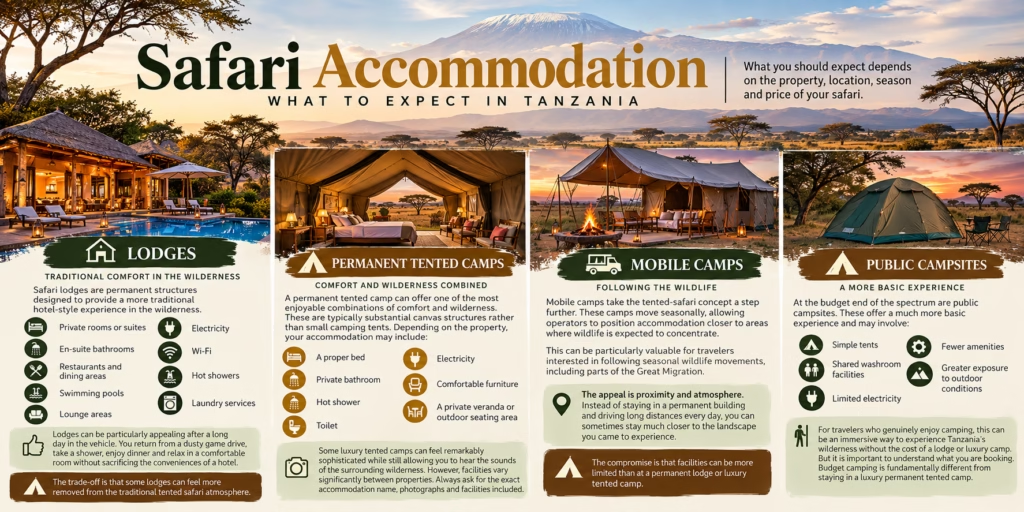
Safari accommodation ranges from simple public campsites to highly comfortable permanent tented camps and luxury lodges with private bathrooms, excellent dining and swimming pools. The word tented tells you something about the structure—not necessarily the level of comfort.
What you should expect depends on the property, location, season and price of your safari.
What It's Like to Sleep in the Wilderness
Sleeping in the Tanzanian wilderness can be one of the most memorable parts of the trip.
It can also take a little getting used to.
At night, the bush does not become silent. You may hear insects, birds, distant animals or movement around the camp. Depending on where you stay, the sounds can be surprisingly close.
That is part of the magic—but it is also why safari camps have safety procedures.
Never assume that because your accommodation has a tent, fence or pathway, you can safely walk around the property alone at night.
At some camps, guests may be accompanied by a staff member when walking between their tent and the main dining or lounge area after dark. Follow the property’s instructions, even if the distance looks short.
You should also:
- Avoid leaving food outside your tent.
- Keep doors and tent entrances properly closed.
- Don’t approach wildlife.
- Don’t wander away from designated areas.
- Listen to staff instructions about wildlife activity around camp.
- Ask for an escort whenever the camp requires one.
You may wake up to the sound of an animal outside your tent. That’s an unforgettable experience—but the correct response is to stay inside and let trained staff handle the situation.
The beauty of safari accommodation is precisely this balance: you can enjoy a comfortable bed, a hot shower and a good meal while still being surrounded by a living wilderness.
Luxury in Tanzania doesn’t necessarily mean escaping the wild. Sometimes, it means experiencing the wild without giving up your comfort.
9. What to Expect from Food, Internet and Connectivity?
A Tanzania safari takes you far away from the routines of everyday life—and that includes some of the conveniences you may normally take for granted.
Food is generally well catered for, but internet and electricity can be less predictable, particularly when you are staying in remote parts of the country. Knowing this before you travel makes it much easier to enjoy the experience rather than worrying about what you cannot access.
Food on Safari
Safari days are long, so meals are generally planned to keep you fueled throughout the day.
Depending on your itinerary and accommodation, you can expect:
- Breakfast — Often served at the lodge or camp before a morning game drive, although early departures may involve a light breakfast or packed option.
- Packed lunches — Particularly useful for full-day game drives when returning to camp would mean losing valuable time in the park.
- Dinner — Usually served at the lodge or camp after the afternoon game drive.
- Vegetarian options — Generally available when requested in advance.
- Dietary requirements — Allergies, intolerances, religious restrictions and other dietary needs should be communicated before your safari.
Food quality varies according to the accommodation category and location. Lodges and established tented camps can offer surprisingly varied menus, while remote camps naturally have fewer ingredients and less ability to accommodate last-minute requests.
If you have a serious allergy or specific dietary requirement, tell your safari operator before departure rather than assuming the camp will be able to accommodate it on arrival.
Drinking Water
Drinking water is commonly provided during safari, particularly in safari vehicles and at accommodation, but the exact arrangement depends on your operator and camp.
Some operators provide refillable drinking water to reduce single-use plastic, while others may provide bottled water.
Before departure, ask:
- Is drinking water included?
- Is water provided throughout game drives?
- Is it bottled, filtered or treated?
- Should you bring your own reusable bottle?
- Is additional drinking water available at camp?
This is a small detail that can make a big difference on a hot day when you’re several hours from your accommodation.
The safest approach is to follow the water guidance provided by your safari operator and accommodation rather than assuming that every water source in Tanzania is suitable for drinking.
Wi-Fi & Mobile Network
Here’s one expectation worth setting before you leave:
Don’t expect your safari to have constant internet.
You may have excellent Wi-Fi at one lodge and no usable connection a few hours later.
In some lodges, Wi-Fi is available in common areas or guest rooms. In more remote locations, however, connectivity can be limited by the property’s infrastructure and the surrounding geography.
This is particularly relevant when traveling through remote areas of the Serengeti or heading into parts of southern Tanzania, where mobile coverage can disappear altogether.
You may experience:
- Wi-Fi at a lodge or camp.
- Weak or intermittent mobile signals.
- Complete loss of mobile coverage in remote areas.
- Internet that works well at certain times but slows when many guests are connected.
- Different connectivity levels from one property to another.
If staying connected is essential for your work or communication, ask your operator about the specific accommodation properties on your itinerary, rather than assuming that every safari camp has reliable Wi-Fi.
And perhaps take the opportunity to enjoy the silence.
A few days without constant notifications can turn out to be one of the unexpected pleasures of safari.
Electricity & Charging
Electricity is another area where expectations should match the type of accommodation you choose.
Established lodges and permanent camps generally provide charging facilities, while more basic or remote camps may have limited electricity or specific charging hours.
If photography is important to you, don’t rely on a single battery.
Pack:
- A power bank for phones and smaller devices.
- Spare camera batteries.
- Extra memory cards for photography.
- Appropriate charging equipment, including the correct travel adapters.
- Offline copies of important documents, bookings, maps and travel information.
Downloading important information before leaving for safari is particularly useful. Your itinerary, accommodation details, emergency contacts and travel documents should remain accessible even when there is no signal.
The basic rule is simple:
Charge when you have power, carry backup power when you don’t, and enjoy the moments when your phone has nothing to say.
10. Tanzania Safari Weather: What Should You Expect?
Many first-time visitors arrive in Tanzania expecting one thing from the weather: heat.
The reality is more varied.
A single safari day can begin with you reaching for a fleece before sunrise, become hot and intensely sunny by lunchtime, and finish with comfortable temperatures as the sun drops behind the plains. Add altitude, seasonal rains and Tanzania’s enormous geographic variety, and there is no single temperature that describes a safari.
The important thing to remember is simple: Tanzania is not hot all day, everywhere, all year.
Early Morning — Cool, and Sometimes Surprisingly Cold
Early-morning game drives can feel much colder than many travelers expect.
You may leave camp around sunrise in an open or pop-up-roof safari vehicle. Once the vehicle starts moving, the combination of cool morning air and wind can make the temperature feel even lower.
Higher-altitude areas, including the Ngorongoro Highlands, can be particularly chilly.
This is why a fleece, light jacket or warm layer belongs in your safari bag even if the afternoon forecast looks hot.
Layering works particularly well. Start the morning warm, then remove layers gradually as the sun rises and temperatures increase.
Midday — Hot and Bright
By late morning and midday, the safari can feel completely different.
The African sun can be strong, particularly in open landscapes such as the Serengeti. Temperatures rise, the light becomes brighter and some animals begin seeking shade.
For travelers, this means thinking about more than temperature.
A hat, sunglasses, sunscreen and lightweight clothing can make long hours in the vehicle considerably more comfortable. Drinking enough water is equally important, particularly during full-day game drives.
The hottest part of the day can also be quieter for certain wildlife sightings, which is one reason some safari itineraries include a midday break at camp or the lodge.
Afternoon — Warm but Increasingly Comfortable
As the afternoon progresses, temperatures generally begin to ease.
The light becomes softer, shadows lengthen and the landscape takes on a warmer tone. Wildlife activity can also change as the intensity of the midday heat decreases.
For many travelers, late afternoon is one of the most enjoyable periods to be out on safari.
It can also create excellent conditions for photography, particularly as the sun gets lower and the harsh midday light disappears.
But once the sun goes down, temperatures can fall quickly—another reason to keep that extra layer somewhere accessible rather than buried at the bottom of your suitcase.
Rainy Periods — What Changes on Safari?
Rain does not automatically mean a bad safari.
In fact, rainy periods can transform Tanzania’s landscapes. Dry grasslands become green, skies can become dramatic, birdlife can be excellent and there may be fewer visitors in some areas.
But rain also introduces practical considerations.
Roads:
Unpaved safari roads can become muddy, slippery or heavily rutted after significant rainfall. A capable 4×4 and experienced driver become particularly important.
Animal movement:
Rain changes the availability of water and fresh vegetation, which can influence where animals move and how widely they disperse.
Driving times:
Difficult road conditions may make some journeys slower than they would be during dry weather.
Photography:
Clouds and rain can create dramatic photographic conditions, but you’ll need to protect cameras, lenses, and other electronics from moisture.
Accessibility:
Heavy rainfall can occasionally make certain tracks or remote areas more difficult to reach, and guides may need to adjust routes according to current conditions.
The key is not to think of Tanzania’s weather as simply “dry equals good, rain equals bad.”
Different seasons create different safari experiences.
Dry conditions can make wildlife easier to concentrate around remaining water sources, while wetter periods can bring green landscapes, dramatic skies, young animals and different wildlife movements.
Whatever season you choose, pack for variation.
Prepare for a cold sunrise, a hot afternoon and the possibility of rain—and you will be far more comfortable when Tanzania’s weather inevitably reminds you that you’re outdoors in the wild.
11. What to Pack for a Tanzania Safari.
Packing for a Tanzania safari is less about bringing everything you own and more about bringing the right things.
You need to prepare for cool mornings, hot afternoons, dust, sun, occasional rain and long hours in a safari vehicle. If your itinerary includes domestic flights between parks, luggage size and weight become even more important.
Here’s a practical checklist to start with.
Clothing
Think lightweight, comfortable and adaptable rather than formal.
- Lightweight trousers — Comfortable for long game drives and useful for sun and insect protection.
- Long-sleeved shirts — Helpful for cool mornings, sun protection and evenings when insects are more active.
- T-shirts — Useful for warmer afternoons and relaxing at camp.
- Fleece or light jacket — Essential for early-morning drives, particularly in higher-altitude areas such as the Ngorongoro Highlands.
- Hat — Choose one with good sun coverage.
- Comfortable closed shoes — Practical for walking around camp and any permitted walking activities.
- Waterproof layer — A lightweight rain jacket can be invaluable when weather changes unexpectedly.
Neutral and earthy colors are practical for safari, particularly for walking activities, although there is no requirement to dress entirely in khaki.
The most important principle is layers. A morning that begins cold can become surprisingly hot by midday.
Health & Personal Essentials
Keep frequently used personal items somewhere easily accessible rather than buried inside your main luggage.
Pack:
- Sunscreen — Preferably with strong sun protection and suitable for extended outdoor exposure.
- Insect repellent — Particularly useful during evenings and in areas where mosquitoes are present.
- Personal medication — Bring enough for the entire trip, plus an appropriate reserve where possible.
- Hand sanitizer — Useful when you’re away from regular washing facilities.
It’s also sensible to carry personal toiletries and any essential health items in your hand luggage when flying between destinations.
Photography & Wildlife Viewing
You don’t need professional photography equipment to enjoy a safari, but a few items can make a significant difference.
- Camera — Smartphone cameras are useful, but a dedicated camera offers greater flexibility for wildlife.
- Binoculars — One of the most useful safari accessories. They can help you spot distant animals and appreciate birds and other smaller wildlife.
- Spare batteries — Long game drives can make it difficult to recharge immediately.
- Memory cards — Bring more storage than you think you’ll need. Once the wildlife starts appearing, you’ll probably take more photographs than expected.
- Power bank — Useful for phones, cameras and other small electronic devices when charging isn’t immediately available.
If you’re serious about wildlife photography, consider bringing equipment that gives you a useful combination of reach, portability and low-light performance. But don’t let expensive equipment become the focus of the trip—the best camera is the one you are comfortable carrying and using.
Luggage: Why Soft-Sided Bags Make Sense
For a road-based safari, luggage restrictions can be relatively forgiving compared with some small aircraft transfers. But if your itinerary includes domestic flights between camps or remote safari destinations, luggage becomes a much more important consideration.
Soft-sided luggage is generally more practical than hard-shell suitcases.
Soft bags are easier to fit into safari vehicles and luggage compartments, and they are often better suited to the baggage restrictions imposed by smaller aircraft.
A practical safari bag should be:
- Durable
- Lightweight
- Easy to carry
- Flexible enough to fit into limited storage spaces
- Securely closable
- Within your airline or safari-flight baggage allowance
Before departure, confirm the exact baggage allowance for any domestic flights included in your itinerary. Small aircraft can have stricter weight and luggage-size restrictions than international flights.
You may also want a small daypack for the vehicle. Keep your camera, binoculars, water, sunscreen, sunglasses and other frequently used items there so you don’t have to unpack your main luggage every time you want something.
The Simple Safari Packing Rule
Don’t pack for an imaginary luxury resort.
Pack for sunrise, sunshine, dust, wildlife, long drives and the occasional rain shower.
Bring fewer things, but make sure the things you bring are comfortable, practical and capable of handling the conditions you’ll actually experience.
12. Is a Tanzania Safari Safe?
For most travelers, a Tanzania safari is a well-organized and highly managed travel experience, particularly when you travel with a reputable operator and experienced professional guides.
But a safari is still a journey into a wild and sometimes remote environment. The right approach is not to be afraid of that environment, but to understand it and respect its rules.
Most safety precautions are straightforward: listen to your guide, follow camp instructions and remember that wildlife is wild—even when an animal appears calm.
Wildlife Safety
The most important safari safety rule is simple:
Never treat a wild animal like a domestic animal.
During game drives:
- Stay inside the vehicle unless your guide specifically tells you that it is safe to exit in a designated area.
- Follow your guide’s instructions at all times, particularly around large animals and predators.
- Never feed wildlife. Feeding animals can alter their natural behavior and create risks for both animals and people.
- Never approach wildlife on foot. An elephant, buffalo or lion that appears relaxed can still react unpredictably if it feels threatened.
Avoid shouting, sudden movements or unnecessary attempts to attract an animal’s attention. Your guide is trained to understand animal behavior and will know when it is appropriate to remain still, move away or reposition the vehicle.
At camps and lodges, follow the property’s instructions about walking after dark. In some locations, guests may need an escort between their accommodation and the main areas at night.
Malaria & Insects
Mosquitoes and other insects are a normal part of traveling through tropical and subtropical environments.
Malaria is present in Tanzania, so travelers should discuss appropriate prevention with a qualified travel-health professional before departure. The right advice can depend on your itinerary, health circumstances and the areas you will visit.
Practical precautions can include:
- Use insect repellent, particularly during periods when mosquitoes are active.
- Wear long sleeves and trousers, especially around dawn, dusk and at night.
- Seek professional medical advice well before your trip regarding malaria prevention and other travel-health considerations.
- Use appropriate prevention measures recommended specifically for your journey.
Don’t wait until the day before departure to think about health preparation. Some travel-health decisions are best made several weeks before you leave.
Food & Water
Safari meals are generally prepared for travelers and accommodation providers are accustomed to hosting international guests. However, you should still take sensible precautions.
For drinking water:
- Use bottled, treated or reliably filtered water according to the guidance of your operator and accommodation.
- Avoid drinking from untreated natural water sources.
- Carry drinking water with you during long game drives.
Good hygiene also matters. Wash your hands regularly or use hand sanitizer when facilities are not immediately available.
If you have allergies, food intolerances, medical dietary requirements or specific religious or personal dietary restrictions, tell your safari operator before arrival. Remote camps may have limited supplies, so advance notice gives the kitchen time to prepare appropriately.
Travel Insurance
Travel insurance is an important part of planning a Tanzania safari, particularly because some safari destinations are far from major medical facilities.
Consider a policy that provides appropriate cover for:
- Medical care
- Emergency evacuation
- Trip interruption
- Trip cancellation, where appropriate
- Lost or delayed luggage
- Other risks relevant to your itinerary
If your safari includes remote areas or domestic flights, check the policy carefully to understand what constitutes an emergency and whether evacuation or repatriation is covered.
The Golden Rule of Safari Safety
The safest safari is one where everyone understands that the wilderness operates on its own terms.
Your guide’s job is not simply to find animals. It is also to help you experience them responsibly.
Listen, observe, keep your distance and respect the environment.
That way, you can enjoy the extraordinary moments of a Tanzania safari while giving the wildlife the space it deserves.
13. What Documents Do You Need for a Tanzania Safari?
The paperwork for a Tanzania safari is usually straightforward, but it is something you should organize before you arrive, not while standing at the airport.
Entry requirements can vary according to your nationality, travel purpose and itinerary, so always check the latest official guidance before departure. Tanzania’s Immigration Services Department specifically advises travelers to use its official visa platform and notes that visa requirements and conditions can change.
Passport
Your passport is the most important document you will carry.
For visa applications, Tanzania Immigration requires a passport with at least six months’ validity and at least one unused visa page.
Before traveling, check:
- Your passport is valid for the required period.
- You have at least one blank visa page.
- Your personal details match your flight and safari bookings.
- Your passport is in good physical condition.
If your passport is close to expiry, renew it before making your travel arrangements rather than discovering the problem shortly before departure.
Visa
Whether you need a visa depends on your nationality.
For travelers who require a visa for tourism, Tanzania provides an official online visa application system. Immigration also states that some nationalities do not require a visa, while others—including certain referral categories—have additional requirements.
For tourism, the Ordinary Visa is generally the relevant category for eligible nationalities, while U.S. passport holders visiting for tourism are required to apply for a Multiple Entry Visa under Tanzania’s current guidance.
Don’t assume that a visa rule you read in an old safari blog still applies to you. Check the requirements for your passport nationality directly with Tanzania Immigration.
Visa Validity
Visa validity depends on the type of visa issued.
Tanzania’s current guidance states that an Ordinary Visa has validity of up to 90 days, while a Multiple Entry Visa can have validity of up to one year, although the maximum continuous stay for a Multiple Entry Visa is generally 90 days.
Your Visa Grant Notice will specify the visa’s start and end dates, and travelers are expected to observe those dates.
Return or Onward Ticket
Tanzania Immigration states that visitors must show a return ticket upon arrival at the entry point.
Keep your onward or return flight confirmation easily accessible, either digitally or as a printed copy.
If your trip includes Tanzania followed by another country—such as a safari followed by Zanzibar or onward international travel—make sure your travel documents clearly show your onward arrangements.
Travel Insurance
Travel insurance is not simply another piece of paperwork to forget in your inbox.
For a safari, consider insurance that provides appropriate cover for:
- Medical treatment
- Emergency evacuation
- Trip cancellation or interruption
- Delayed or lost baggage
- Other risks relevant to your itinerary
Keep your policy number, emergency assistance contact and coverage details accessible throughout your trip.
Health Documentation Where Applicable
Health requirements can depend on where you are traveling from, where you have recently traveled and your itinerary.
Some travelers may need vaccination certificates or other health documentation, while requirements can change over time.
Rather than relying on a generic packing list, check the current requirements that apply specifically to your nationality and travel route before departure.
If you are unsure, consult an appropriate travel-health professional well ahead of your trip.
Domestic Flight Requirements
A safari itinerary may include domestic flights between destinations such as Arusha, Serengeti airstrips, Zanzibar or other remote safari areas.
These flights can have different baggage restrictions from your international airline.
Before traveling, confirm:
- Baggage allowance
- Weight limits
- Size restrictions
- Whether soft-sided luggage is required or recommended
- Check-in requirements
- Departure airstrip or airport
- Transfer arrangements
This is particularly important for fly-in safaris, where small aircraft may have considerably tighter luggage limits.
It is also sensible to carry printed copies of your most important documents, particularly your passport information, visa, insurance details and itinerary.
Store digital copies somewhere you can access offline, because you may not have reliable internet throughout your safari.
Check the Official Source Before You Travel
Visa rules and entry requirements can change, so this is one area where an old travel blog should never be your final authority.
For the latest information, check the official Tanzania Immigration Services website and the official Tanzania eVisa portal before departure. Tanzania Immigration specifically advises visa applicants to use its official website rather than third-party visa links.
Your safari operator can help you understand the practical requirements for your itinerary, but the final responsibility for having the correct travel documents remains with the traveler.
14. What Should You Expect to Pay for a Tanzania Safari?
One of the first questions travelers ask when planning a Tanzania safari is simple: How much does it cost?
The honest answer is that there is no single Tanzania safari price.
A safari can range from a relatively simple camping adventure to a private, luxury, fly-in experience costing several thousand dollars per person. The difference isn’t necessarily about one operator charging more than another. It often comes down to what is actually included in the trip.
Tanzania safaris can be expensive because the price may combine professional guiding, specialized 4×4 vehicles, accommodation, park and conservation fees, meals, logistics, taxes and sometimes domestic flights—all while operating across large and remote wilderness areas.
The best way to compare prices is therefore not to ask only, “How much is the safari?”
Ask:
“What exactly does that price include?”
What Your Safari Price Pays For
Depending on the itinerary and operator, your safari price may cover:
- Safari vehicle — A specialized 4×4 vehicle designed for wildlife viewing and long-distance travel.
- Professional guide — An experienced guide who drives, interprets wildlife behavior and manages the daily safari experience.
- Park fees — Entrance and other applicable fees charged for access to national parks.
- Conservation fees — Charges associated with conservation areas and specific destinations.
- Accommodation — Lodges, tented camps, mobile camps or campsites.
- Meals — Breakfast, lunch and dinner according to the package.
- Drinking water — Water supplied during game drives and/or at accommodation, depending on the operator.
- Taxes and service charges — Applicable government taxes and operational charges.
- Transfers — Airport transfers and other transportation included in the itinerary.
- Domestic flights — Included only when specifically stated in the package.
These components can add up quickly, particularly when visiting several parks or traveling during a high-demand period.
Budget vs Mid-Range vs Luxury
There is no universal definition of budget, mid-range or luxury safari. One operator’s “mid-range” may look very different from another’s.
As a broad planning guide, travelers may encounter:
Budget safari:
Generally focuses on shared vehicles, simpler accommodation and camping, with an emphasis on keeping daily costs lower.
Mid-range safari:
Typically combines comfortable lodges or permanent tented camps with professional guiding and a more comfortable overall experience.
Luxury safari:
Usually involves premium accommodation, private vehicles, more personalized service and, in some itineraries, fly-in connections between remote camps.
As a very broad planning range, published safari estimates often place budget trips around US$200–350 per person per day, mid-range experiences around US$350–700, and luxury safaris from approximately US$700 upward. Premium private or fly-in experiences can be considerably higher.
These figures should be treated as planning ranges rather than fixed market prices. Season, park fees, accommodation, group size, route and inclusions can change the final cost significantly.
Why Two Similar-Looking Safaris Can Have Very Different Prices
Two safari itineraries can appear almost identical on a website while having very different prices.
The reason is usually hidden in the details.
Accommodation
There is no universal definition of budget, mid-range or luxury safari. One operator’s “mid-range” may look very different from another’s.
As a broad planning guide, travelers may encounter:
Budget safari:
Generally focuses on shared vehicles, simpler accommodation and camping, with an emphasis on keeping daily costs lower.
Mid-range safari:
Typically combines comfortable lodges or permanent tented camps with professional guiding and a more comfortable overall experience.
Luxury safari:
Usually involves premium accommodation, private vehicles, more personalized service and, in some itineraries, fly-in connections between remote camps.
As a very broad planning range, published safari estimates often place budget trips around US$200–350 per person per day, mid-range experiences around US$350–700, and luxury safaris from approximately US$700 upward. Premium private or fly-in experiences can be considerably higher.
These figures should be treated as planning ranges rather than fixed market prices. Season, park fees, accommodation, group size, route and inclusions can change the final cost significantly.
Why Two Similar-Looking Safaris Can Have Very Different Prices
Two safari itineraries can appear almost identical on a website while having very different prices.
The reason is usually hidden in the details.
Tanzania Safari: What to Expect at a Glance
Tanzania is like Africa’s greatest hits album. It’s home to the Big Five (lion, elephant, buffalo, leopard, and rhino), the Great Wildebeest Migration, and iconic landscapes like the Serengeti and Ngorongoro Crater. You don’t need to be an animal expert to appreciate the sheer wow factor here — nature does all the heavy lifting.
It’s also safe, welcoming, and packed with friendly locals ready to share their culture and stories.
2. Best Time to Visit Tanzania for a Safari
Short answer: It depends on what you want to see.
Dry Season (June to October): Best for wildlife viewing. Animals gather around waterholes, and grass is shorter — meaning better photo ops.
Calving Season (January to March): In Ndutu and southern Serengeti, thousands of baby wildebeests are born — and predators are on the prowl.
Green Season (November, April-May): Lush, less dusty, fewer tourists, and lower prices — but some remote roads can be muddy.
3. Types of Safaris: Which One Suits You Best?
Game Drive Safaris: The classic! Drive through national parks in a 4×4 with a pop-up roof.
Walking Safaris: Get closer to nature — safely — with an armed ranger.
Balloon Safaris: Float over the Serengeti at sunrise. It’s pricey, but unforgettable.
Mobile Camping Safaris: Sleep under the stars in luxury or basic tents, following the wildlife.
Each type offers a different flavor of adventure. What’s your style — luxury lodges or rustic bush tents?
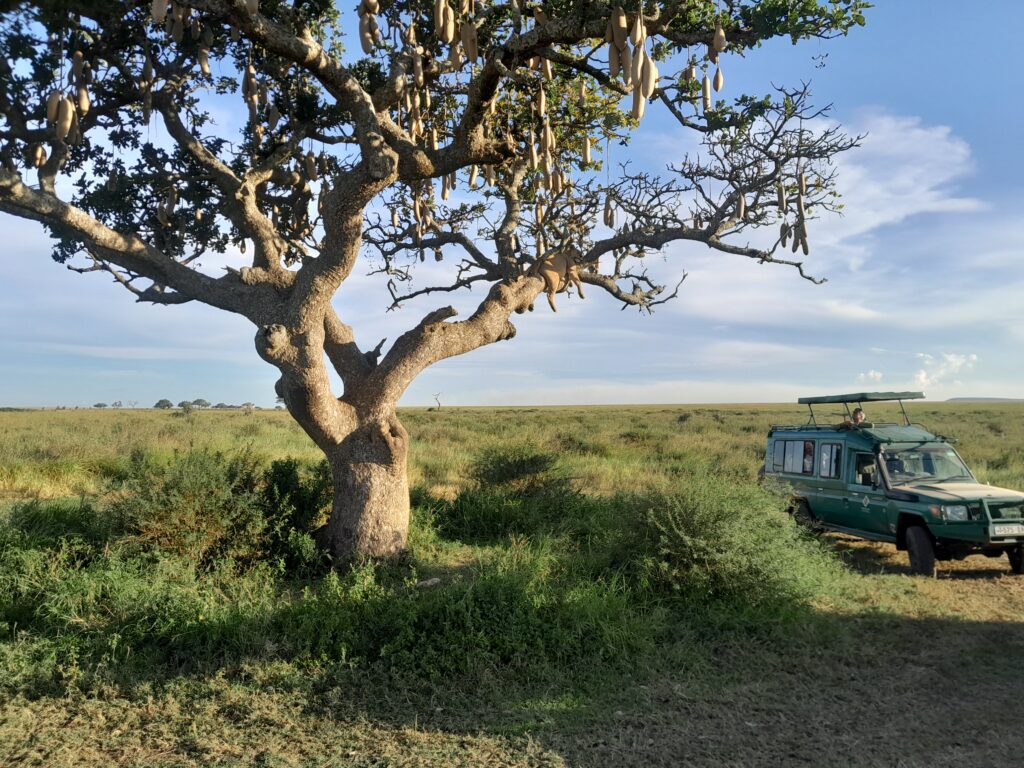
4. What Wildlife Will You See in Tanzania?
Tanzania is a living, breathing wildlife documentary.
Expect to see:
Big Cats: Lions, leopards, cheetahs
Giants: Elephants, giraffes, hippos, rhinos (mostly in Ngorongoro)
Ungulates: Wildebeest, zebras, antelope
Birds: Over 1,100 species, from flamingos to eagles
Pro tip: Early mornings and late afternoons are best for spotting predators.
5. Popular Safari Parks in Tanzania
Serengeti National Park
The king of all safari parks. Come here for the Great Migration and open savannahs packed with wildlife.
Ngorongoro Crater
Imagine a giant natural zoo inside a volcano. That’s the Ngorongoro Crater.
Tarangire National Park
Famous for elephants and baobab trees.
Lake Manyara National Park
Great for birdlife and tree-climbing lions.
Ruaha and Selous (Nyerere NP)
Less crowded, more remote. Off-the-beaten-path magic.
6. Accommodations: Where Will You Sleep?
From budget to ultra-luxury, there’s something for everyone.
Lodges: Comfortable, often with pools and Wi-Fi
Tented Camps: Glamping in style — real beds, great food, close to nature
Public Campsites: Basic but affordable for backpackers and adventurers
Tip: Book early in peak season. The best spots go fast.
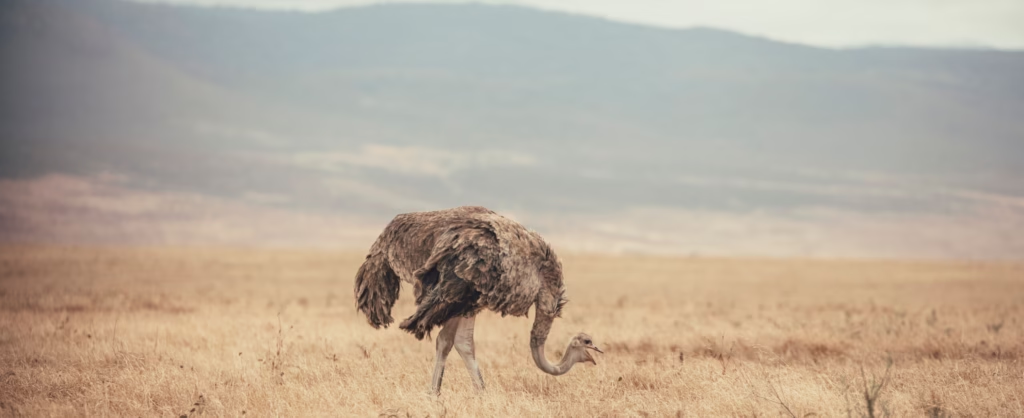
7. What a Typical Day on Safari Looks Like
Here’s a sample day:
5:30 AM: Wake-up call with coffee or tea
6:00 AM: Morning game drive
9:30 AM: Breakfast back at camp
Midday: Relax, nap, maybe a swim
4:00 PM: Afternoon game drive
7:00 PM: Dinner under the stars
You won’t be on the go all day — safaris have a peaceful rhythm that gives you time to soak in the magic.
8. Safari Guides: Your New Best Friend
Your guide isn’t just a driver. They’re:
A wildlife expert
A storyteller
A cultural bridge
Sometimes, a comedian!
A good guide can turn a simple lion sighting into a moment you’ll never forget. Don’t be shy — ask questions!
9. Costs and Budget: What Should You Expect?
Safari costs vary widely, but here’s a rough idea per person, per day:
Budget: $200–$300
Mid-range: $400–$600
Luxury: $800–$1,500+
Prices include park fees, accommodation, food, and transport. Want to save? Travel in the off-season or join a group tour.
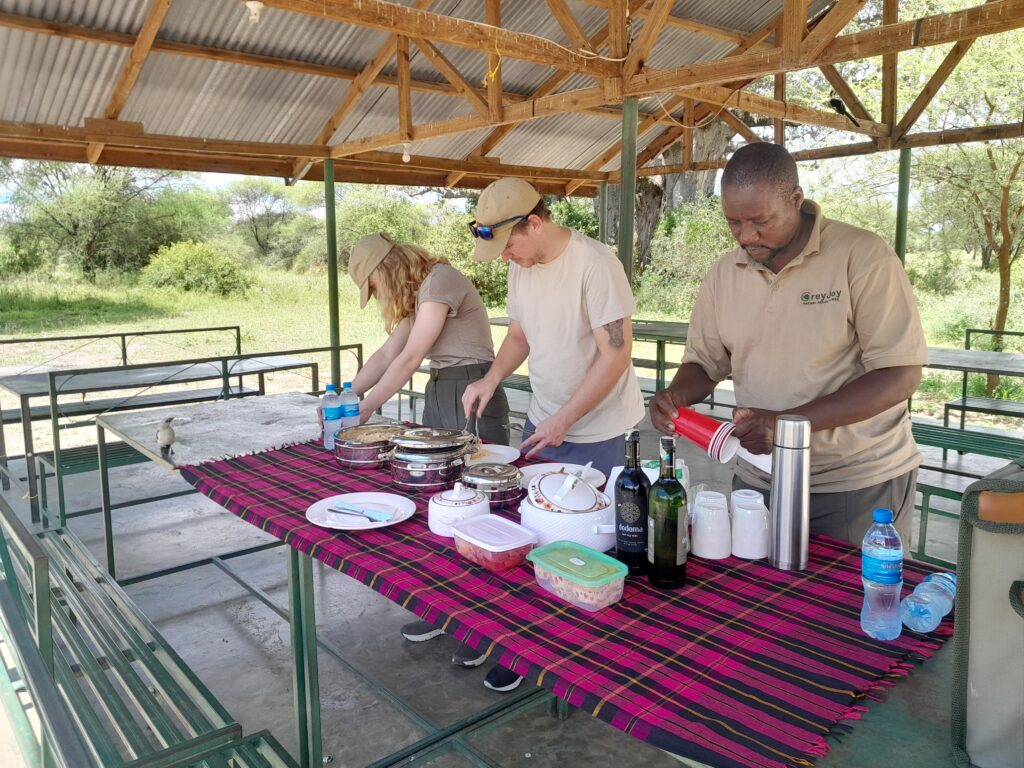
10. What to Pack for Your Safari
Think practical, not fashionable.
Must-haves:
Neutral-colored clothing (avoid bright colors)
Hat, sunglasses, sunscreen
Binoculars and camera
Insect repellent
Light jacket for cool mornings
Comfortable shoes
Leave behind: Drones (banned in many parks), camo clothing, and fancy outfits — the animals don’t care what you wear!
11. Safety and Health Tips
Tanzania is generally safe, but here’s how to stay healthy:
Vaccinations: Yellow fever (if coming from an endemic country), Hepatitis A, Typhoid
Malaria: Take anti-malarials and use mosquito repellent
Travel Insurance: Don’t skip this!
Listen to your guide: Especially during walks or animal encounters
12. Food and Drinks: What’s on the Menu?
You’ll be surprised — the food is usually great!
Expect:
Fresh fruits and vegetables
Grilled meats
Rice, chapati, stews
Vegetarian options available
Drink bottled water only, and avoid ice in remote areas unless you’re sure it’s safe.
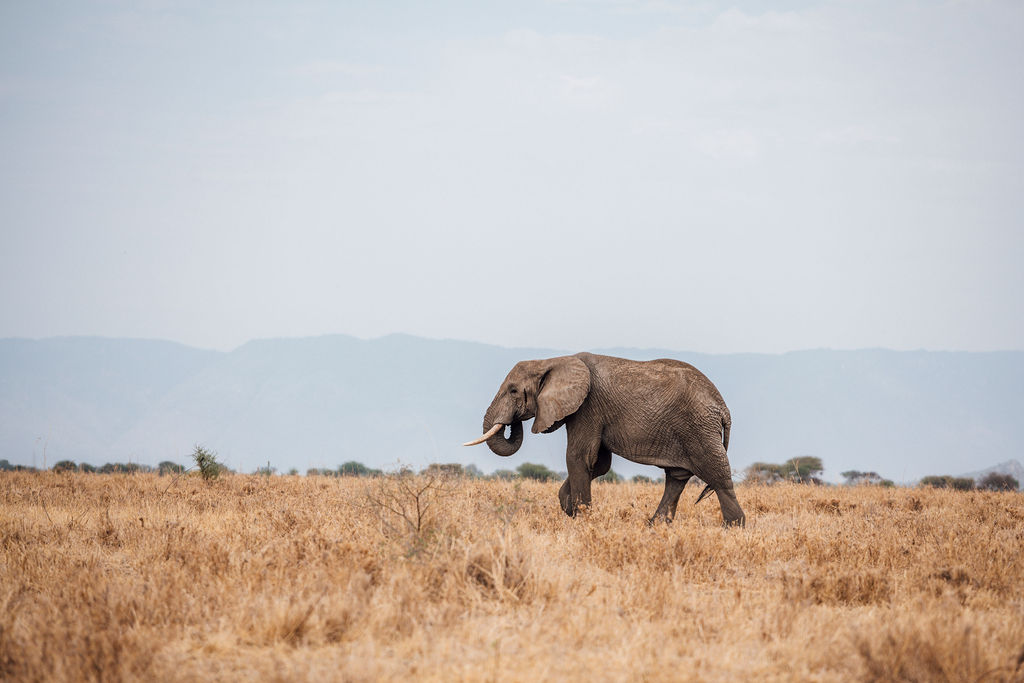
13. Cultural Encounters: Meet the Maasai
No safari is complete without meeting Tanzania’s iconic Maasai people.
You can:
Visit a traditional boma (village)
Learn about their customs and dress
Watch their famous jumping dance
Buy handmade beadwork
It’s a respectful, enriching experience — just make sure it’s an authentic, ethical visit.
14. Photography Tips for Safari Moments
Capturing wildlife on camera isn’t just point and shoot.
Tips:
Use a camera with a zoom lens
Turn off the flash
Be patient — great moments take time
Ask your guide for the best angles
Shoot early morning or sunset for golden light
And remember, sometimes it’s better to put the camera down and just watch.
15. Final Thoughts: Embracing the Safari Spirit
A Tanzania safari is more than a vacation — it’s a deep breath for the soul. It’s dusty boots, wide skies, and the primal thrill of hearing a lion’s roar in the wild. It’s moments of stillness and awe that remind you how big, beautiful, and wild the world truly is.
So, what should you expect on a Tanzania safari? Expect the unexpected. Expect to be amazed.