
Traveling to Tanzania in 2026: Visa, Vaccines, & Requirements
Table of Contents
ToggleIntroduction
Planning a trip to Tanzania in 2026? You’re not alone. As safari demand surges and travel rules continue to evolve, more travelers are searching for clear, up-to-date information on Tanzania travel requirements 2026—from visas and entry rules to vaccines and health guidelines.
And it makes sense. Tanzania isn’t just another destination—it’s home to some of Africa’s most iconic experiences. From the endless plains of the Serengeti National Park and the wildlife-rich crater of the Ngorongoro Conservation Area to the white-sand beaches of Zanzibar, this is where bucket-list safaris come to life.
But before you step onto the savannah or board your flight, you need clarity. Entry requirements, visa options, vaccination rules—these are the details that can make or break your trip if overlooked.
This guide brings everything together in one place—simple, accurate, and up to date—so you can plan with confidence.
Before booking your safari, here’s what you need to know.
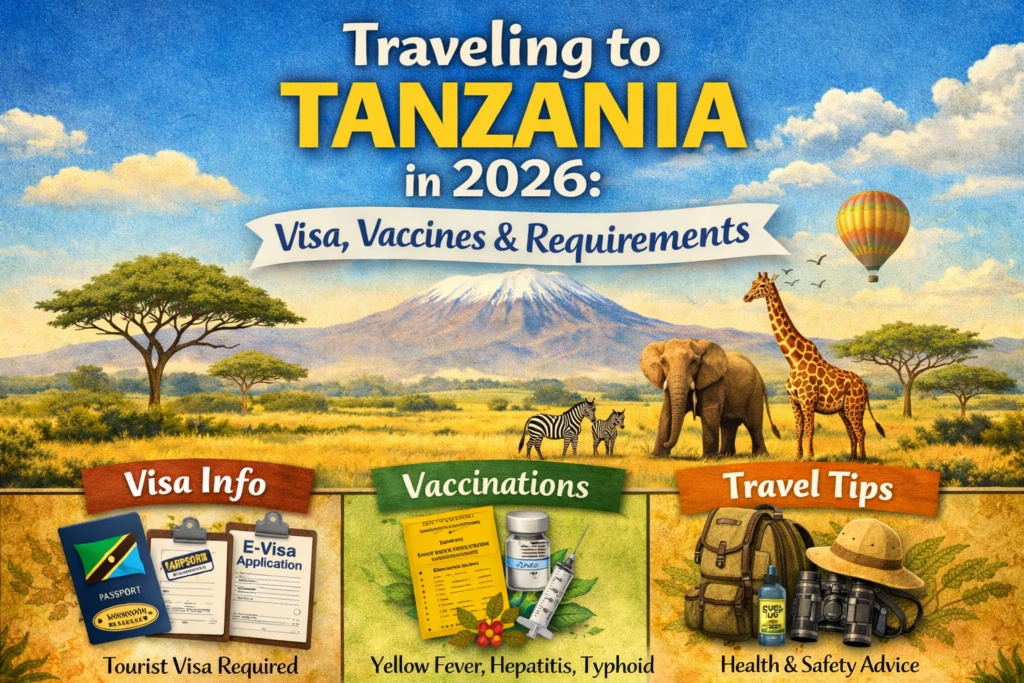
1. Entry Rules for Tanzania in 2026 (What You Need Before Arrival)
Before you arrive in Tanzania, immigration authorities expect a few non-negotiables. These are straightforward—but missing even one can delay or disrupt your entry. Here’s exactly what you need to prepare.
1.1 Valid Passport Requirements
Your passport is your primary travel document, and Tanzania enforces strict validity rules:
- It must be valid for at least 6 months beyond your date of entry
- You must have at least one blank visa page for entry and exit stamps
- For smoother processing—especially if using an eVisa—two blank pages are strongly recommended
Airlines often check these requirements before boarding, so don’t leave this to chance.
1.2 Approved Entry Points
All travelers must enter Tanzania through official immigration checkpoints. These include:
- International airports (such as Julius Nyerere International Airport, Kilimanjaro International Airport, and Abeid Amani Karume International Airport)
- Recognized land border crossings
- Designated seaports
Attempting to enter through informal or unauthorized crossings is not permitted and can result in denial of entry or legal complications.
To avoid unnecessary stress, always plan your arrival and departure through officially recognized routes.
1.3 Required Travel Documents
Beyond your passport and visa, Tanzania immigration officers may ask for supporting documents to confirm the purpose and legitimacy of your trip. These checks are not always exhaustive—but you should be fully prepared to present them if requested.
- Return or Onward Ticket
You may be asked to show proof that you intend to leave Tanzania within your permitted stay. This is typically:- A return flight ticket, or
- An onward travel booking to another country
This requirement helps immigration confirm that you are not planning to overstay your visa.
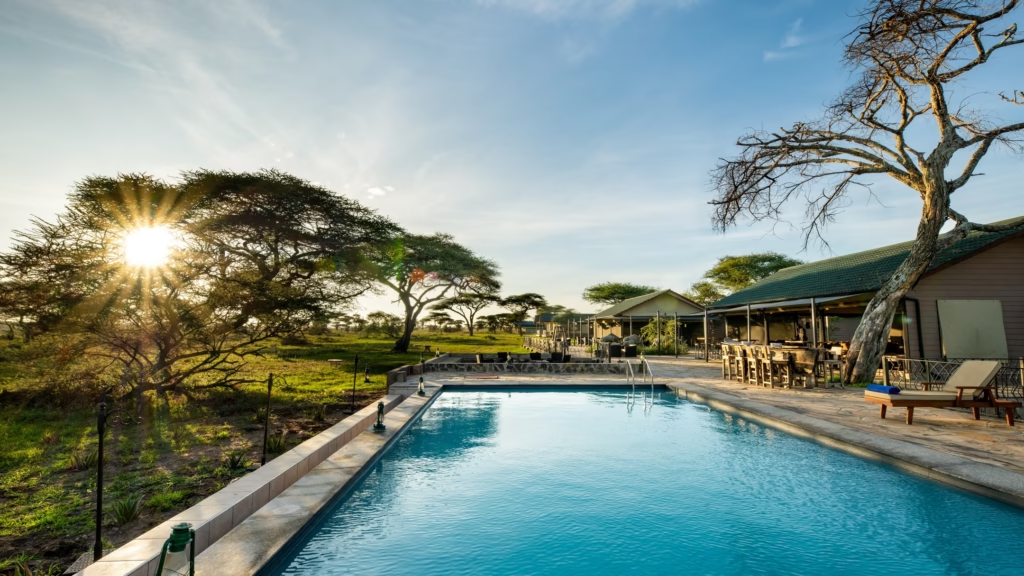
- Proof of Accommodation (Hotel, Lodge, or Invitation Letter)
Immigration may request details of where you will be staying during your visit. Accepted forms include:- Confirmed hotel or safari lodge bookings
- A tour itinerary from your safari operator
- An invitation letter if staying with friends, family, or a host
For safari travelers, having a day-by-day itinerary can significantly speed up the process and demonstrate clear travel plans.
- Proof of Sufficient Funds (For Some Nationalities)
While not always enforced uniformly, some travelers may be required to demonstrate they can financially support their stay. This can include: - A recent bank statement
- Credit or debit cards
- Proof of prepaid services (e.g., fully booked safari package)
Plan Your Tanzania Safari the Right Way
👉 Get expert help with visa guidance, travel planning, and itinerary design—all in one place.
Let our team help you design a custom Tanzania safari tailored to your travel style, budget, and timing.
1.4 Currency Declaration Rules
Tanzania has strict but straightforward financial declaration rules designed to regulate large cash movements.
- Mandatory Declaration Threshold
If you are carrying more than USD 10,000 (or equivalent in any currency), you are legally required to declare it to customs authorities. - Applies on Arrival and Departure
This rule is enforced both:- When entering Tanzania, and
- When leaving the country
Failure to declare large sums can result in:
- Confiscation of funds
- Fines or penalties
- Delays during immigration clearance
Pro tip: If you’re traveling with significant cash (for example, for business or remote safari payments), always declare it transparently and keep documentation accessible.
1.5 Zanzibar vs Mainland Tanzania
One of the most common points of confusion for travelers is whether Zanzibar has separate entry rules from mainland Tanzania. The short answer: it doesn’t—but there are a few nuances worth understanding.
- One Visa Covers Both Mainland and Zanzibar
Tanzania operates as a union, which means a single Tanzanian visa grants you access to both the mainland and Zanzibar without any additional paperwork.
Whether you land in Julius Nyerere International Airport and later fly to Zanzibar, or arrive directly via Abeid Amani Karume International Airport, your visa remains valid across both regions.
There are no internal immigration checks between mainland Tanzania and Zanzibar for international visitors once you’ve legally entered the country.
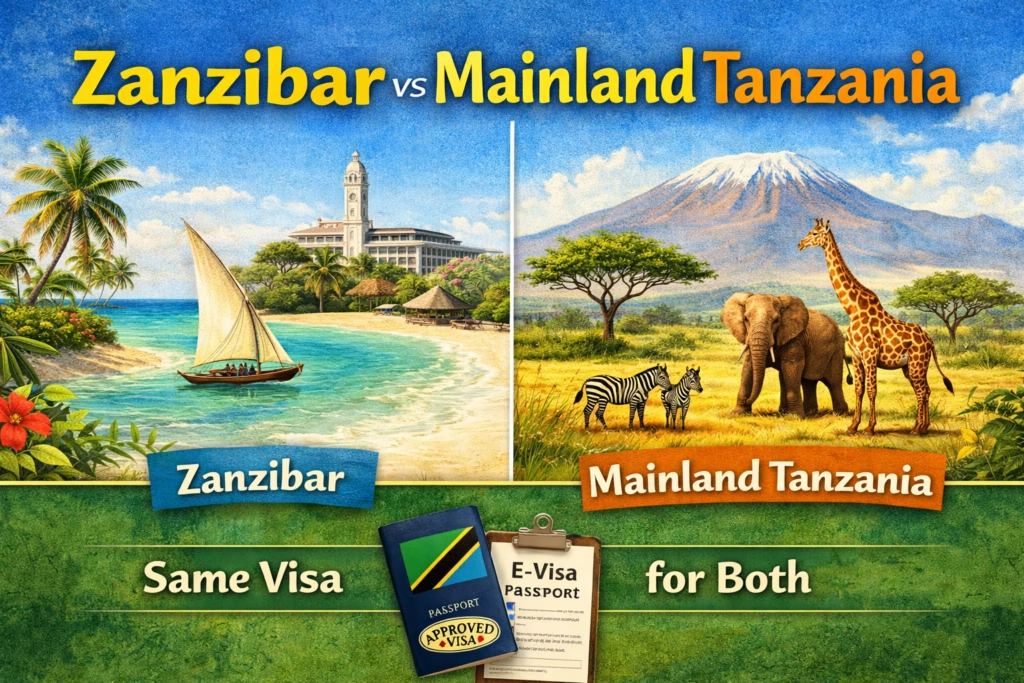
- No Separate “Zanzibar Visa” Exists
Despite frequent online confusion and outdated information, Zanzibar does not issue its own visa.
Any claim suggesting you need a separate Zanzibar visa is incorrect.
All visas—whether obtained via:
- eVisa
- Visa on arrival
- Embassy
are issued under the United Republic of Tanzania and automatically cover Zanzibar.
- Special Rules for Cruise and Yacht Arrivals
If you’re arriving by cruise ship or private yacht, additional procedures apply due to maritime regulations:- You must enter through designated seaports with immigration clearance facilities
- Advance port clearance and customs documentation may be required
- Your vessel operator or captain typically handles pre-arrival coordination with authorities
These rules apply whether docking in Zanzibar or along the mainland coast, and they are strictly enforced.
Key takeaway: For most travelers—especially those arriving by air—Tanzania is a single, seamless destination. You can combine a wildlife safari on the mainland with a beach escape in Zanzibar without worrying about extra visas or immigration barriers.
2. Tanzania Visa Requirements & Fees (2026 Update)
Understanding visa requirements is a critical step when planning your trip. Tanzania maintains a relatively straightforward visa system—but eligibility depends largely on your nationality.
2.1 Do You Need a Visa for Tanzania?
- Most nationalities require a visa
The majority of travelers—including those from the United States, United Kingdom, European Union countries, and many parts of Africa—must obtain a visa before or upon arrival in Tanzania. This applies whether you are visiting for tourism, business, or short-term travel.
- Limited Visa-Exempt Countries
Tanzania does have a small list of visa-exempt nationalities, but it is relatively limited compared to other destinations. Travelers from these countries can enter without a visa for a specified period, depending on bilateral agreements.
Because this list is subject to change, it’s important not to rely on outdated information.
- Always Check Your Nationality Before Travel
Visa rules can vary based on:- Your passport country
- Purpose of travel
- Duration of stay
Before booking flights or a safari, you should verify your visa requirements through official Tanzania Immigration channels or your nearest embassy.
This step ensures:
- You apply for the correct visa type
- You avoid delays or denied boarding
- You arrive fully prepared for entry
Key takeaway: Unless you are from a visa-exempt country, you should plan to obtain a Tanzanian visa—either online (eVisa), on arrival, or through an embassy—before starting your journey.
2.2 Types of Tanzania Visas (2026)
Present as a clean table:
Visa Type | Purpose | Duration | Fee |
Tourist (Ordinary) | Tourism / visiting family | Up to 90 days | $50 |
Multiple Entry | Frequent visits | Up to 12 months | $100 |
Business Visa | Short-term work/business | Up to 90 days | $250 |
Transit Visa | Passing through | Up to 7 days | $30 |
Student Visa | Study purposes | Varies | $50–$550 |
Skip the Stress — Let Us Handle the Details
👉 Message us now to get personalized visa support + a complete safari plan for your 2026 trip.
Not sure about visas, vaccines, or entry requirements?
We’ll guide you step-by-step so you can focus on the adventure.
2.3 Tanzania eVisa (Recommended Option)
If you’re looking for the best way to get a Tanzania visa in 2026, the answer is simple: apply for the Tanzania eVisa online before you travel.
This is the most efficient, predictable, and traveler-friendly option—especially if you want to avoid long queues and uncertainty on arrival.
- Apply Online Before Travel
The Tanzania eVisa system allows you to complete your entire application digitally before departure. You’ll typically need to:- Fill out an online application form
- Upload your passport copy
- Provide travel details (dates, accommodation, return ticket)
- Pay the visa fee online
Once approved, you’ll receive your eVisa confirmation, which you present on arrival.
- Processing Time: 1–3 Business Days
In most cases, eVisas are processed within 1 to 3 business days. However, it’s smart to apply at least 1–2 weeks in advance to allow for any delays or additional document requests.
This buffer ensures a stress-free departure—especially during peak travel seasons.
- Standard Entry Requirements Still Apply
Getting an eVisa does not bypass standard immigration rules. You must still meet all entry requirements, including:- Passport validity of at least 6 months
- Sufficient blank visa pages
- Supporting documents (return ticket, accommodation, etc.)
Immigration officers at the airport will verify these upon arrival.
Why eVisa is the preferred option:
It saves time, reduces airport hassle, and gives you pre-approved entry confidence before you even board your flight—making it the smartest choice for most travelers visiting Tanzania in 2026.
2.4 Visa on Arrival
For travelers who prefer flexibility—or didn’t apply in advance—Tanzania offers a visa on arrival option at major entry points. While convenient in theory, it comes with a few practical trade-offs you should be aware of.
- Where Visa on Arrival Is Available
You can obtain a visa on arrival at Tanzania’s main international gateways, including:- Julius Nyerere International Airport
- Kilimanjaro International Airport
- Abeid Amani Karume International Airport
It is also available at selected land border crossings, though facilities and processing speed can vary.
- Downsides to Consider
While the visa on arrival system is widely used, it’s not always the smoothest experience:
- Long Queues and Waiting Times
During peak travel seasons or when multiple international flights land at the same time, queues at immigration can be lengthy. It’s not uncommon to wait 30 minutes to several hours, especially at busy airports. - Payment Limitations (Cash/Card Variability)
Payment methods are not always consistent:- Some entry points prefer or require cash in USD
- Others may accept credit/debit cards, but systems can be unreliable
- Long Queues and Waiting Times
Travelers without the correct payment method may face delays or complications.
Bottom line: Visa on arrival is a valid backup option, but if you want a faster, more predictable airport experience, applying for an eVisa in advance is generally the better choice.
2.5 Embassy Visa (When Needed)
While most travelers can secure a Tanzania visa via eVisa or visa on arrival, some situations require obtaining a visa through a Tanzanian embassy or consulate. This method is typically reserved for specific cases and offers additional flexibility.
- For Restricted Nationalities
Certain countries are not eligible for eVisa or visa on arrival due to diplomatic or security regulations. Travelers from these nations must apply directly through an embassy before departure.
The embassy visa ensures you have proper authorization and avoids potential complications at entry points.
- For Long-Term or Special Travel Purposes
If your trip involves:- Extended stays beyond typical tourist durations
- Study programs or research
- Work or official business assignments
An embassy-issued visa is often required. These visas may include multiple entries, longer validity, or special conditions tailored to the purpose of your visit.
Key takeaway: Embassy visas are less common for standard tourism but essential for certain travelers or specialized trips. Always confirm with your nearest Tanzanian embassy to ensure you apply for the correct visa type well in advance of your departure.
3. Health Guidelines & Vaccines for Tanzania (2026)
Health preparation is a key part of planning your trip to Tanzania. While most requirements are straightforward, there is one mandatory rule that travelers must pay close attention to—especially depending on where they are coming from.
3.1 Mandatory Requirement: Yellow Fever Vaccine
- Required if Arriving from Endemic Countries
Tanzania requires proof of yellow fever vaccination if you are traveling from—or transiting through—a country where yellow fever is considered endemic (common in parts of Africa and South America).
This rule is strictly enforced at entry points, and immigration or health officials may request to see your certificate upon arrival.
- Includes Long Layovers (12+ Hours)
Even if Tanzania is not your original departure country, the rule still applies if you have:- A layover of 12 hours or more in a yellow fever–risk country
- Passed through an airport located in an endemic region
Many travelers overlook this detail, but it can result in being denied entry or required to take additional health measures on arrival.
- Must Carry a Valid Yellow Fever Certificate
You must present an official International Certificate of Vaccination or Prophylaxis (ICVP)—commonly known as the “yellow card.”
Key points:
- The vaccine must be administered at least 10 days before travel
- The certificate is considered valid for life once issued
- You should carry a physical copy (digital versions may not always be accepted)
Important: If you are traveling directly from a non-endemic country (with no qualifying layovers), this requirement typically does not apply. However, it’s always safest to verify your specific route and risk level before departure.
3.2 COVID-19 Rules (2026 Update)
As of 2026, Tanzania has largely relaxed its COVID-19 entry restrictions, making travel significantly easier compared to previous years. However, a few practical considerations still apply.
- No Routine Vaccine or Test Required
Travelers entering Tanzania are not required to present a COVID-19 vaccination certificate or a negative test result under normal circumstances. This applies to most international arrivals, whether visiting the mainland or Zanzibar.
This policy reflects the country’s shift toward standard pre-pandemic travel procedures.
- Possible Random Health Checks
While documentation is no longer routinely required, health authorities may still conduct:- Random temperature screenings
- Visual health assessments if a traveler shows symptoms
In rare cases, additional checks may be carried out at the point of entry.
- Airline-Specific Rules May Differ
Even though Tanzania’s government has eased restrictions, your airline may still enforce its own requirements, which can include:- Mask recommendations or mandates on certain routes
- Health declaration forms
- Proof of vaccination or testing for transit countries
These policies can vary depending on:
- The airline
- Transit hubs
- Your departure country
Key takeaway: Entry into Tanzania is currently straightforward from a COVID-19 perspective, but always double-check your airline and transit requirements to avoid last-minute surprises.
3.3 Recommended Vaccines for Travelers
While only yellow fever may be mandatory in certain cases, health authorities strongly recommend additional vaccinations to protect you during your trip—especially if you plan to combine city stays with safaris, rural visits, or cultural experiences.
To make this simple, here’s what you should consider before traveling to Tanzania in 2026:
Routine Vaccines (Stay Up to Date)
These are standard immunizations that should already be part of your regular healthcare—but it’s important to ensure they are fully up to date before travel:
- MMR (Measles, Mumps, Rubella)
Protects against highly contagious viral infections that can spread in crowded environments such as airports or group tours. - Tdap (Tetanus, Diphtheria, Pertussis)
Especially important if you’ll be spending time outdoors, where cuts or injuries may occur. - Polio
A booster may be recommended for adults traveling to certain regions, even if vaccinated in childhood. - Influenza (Flu Vaccine)
Helps reduce the risk of seasonal flu, particularly during long-haul flights and multi-country travel.
Build Your Dream Safari + Zanzibar Escape
👉 Request your custom safari + Zanzibar itinerary today.
Combine wildlife in the Serengeti National Park with beach relaxation in Zanzibar—all seamlessly planned for you
Travel-Specific Vaccines (Highly Recommended for Tanzania)
These vaccines are specifically advised for travelers visiting destinations like Tanzania, where exposure risks may differ from your home country:
- Hepatitis A
Transmitted through contaminated food or water. This is one of the most commonly recommended vaccines for Tanzania and provides long-term protection. - Typhoid
Also linked to food and water safety—especially important if you plan to eat local cuisine or travel beyond major hotels and lodges. - Rabies (Pre-Exposure Vaccination)
Recommended for:- Longer stays
- Travelers visiting rural areas
- Safari-goers or those working with wildlife
While incidents are rare, access to immediate treatment can be limited in remote areas.
- Hepatitis B
Advised for travelers who may:- Stay for extended periods
- Require medical care
- Have close contact with local communities
Important tip: Many of these vaccines require multiple doses or time to become effective, so it’s best to visit a travel clinic at least 4–6 weeks before departure.
Bottom line: You don’t need every vaccine—but the right combination depends on your itinerary, travel style, and length of stay. Proper preparation ensures your Tanzania experience is focused on adventure—not avoidable health risks.
3.4 Malaria Prevention in Tanzania
Tanzania is considered a malaria-endemic country, meaning the risk of transmission exists in most regions—including popular safari destinations and some urban areas. Prevention is essential, but with the right approach, the risk can be effectively managed.
- Preventive Medication Options
Health professionals typically prescribe antimalarial medication based on your health profile, travel duration, and tolerance. Common options include:- Atovaquone-proguanil (Malarone)
A popular choice for short-term travelers due to minimal side effects and a simple dosing schedule. - Doxycycline
A cost-effective option that also provides protection against some other infections, but requires daily dosing and sun sensitivity precautions. - Mefloquine (Lariam)
Taken weekly, suitable for longer trips, though not recommended for everyone due to potential side effects.
- Atovaquone-proguanil (Malarone)
Always consult a qualified travel clinic or doctor to determine the best option for you—self-prescribing is not advised.
- Mosquito Protection Strategy
Medication alone is not enough. Effective malaria prevention combines drugs with physical protection against mosquito bites, especially during evening and nighttime hours when mosquitoes are most active.
Key measures include:
- Use mosquito repellent (DEET-based recommended) on exposed skin
- Wear long-sleeve shirts and long trousers, particularly at dusk
- Sleep under insecticide-treated bed nets, especially in camps or lodges without screened rooms
Many high-end safari lodges provide nets and insect control, but personal precautions remain essential.
Bottom line: Malaria prevention is about layering protection—medication + behavior + awareness. Done correctly, it should not interfere with your travel experience.
3.5 When to Get Vaccinated
Timing is critical when preparing for travel health requirements.
- Visit a Travel Clinic 4–6 Weeks Before Departure
This allows enough time for:- Proper medical consultation
- Receiving all recommended vaccines
- Starting malaria prophylaxis if needed
- Some Vaccines Require Multiple Doses
Certain vaccines—such as hepatitis A, hepatitis B, and rabies—may require:- Multiple injections over several weeks or months
- Time to build full immunity before travel
Starting late may mean incomplete protection by the time you depart.
Key takeaway: Don’t leave health prep to the last minute. A well-timed visit to a travel clinic ensures you’re fully protected and ready to enjoy Tanzania with confidence.
4. Quick Checklist: Tanzania Travel Requirements 2026
Here’s your easy, scannable checklist to make sure everything is in place before you travel:
✅ Passport – Valid for at least 6 months beyond your entry date
✅ Visa – eVisa (recommended) or visa on arrival
✅ Return Ticket – Proof of onward or return travel
✅ Accommodation Proof – होटल, lodge booking, or invitation letter
✅ Yellow Fever Certificate – Required if arriving from endemic countries
✅ Travel Insurance – Strongly recommended for medical and trip coverage
✅ Malaria Prevention Plan – Medication + mosquito protection strategy
Pro tip: Save both digital and printed copies of all documents to avoid any issues at check-in or immigration.
5. Pro Travel Tips (Expert Insight Section)
Planning a trip to Tanzania is straightforward—but small details can make a big difference in how smooth and enjoyable your journey feels. These expert tips are based on real traveler experiences and on-the-ground realities.
- Apply for Your eVisa in Advance
Even though visa on arrival is available, applying for an eVisa before departure is the smarter move. It helps you:- Skip long airport queues
- Avoid payment complications
- Arrive with confidence knowing your entry is pre-approved
This is especially valuable during peak safari seasons when airports are busy.
- Carry Printed Copies of Important Documents
While digital convenience is great, Tanzania still operates with a mix of digital and manual systems. Always carry printed copies of:- Your visa (or eVisa approval)
- Hotel or safari bookings
- Return flight ticket
Phones can run out of battery or lose signal—paper backups ensure you’re never stuck at immigration.
Get a Free Customized Travel Plan
👉 Start your journey with a free personalized safari quote + visa guidance.
Tell us your dates, budget, and preferences, and we’ll craft a tailor-made Tanzania experience.
- Bring Small USD Bills for Easy Payments
US dollars are widely accepted for visas, tips, and some services. However:- Large notes may not always be accepted
- Change can be limited
Carry small denominations ($10, $20, $50) in clean, newer notes (issued after 2009) to avoid issues.
- Combine Safari + Zanzibar for the Full Experience
Tanzania offers two completely different but perfectly complementary experiences:- Wildlife safaris in places like the Serengeti National Park and Ngorongoro Conservation Area
- Tropical beach relaxation in Zanzibar
Combining both in one trip gives you the ultimate Tanzania journey—adventure and relaxation in a
Expert insight: The difference between a stressful trip and a seamless one often comes down to preparation. Get the basics right, and Tanzania will exceed every expectation.
6. Conclusion (Conversion-Focused)
Traveling to Tanzania in 2026 is far simpler than many first-time visitors expect. With the right preparation—valid passport, visa, and basic health precautions—you’ll find the process smooth, predictable, and well-organized.
Tanzania remains one of Africa’s most safe, welcoming, and accessible safari destinations, offering world-class experiences from the plains of the Serengeti National Park to the beaches of Zanzibar. The entry requirements are clear, the visa process is straightforward, and health guidelines are easy to follow with minimal effort.
In short: once you understand the basics, there’s nothing complicated standing between you and your safari.
Now that you know the Tanzania travel requirements for 2026, the next step is simple—start planning your journey.
Get a Free Customized Travel Plan
👉 Start planning your Tanzania safari today—message us now for a free personalized itinerary.
Tell us your dates, budget, and preferences, and we’ll craft a tailor-made Tanzania experience.
7. Frequently Asked Questions (FAQs)
1. Do I need a visa to travel to Tanzania in 2026?
Yes, most travelers require a visa to enter Tanzania. You can obtain it via eVisa, visa on arrival, or through an embassy, depending on your nationality.
2. What is the best way to get a Tanzania visa in 2026?
The best option is to apply for an eVisa online before travel. It saves time, avoids airport queues, and ensures a smoother arrival process.
3. How long does it take to process a Tanzania eVisa?
Typically, it takes 1–3 business days, but it’s recommended to apply at least 1–2 weeks in advance to avoid any delays.
4. Do I need a separate visa for Zanzibar?
No, you do not need a separate visa. A Tanzania visa covers both mainland Tanzania and Zanzibar.
5. Is the yellow fever vaccine required for Tanzania?
It is only required if you are traveling from—or transiting through—a yellow fever endemic country (including long layovers of 12+ hours).
6. Are COVID-19 vaccines or tests required to enter Tanzania in 2026?
No, Tanzania does not require COVID-19 vaccination or testing for most travelers, although airlines may have their own rules.
7. Is malaria a risk in Tanzania?
Yes, Tanzania is a malaria-endemic country. Travelers are advised to take preventive medication and use mosquito protection measures.
8. What documents do I need to show on arrival?
You may be asked to present:
- A valid passport
- Visa (or eVisa approval)
- Return or onward ticket
- Proof of accommodation
- Yellow fever certificate (if applicable)
Continue Exploring Tanzania
👉 Read our featured articles:
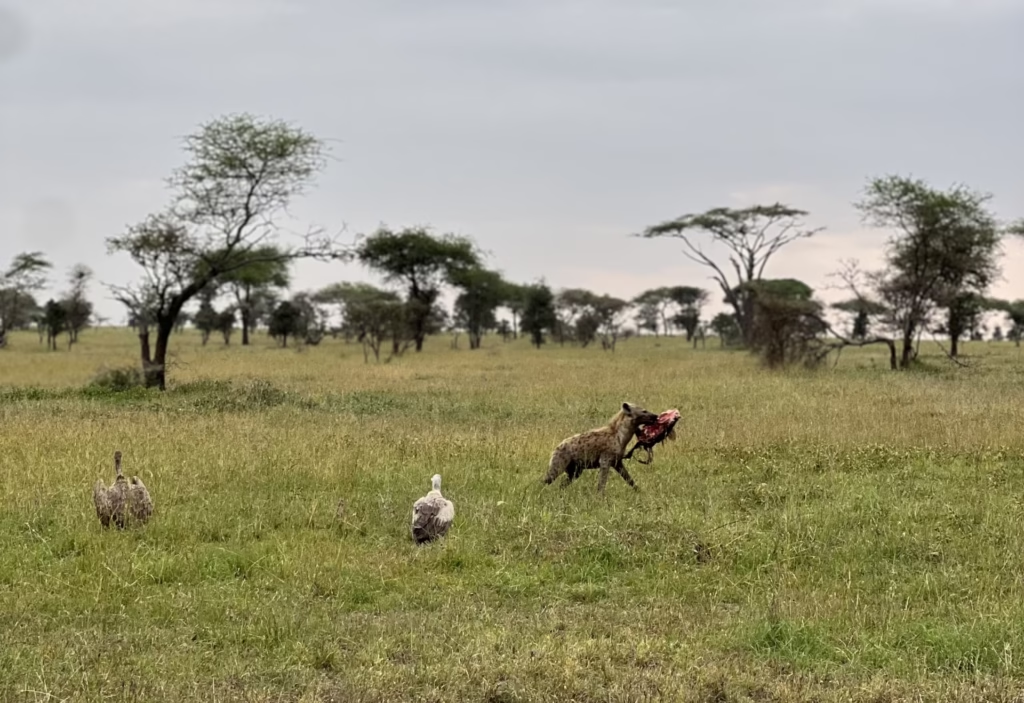
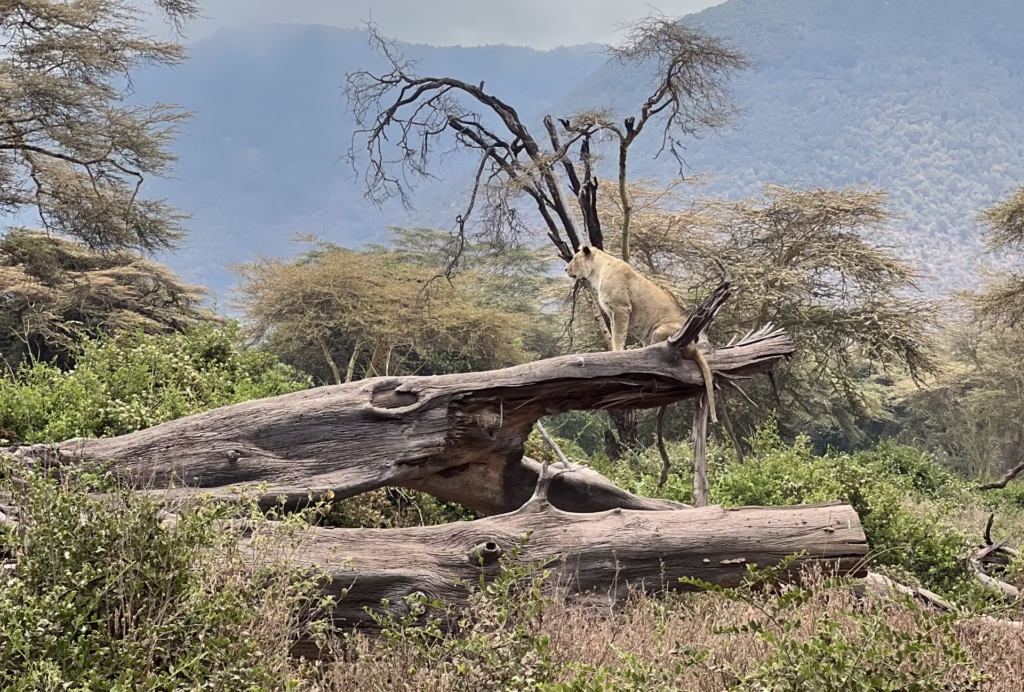
Why Do Some Safaris See More Animals Than Others in the Same Park?
Discover why some safaris see more animals than others. Learn how guide expertise, timing, routes, and vehicle positioning make every...
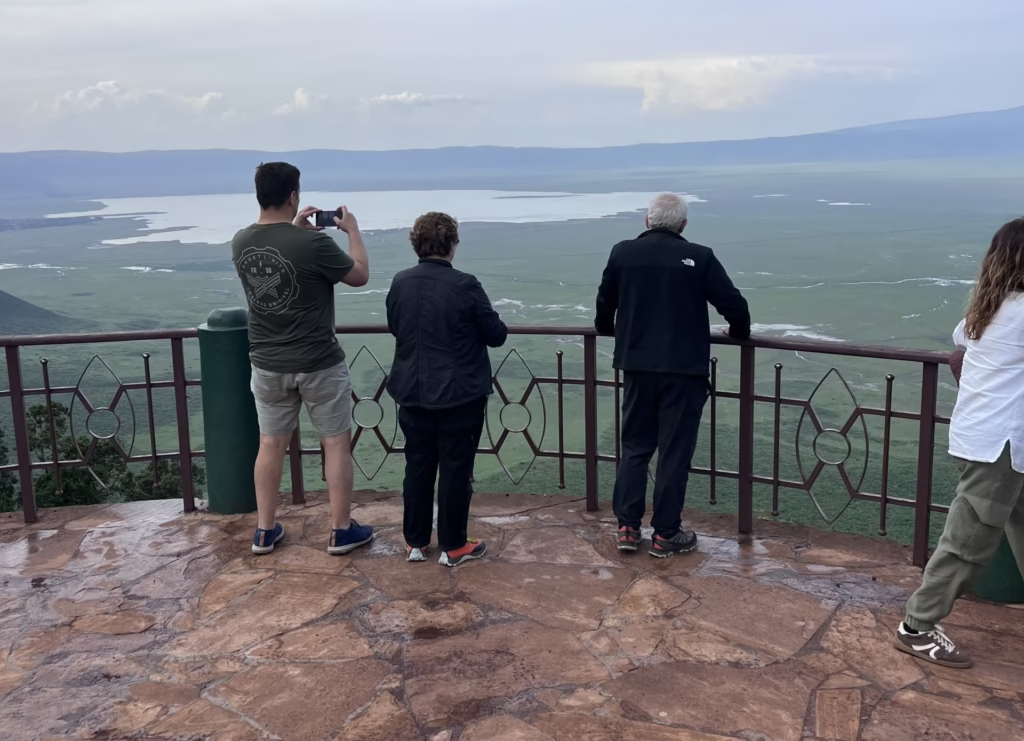
Can You Enjoy the Serengeti Without Following the Migration?
Discover if you can enjoy the Serengeti without migration. Learn about resident wildlife, predator density, best areas, and when to...
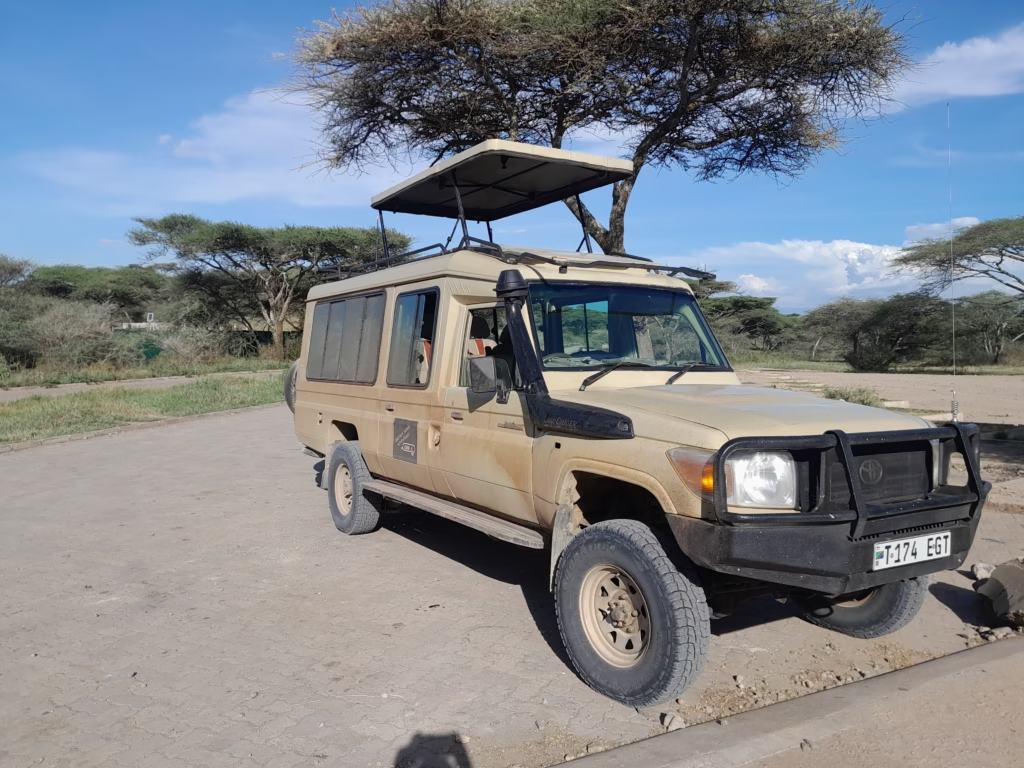
Tanzania Safari Safety: Everything You Need to Know
Is safari in Tanzania safe? Yes—discover how parks, guides, vehicles, and lodges keep travelers safe while enjoying unforgettable wildlife adventures.
What Do Safari Guests Regret Not Knowing Before Visiting Tanzania?
Tanzania Safari Mistakes to avoid before your trip—learn packing tips, timing, hidden costs, and how to plan the perfect safari...